
full timeline
Trump BBC defamation lawsuit
A US federal judge has denied the BBC's motion to dismiss President Donald Trump's $10 billion defamation lawsuit over a documentary regarding the January 6 Capitol attack.
Follow Trump BBC defamation lawsuit in the Factlen app and get an alert when there is news. Get the app
Share this story
Latest report
Federal Judge Allows Donald Trump's $10 Billion Defamation Lawsuit Against the BBC to Proceed
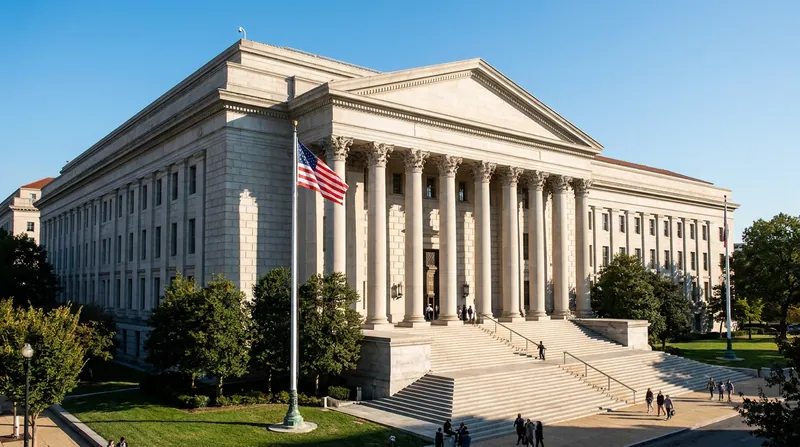
A US federal judge has denied the BBC's motion to dismiss President Donald Trump's $10 billion defamation lawsuit over a documentary regarding the January 6 Capitol attack. The ruling clears the path for discovery and potential deposition in a case testing the limits of media liability.
- A federal judge denied the BBC's motion to dismiss Donald Trump's $10 billion defamation lawsuit.
- The ruling forces the UK-based broadcaster into a costly and intrusive discovery phase in US federal court.
- The lawsuit alleges a BBC Panorama documentary maliciously misrepresented Trump's actions surrounding January 6.
- The case sets a high-stakes precedent for international media organizations covering US political figures.
A United States federal judge has officially denied a motion by the British Broadcasting Corporation to dismiss a $10 billion defamation lawsuit filed by President Donald Trump. The ruling ensures that the high-stakes legal battle over a documentary concerning the January 6 Capitol attack will advance to the discovery phase.[2][4]
The lawsuit centers on a BBC Panorama broadcast that Trump alleges maliciously misrepresented his actions and statements surrounding the 2021 riot. By rejecting the broadcaster's attempt to throw out the case, the court has opened the door for a protracted and highly public examination of international media practices.[1][3]
President Trump welcomed the decision on Wednesday, with his campaign releasing a statement describing the ruling as a "huge victory" against what he characterized as systemic media bias. His legal team has consistently argued that the documentary was not merely critical, but intentionally fabricated a narrative to damage his political standing.[3]
The BBC had sought to dismiss the suit on the grounds that its reporting was protected speech and that the former president failed to meet the rigorous legal standard for actual malice. The broadcaster maintains that the Panorama episode was a rigorously researched piece of public interest journalism.[1][5]
The legal threshold for malice
The federal judge's ruling does not determine the ultimate truth of the defamation claims, but rather confirms that the lawsuit contains sufficient factual allegations to warrant a full trial process. To win, Trump must eventually prove that the BBC published falsehoods with reckless disregard for the truth.[2][6]
Defamation cases brought by public figures face an intentionally steep climb in the US legal system, a standard established to protect press freedom. However, the court found that the specific claims regarding the editing and framing of the January 6 footage met the initial threshold to survive a dismissal motion.[4][8]
Surviving a motion to dismiss forces the defendant into the costly and intrusive discovery phase, a significant procedural hurdle cleared by the plaintiff. The BBC will now be required to produce internal communications, editorial notes, and draft scripts to demonstrate how the documentary was assembled and vetted.[1][2]
The discovery process is expected to be fiercely contested, as media organizations routinely fight to protect journalistic work product and confidential sources. Trump's attorneys are anticipated to aggressively pursue emails and messages between the documentary's producers to establish their state of mind during the production process.[4][5]
Navigating international jurisdictions
The case also highlights the complex dynamics of a US president suing a foreign, publicly funded broadcaster in an American federal court. The BBC, funded primarily by UK television license fees, now faces the prospect of defending its editorial standards under the strict parameters of US defamation law.[1][3]
While the BBC operates globally, its core mandate and editorial guidelines are rooted in British broadcasting regulations, which differ significantly from American media frameworks. The intersection of these distinct legal and cultural approaches to journalism will likely form a central tension as the complex litigation proceeds.[5][6]
Earlier in the litigation, the court issued an order requiring Trump to sit for a deposition, a rare procedural step for a sitting president. That prior ruling signaled the judge's intent to subject both parties to rigorous evidentiary scrutiny, ensuring that the plaintiff is not shielded from the discovery process.[2][4]
Trump's willingness to undergo deposition underscores the priority his administration places on challenging institutional media outlets. His legal team has framed the $10 billion damages figure not just as compensation, but as a punitive measure designed to deter future critical coverage by major international television networks.[3][8]
The January 6 documentary
The BBC Panorama documentary at the heart of the dispute aired in the aftermath of the Capitol riot, examining the political climate and the rhetoric that preceded the violence. Trump's lawsuit specifically targets the program's characterization of his speeches and his administration's response to the unfolding events.[1][4]
According to the complaint, the broadcast selectively edited clips and omitted crucial context to falsely portray Trump as directly coordinating the breach of the Capitol. The BBC has strongly denied these allegations, pointing to the extensive public record and congressional investigations that informed their comprehensive reporting.[2][5]
The documentary was broadcast to a global audience, amplifying its impact and, according to the lawsuit, magnifying the alleged reputational harm. Trump's attorneys argue that the BBC leveraged its reputation for impartiality to lend unwarranted credibility to a partisan narrative designed to undermine his political movement.[3][6]
Press freedom advocates have expressed alarm at the sheer scale of the financial damages sought, warning that a $10 billion claim is designed to intimidate rather than compensate. They argue that such astronomical figures risk creating a chilling effect on investigative journalism targeting powerful political figures worldwide.[1][8]
Implications for press freedom
The ruling arrives amid a broader, sustained campaign by the Trump administration to challenge the legal protections traditionally afforded to the press. By advancing this case, the federal court has provided a high-profile venue for testing the boundaries of the First Amendment against claims of malicious reporting.[2][4]
If the case reaches a jury, it will require ordinary citizens to evaluate the editorial judgments made by one of the world's most established news organizations. The trial would likely feature testimony from senior BBC executives, producers, and potentially the president himself, creating an unprecedented legal spectacle.[3][5]
The BBC has not yet indicated whether it will attempt an interlocutory appeal to challenge the denial of its dismissal motion before discovery concludes. However, legal experts suggest that appellate courts are generally reluctant to intervene at this preliminary stage unless there is a glaring error of law.[1][6]
In the interim, both legal teams are preparing for a grueling exchange of documents and interrogatories that could stretch well into 2027. The discovery timeline will likely be complicated by the logistical and security challenges of deposing a sitting president and coordinating with a London-based broadcaster.[2][8]
A high-stakes precedent
The outcome of this litigation could reshape how international media organizations approach coverage of US political figures. A victory or even a substantial settlement for Trump might embolden other politicians to pursue aggressive defamation claims against foreign outlets operating within the United States.[4][5]
Conversely, a definitive victory for the BBC after a full trial could reinforce the robust protections for public interest journalism, even when it involves harsh criticism of the highest office. The broadcaster has vowed to defend its reporting vigorously, viewing the case as a fundamental test of its editorial independence.[1][3]
The financial stakes are particularly acute for the BBC, which is currently navigating domestic funding pressures and political scrutiny in the United Kingdom. A protracted legal battle in the US, regardless of the final verdict, will consume significant resources and executive attention at a critical juncture for the corporation.[5][6]
As the case moves forward, the immediate focus shifts to the scheduling of depositions and the parameters of the document requests. The presiding judge is expected to issue a comprehensive discovery order in the coming weeks, setting the pace for the next critical phase of the litigation.[2][4]
The denial of the motion to dismiss transforms a theoretical legal threat into a concrete, operational challenge for the BBC. The court has ensured that the dispute over the January 6 narrative will be litigated not just in the court of public opinion, but under the strict evidentiary rules of a federal trial.[1][8]
Sources
- [1]The Guardian — Federal judge allows Trump’s $10bn defamation lawsuit against BBC to proceed Read on The Guardian →
- [2]CBS News — A U.S. federal judge has denied a motion to dismiss President Trump's defamation case against the BBC, allowing the case to proceed Read on CBS News →
- [3]The Independent — Trump welcomes 'huge victory' in $10 billion lawsuit against BBC Read on The Independent →
- [4]TheWrap — BBC Fails to Get Trump's $10 Billion Defamation Lawsuit Dismissed Read on TheWrap →
- [5]The Irish Times — Judge allows Trump’s $10bn defamation lawsuit against BBC to proceed Read on The Irish Times →
- [6]CNA — US judge says Trump's US$10 billion BBC defamation case can proceed Read on CNA →
- [7]The New Arab — US judge rejects BBC bid to dismiss Trump's defamation suit Read on The New Arab →
- [8]Arab News — US judge rejects BBC bid to dismiss Trump defamation suit Read on Arab News →
What to watch
- Donald Trump is ordered to sit for a sworn deposition by December 11.
Charts, maps and images
Timeline
November 2026
Federal Judge Allows Donald Trump's $10 Billion Defamation Lawsuit Against the BBC to Proceed
October 2026
Federal Judge Orders Trump to Sit for Deposition in $10 Billion BBC Defamation Lawsuit
July 2026
Trump's Legal Team Rejects Financial Discovery in $10 Billion BBC Defamation Suit
How the story developed
The defamation lawsuit stems from a 2024 BBC Panorama documentary regarding the January 6 Capitol attack. The broadcast featured an edited clip of Trump's January 6 speech that omitted his call for peaceful demonstration. The BBC previously apologized for the edit, which led to the resignation of top executives at the broadcaster.
Trump filed a $10 billion civil defamation lawsuit against the BBC, prompting a complex discovery process. The BBC turned over 45,000 pages of internal documents during this phase, while simultaneously fighting to dismiss the case on jurisdictional grounds.
On July 4, Trump's legal team refused to hand over financial documents to the BBC, calling the request a "fishing expedition." The BBC had requested the documents to verify Trump's claims of $10 billion in financial damage from the 2024 documentary.
The dispute over direct questioning escalated in the fall. Trump's legal team canceled a scheduled interview, leading the court to threaten sanctions on October 16. On October 22, the presiding judge explicitly rejected Trump's attempts to avoid direct questioning through written answers, ordering him to sit for a deposition.
On November 11, a federal judge denied the BBC's motion to dismiss the lawsuit. The ruling cleared the path for further discovery and the deposition in a case testing the limits of media liability for international organizations covering US political figures.