
full timeline
COP31 climate summit
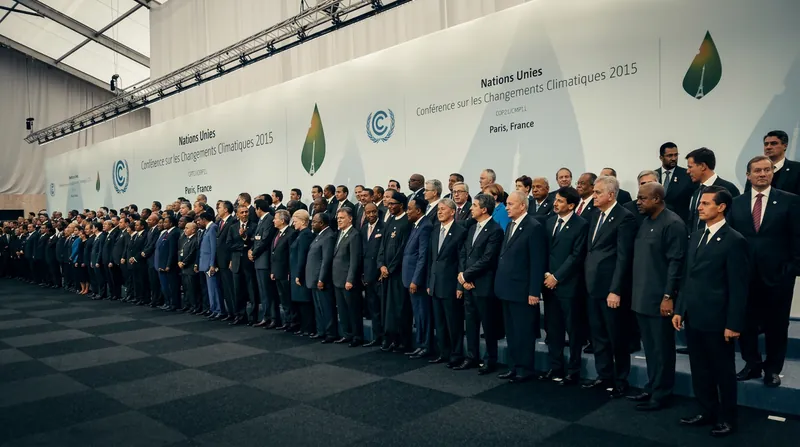
International delegates and United Nations officials are convening to negotiate global climate action and address rising global temperatures.
Follow COP31 climate summit in the Factlen app and get an alert when there is news. Get the app
Share this story
Latest report
Major Polluters Skip COP31 as UN Chief Warns Climate Crisis Is Outrunning Global Response
As the United Nations COP31 climate summit opens in Antalya, heads of state from the United States, China, and India are notably absent. The missing leadership from the world's top emitters complicates negotiations as developing nations push for a comprehensive climate justice pact.
- Heads of state from the US, China, and India are absent from the COP31 leaders' summit in Antalya.
- UN Secretary-General António Guterres warned delegates that the climate crisis is currently outrunning the global diplomatic response.
- Public climate finance pledges intended for developing nations have dropped by more than 70 percent heading into the talks.
- Developing countries are pushing for industrialized nations to meet a $300 billion annual funding target by 2035.
The 31st United Nations Climate Change Conference opened in Antalya, Turkey, with a stark diplomatic void at the highest level. Heads of state from the United States, China, and India—the world’s three largest greenhouse gas emitters—declined to attend the leaders' summit.[5][7]
Together, these three nations account for more than 40 percent of global carbon output. Their executive absence leaves a significant gap in authority during the critical opening days of COP31, shifting the negotiating burden onto lower-level diplomatic delegations and climate envoys.[5]
United Nations Secretary-General António Guterres addressed the remaining assembly with a blunt assessment of the global environmental trajectory. He warned the gathered delegates that the climate crisis is currently "outrunning us," urging immediate structural changes to international finance mechanisms.[2][3]
The Secretary-General pointed to the accelerating pace of extreme weather events recorded over the past twelve months as evidence of this widening gap. He noted that while diplomatic negotiations proceed at a measured pace, the physical realities of a warming atmosphere are compounding daily.[2][3]
Guterres framed the Antalya summit as a definitive "make or bake time" for the planet's future. He pressed the assembly for a comprehensive climate justice pact that would force industrialized nations to accelerate their transition timelines and fund adaptation in vulnerable regions.[4]
The Diplomatic Roster
Despite the high-profile absences, the diplomatic roster in Antalya remains extensive. Turkish officials confirmed that 102 leaders representing 95 countries and seven international organizations traveled to the Mediterranean coastal city for the two-week conference.[6]
Hosting the summit in Antalya represents a significant diplomatic undertaking for the Turkish government, which has sought to position itself as a mediator between the industrialized North and the developing South. The Mediterranean resort city was heavily fortified to accommodate the influx of international delegates.[6]
The broader attendance figures reflect the massive scale of the modern climate apparatus. More than 92,000 people registered to attend the COP31 summit in Antalya, potentially making it the largest gathering in the history of the United Nations framework.[11]
The executive assembly skews heavily toward the Global South, island nations, and European states. Representatives from these regions arrived in Turkey seeking binding resolutions on the financial mechanisms required to manage extreme weather events and transition their economies away from fossil fuels.[6][10]
Civil society observers noted that the missing executives extend well beyond the top three emitters. Heads of government from Canada, Japan, and several major European economies also skipped the high-level segment, delegating their negotiating authority to environment ministers and specialized climate envoys.[8]
The United States government, in particular, has no official executive presence at the summit following the recent midterm elections. The domestic political calendar effectively sidelined the American delegation from making new, binding financial commitments on the global stage in Antalya.[5]
The Finance Gap
The leadership vacuum coincides with a severe contraction in international climate funding. Recent analysis indicates that public funding pledges intended to help developing countries tackle the impacts of climate change dropped by more than 70 percent heading into the Antalya talks.[9]
This financial shortfall places developing nations in a precarious planning limbo. Under existing frameworks, industrialized governments are supposed to provide $300 billion annually by 2035 to support low-carbon transitions and climate resilience projects in the developing world.[10]
That $300 billion baseline is intended to be supplemented by roughly $1 trillion from private and institutional sources. Without heads of state present to underwrite those guarantees, recipient countries are struggling to attract the necessary private investment for their energy grids.[10]
Institutional investors have repeatedly stated that they require clear regulatory frameworks and state-backed risk mitigation before deploying capital into emerging markets. The lack of executive assurances at COP31 leaves these private financial institutions hesitant to commit to long-term green infrastructure projects.[10]
Furthermore, the delay in finalizing these new climate finance plans creates a cascading effect on national policy. Without a clear understanding of available international support, developing nations are unable to submit their updated, more ambitious emission reduction targets to the United Nations.[10]
Developing country negotiators argue that the absence of top-tier leaders signals a retreat from previous financial promises. They maintain that environment ministers lack the domestic budgetary authority to sign off on the massive capital transfers required to meet the 2035 targets.[1][10]
Vulnerable Nations Respond
The dynamic in the plenary halls has consequently shifted toward technical and procedural battles. Rather than securing sweeping executive agreements, negotiators are focusing on the granular rules governing international carbon markets and bilateral technology transfers between industrialized and developing states.[6]
This procedural focus frustrates nations currently facing the immediate impacts of rising sea levels and prolonged droughts. Leaders from vulnerable states used their opening addresses to demand that the absent powers be held accountable for the stalled financial mechanisms.[1]
Representatives from the Global South emphasized that their domestic energy transitions depend entirely on predictable international funding. Without the promised capital, many emerging economies will be forced to rely on cheaper, high-emission fossil fuels to meet their growing baseline energy demands.[10]
The United Nations leadership is attempting to bridge this gap by elevating the role of multilateral development banks. Guterres and his deputies are pushing institutions like the World Bank to assume more risk in financing green infrastructure projects in emerging markets.[3][4]
However, structural reforms to the World Bank and the International Monetary Fund require the explicit approval of their largest shareholders. The United States and China hold dominant voting blocs in these institutions, making their executive absence in Antalya a practical hurdle for reform.[5]
The Path Forward in Antalya
The remaining ten days of the conference will test whether ministerial-level delegations can bypass the executive bottleneck. European envoys have signaled a willingness to form smaller, bilateral coalitions to fund specific adaptation projects in Africa and Southeast Asia.[8]
These fragmented agreements, while helpful to individual nations, fall short of the comprehensive climate justice pact Guterres envisioned. Climate finance experts warn that piecemeal funding cannot replace the systemic capital mobilization required to keep global temperature rise within manageable limits.[4][9]
The Turkish presidency of COP31 is now tasked with salvaging a credible final text from the fractured assembly. Diplomats are working to draft a concluding declaration that maintains pressure on the absent nations without collapsing the broader United Nations framework.[6]
Negotiators are heavily focused on finalizing the operational details of the loss and damage fund established at previous summits. The fund requires continuous capitalization, and the current 70 percent drop in pledges threatens to leave it functionally insolvent before it fully launches.[9][10]
As the first week of negotiations concludes, the focus remains on securing whatever incremental progress the present delegations can authorize. The ultimate success of the Antalya summit may depend on whether the technical agreements forged here can survive the political realities back home.[1][2]
The absence of the world's largest polluters serves as a stark reminder of the limits of international climate diplomacy. While the United Nations can convene the global community, it cannot compel sovereign executives to prioritize multilateral environmental agreements over their domestic political calendars.[5][7]
Sources
- [1]KSL — World leaders urge stronger and faster action at UN climate talks over inadequate response Read on KSL →
- [2]bdnews24 — Climate crisis is 'outrunning us', UN chief warns Read on bdnews24 →
- [3]Al Jazeera — 'Climate crisis is outrunning us,' UN chief Guterres says at COP31 Read on Al Jazeera →
- [4]UN News — 'Make or bake time': Guterres urges climate justice pact as leaders gather at COP31 Read on UN News →
- [5]The Guardian — US government will have no official presence at UN's annual climate summit, held this year in Antalya, Turkey Read on The Guardian →
- [6]Anadolu Agency — Leaders from 95 countries, 7 international organizations expected to participate in UN climate conference in Antalya on Nov. 9-20 Read on Anadolu Agency →
- [7]France24 English — COP31 talks in Turkey: Leeaders from US, China and India skip summit Read on France24 English →
- [8]The Guardian — Cop31 live: World leaders to speak at climate crisis summit Read on The Guardian →
- [9]Carbon Brief — Analysis: Climate-finance pledges fall 70% as countries meet at COP31 Read on Carbon Brief →
- [10]The Guardian — Developing countries in limbo as rich nations delay new climate finance plans Read on The Guardian →
- [11]Carbon Brief — Analysis: Which countries have sent the most delegates to COP31? Read on Carbon Brief →
What to watch
- Developing countries are pushing to include climate finance on the official agenda to secure $300 billion in annual funding commitments from wealthy nations.
- Negotiators face pending decisions regarding the capitalization of a new global climate finance target and the global loss and damage fund.
- The African Development Bank and World Bank are scheduled to launch the Electrify Now Finance Coalition in 2027.
- An intensifying El Niño is expected to exacerbate water shortages and other crises into 2027.
Where things stand
Global Delegations Assemble for COP31 Climate Summit in Turkey
Key point: The COP31 climate summit opened in Turkey with a focus on global electrification, though negotiations face significant hurdles from geopolitical conflicts, surging AI power demands, and disputes over climate finance.
AIIllustration: The intensifying El Niño acts as a risk multiplier, supercharging extreme weather events such as prolonged droughts.From: UN Warns Planet Is Entering Age of Climate Extremes as WMO Tracks Accelerating Heat Ahead of COP31 Representatives from nearly 200 countries gathered in Antalya, Turkey, on Monday for the opening of the COP31 United Nations climate summit. The two-week conference commenced amid mounting geopolitical tensions and escalating energy demands that threaten global climate goals.
Turkey's COP31 presidency introduced an Action Agenda focused on increasing electricity's share of the global economy to 35 percent by 2035. However, the pledge has drawn criticism from climate advocates because it does not mandate that the additional power come from low-carbon sources. Meanwhile, UN Secretary-General Antonio Guterres urged world leaders to accelerate emissions cuts and deliver necessary funding to vulnerable nations.
The negotiations faced immediate hurdles as developing countries pushed to include climate finance on the official agenda, highlighting the ongoing divide over how wealthy nations should support poorer ones. The diplomatic landscape is further complicated by the United States shunning official climate cooperation for a second consecutive year, alongside energy market disruptions caused by the U.S. war with Iran and surging power demands from artificial intelligence.
The summit follows a year of severe weather extremes, including punishing European heatwaves and catastrophic floods in Nepal. A recent UN report warned that global temperatures remain on track to breach the 1.5-degree Celsius warming limit established by the Paris Agreement, underscoring the urgency of translating previous climate pledges into concrete implementation.
WMO warns of accelerating global heat and climate extremes as COP31 opens
Key point: The World Meteorological Organization has warned that Earth is accumulating heat at an unprecedented rate, supercharging extreme weather events as global leaders gather for the COP31 climate summit.
The World Meteorological Organization (WMO) has warned that the Earth is accumulating heat at an accelerating rate, driving unprecedented climate and weather extremes. The stark assessment was highlighted on Monday to coincide with the opening of the COP31 climate summit in Antalya, Turkey.
According to the WMO's State of the Global Climate update, the imbalance between incoming solar energy and outgoing energy has reached its highest level since monitoring began. The UN agency noted that 2026 is continuing a streak of exceptional global temperatures, melting ice, and rising sea levels, giving "new meaning to off the charts."
The report underscores a worsening trajectory for global heating, prompting the UN chief to declare that the world is entering a "new age of climate extremes." This escalating heat accumulation threatens to supercharge extreme weather events, including those driven by an intensifying El Niño, which is expected to exacerbate water shortages and other crises into next year.
These warnings set a sobering tone for the COP31 negotiations, where international delegates are gathering to address the steadily worsening climate situation. The summit will focus on implementing urgent targets to cut greenhouse gas emissions as countries face the mounting consequences of global warming.
Earlier updates
2 updates
COP31 climate summit opens in Antalya amid record global temperatures
Key point: Officials from around the world have gathered in Antalya, Turkey, for the UN COP31 climate summit to negotiate climate action as global temperatures hit record highs.
The United Nations COP31 climate summit has officially commenced in Antalya, Turkey, bringing together negotiators and leaders from nearly every nation to confront the escalating crisis of global warming. The annual climate negotiations open against a stark environmental backdrop, as global temperatures are currently on track to breach key warming thresholds established in previous agreements.
While the formal agenda in Antalya centers on the implementation of past climate commitments, the summit is already being overshadowed by broader global crises, including ongoing wars, the rapid advancement of artificial intelligence, and the incoming Trump administration in the United States. Despite these headwinds, the European Union has announced its intention to push for accelerated global climate action during the proceedings. Meanwhile, Australian minister Chris Bowen faces the complex diplomatic challenge of brokering key negotiations, a role complicated by his own country's status as a major exporter of coal and gas.
This year's conference has been distinctly dubbed a "Blue COP," carrying a specific mandate to spotlight the urgent need for comprehensive ocean protections amid record-breaking marine heat. This dedicated focus on oceans represents a strategic shift to address the compounding impacts of climate change on vulnerable marine ecosystems, which have historically absorbed the vast majority of the excess heat trapped by greenhouse gas emissions.
COP31 arrives at a critical juncture for international climate policy, with delegates facing a combination of low political expectations and unprecedented high temperatures. The talks in Antalya will ultimately test the international community's resolve to maintain momentum and secure necessary funding for the global transition away from fossil fuels, even as shifting political landscapes and competing geopolitical priorities threaten to derail long-term environmental goals.
COP31 Climate Summit Opens in Turkey Amid Geopolitical Tensions
Key point: Delegates from nearly 200 nations have gathered in Antalya for the COP31 climate summit, aiming to implement concrete energy transitions despite overshadowing geopolitical conflicts and the absence of an official U.S. delegation.
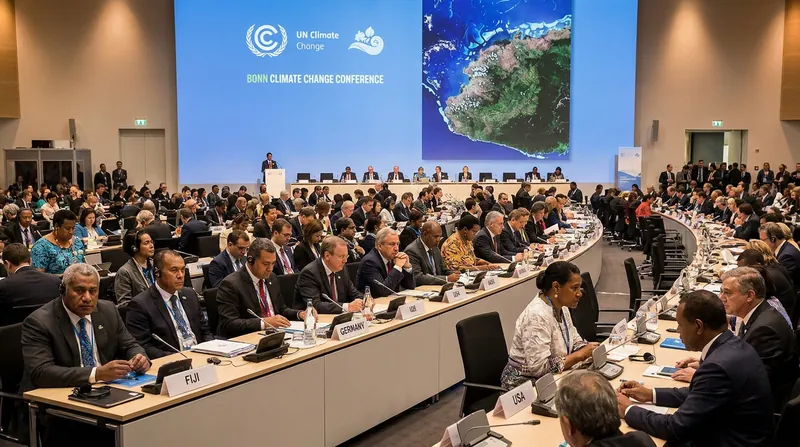
AIDelegates gather in the plenary hall during the opening days of the COP31 climate summit in Antalya, Turkey.From: Major Polluters Skip COP31 as UN Chief Warns Climate Crisis Is Outrunning Global Response The COP31 United Nations climate summit has officially opened in Antalya, Turkey, drawing delegates and leaders from nearly 200 nations to negotiate the next phase of global climate action. The critical conference commences amid significant geopolitical strain, with ongoing wars in the Middle East and Ukraine, international trade conflicts, and the recent United States presidential election heavily overshadowing the environmental agenda.
Under a unique power-sharing arrangement designed to resolve a previous hosting dispute, Turkey is hosting the event and managing voluntary action initiatives, while Australia leads the formal negotiations. COP31 President and Turkish Environment Minister Murat Kurum has emphasized the need to shift from past pledges to concrete implementation. A centerpiece of this effort is the new "35-by-35" goal, which aims to increase electricity's share of global energy consumption from its current level of around 20 percent to 35 percent by 2035.
The summit faces immediate diplomatic hurdles, most notably the glaring absence of an official U.S. delegation following President Donald Trump's formal withdrawal from the Paris Agreement earlier this year. Beyond the U.S. absence, negotiators are grappling with deep divisions over climate finance for developing nations, who are demanding that wealthy countries meet their $300 billion annual funding commitments. Delegates are also clashing over the transition away from fossil fuels, especially after last year's COP30 omitted explicit mentions of fossil fuels from its final text due to pushback from oil-producing states.
These tense negotiations unfold against a backdrop of escalating climate emergencies, as global temperatures are projected to breach the critical 1.5 degrees Celsius warming threshold. Driven by an exceptionally strong El Nino, 2026 is on track to potentially become the hottest year on record. While the landmark 2015 Paris Agreement successfully lowered long-term warming projections from catastrophic levels, current national commitments still place the world on a trajectory for a dangerous 2.6 degrees Celsius temperature rise by the end of the century.
1 update
Turkey Unveils National Energy Plan and Global Electrification Push Ahead of COP31
Key point: Turkey has announced plans to transition away from coal and is pushing for a 35 percent global electrification target by 2035 ahead of the COP31 climate summit.
Current national climate plans remain insufficient to limit warming to 1.5 degrees Celsius.From: Global Electrification Must Quadruple to Meet COP31 '35 by 35' Target, Analysis Shows Turkey has outlined plans for a paradigm shift in energy use, pushing for a global electrification drive ahead of hosting the COP31 climate summit in Antalya. Turkish Energy Minister Alparslan Bayraktar revealed the National Energy Plan 2040 on Friday, aiming to transition the country away from coal and reduce emissions by 40 percent by 2040. The initiative seeks to help Turkey fulfill its pledge to reach net-zero emissions by 2053.
Bayraktar stated that Turkey aims to reach 36 percent electrification by 2040, which includes increasing the number of electric vehicles on its roads from 500,000 to 20 million over the next 13 years. At the international level, the Turkish COP31 presidency will invite attending nations to sign a voluntary pledge to achieve a 35 percent global electrification rate by 2035. The presidency's priorities also include cutting the growth in waste generation and reducing energy intensity in buildings.
The push for clean electricity comes as the summit's co-hosts face scrutiny over their own fossil fuel reliance. Turkey remains Europe's largest coal power generator, and its national climate plan currently allows for an increase in greenhouse gas emissions. Meanwhile, Australia, which holds the role of president of negotiations for the summit, continues to be a major coal exporter.
The COP31 conference, running from November 9 to 20, takes place against a backdrop of geopolitical volatility, including conflicts in Iran and Gaza that are destabilizing global alliances. Experts note that the recent closure of the Strait of Hormuz has catalyzed the clean energy transition, making the ambitious electrification targets more attainable as countries seek energy security. The rapid deployment of large-scale battery storage and affordable solar power has further bolstered the feasibility of these goals.
Charts, maps and images
Timeline
November 2026
Greta Thunberg Issues Urgent Warning as UN Climate Talks Open in Antalya
AIAIAIAIInternational delegates and United Nations officials are convening to negotiate global climate action and address rising global temperatures.
AI- WMO warns of accelerating global heat and climate extremes as COP31 opensKey point: The World Meteorological Organization has warned that Earth is accumulating heat at an unprecedented rate, supercharging extreme weather events as global leaders gather for the COP31 climate summit.
- Global Delegations Assemble for COP31 Climate Summit in TurkeyKey point: The COP31 climate summit opened in Turkey with a focus on global electrification, though negotiations face significant hurdles from geopolitical conflicts, surging AI power demands, and disputes over climate finance.
Nations and regional leaders are holding preparatory meetings and negotiations surrounding the United Nations COP31 climate conference.
- COP31 climate summit opens in Antalya amid record global temperaturesKey point: Officials from around the world have gathered in Antalya, Turkey, for the UN COP31 climate summit to negotiate climate action as global temperatures hit record highs.
- COP31 Climate Summit Opens in Turkey Amid Geopolitical TensionsKey point: Delegates from nearly 200 nations have gathered in Antalya for the COP31 climate summit, aiming to implement concrete energy transitions despite overshadowing geopolitical conflicts and the absence of an official U.S. delegation.
Turkey is preparing its policy priorities and international proposals as the host of the upcoming COP31 climate conference.
- Turkey Unveils National Energy Plan and Global Electrification Push Ahead of COP31Key point: Turkey has announced plans to transition away from coal and is pushing for a 35 percent global electrification target by 2035 ahead of the COP31 climate summit.




October 2026
Turkey Replaces Fossil Fuel Phase-Out on COP31 Agenda With Voluntary Electrification Pledge
Pacific Leaders and Australia Open Pre-COP31 Summit in Fiji and Tuvalu to Set Climate Agenda

June 2026
COP31 Hosts Propose '35 by 35' Global Electrification Target to Accelerate Fossil Fuel Phaseout
AI
How the story developed
The initiative for the COP31 climate summit began on June 13 at the mid-year United Nations climate talks in Bonn, Germany. Co-hosts Australia and Turkey proposed a global target to increase the share of electricity in final energy consumption to 35 percent by 2035. The plan aimed to accelerate the transition away from fossil fuels through the rapid deployment of electric vehicles, heat pumps, and electric industrial processes. Climate campaigners welcomed the target but stated that electrification must reach 45 percent by 2035 to keep global warming below 1.5 degrees Celsius.
On October 5, Pacific Island leaders and Australian officials opened a Pre-COP31 summit in Suva, Fiji, and Funafuti, Tuvalu, to align their negotiating priorities. The delegations focused on securing binding commitments for climate finance and formalizing an ocean agenda to mandate marine conservation targets alongside greenhouse gas reductions. During the summit, human rights organizations demanded that industrialized nations match their diplomatic engagement with a phase-out of domestic fossil fuel extraction.
A turning point occurred on October 13 when the Turkish presidency formally removed a binding fossil fuel phase-out from the COP31 agenda, replacing it with the voluntary 35 percent electrification pledge. Climate advocates warned the pledge lacked a clean-energy mandate and could drive up coal and gas generation to meet new grid demand. Both host nations faced scrutiny, as Turkey expanded its coal capacity and Australia approved new coal-mine extensions. On November 6, Turkey announced a national energy plan to transition away from coal while continuing to push the global electrification target.
The COP31 summit officially opened in Antalya, Turkey, on November 8, drawing delegates from nearly 200 nations. Under a power-sharing arrangement designed to resolve a previous hosting dispute, Turkey hosted the event and managed voluntary action initiatives, while Australian minister Chris Bowen led the formal negotiations, a role complicated by his country's status as a major exporter of coal and gas. The conference was dubbed a Blue COP with a mandate to spotlight comprehensive ocean protections amid record-breaking marine heat. The summit commenced without an official United States delegation, following President Donald Trump's formal withdrawal from the Paris Agreement earlier in the year, leaving current national commitments on a trajectory for a 2.6 degrees Celsius temperature rise by the end of the century.
On November 9, the World Meteorological Organization reported that the Earth is accumulating heat at an accelerating rate, with 2026 on track to be one of the four warmest years on record at 1.47 degrees Celsius above pre-industrial levels. The agency noted that greenhouse gas concentrations, ocean heat content, and global sea levels reached unprecedented highs. United Nations Secretary-General António Guterres warned delegates that the planet has entered a new age of climate extremes and urged immediate action.
Negotiations faced immediate hurdles on November 9 as developing countries pushed to include climate finance on the official agenda, demanding that wealthy nations meet their $300 billion annual funding commitments. The diplomatic landscape was further complicated by energy market disruptions caused by a United States war with Iran, surging power demands from artificial intelligence, international trade conflicts, and ongoing wars in the Middle East and Ukraine. Despite these headwinds, the European Union announced its intention to push for accelerated global climate action.