
Moody's Upgrades India's 2027 Economic Growth Forecast to Seven Percent on Strong Domestic Demand
The credit rating agency raised its gross domestic product projection for the upcoming fiscal year, citing robust household consumption and resilient corporate investment. The revision signals confidence in the South Asian economy's ability to absorb external energy shocks and global trade friction.
By Bo Feng

Share this story
Moody's Investors Service revised its gross domestic product growth projection for India to 7.0 percent for the 2027 fiscal year. The credit rating agency published the upgraded estimate on Wednesday, signaling sustained confidence in the South Asian nation's economic trajectory.[1][2]
The revision represents a notable endorsement of India's domestic market resilience amid an otherwise fragmented global trade environment. Analysts at the firm anchored the upgrade to robust household consumption and steadily improving corporate investment dynamics across multiple sectors.[3][5]
"The Indian economy continues to demonstrate broad-based momentum," Moody's stated in its latest macroeconomic assessment. The agency highlighted that the country's growth drivers remain largely insulated from the immediate pressures of international supply chain disruptions.[1][8]
Household spending, which accounts for nearly sixty percent of the nation's gross domestic product, has maintained a steady upward trajectory throughout late 2026. Urban demand for consumer durables and a gradual recovery in rural purchasing power provided the foundation for the revised outlook.[6][9]
The 7.0 percent target places India firmly at the top of the growth tables among the Group of Twenty major economies. This sustained expansion rate outpaces both advanced western markets and regional peers currently navigating structural slowdowns.[2][7]
Infrastructure and Capital Expenditure
Government-led capital expenditure continues to serve as the primary engine for gross fixed capital formation across the subcontinent. Federal allocations for highways, railways, and digital infrastructure have crowded in private investment, creating a multiplier effect across the broader economy.[5][10]
Private sector balance sheets appear significantly healthier in the final quarter of 2026 than in previous expansion cycles. Corporate debt levels have moderated, giving large conglomerates the fiscal space required to initiate new greenfield manufacturing projects.[1][3]
Commercial bank credit growth has expanded at double-digit rates year-over-year, reflecting strong demand for working capital and term loans. The Reserve Bank of India has actively monitored this credit expansion to ensure systemic stability while supporting productive sectors.[4][6]
Foreign direct investment flows have also begun to stabilize following a period of global monetary tightening. Multinational corporations are increasingly executing diversification strategies, directing fresh capital into Indian electronics and semiconductor manufacturing facilities.[2][9]
The agency noted that this combination of public infrastructure spending and private capacity expansion creates a durable foundation for the 2027 fiscal year. This structural shift reduces the economy's historical reliance on services-led growth and broadens the industrial base.[5][8]
Resilience to External Shocks
India's economic framework has demonstrated unexpected durability against recent volatility in global energy markets. Despite importing more than eighty percent of its crude oil requirements, the domestic economy absorbed the late 2026 price fluctuations without derailing the broader recovery.[7][10]
Strategic procurement of discounted crude and a concerted push toward renewable energy capacity have partially insulated the industrial sector from spot market price spikes. These measures helped maintain manufacturing margins during the third quarter, supporting corporate profitability.[1][7]
The country's robust foreign exchange reserves, which surpassed $700 billion earlier in the year, provide the central bank with substantial ammunition to manage currency volatility. This buffer has deterred speculative attacks on the rupee during periods of dollar strength.[3][4]
Services exports, particularly in information technology and global capability centers, continue to generate reliable foreign exchange inflows. These structural surpluses in the services account consistently offset the traditional merchandise trade deficit, stabilizing the current account balance.[6][8]
Moody's assessment explicitly recognized this external sector stability as a key factor in the 7.0 percent forecast. The agency views the current balance of payments position as a structural strength rather than a cyclical anomaly.[2][7]
Inflation and Monetary Policy
Price stability remains a critical variable in realizing the 2027 growth projection. The Reserve Bank of India has maintained a cautious monetary stance throughout 2026, prioritizing the alignment of headline inflation with its mandated 4.0 percent target.[1][5]
Core inflation has remained relatively subdued, though volatile food prices continue to pose intermittent challenges to household budgets. A normal monsoon season in 2026 helped replenish reservoirs and stabilize agricultural output, mitigating some rural distress and easing food price pressures.[3][9]
The central bank's refusal to prematurely lower benchmark interest rates has anchored inflation expectations among businesses and consumers. This policy credibility ensures that the projected 7.0 percent expansion represents real economic value rather than nominal price inflation.[4][10]
Analysts expect the monetary policy committee to retain its focus on the withdrawal of accommodation until durable disinflation is achieved. This steady regulatory environment provides the predictability that institutional investors require for long-term capital commitments.[2][6]
Sectoral Performance Shifts
The manufacturing sector has shown particular vigor, outpacing historical averages as production-linked incentive schemes gain traction. Government subsidies targeting electronics, pharmaceuticals, and automotive components have successfully localized several critical supply chains over the past twelve months.[1][3]
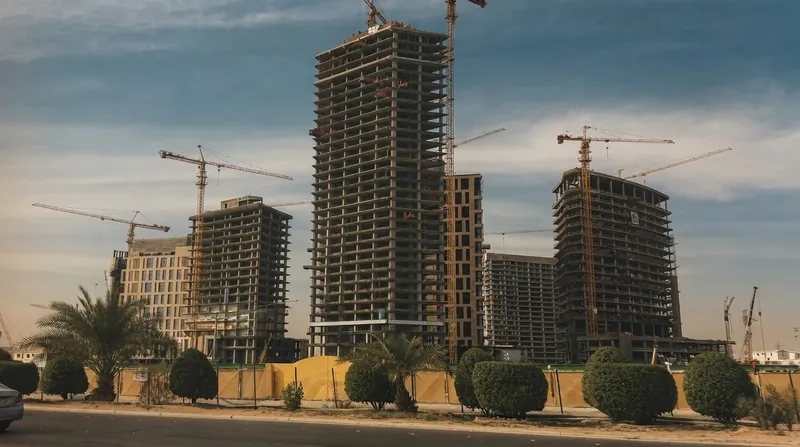
Real estate and construction also registered robust activity, driven by a post-pandemic surge in residential housing demand across tier-one and tier-two cities. This construction boom has generated significant secondary demand for steel, cement, and heavy machinery.[6][9]
Conversely, the agricultural sector's performance remains highly variable, underscoring the uneven nature of the current economic expansion. Policymakers are increasingly focused on improving irrigation infrastructure and cold storage logistics to smooth out these seasonal output fluctuations.[4][8]
Structural Risks and Future Indicators
Despite the optimistic baseline, the rating agency outlined several downside risks that could challenge the 7.0 percent trajectory. Unpredictable weather patterns driven by climate change remain a persistent threat to agricultural yields and rural consumption.[1][8]
Geopolitical fragmentation and the potential for renewed trade protectionism in western markets could also constrain India's export growth. While the domestic market is large, achieving sustained high growth requires deeper integration into global value chains and export markets.[3][7]
Labor market dynamics present another structural hurdle, as the economy must generate millions of formal jobs annually to absorb the expanding working-age population. The manufacturing sector's ability to transition from capital-intensive to labor-intensive production remains largely untested.[5][9]
The upcoming federal budget for the 2027 fiscal year will serve as the next major policy checkpoint for institutional investors. Markets will scrutinize the government's commitment to fiscal consolidation while maintaining the aggressive infrastructure rollout that has driven recent growth.[2][10]
If the administration successfully navigates these structural challenges, the 7.0 percent expansion rate could establish a new baseline for the remainder of the decade. The incoming macroeconomic data over the next two quarters will determine whether this momentum translates into permanent capacity additions.[1][4]
Key points
- Moody's upgraded India's gross domestic product growth forecast for the 2027 fiscal year to 7.0 percent.
- The revision is driven by robust household consumption and a sustained recovery in corporate investment dynamics.
- India's economy demonstrated significant resilience against recent global energy shocks and international supply chain disruptions.
- The rating agency warned that unpredictable weather patterns and geopolitical fragmentation remain structural risks to the outlook.
Open questions
- How potential shifts in western trade policies following the 2026 elections will impact India's export volumes.
- Whether the manufacturing sector can generate sufficient formal employment to match the expanding working-age population.
- The exact impact of changing climate patterns on agricultural yields for the upcoming harvest season.
Timeline
Early 2026
Global energy markets experience volatility, testing the resilience of emerging market economies.
Mid 2026
The Reserve Bank of India maintains benchmark interest rates to anchor inflation near its 4.0 percent target.
November 2026
Moody's upgrades India's FY2027 economic growth projection to 7.0 percent.
- Macroeconomic Analysts
- Financial analysts focusing on the structural drivers of India's domestic growth.
- Global Risk Assessors
- Strategists evaluating India's vulnerability to external shocks and geopolitical shifts.
- Domestic Policy Watchers
- Observers focusing on the central bank's inflation management and government infrastructure spending.
Perspectives this story doesn't cover
- Agricultural Sector Representatives
- Small and Medium Enterprise Owners
Sources
Source coverage
10 outlets
3 viewpoints surfaced










- [1]LivemintMacroeconomic Analysts
Moody's ups India's FY27 growth forecast to 7% on strong economic momentum, warns of risks
Read on Livemint → - [2]Fortune IndiaMacroeconomic Analysts
Moody's Upgrades India's FY27 Growth Forecast to 7% Amid Economic Resilience
Read on Fortune India → - [3]Business StandardMacroeconomic Analysts
Moody's retains India's FY27 growth forecast at 7% on resilient demand
Read on Business Standard → - [4]The Times of IndiaDomestic Policy Watchers
Moody's raises India's FY27 growth forecast to 7% on strong economic momentum
Read on The Times of India → - [5]NDTV ProfitMacroeconomic Analysts
Moody's Hikes India's FY27 GDP Growth Estimate To 7% On Investment, Consumption Dynamics
Read on NDTV Profit → - [6]ThePrintGlobal Risk Assessors
Moody's pegs India's FY27 GDP growth at 7 pc, aided by robust consumption, investment
Read on ThePrint → - [7]India TodayGlobal Risk Assessors
Moody's upgrades India's growth forecast to 7%, sees resilience to global shocks
Read on India Today → - [8]The TribuneDomestic Policy Watchers
Moody's ups India's FY27 growth estimate to 7 pc on broad-based momentum
Read on The Tribune → - [9]ANI NewsDomestic Policy Watchers
Moody's raises India's growth forecasts to 7% on strong demand, investment
Read on ANI News → - [10]ETV BharatDomestic Policy Watchers
Moody's Ups India's FY27 Growth Estimate To 7 Pc On Broad-Based Momentum
Read on ETV Bharat →
More in Business
See all →Tax Enforcement
China Collects $24 Billion in Historic Tax Crackdown on Wealthy Offshore Trusts
5 sources

Fintech Expansion
Airwallex Pledges $1.6 Billion Singapore Expansion Over Five Years
5 sources

Consumer Debt
US Household Debt Reaches $19.1 Trillion as Credit Card Balances Hit Record High
6 sources

AI Infrastructure
SoftBank Logs $7.4 Billion Quarterly Loss as US Data Center and AI Investments Swell
6 sources

Comments
Every angle. Every day.
Get Business stories with full source coverage and perspective breakdowns, free every day.