
full timeline
Bundibugyo Ebola outbreak
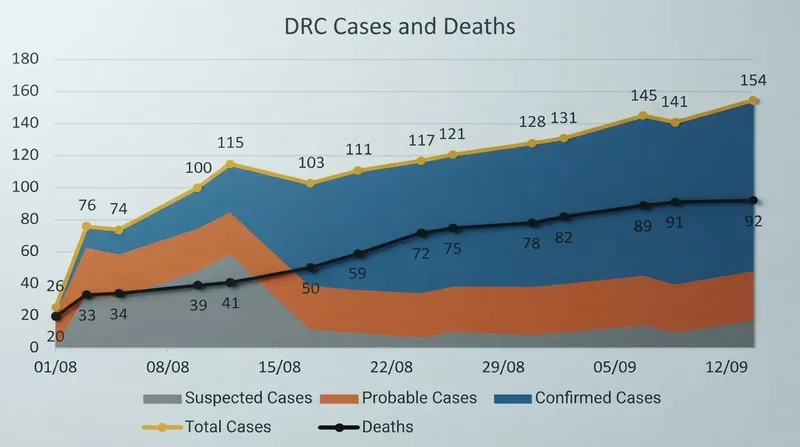
The ongoing Bundibugyo Ebola epidemic in the Democratic Republic of Congo has reached a grim new milestone, with confirmed infections exceeding 11,000 and fatalities nearing 5,400.
Follow Bundibugyo Ebola outbreak in the Factlen app and get an alert when there is news. Get the app
Share this story
Latest report
Democratic Republic of Congo Ebola Outbreak Surpasses 11,000 Cases and 5,300 Deaths
The ongoing Bundibugyo Ebola epidemic in the Democratic Republic of Congo has reached a grim new milestone, with confirmed infections exceeding 11,000 and fatalities nearing 5,400. Health officials are urgently calling for expanded deployment of the Ervebo vaccine to contain the deadliest regional outbreak on record.
- The Democratic Republic of Congo has officially recorded over 11,000 cases and 5,387 deaths in the ongoing Bundibugyo Ebola outbreak.
- Health officials are urgently calling for the expanded deployment of the Ervebo vaccine beyond the current ring vaccination strategy.
- The unprecedented scale of the 2026 epidemic has severely strained local medical infrastructure and disrupted regional economies.
- Cross-border transmission remains a critical concern, with heightened surveillance implemented in neighboring countries to prevent further spread.
The Democratic Republic of Congo has officially recorded more than 11,000 cases in its current Ebola outbreak, cementing the crisis as the deadliest regional epidemic in recorded history. Government data released on Wednesday confirmed the grim milestone alongside a mounting death toll of 5,387 individuals.[1][3]
The unprecedented scale of the crisis has overwhelmed local medical infrastructure across the central African nation. Health ministries are struggling to maintain isolation wards and contact-tracing networks as the Bundibugyo virus continues its relentless spread through densely populated provinces.[2][4]
"This is a catastrophic threshold that demands an immediate, coordinated global response," a spokesperson for the World Health Organization stated in a recent epidemiological update. The agency noted that transmission chains remain active in several previously unaffected health zones.[6]
Expanding the vaccination perimeter
In response to the escalating caseload, infectious disease experts are urgently advocating for the wider deployment of the Ervebo vaccine. The immunization, which has proven highly effective in previous outbreaks, is currently being administered under a ring vaccination strategy targeting direct contacts of confirmed patients.[5]
However, public health advocates argue that the sheer volume of 2026 infections necessitates a broader approach. Expanding the vaccination perimeter to include entire high-risk communities could create a crucial buffer against further viral transmission across the region.[5]
Logistical hurdles continue to impede the rapid distribution of the vaccine across the Democratic Republic of Congo. Cold-chain storage requirements and ongoing regional instability have severely complicated efforts to deliver doses to remote and conflict-affected areas.[1][5]
Despite these challenges, international health coalitions are mobilizing emergency resources to support the Congolese government. Additional mobile clinics and specialized treatment centers are being established in the hardest-hit districts to alleviate the burden on existing hospitals.[2][6]
The Bundibugyo strain challenge
The current epidemic is driven by the Bundibugyo ebolavirus, a distinct species within the Ebolavirus genus that has historically caused smaller, localized outbreaks. Its unprecedented proliferation in 2026 has alarmed virologists and epidemiologists tracking the pathogen's behavior.[6]
The Bundibugyo strain was first identified in 2007 in Uganda, but it has never before reached this level of sustained transmission. The current 2026 outbreak has seen the virus adapt to denser urban environments, complicating traditional containment strategies that were designed for rural settings.[6]
Unlike the Zaire ebolavirus, which was responsible for the devastating 2014 West African epidemic, the Bundibugyo strain presents unique clinical and epidemiological challenges. Researchers are closely monitoring the virus for any genetic mutations that might enhance its transmissibility or virulence.[5][6]
"We are dealing with a pathogen that is exploiting the vulnerabilities of a fractured health system," an infectious disease specialist told Al Jazeera. The specialist emphasized that community engagement and trust-building are just as critical as medical interventions in halting the outbreak.[1]
Misinformation and fear continue to drive some symptomatic individuals away from official treatment centers. Public health campaigns are working tirelessly to educate communities about the importance of early diagnosis and safe burial practices to prevent further exposure.[3][4]
Cross-border transmission risks
The porous borders of the Democratic Republic of Congo pose a significant risk for the international spread of the virus. The World Health Organization has already documented cases linked to the Bundibugyo strain in neighboring Kenya and Nigeria, prompting heightened surveillance across the continent.[6]
Regional health authorities have implemented strict screening protocols at major border crossings and transit hubs. Thermal imaging cameras and health declaration forms are being utilized to identify potentially infected travelers before they can introduce the virus to new populations.[1][6]
Despite these precautions, the sheer volume of cross-border trade and migration makes complete containment incredibly difficult. Epidemiologists warn that a single undetected case in a major urban center could ignite a secondary epidemic with devastating consequences.[2][5]
The international community has pledged increased financial and technical support to bolster regional preparedness. Donor nations are funneling millions of dollars into emergency response funds to ensure that neighboring countries have the resources necessary to detect and isolate cases rapidly.[3][4]
The human toll and economic impact
Beyond the staggering mortality figures, the Ebola outbreak is inflicting profound social and economic damage on the Democratic Republic of Congo. The loss of 5,387 lives has left thousands of children orphaned and decimated the agricultural workforce in affected provinces.[1][4]
Local economies have ground to a halt as markets close and transportation networks are disrupted by quarantine measures. The World Bank estimates that the epidemic could cost the region hundreds of millions of dollars in lost productivity and trade revenue.[2][3]
Survivors of the virus also face significant long-term challenges, including persistent joint pain, vision problems, and severe social stigma. Comprehensive aftercare programs are desperately needed to support these individuals as they attempt to reintegrate into their communities.[1][6]
"The scars left by this outbreak will take generations to heal," a local community leader told Newsday. The leader stressed that international aid must extend beyond the immediate medical crisis to address the underlying poverty and infrastructure deficits that allowed the virus to thrive.[2]
Accelerating clinical research
The unprecedented scale of the 2026 epidemic has catalyzed a surge in clinical research aimed at developing new therapeutics and diagnostics. Several experimental antiviral medications are currently undergoing expedited clinical trials in Congolese treatment centers.[5][6]
One promising antiviral candidate has shown a 40 percent reduction in mortality when administered within the first three days of symptom onset. However, the drug remains in limited supply, and manufacturing bottlenecks have delayed its widespread distribution to the most affected provinces.[5]
Researchers are also working to refine rapid diagnostic tests that can deliver results in a matter of minutes, rather than hours or days. Faster identification of infected individuals is crucial for breaking transmission chains and initiating life-saving supportive care.[5]
The World Health Organization is coordinating these research efforts to ensure that data is shared transparently and ethically. The agency has established strict protocols for the compassionate use of experimental treatments in emergency settings.[6]
While these scientific advancements offer a glimmer of hope, they are not a substitute for robust public health infrastructure. Experts agree that the ultimate solution to the Ebola crisis lies in strengthening local healthcare systems and improving baseline sanitation.[3][5]
The path forward
As the Democratic Republic of Congo grapples with the grim reality of 11,000 confirmed cases, the focus remains on scaling up the immediate response while laying the groundwork for long-term resilience. The deployment of the Ervebo vaccine must be accelerated to protect frontline workers and vulnerable populations.[1][5]
International solidarity is more critical now than ever before. Donor nations, non-governmental organizations, and global health agencies must maintain their commitment to the region long after the current outbreak is brought under control.[2][4]
Sources
- [1]Al Jazeera — Ebola cases in DR Congo pass 11,000, with 5,387 deaths Read on Al Jazeera →
- [2]Newsday — Ebola tops 11,000 cases in Congo's deadliest outbreak Read on Newsday →
- [3]Daily Maverick — Congo's Ebola cases surpass 11,000, government data show Read on Daily Maverick →
- [4]The Pioneer — Congo's Ebola outbreak passes 11,000 cases with 5,387 dead Read on The Pioneer →
- [5]CIDRAP — Wider use of Ervebo vaccine urged as DR Congo Ebola outbreak nears 11,000 cases Read on CIDRAP →
- [6]World Health Organization — Ebola disease caused by Bundibugyo virus, Democratic Republic of the Congo, Kenya and Nigeria Read on World Health Organization →
What to watch
- Health officials estimate it may take several months and up to 1,000 enrolled patients to definitively prove the efficacy of MBP134 and remdesivir in the PARTNERS clinical trial.
- Isolated contacts in Nigeria and Kenya are undergoing 21-day monitoring periods to detect any secondary transmission.
- Moderna is advancing an mRNA-based Bundibugyo vaccine candidate that received ethical approval for Phase Ib trials in Uganda.
- Social workers are attempting family reunification for separated infants currently cared for in specialized UNICEF nurseries.
Earlier updates
1 update
British Healthcare Worker Evacuated to UK After Contracting Ebola in DR Congo
Key point: A British healthcare worker infected with Ebola in the Democratic Republic of the Congo has been evacuated to the UK for specialized treatment.
AIIllustration: Researchers are working to refine rapid diagnostic tests to quickly identify infected individuals.From: Democratic Republic of Congo Ebola Outbreak Surpasses 11,000 Cases and 5,300 Deaths A British healthcare worker who contracted Ebola in the Democratic Republic of the Congo has been evacuated to the United Kingdom for specialized medical care. The patient, whose identity has not been disclosed, is the first British national infected during the current outbreak and has arrived in the UK for treatment.
The UK government confirmed the evacuation, stating that well-established procedures for dealing with infectious diseases have been activated and that the risk to the general public remains low. The patient is expected to be treated at a high-level isolation unit, such as the specialized facility at the Royal Free Hospital in London, which previously handled cases during the 2014-2015 West Africa outbreak. Health officials emphasized that patients can be transported under carefully controlled conditions with strict infection prevention measures.
The evacuation marks the latest instance of an infected individual being medically transferred to Europe during the current outbreak, following previous cases treated in countries including France and Switzerland. The British healthcare worker had been deployed to the DR Congo by a humanitarian organization to assist in responding to the escalating health crisis. Experts noted that while the infection of a frontline worker is deeply concerning, it is not entirely unexpected given the extremely challenging conditions they face.
The ongoing Ebola outbreak in the DR Congo, caused by the Bundibugyo virus, is the largest and deadliest in the country's history, with over 10,000 recorded cases and more than 5,000 deaths. The virus, which spreads through direct contact with infected bodily fluids, currently has no approved treatment, though vaccine trials are underway. The geographic extension of the outbreak has been unprecedented, spreading to multiple provinces and neighboring countries like Kenya and Uganda.
1 update
WHO Authorizes Clinical Trials for Two New Bundibugyo Ebola Vaccines
Key point: The World Health Organization has approved the clinical evaluation of two new vaccines specifically designed to target the deadly Bundibugyo Ebola virus in the Democratic Republic of the Congo.
AIHealth workers in the DRC are preparing to administer two new experimental vaccines targeting the Bundibugyo ebolavirus.From: WHO Authorizes Human Clinical Trials for Two New Ebola Vaccines to Halt DRC Outbreak The World Health Organization has authorized clinical trials for two new candidate vaccines to combat the ongoing Bundibugyo Ebola outbreak. The vaccines will be added to the ongoing Tumaini clinical trial in the Democratic Republic of the Congo.
WHO Director-General Tedros Adhanom Ghebreyesus announced that expert groups recommended the inclusion of the ChAdOx1 BDBV vaccine, developed by the University of Oxford and the Serum Institute of India, alongside Moderna's mRNA-1469 candidate. The trial is being led by the DRC's National Institute for Biomedical Research with support from international partners.
This marks the first time vaccines specifically designed to protect against the Bundibugyo virus will be evaluated during an active outbreak. The Tumaini trial previously relied on Ervebo, a vaccine approved for the Zaire ebolavirus strain but not specifically targeted at the Bundibugyo variant.
The current Ebola epidemic, which began in the DRC in May 2026, is the fastest-growing on record, with over 10,000 infections and more than 5,000 deaths reported. While the DRC remains the epicenter, the virus has also spread to neighboring countries, including Kenya, Nigeria, and Uganda.
2 updates
DRC Ebola Outbreak Surpasses 10,000 Cases as Vaccine Trials Begin
Key point: The DRC's Ebola outbreak has exceeded 10,000 cases and nearly 4,900 deaths as health officials begin testing the Ervebo vaccine against the Bundibugyo strain.
The Democratic Republic of the Congo's Ebola outbreak has surpassed 10,000 confirmed cases, with government data reporting 10,060 infections and 4,887 deaths. As the crisis escalates, testing of the Ervebo vaccine has begun to determine if it can provide protection against the rare Bundibugyo strain driving the epidemic.
The outbreak, which was first detected in May, is now the deadliest in the country's history and has spread beyond its borders. Cases have been recorded in Kenya, Uganda, and Nigeria, prompting the World Health Organization to warn of a complex containment task across the continent.
Efforts to control the virus have been hampered by a lack of approved treatments for the Bundibugyo variant, as well as violence and public distrust in the hardest-hit eastern provinces. Meanwhile, a Swiss woman who contracted the virus was evacuated from Nigeria to Geneva, leading Nigerian authorities to monitor dozens of her contacts.
WHO Warns Central Africa Ebola Outbreak Surpasses 10,000 Cases and 5,000 Deaths
Key point: The Ebola outbreak in Central Africa has reached a grim milestone of over 10,000 cases and nearly 5,000 deaths, prompting urgent warnings from the WHO.
AIIllustration: Health officials have intensified border screenings to intercept the virus as it spreads outward from the DRC.From: DRC Ebola Outbreak Surpasses 10,000 Cases as Bundibugyo Strain Spreads Without Approved Vaccine The Ebola outbreak in Central Africa has surpassed 10,000 confirmed cases and nearly 5,000 deaths, marking the deadliest outbreak in the Democratic Republic of Congo's history. The World Health Organization and other health officials warned that the unprecedented geographic spread of the virus presents a complex challenge, with cases now detected in Kenya, Nigeria, and Uganda.
The current outbreak, caused by the rare Bundibugyo strain of the virus, has no approved vaccines or treatments. Response efforts have been severely hampered by armed conflict, weak contact tracing, and violence against health workers in the affected regions.
The crisis has disrupted routine healthcare across the DRC, while health officials urge countries globally to increase their preparedness levels. Vaccine trials are currently underway to determine if existing treatments can provide protection against the Bundibugyo variant.
Charts, maps and images
Timeline
November 2026
Democratic Republic of Congo Ebola Outbreak Surpasses 11,000 Cases and 5,300 Deaths
WHO Authorizes Human Clinical Trials for Two New Ebola Vaccines to Halt DRC Outbreak
AI- British Healthcare Worker Evacuated to UK After Contracting Ebola in DR CongoKey point: A British healthcare worker infected with Ebola in the Democratic Republic of the Congo has been evacuated to the UK for specialized treatment.
WHO Authorizes Clinical Trials for Two New Bundibugyo Ebola Vaccines
- WHO Authorizes Clinical Trials for Two New Bundibugyo Ebola VaccinesKey point: The World Health Organization has approved the clinical evaluation of two new vaccines specifically designed to target the deadly Bundibugyo Ebola virus in the Democratic Republic of the Congo.
Africa CDC Confirms 5,376 Fatalities in Expanding Bundibugyo Ebola Epidemic

October 2026
DRC Ebola Outbreak Surpasses 10,000 Cases as Bundibugyo Strain Spreads Without Approved Vaccine
AI- DRC Ebola Outbreak Surpasses 10,000 Cases as Vaccine Trials BeginKey point: The DRC's Ebola outbreak has exceeded 10,000 cases and nearly 4,900 deaths as health officials begin testing the Ervebo vaccine against the Bundibugyo strain.
- WHO Warns Central Africa Ebola Outbreak Surpasses 10,000 Cases and 5,000 DeathsKey point: The Ebola outbreak in Central Africa has reached a grim milestone of over 10,000 cases and nearly 5,000 deaths, prompting urgent warnings from the WHO.
Nigeria Evacuates First Ebola Patient to Switzerland for Continued Treatment
- Nigeria Evacuates First Ebola Patient to Switzerland for Continued TreatmentKey point: A Swiss citizen treated for Ebola in Nigeria has been medically evacuated to Switzerland along with her husband, while Nigerian authorities continue to monitor 52 local contacts.
- Congo Ebola Outbreak Surpasses 10,000 Cases Amid Regional SpreadKey point: The Ebola outbreak in the Democratic Republic of Congo has reached 10,000 confirmed cases as authorities struggle to contain the regional spread.
Uganda Enforces 21-Day Quarantine for Travelers Arriving From DR Congo
- Uganda Enforces 21-Day Quarantine for Travelers Arriving From DR CongoKey point: Uganda has mandated a 21-day quarantine at the traveler's expense for citizens returning from the Democratic Republic of Congo amid regional Ebola concerns.
WHO Launches Tumaini Trial for Bundibugyo Ebola Vaccine in DR Congo
- WHO Launches Tumaini Trial for Bundibugyo Ebola Vaccine in DR CongoKey point: The World Health Organization has initiated a Phase 2/3 clinical trial in the Democratic Republic of the Congo to test a vaccine against the Bundibugyo Ebola strain.
- Kenya Records Second Ebola Bundibugyo DeathKey point: A 65-year-old woman has become Kenya's second Ebola Bundibugyo fatality as the outbreak in the DRC surpasses 9,700 cases.
WHO warns of 'complex' Ebola outbreak as Nigeria confirms first case of Bundibugyo strain
- WHO warns of 'complex' Ebola outbreak as Nigeria confirms first case of Bundibugyo strainKey point: The World Health Organization warned of a complex regional outbreak after Nigeria confirmed its first imported case of the Bundibugyo Ebola strain.
Laboratory Analysis Confirms Bundibugyo Strain in Nigeria's Expanding Ebola Outbreak
AIAINigeria Detects First Ebola Case in New Outbreak After Traveler Arrives From Uganda
Kenya Identifies Eighth Ebola Case as Outbreak Spreads to Healthcare Workers
Kenya Confirms Third Ebola Case Near Border as 127 Contacts Enter Quarantine
AIAIDR Congo Ebola Outbreak Spreads to Eighth Province Bordering Central African Republic
Oxford Bundibugyo Ebola Vaccine Candidate Enters Clinical Trials in Uganda
AIAI



How the story developed
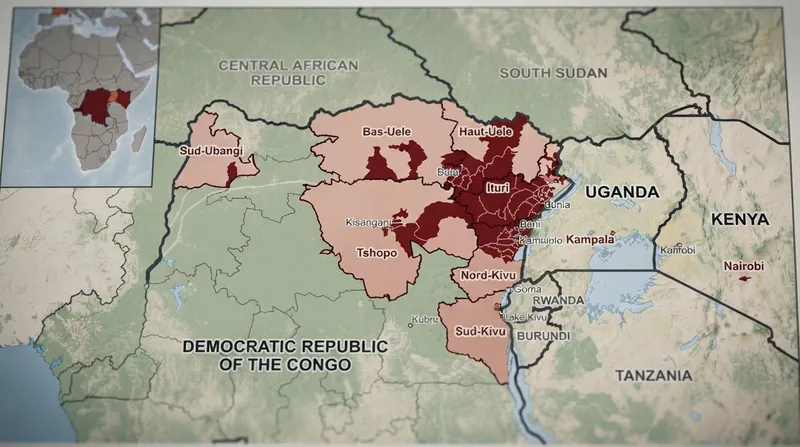
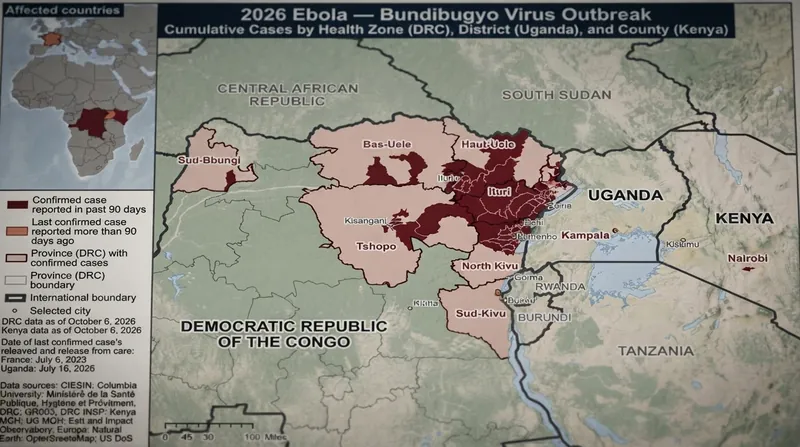
The outbreak of the Bundibugyo ebolavirus began in May 2026 in the Democratic Republic of the Congo. Lacking an approved vaccine or targeted treatment, the virus spread rapidly. On July 5, the World Health Organization launched the PARTNERS clinical trial in the Democratic Republic of the Congo to evaluate the monoclonal antibody MBP134 and the antiviral remdesivir. By August 29, the outbreak had surpassed 5,700 confirmed cases and 2,700 deaths, becoming the fastest-moving filovirus event in recorded history. Health officials estimated that only 30 to 40 percent of actual infections had been detected, with community mistrust and regional conflict hampering contact tracing.
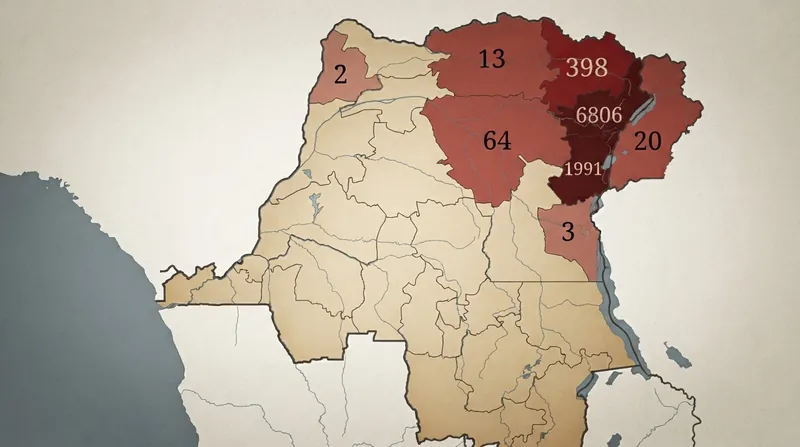
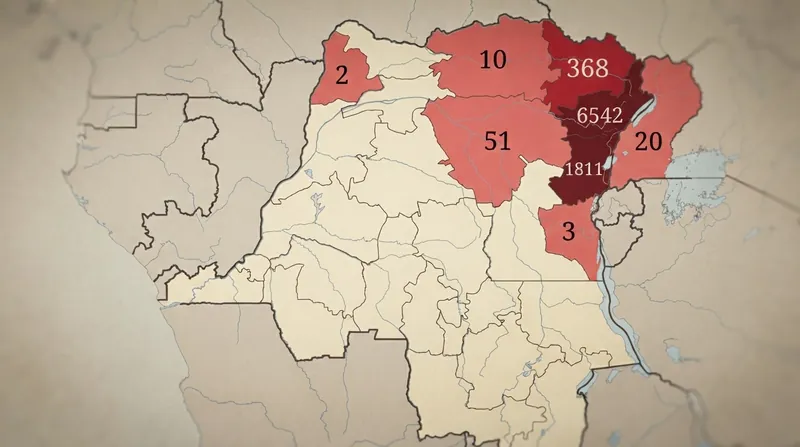
Throughout September, the virus expanded across the country. By September 13, infections reached 61 health zones, and by September 26, the total approached 7,900 cases with nearly 3,800 deaths across 63 health zones. On September 28, NanoViricides began dosing patients in a Phase II trial for NV-387, an oral antiviral gummy, in Ituri province. By October 6, the death toll surpassed 4,000 as cases surged in the rebel-held North Kivu province, where the destruction of a transit center in a displacement camp disrupted screening. The outbreak heavily impacted minors, who accounted for more than 25 percent of cases and roughly 33 percent of fatalities. UNICEF established 12 specialized nurseries adjacent to treatment centers to care for the more than 1,900 children orphaned or separated by the virus.
The epidemic crossed international borders in October. On October 6, Kenya confirmed its first imported case after a patient traveling from the Democratic Republic of Congo died in Nairobi 48 hours after arrival. By October 17, Kenya identified its third case in a relative of the initial victim, and later that day confirmed four new infections, including three medical workers, marking the country's first local transmissions. A 65-year-old woman became Kenya's second fatality on October 24. Kenya's caseload reached eight by October 19, with 127 contacts placed in a mandatory 21-day quarantine.
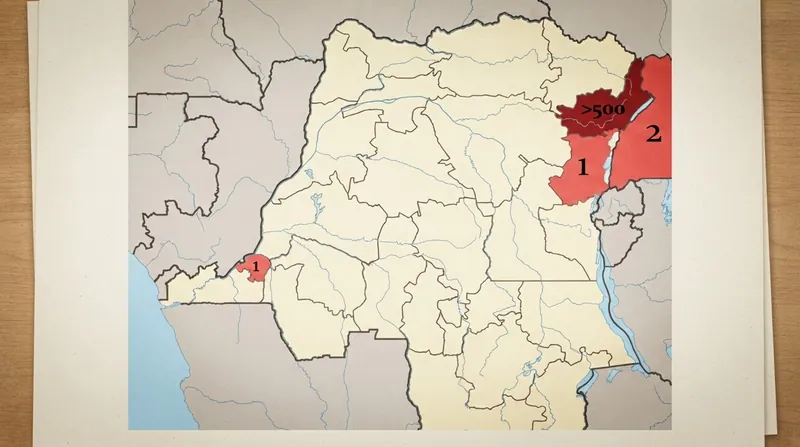
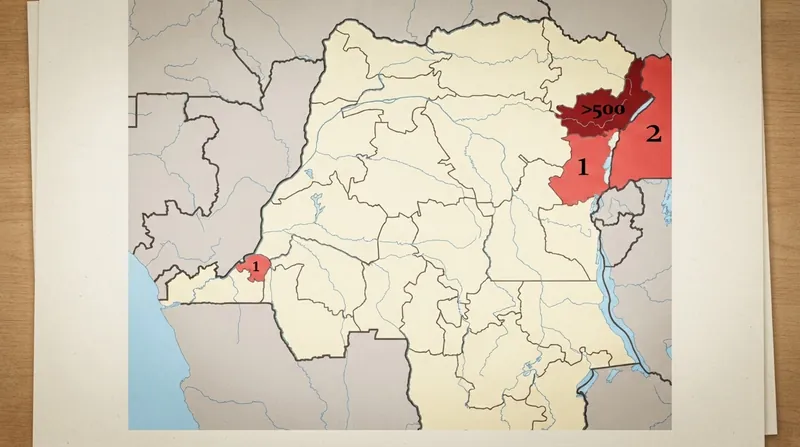
Within the Democratic Republic of the Congo, the virus reached North Ubangi on October 16, the eighth affected province, positioning the outbreak on the border of the Central African Republic. In neighboring Uganda, a Phase I clinical trial for an Oxford-developed targeted Bundibugyo vaccine launched on October 6, supported by 620,000 stockpiled doses manufactured by the Serum Institute of India. Uganda subsequently deployed thermal scanners at major border crossings and, on October 26, enforced a mandatory 21-day quarantine at the traveler's expense for citizens returning from the Democratic Republic of Congo.
The virus reached a fifth country when a traveler who had transited through Uganda arrived in Abuja, Nigeria, on October 5. Nigerian authorities confirmed the Bundibugyo strain on October 21 and isolated 44 contacts, which later increased to 52. The patient, a Swiss citizen, was medically evacuated to Switzerland along with her husband on October 27. As the regional crisis deepened, the Africa CDC convened an emergency virtual summit for continental health ministers on October 28. On the same day, the World Health Organization initiated the Phase 2/3 Tumaini trial for a vaccine in the Democratic Republic of the Congo, and health officials began testing the Ervebo vaccine against the Bundibugyo strain as total cases crossed the 10,000 mark.