
UNICEF Reports Over 1,900 Children Orphaned or Separated in Eastern DR Congo Ebola Outbreak
More than 1,900 children have lost parents or caregivers to the ongoing Ebola outbreak in the Democratic Republic of the Congo. UNICEF is establishing specialized nurseries near treatment centers to care for separated infants while social workers attempt family reunification.

The ongoing Bundibugyo Ebola outbreak in the Democratic Republic of the Congo has separated or orphaned more than 1,900 children since May 2026. Data compiled by UNICEF and provincial social affairs teams shows that 1,581 of these children are in Ituri province, with another 322 identified in North Kivu.[1][4]
The true number of unaccompanied minors is likely higher, as current figures only reflect areas where UNICEF operates alongside the Provincial Division of Social Affairs. When parents contract the virus or die, fear and social stigma often deter extended family members and neighbors from offering shelter.[1][2]
"For children, Ebola can set off a rapid chain of harm," said UNICEF Director of Emergency Operations Lucia Elmi following a visit to Bunia. "A parent falls ill and a child may be exposed. That parent is then hospitalized or dies, and the child is left without the person they depend on."[1][3]
Elmi noted that at the exact moment a child most needs support, the fear of infection leaves relatives afraid to step in. Without a primary caregiver, these children face acute isolation and are less likely to be reached by contact tracers or brought to care if they develop symptoms.[1][2]
An additional 214 children living and working on the streets in Bunia have been identified as needing immediate protection. UNICEF warns that these unaccompanied minors face heightened risks of exploitation, violence, and malnutrition as the regional economy contracts under the strain of the epidemic.[1][4]
Disproportionate Toll on the Young
The crisis has taken an exceptionally severe physical toll on young populations across the eastern provinces. Epidemiological records reveal that at least 2,076 children had contracted Ebola during this wave, resulting in 1,162 child fatalities as of September 29, 2026.[1][2]
Children make up over 25 percent of confirmed cases but account for roughly 33 percent of all deaths in the current outbreak. Young children under five face a mortality rate of approximately 70 percent, up from 60 percent just weeks prior, highlighting the aggressive nature of the Bundibugyo strain.[1][5]
Many of these young patients are dying before accessing formal medical evaluation or specialized treatment centers. The rapid onset of symptoms, combined with disruptions to routine pediatric care and widespread fear of health facilities, has severely delayed early interventions that could improve survival odds.[1][2]
In many cases, children succumb to the virus before the pathogen is ever detected by local health authorities. The collapsing primary healthcare system struggles to maintain routine services, leaving vulnerable populations without a safety net during the crisis.[2][6]
Nurseries Provide a Safe Haven
In response to the growing number of unaccompanied minors, UNICEF is establishing specialized nurseries adjacent to Ebola treatment facilities. These 12 supported nurseries ensure vulnerable infants and uninfected children receive dedicated nutrition, psychological support, and continuous health monitoring.[2][5]
The facilities provide a critical buffer for children who have been exposed to the virus, who are on their own, or whose parents are currently in isolation. Caregivers at the nurseries wear protective equipment while feeding and playing with the children, maintaining a safe environment while monitoring for any signs of fever.[2]
While children are cared for in these safe spaces, social workers coordinate long-term family tracing, foster placement, and community reintegration efforts. Feza, a nursery supervisor in Bunia, noted that every time a child walks through the doors, the staff holds onto the hope that the parents will recover and the family will be reunited.[2][5]
One such case is Lina, a seven-month-old baby who survived Ebola after losing her mother to the disease. Her grandfather lives nearby and has visited her twice at a UNICEF-supported nursery, with social workers hoping the two will be permanently reunited soon.[1][2]
A Complex Operating Environment
The Democratic Republic of the Congo officially declared the Ebola Virus Disease outbreak on May 15, 2026, following laboratory confirmation of the Bundibugyo strain. As of late September, the outbreak had expanded to 63 health zones across seven provinces, with 8,067 confirmed cases and 3,901 deaths reported.[6][7]
Insecurity, population movements, and limited access to health services continue to complicate response efforts and increase the risk of further spread. The World Health Organization declared the outbreak a Public Health Emergency of International Concern on May 17, 2026, citing the risk of regional transmission.[6][7]
The risk of international spread remains a significant concern for health officials, as population movements and regional connectivity facilitate the virus's reach. Neighboring countries, including Uganda and Kenya, have heightened their surveillance measures after recording imported cases linked to the Congolese outbreak.[6][7]
There is currently no approved vaccine or specific treatment for the Bundibugyo virus, forcing medical teams to rely on early supportive care and rehydration to improve survival rates. This lack of targeted therapeutics makes early detection and isolation the primary tools for breaking chains of transmission.[6][7]
The Long Road to Recovery
The outbreak persists in Ituri and North Kivu, provinces that are already home to some 4.4 million displaced people fleeing armed conflict. The convergence of mass displacement, a highly lethal pathogen, and a collapsing primary healthcare system has created unprecedented challenges for humanitarian organizations.[2][6]
UNICEF has called for urgent funding to protect children left without care as the epidemic stretches into its fifth month. The organization emphasizes that treating a child for Ebola is not enough; comprehensive support systems are required to address the cascading social impacts of the disease.[1][2]
The long-term recovery of these orphaned children will depend on sustained psychosocial care and successful integration into extended families or foster homes. Until the outbreak is contained, the nurseries will remain a vital lifeline for the youngest victims of the Democratic Republic of the Congo's seventeenth Ebola epidemic.[2][6]
Key points
- The ongoing Ebola outbreak in the Democratic Republic of the Congo has orphaned or separated over 1,900 children since May 2026.
- Children account for more than 25 percent of confirmed cases and roughly 33 percent of all fatalities in the current epidemic.
- UNICEF has established 12 specialized nurseries adjacent to treatment centers to care for vulnerable infants and uninfected children.
- Fear of infection and social stigma often deter extended family members from taking in children who have lost their primary caregivers.
What we don’t know
- The true number of orphaned or separated children in areas where humanitarian access is blocked by armed conflict.
- When clinical trials for experimental Bundibugyo virus therapeutics might yield an approved treatment.
- How the long-term psychosocial development of children raised in temporary nurseries will be affected by the trauma of the outbreak.
How we got here
May 15, 2026
The Democratic Republic of the Congo officially declares an Ebola Virus Disease outbreak following laboratory confirmation of the Bundibugyo strain.
May 17, 2026
The World Health Organization declares the outbreak a Public Health Emergency of International Concern due to the risk of regional spread.
September 29, 2026
Epidemiological records confirm that at least 2,076 children have contracted Ebola, resulting in 1,162 child fatalities.
October 6, 2026
UNICEF reports that over 1,900 children have been orphaned or separated from their caregivers across eastern DRC.
- Humanitarian Organizations
- Focusing on the cascading social impacts of the epidemic.
- Local Health Authorities
- Navigating the logistical challenges of containing a highly lethal strain.
- Affected Communities
- Balancing traditional support structures with the fear of infection.
Perspectives this story doesn't cover
- Local foster families
- Orphaned children who have recovered from the virus
Sources
Source coverage
7 outlets
3 viewpoints surfaced






- [1]UNICEFHumanitarian Organizations
More than 1,900 children orphaned or separated from their families by Ebola in eastern DR Congo – UNICEF
Read on UNICEF → - [2]UNICEFHumanitarian Organizations
“Ebola takes the people children depend on and unravels their lives” – UNICEF
Read on UNICEF → - [3]UN NewsHumanitarian Organizations
'Ebola takes the people children depend on': UNICEF
Read on UN News → - [4]The Eastleigh VoiceAffected Communities
UNICEF: Over 1,900 children orphaned or separated from families by Ebola in Eastern DRC
Read on The Eastleigh Voice → - [5]Peoples GazetteAffected Communities
Ebola: Nearly 2,000 children separated from parents, caregivers in DR Congo, says UNICEF
Read on Peoples Gazette → - [6]ReliefWebLocal Health Authorities
DRC - Concept of Operations - Ebola Virus Disease (EVD) Outbreak, October 2026
Read on ReliefWeb → - [7]Wikipedia
2026 Ebola epidemic
Read on Wikipedia →

More in Health
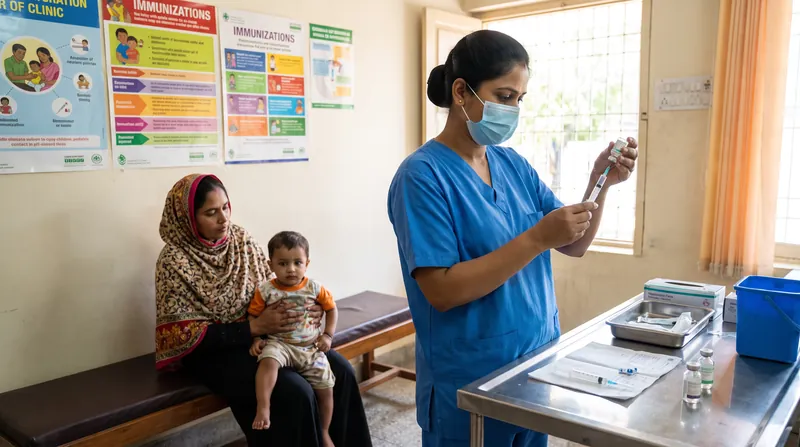
See all →Measles Outbreak
Bangladesh Measles Outbreak Claims 1,096 Lives as Health Officials Push for Vaccination
6 sources
Infant Safety
The Triple-Risk Model: How Three Hidden Factors Combine to Cause SIDS
8 sources
Vaccine Access
CDC Delay Blocks Updated COVID-19 Vaccine Access for Half of US Children in Federal Program
8 sources
Developmental Screening
The 75th Percentile Threshold: How the CDC Revised Developmental Milestones to Improve Early Screening
6 sources
Comments
Every angle. Every day.
Get Health stories with full source coverage and perspective breakdowns, free every day.