
Goldman Sachs, HSBC, and Fortress Back $150 Million Private Credit Deal for United Saudi Company
A consortium of global financial institutions has partnered with regional fund managers to provide $150 million in private credit to United Saudi Company. The landmark transaction signals growing international appetite for alternative financing in Saudi Arabia as the Kingdom seeks private capital to sustain its economic transformation amid regional liquidity pressures.
By Bo Feng
Share this story
Goldman Sachs Group, HSBC Holdings, and Fortress Investment Group have finalized a $150 million private credit transaction with United Saudi Company. The landmark deal, executed alongside regional fund managers Ruya Partners and Amwal Capital Partners, injects significant international capital into the Kingdom's manufacturing sector at a critical economic juncture.[1][2][3]
The financing package provides a crucial capital lifeline to United Saudi Company, a Jeddah-headquartered manufacturer established in 1994. The company operates major production facilities in the industrial city of Yanbu and serves as the Kingdom's primary domestic producer of dry-laid hygiene nonwoven fabrics for the regional market.[1][3]
For Fortress Investment Group, the transaction represents a major strategic milestone in the Middle East. Backed by Abu Dhabi's Mubadala Investment Company, the $150 million deal marks Fortress's first direct foray into Saudi Arabia's rapidly expanding private credit market, signaling confidence in the Kingdom's industrial base.[1][3]
The involvement of Goldman Sachs and HSBC highlights a growing appetite among Wall Street and European heavyweights for Middle Eastern alternative assets. Both institutions are leveraging their global balance sheets to capture higher yields in a market that has historically been dominated by local commercial banks.[1][4]
Representatives for Goldman Sachs, HSBC, and Amwal Capital Partners declined to comment on the specific terms, pricing, or maturity of the financing. Fortress Investment Group did not respond to inquiries regarding its broader credit strategy in the region or future deployment plans for Saudi Arabia.[1][6]
Liquidity Squeeze and Economic Pressures
The $150 million transaction arrives at a critical juncture for the Saudi financial system. The outbreak of the U.S.-Iran conflict in February 2026 has introduced severe fiscal pressures across the region, straining government revenues and significantly tightening liquidity across the domestic Saudi banking sector.[1][5]
As regional instability persists, traditional lenders have become increasingly conservative with their balance sheets, preserving capital and reducing loan origination. This liquidity squeeze has exacerbated funding challenges for industrial operators and mid-sized enterprises seeking reliable capital for capacity expansion and supply chain integration.[1][5]
Crown Prince Mohammed bin Salman's multi-trillion-dollar economic transformation agenda, known as Vision 2030, requires massive and continuous investment. With state coffers under pressure from the ongoing war, the government is aggressively pushing private capital markets to step up and fill the widening infrastructure funding gap.[1][4]
The shift is explicitly designed to keep critical infrastructure and manufacturing projects moving forward despite the severe macroeconomic headwinds. "Saudi Arabia is increasingly turning to private capital amid efforts by the Crown Prince to advance his economic transformation agenda," according to Bloomberg's regional financial analysis.[3]
The United Saudi Company deal ranks among the most significant private credit transactions since alternative financing gained widespread prominence in mid-2025. It demonstrates that high-quality industrial assets with strong cash flows can still attract global capital despite the elevated geopolitical volatility in the Gulf.[1][5]
The Rise of Private Credit
Private credit has rapidly evolved from a niche financial product to a mainstream funding mechanism in Saudi Arabia. Historically, local companies relied almost exclusively on traditional bank loans, equity issuance, or direct government subsidies to finance their daily operations and long-term capital expenditures.[1]
That dynamic shifted dramatically over the past 18 months. As regulatory frameworks modernized and the Saudi central bank actively encouraged financial diversification, international alternative asset managers began deploying specialized financing structures, including asset-backed lending, mezzanine debt, and venture credit.[1][4]
Small and medium-sized enterprises form a crucial pillar of the Kingdom's economic diversification strategy, driving employment and localized production. These enterprises, often unable to secure favorable terms from risk-averse commercial banks, are increasingly driving the surging demand for flexible private credit solutions.[4][5]
Beyond traditional private credit, Saudi companies are exploring a wide variety of alternative funding channels to sustain growth. Crowdfunding platforms, micro-lending services, and venture debt vehicles have all seen record transaction volumes as the domestic funding ecosystem matures and adapts to the liquidity crunch.[1][5]
International financial institutions have taken notice of this structural shift in the Saudi capital markets. Competitors including Jefferies Financial Group, Citigroup, and Apollo Global Management have all participated in specialized financing transactions and asset-backed lending facilities in the Kingdom over the past year.[1][5]
Regional Fund Managers Capitalize
The $150 million United Saudi Company deal underscores the vital role of regional intermediaries in closing complex transactions. Global giants like Goldman Sachs frequently partner with local firms like Ruya Partners and Amwal Capital Partners to navigate the Kingdom's complex regulatory environment and business landscape.[2][3]
Ruya Partners has been particularly active in supporting the Saudi industrial sector's localization efforts. In July 2025, the Abu Dhabi-based fund manager deployed $55 million to finance a new hygiene nonwoven fiber production plant in Yanbu, directly supporting United Saudi Company's upstream supply chain.[1]
That earlier facility, owned and operated by Al Shair Group, was specifically designed to supply raw materials to United Saudi Company. The integration brings the full nonwoven supply chain inside the Kingdom, aligning perfectly with the government's mandate to localize critical manufacturing and reduce import reliance.[1]
Regional fund managers are aggressively raising new capital to meet the surging corporate demand for alternative financing. Ruya Partners, which counts the Saudi Public Investment Fund and Mubadala among its institutional backers, is currently working to raise a $400 million fund dedicated entirely to regional credit.[1]
International asset managers are also launching dedicated Middle East vehicles to capture the growing opportunity set. Janus Henderson recently announced that its regional private credit fund had pulled in close to $200 million, signaling sustained institutional interest in the asset class despite regional tensions.[1]
Navigating Geopolitical Headwinds
The successful syndication of the $150 million facility provides a clear blueprint for future cross-border transactions in the region. It proves that carefully structured credit can offer global investors sufficient downside protection to confidently deploy capital in a conflict-adjacent geography during periods of stress.[1]
However, significant structural obstacles remain for the broader adoption of private credit in Saudi Arabia. Market participants consistently cite a lack of borrower education, evolving regulatory standards, and high administrative barriers to entry as persistent challenges for new international entrants looking to establish a foothold.[1]
The cost of capital also reflects the heightened regional risk environment. While specific pricing for the United Saudi Company deal was not publicly disclosed, regional private credit yields have generally widened by 150 to 200 basis points since the conflict escalated in February 2026.[1]
For United Saudi Company, the $150 million capital injection secures its near-term capacity expansion plans. The funds will likely support further backward integration and operational efficiency upgrades at its Yanbu production hub, insulating the manufacturing firm from external supply shocks and currency fluctuations.[3]
The involvement of global heavyweights ensures that the transaction will be closely watched by other regional corporates seeking capital. If United Saudi Company successfully leverages the facility to accelerate its growth, it could trigger a wave of similar private credit mandates across the Saudi industrial sector.[1]
The transaction signals a rapidly maturing financial ecosystem in the Middle East. As global lenders like Goldman Sachs and Fortress establish their private credit footprints, Saudi Arabia's industrial base gains a durable, sophisticated alternative to traditional bank financing that can weather geopolitical storms.[1][4]
Key points
- Goldman Sachs, HSBC, and Fortress Investment Group are co-financing a $150 million private credit package for United Saudi Company.
- The transaction marks Fortress Investment Group's first direct entry into the Saudi private credit market.
- The international lenders are partnering with Middle East fund managers Ruya Partners and Amwal Capital Partners.
- The deal highlights a shift toward alternative financing as Saudi banks face liquidity constraints amid ongoing regional conflict.
Open questions
- The specific interest rate, maturity timeline, and covenant structure of the $150 million financing package.
- Whether Fortress Investment Group plans to launch a dedicated Middle East credit fund following this initial transaction.
- The exact allocation of the $150 million between Goldman Sachs, HSBC, and Fortress.
- Global Alternative Asset Managers
- Focuses on the deployment of international capital into high-yield Middle Eastern credit markets.
- Regional Financial Intermediaries
- Emphasizes the role of local fund managers in facilitating cross-border capital flows.
- Saudi Industrial Sector
- Highlights the urgent need for flexible financing to support domestic manufacturing and economic diversification.
Perspectives this story doesn't cover
- Saudi Central Bank (SAMA)
- Traditional Saudi Commercial Banks
Sources
Source coverage
6 outlets
3 viewpoints surfaced




- [1]QuartzGlobal Alternative Asset Managers
Goldman Sachs, HSBC, and Fortress are backing a $150 million Saudi private credit deal
Read on Quartz → - [2]MarketScreenerGlobal Alternative Asset Managers
Goldman Sachs, HSBC, Fortress Team Up on $150 Million Saudi Private Credit Deal
Read on MarketScreener → - [3]TradingViewRegional Financial Intermediaries
Goldman Sachs, HSBC partner for $150M financing to United Saudi Company - report
Read on TradingView → - [4]FutubullSaudi Industrial Sector
Saudi Arabia Attracts entry of international financial giants private credit
Read on Futubull → - [5]HeadlinerRegional Financial Intermediaries
Oorlog dwingt Saoedi-Arabië naar privaat kapitaal
Read on Headliner → - [6]MoomooGlobal Alternative Asset Managers
Market Chatter: Goldman Sachs, HSBC, Fortress Team Up on $150 Million Saudi Private Credit Deal
Read on Moomoo →

More in Business
See all →Tax Enforcement
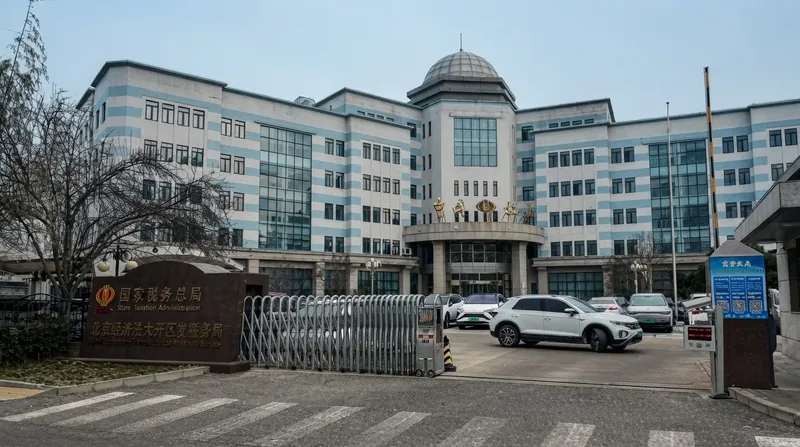
China Collects $24 Billion in Historic Tax Crackdown on Wealthy Offshore Trusts
5 sources
Fintech Expansion
Airwallex Pledges $1.6 Billion Singapore Expansion Over Five Years
5 sources

Consumer Debt
US Household Debt Reaches $19.1 Trillion as Credit Card Balances Hit Record High
6 sources

AI Infrastructure
SoftBank Logs $7.4 Billion Quarterly Loss as US Data Center and AI Investments Swell
6 sources

Comments
Every angle. Every day.
Get Business stories with full source coverage and perspective breakdowns, free every day.