
full timeline
AI data center power demand
Texas officials have instituted a pause on new data center projects over power grid reliability concerns, drawing pushback from technology and cloud infrastructure firms.
Follow AI data center power demand in the Factlen app and get an alert when there is news. Get the app
Share this story
Latest report
Senate Advances Bipartisan Infrastructure Bill Requiring AI Data Centers to Fund Grid Upgrades
A sweeping bipartisan permitting package has cleared a major procedural hurdle, introducing strict new mandates that force technology companies to bear the multibillion-dollar costs of powering their artificial intelligence facilities.
- The US Senate advanced a bipartisan permitting bill requiring AI data centers to fully fund their own electrical grid upgrades.
- The legislation aims to shield residential ratepayers from the multibillion-dollar infrastructure costs associated with the generative AI boom.
- Environmental groups strongly oppose the package, warning it streamlines approvals for fossil fuel projects and ICE detention facilities.
- Tech industry advocates argue the mandate will double interconnection costs and slow American innovation in artificial intelligence.
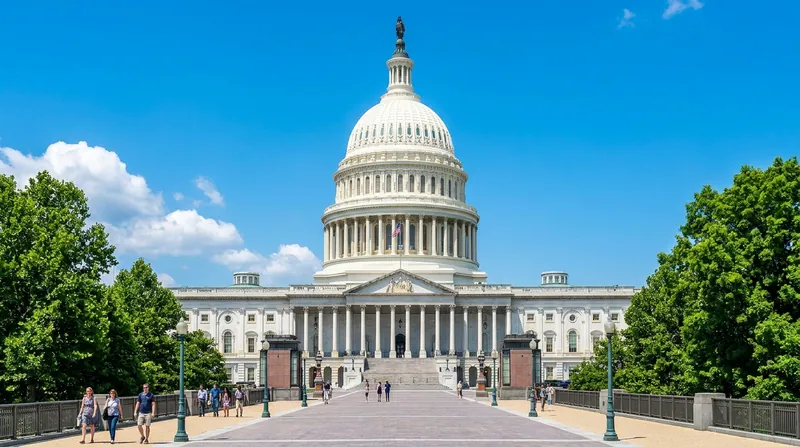
The United States Senate advanced the American Affordability and Jobs Act on Tuesday, fundamentally altering how the nation finances its electrical grid. The legislation explicitly prohibits utility companies from passing the cost of new transmission lines for massive data centers onto residential ratepayers.[3][7]
Lawmakers voted to move the bill forward despite fracturing coalitions on both sides of the aisle. The package, championed by Senator Shelley Moore Capito, aims to accelerate domestic energy development while addressing the unprecedented power demands of the generative AI boom.[7]
"This legislation ensures that the companies driving this unprecedented demand are the ones paying to keep the lights on," Capito stated in a release from the Senate Committee on Environment and Public Works. The committee advanced the framework after weeks of closed-door negotiations.[7]
Under the current regulatory framework, utility companies typically socialise the cost of new transmission lines and substations across their entire customer base. The new legislation prohibits this practice for facilities drawing more than 100 megawatts, forcing developers to bear the upfront capital costs.[6]
The shift represents a multibillion-dollar reallocation of infrastructure expenses. With individual AI training clusters now requiring massive amounts of continuous power, regional grid operators have warned that residential ratepayers could face severe rate increases if tech companies do not cover the expansion costs.[6]
Grid operators across the country have sounded the alarm over the past year as interconnection queues swell with requests from technology firms. The sheer volume of proposed data centers has overwhelmed regional transmission planning, forcing regulators to reconsider how infrastructure upgrades are financed.[6]
Without legislative intervention, the cost of upgrading transmission lines to meet this demand would fall on everyday consumers. The American Affordability and Jobs Act explicitly shields residential and small commercial ratepayers from these capital expenditures, shifting the burden entirely to the technology sector.[7]
The Cost of Compute
Technology firms constructing gigawatt-scale campuses for machine learning models face a stark new reality. Industry analysts estimate that requiring operators to pay for their own transmission infrastructure could effectively double the interconnection costs for new facilities.[6]
The provision has triggered intense lobbying from Silicon Valley. Tech executives argue the mandate will slow down American innovation and cede ground to international competitors who benefit from state-subsidised power grids and faster permitting timelines.[4]
The vote exposed deep divisions within the chamber. A coalition of senators representing states with heavy tech investments opposed the measure, arguing it unfairly targets a single industry while traditional manufacturing facilities face no such requirements.[1]
Newsweek published a full list of the senators who voted against the provision on Tuesday. The dissenting lawmakers argued that isolating data centers from standard utility cost-sharing models sets a dangerous precedent for industrial development in the United States.[1]
Environmental Opposition
While the data center provision appeals to consumer advocates, the broader permitting package has drawn fierce opposition from climate activists. Environmental groups warn the legislation streamlines approvals for fossil fuel projects alongside renewable energy initiatives.[2]
Senate Majority Leader Chuck Schumer faced coordinated protests outside his office last week. Activists labeled the package a "dirty data center deal," arguing that accelerating grid connections for tech companies will inevitably extend the lifespan of coal and natural gas plants.[5]
"We are handing a massive giveaway to the AI data center industry while gutting the environmental reviews that protect frontline communities," a spokesperson for a leading climate coalition told TIME magazine following the vote on Tuesday.[4]
The Guardian reported that key environmental groups have also raised alarms about other provisions in the bill. Activists fear the streamlined permitting process could be exploited to fast-track the construction of Immigration and Customs Enforcement detention facilities.[2]
The inclusion of expedited permitting for fossil fuel infrastructure was a necessary concession to secure Republican votes, but it has fractured the Democratic base. Progressive lawmakers argue that accelerating natural gas pipelines undermines the administration's long-term climate commitments.[2][5]
Protesters outside Schumer's office carried signs demanding "No Blank Checks for Big Tech," reflecting a growing skepticism toward the industry's environmental footprint. The demonstrations highlight the tension between maintaining American leadership in artificial intelligence and achieving aggressive decarbonisation targets.[5]
The Permitting Trade-Off
The legislation represents a classic Washington compromise forged over months of negotiations. Republicans secured expedited permitting timelines for traditional energy extraction, while Democrats won the grid-funding mandate to protect residential ratepayers from surging utility bills.[3]
Free-market advocates have offered mixed reactions to the legislative package. While they praise the deregulation of energy development, some argue the specific targeting of data centers distorts the energy market and creates an uneven playing field for industrial power users.[3]
Reason magazine highlighted the major caveats within the bill, noting that the attempt to unleash energy development comes with heavy regulatory strings attached for the technology sector. The publication warned that the grid-funding mandate could stifle the deployment of next-generation AI models.[3]
Local Community Impact
The Senate action follows months of escalating tension in rural counties where massive data centers are proposed. Local zoning boards have increasingly rejected tech campuses, citing fears of rolling blackouts, strained infrastructure, and depleted municipal water supplies.[6]
The industry has already been forced to adapt to growing public scrutiny. Earlier this year, major AI developers abandoned the use of strict non-disclosure agreements for their infrastructure projects following intense pushback from local municipalities demanding transparency.[6]
By forcing data centers to internalise their infrastructure costs, the Senate bill attempts to align the financial incentives of tech companies with the physical realities of the electrical grid. Proponents argue this will encourage developers to site facilities near existing power generation rather than in constrained regions.[7]
Municipal leaders have welcomed the Senate's approach. For towns facing sudden influxes of data center proposals, the legislation provides a federal backstop against utility rate hikes that local governments previously had little power to prevent.[6][7]
The Path Forward
The bill now faces a final floor vote before moving to the House of Representatives, where its fate remains uncertain. House leadership has expressed skepticism about the grid-funding mandate, setting up a potential clash during the lame-duck session.[1]
If signed into law, the Federal Energy Regulatory Commission would have exactly 180 days to draft the specific rules governing how utilities calculate and assess the new infrastructure charges to data center operators across different regional grids.[7]
The final shape of the legislation will determine whether the United States can sustain its rapid expansion of artificial intelligence infrastructure without destabilising the regional power grids that support it. The upcoming House negotiations will test whether the bipartisan Senate coalition can hold.[3]
Sources
- [1]Newsweek — Senators Who Voted Against Data Centers Paying Own Energy Bills: Full List Read on Newsweek →
- [2]The Guardian — Key environmental groups come out against bipartisan Baaja bill over fears it could spur datacenters and ICE jails Read on The Guardian →
- [3]Reason — Senate Advances Bipartisan Permitting Bill That Could Unleash Energy Development With Major Caveats Read on Reason →
- [4]TIME — Congress's Permitting Bill Is a 'Massive Giveaway' to the AI Data Center Industry, Critics Warn Read on TIME →
- [5]Common Dreams — 'No Blank Checks for Big Tech': Schumer Faces Protest Over 'Dirty Data Center Deal' Read on Common Dreams →
- [6]Latitude Media — Are data centers ready to pay double to unclog the grid? Read on Latitude Media →
- [7]U.S. Senate Committee on Environment and Public Works — Senate Advances Capito’s Bipartisan American Affordability and Jobs Act Read on U.S. Senate Committee on Environment and Public Works →
What to watch
- Texas Governor-elect Gina Hinojosa is scheduled to take office in January.
- The first batch of studies from the Texas state audit on data center grid connections is expected to conclude by April 2027.
- OpenAI plans to hold an initial public offering in 2027.
- The Brookfield and NextEra Energy data center campus in Kentucky is scheduled for completion in 2032.
- Commercial Small Modular Reactors are expected to become widely available in the 2030s.
Where things stand
CoreWeave Asks Texas Governor-Elect to Allow Completion of Permitted Data Centers
Key point: CoreWeave CEO Michael Intrator has written to Texas Governor-elect Gina Hinojosa, offering to fund power infrastructure and limit water use in exchange for allowing permitted data centers to be completed.
AITexas has paused grid interconnections for new data centers as regulators audit the industry's massive power and water demands.From: Texas Governor Imposes Moratorium on Data Center Construction Over Energy Demand and Grid Strain AI cloud provider CoreWeave has formally requested that Texas Governor-elect Gina Hinojosa allow the completion of data center projects that have already received permits. In a letter sent on Saturday, CoreWeave CEO Michael Intrator offered to collaborate with Hinojosa's transition team to responsibly finish existing projects and establish clear standards for future development.
Intrator expressed support for Hinojosa's principle that data center growth must benefit Texas residents without burdening them with infrastructure costs. To that end, he pledged that CoreWeave would pay for the power infrastructure required to connect its facilities to the grid and utilize cooling systems designed to minimize water consumption. He also emphasized that communities making the company's operations possible should share in the benefits of that growth.
The diplomatic outreach follows a severe market sell-off of CoreWeave's equity and corporate bonds, driven by credit market anxiety and the shifting political landscape in Texas. CoreWeave's stock recently plunged to a record low, capping a 44 percent monthly decline, while yields on its corporate bonds surged past 17 percent. Hinojosa's recent election victory has introduced significant regulatory uncertainty for AI infrastructure companies, as she has vowed to block new data center approvals until the state legislature passes protective laws.
Hinojosa, the first Democrat elected governor of Texas in over 30 years, campaigned heavily on imposing a statewide moratorium on new data center construction. Her platform resonated with voters concerned about the industry's massive electricity demand and strain on local water supplies. This political shift has prompted developers like CoreWeave, which relies heavily on continuous borrowing to finance its GPU clusters, to proactively seek a truce to protect their capital-intensive expansion plans.
CoreWeave Pleads With Texas Governor-Elect to Spare Permitted Data Centers
Key point: CoreWeave has formally asked Texas Governor-elect Gina Hinojosa to allow its already-permitted data center projects to proceed, offering concessions on infrastructure costs following a market sell-off triggered by her campaign pledge to halt new builds.
AI cloud provider CoreWeave has appealed to Texas Governor-elect Gina Hinojosa to allow already-permitted data center projects to proceed. In a letter sent on Saturday, CEO Michael Intrator offered to collaborate with Hinojosa's transition team on completing existing builds and establishing clear standards for future infrastructure.
Intrator sought to align the heavily leveraged company with the incoming administration's strict new platform, stating that CoreWeave strongly supports Hinojosa's principle that data center growth must deliver tangible benefits to Texans. He pledged that the company would fund the power infrastructure needed to connect its facilities to the grid, utilize cooling systems designed to limit water consumption, and ensure local households do not bear the costs of expansion.
The diplomatic overture follows a severe market sell-off for CoreWeave triggered by Hinojosa's election victory on November 3. The incoming Democrat campaigned on a statewide moratorium for new AI data center construction, arguing that local communities should have a say in whether and how facilities operate in their areas. She cited the urgent need to protect local water supplies and the electricity grid from what she described as a corporate Wild West.
Consequently, mounting fears regarding CoreWeave's highly leveraged business model caused its stock to recently plunge 44 percent to a record low of $49.92, while yields on its corporate bonds surged past 17 percent. Texas has become a primary hub for AI infrastructure, and CoreWeave maintains several active facilities in the state, including a massive 262-megawatt site in Denton, as developers increasingly face political headwinds and voter backlash over the industry's rapid expansion.
CoreWeave Seeks Truce With Texas Governor-Elect Over Data Centers
Key point: CoreWeave has asked Texas Governor-elect Gina Hinojosa to allow already-permitted data center projects to proceed while offering to collaborate on future development standards.
CoreWeave CEO Michael Intrator sent a letter to Texas Governor-elect Gina Hinojosa on November 7, offering to collaborate with her incoming administration on data center regulations. Intrator proposed working together to responsibly complete already-permitted projects and establish clear, durable standards for future development across the state. The letter marks a direct appeal to the newly elected leadership as the company seeks to navigate a tightening regulatory environment.
In the correspondence, Intrator expressed support for Hinojosa's principle that communities should benefit from data center growth without bearing the financial burden. He pledged that CoreWeave would independently fund the power infrastructure required to connect its facilities to the grid, rather than passing those expenses onto local households. Additionally, the CEO committed to utilizing closed-loop liquid cooling systems in new capacity to minimize water consumption, noting that day-to-day usage would be comparable to a standard commercial office building.
The outreach represents an attempt to secure continuity for CoreWeave's existing investments as Hinojosa prepares to take office in January. The incoming governor campaigned heavily on a pledge to halt new data center approvals and implement a statewide moratorium. She has argued that the current regulatory environment resembles a corporate Wild West and insists that construction must pause until legislative safeguards are enacted to protect residents and local resources.
CoreWeave's diplomatic effort follows a severe market sell-off of its stock and corporate bonds, driven by investor concerns over its heavy debt load and the shifting political landscape in Texas. The company's shares recently plunged to a record low of $49.92, while yields on its corporate bonds surged above 17 percent. CoreWeave, which relies heavily on borrowing to finance its infrastructure, currently operates multiple facilities across the state, including a massive 262-megawatt site in Denton.
Earlier updates
1 update
OpenAI CFO Pledges to Continue Data Center Expansion Despite Midterm Backlash
Key point: OpenAI CFO Sarah Friar confirmed the company will proceed with its data center buildout and 2027 IPO despite recent midterm voter pushback against AI infrastructure.
The four central commitments outlined in the newly released infrastructure guidelines.From: OpenAI Abandons Non-Disclosure Agreements for Data Center Projects After Midterm Pushback OpenAI Chief Financial Officer Sarah Friar has pledged to continue the company's expansion of artificial intelligence data centers. The commitment comes despite recent midterm election results that saw voters push back against local AI infrastructure projects.
Friar stated that the company will not let the midterm voter backlash derail its spending plans, emphasizing that customer demand still requires significant computing power. She noted that OpenAI intends to work on building trust with local communities as it moves forward with its infrastructure investments.
The CFO also confirmed that the company's planned initial public offering for 2027 remains on track. This signals that the recent Democratic wave and local ballot defeats have not altered OpenAI's long-term financial roadmap.
The reaffirmation of these plans follows a series of midterm elections where communities expressed opposition to the resource demands of large-scale data centers. The rapid expansion of AI infrastructure has increasingly become a local political issue as companies race to secure the power needed for advanced computing.
1 update
OpenAI Pledges Data Center Reforms Following Midterm Voter Backlash
Key point: OpenAI has introduced a new policy framework committing to pay full infrastructure costs and increase transparency for its data centers following widespread voter opposition.
AIIllustration: OpenAI's new guidelines aim to increase transparency around the massive infrastructure required to train artificial intelligence models.From: OpenAI Abandons Non-Disclosure Agreements for Data Center Projects After Midterm Pushback OpenAI has released a National Community Compact and a Compute Campus Policy Blueprint, establishing new transparency and resource commitments for its future data centers. The framework, published on Thursday, outlines how the company will engage with local communities and manage the environmental impact of its physical infrastructure. It requires a locally tailored version of the compact at every future campus OpenAI owns and operates.
Under the compact, OpenAI pledges to pay the full cost of its electricity and necessary grid upgrades, protecting residents from potential rate spikes. The company also committed to eliminating nondisclosure agreements with public officials, publishing site-specific water and power usage, prioritizing low-water cooling systems, and establishing local hiring targets. Chris Lehane, OpenAI's chief global affairs officer, stated the policies stem from months of discussions with local residents and officials in states impacted by the data center boom.
The accompanying blueprint extends these principles to the broader industry, urging federal and state policymakers to adopt similar requirements. OpenAI recommended that utility commissions create large-load tariffs to ensure major electricity users pay for their incremental grid costs, alongside clear public explanations of cost allocations. The company conceded that voluntary corporate promises cannot provide communities with lasting assurances at the scale needed, marking a significant departure from the opacity of earlier industry negotiations.
The policy shift follows a massive voter backlash against AI infrastructure during the United States midterm elections earlier in the week. Voters overwhelmingly rejected data center expansions in 40 out of 41 local ballot measures spread across 10 states. Additionally, Democratic candidates who campaigned on data center moratoriums or strict regulations won gubernatorial races in key states like Texas, Ohio, and Georgia, putting roughly half of proposed AI data center additions under threat of stricter local scrutiny.
Charts, maps and images
Timeline
November 2026
Senate Advances Bipartisan Infrastructure Bill Requiring AI Data Centers to Fund Grid Upgrades
Texas officials have instituted a pause on new data center projects over power grid reliability concerns, drawing pushback from technology and cloud infrastructure firms.
- CoreWeave Seeks Truce With Texas Governor-Elect Over Data CentersKey point: CoreWeave has asked Texas Governor-elect Gina Hinojosa to allow already-permitted data center projects to proceed while offering to collaborate on future development standards.
- CoreWeave Pleads With Texas Governor-Elect to Spare Permitted Data CentersKey point: CoreWeave has formally asked Texas Governor-elect Gina Hinojosa to allow its already-permitted data center projects to proceed, offering concessions on infrastructure costs following a market sell-off triggered by her campaign pledge to halt new builds.
- CoreWeave Asks Texas Governor-Elect to Allow Completion of Permitted Data CentersKey point: CoreWeave CEO Michael Intrator has written to Texas Governor-elect Gina Hinojosa, offering to fund power infrastructure and limit water use in exchange for allowing permitted data centers to be completed.
OpenAI CFO Pledges to Continue Data Center Expansion Despite Midterm Backlash
- OpenAI CFO Pledges to Continue Data Center Expansion Despite Midterm BacklashKey point: OpenAI CFO Sarah Friar confirmed the company will proceed with its data center buildout and 2027 IPO despite recent midterm voter pushback against AI infrastructure.
OpenAI Abandons Non-Disclosure Agreements for Data Center Projects After Midterm Pushback
AILocal communities and voters are increasingly organizing ballot measures and protests to oppose the construction of new artificial intelligence data centers.
AI- OpenAI Pledges Data Center Reforms Following Midterm Voter BacklashKey point: OpenAI has introduced a new policy framework committing to pay full infrastructure costs and increase transparency for its data centers following widespread voter opposition.
September 2026
California Enacts Sweeping Resource Limits on AI Data Centers
California Lawmakers Pass Bills Requiring Data Center Water and Energy Disclosures
August 2026
Texas Governor Orders Statewide Pause on New Data Center Development Citing Grid Reliability
AIHow Local Voters Are Using Ballot Measures to Ban New Data Centers
US Building Twice as Much Gas-Fired Power as China to Fuel AI Boom
Is the AI Power Crisis Forcing the US to Finally Embrace Nuclear Energy as the Only 'Green' Solution?
AIUS Data Center Power Demand Forecast to Consume 20% of US Electricity by 2035
Is the AI-Driven Power Demand Forcing a Quiet Retreat from US Climate Goals?
AIAIGlobal Data Center Power Consumption Reaches 2% of World Electricity and 6% of US Grid
AIAIAI
How the story developed
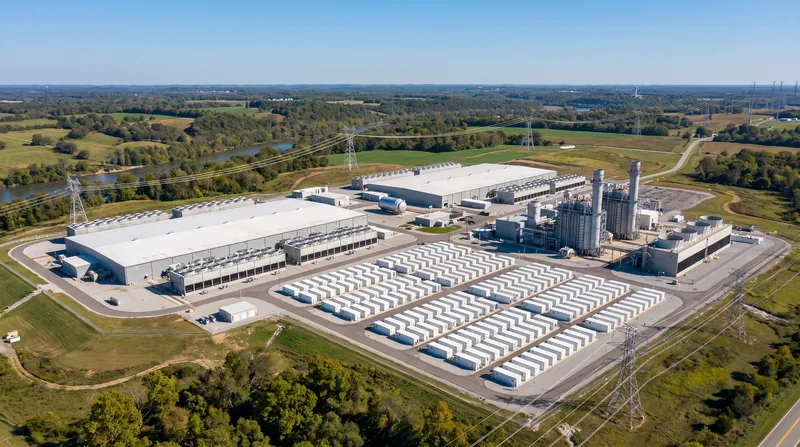
By August 7, global data center power consumption reached 67.7 gigawatts, accounting for 2 percent of the world's electricity. Driven by a 36 percent growth in artificial intelligence workloads requiring continuous power for graphics processing units, the facilities began consuming 6 percent of the United States grid, with Germany and Singapore also far exceeding the global average. Researchers estimated that 13 percent of US data center power was wasted on 'zombie' applications running continuously without being used. To address the demand, Brookfield and NextEra Energy announced plans on August 7 for a $100 billion, 1.2-gigawatt artificial intelligence data center campus at a former Department of Energy site in Kentucky. The facility features a bring-your-own-power model utilizing up to 4.6 gigawatts of dedicated natural gas and battery storage, with surplus electricity flowing back into the regional grid.
Projections released on August 20 estimated that US data centers will consume 20 percent of the nation's electricity by 2035, reaching 194 gigawatts. Nearly half of the projected capacity is dedicated to artificial intelligence training and inference workloads. Analysts warned that even if the US grid sustains a record pace of expansion, a potential 19-gigawatt supply shortfall could occur by 2035. Researchers warned on August 17 of an indirect rebound effect, where artificial intelligence-driven economic growth accelerates overall energy demand, threatening to absorb the 15 to 20 percent grid capacity expansion intended for broader economic electrification. Proponents argue that the technology will ultimately pay off its carbon debt by optimizing the power grid and accelerating the discovery of new climate technologies.
To meet the 24/7 baseload requirements of artificial intelligence training, the technology industry began pivoting to nuclear energy, betting heavily on Small Modular Reactors. Because commercial reactors will not be widely available until the 2030s, developers initiated a massive buildout of natural gas facilities to fill the short-term energy gap. By August 25, the US had 52 gigawatts of natural gas power under construction, more than double China's 24 gigawatts, with nearly 17 gigawatts intended directly for data centers. The total pipeline of US gas projects in development surged 50 percent in the first half of the year to 378 gigawatts, though more than half of the proposed projects lacked a named turbine manufacturer.
The rapid expansion triggered regulatory and political interventions, as community resistance reliably intensified when data centers exceeded 5 percent of a local grid's capacity. On August 17, Texas Governor Greg Abbott halted grid connection approvals for new data centers pending a comprehensive state audit, responding to an interconnection queue that reached 474 gigawatts. The moratorium placed approximately 49.8 gigawatts of near-term projects and up to 300 total projects at risk of delay, though facilities building their own on-site power generation were exempted. In California, Governor Gavin Newsom signed a seven-bill package on September 23 regulating data center resource consumption. The legislation required developers to disclose projected water usage before receiving local project approval and removed categorical environmental exemptions for most private data center projects. The laws also directed the California Public Utilities Commission to create specific electricity rates for data centers to prevent cost-shifting to residential customers.
Community resistance culminated during the November 5 midterm elections, where voters in 44 out of 45 municipalities with data center ballot measures chose to restrict or ban new construction. Prior to the election, a June poll found that 57 percent of Americans opposed having a data center built in their community, and 40 states had some form of active data center ban or moratorium in place. During the midterms, Ohio experienced the most concentrated opposition, with over a dozen communities enacting zoning restrictions or outright bans on hyperscale facilities. Gubernatorial candidates who campaigned on data center moratoriums secured victories in key technology hubs, including Texas and Ohio, as exit polling indicated 56 percent of midterm voters considered artificial intelligence and data centers a major factor in their decisions.