full timeline
US Air Force autonomous drone development
Two uncrewed Collaborative Combat Aircraft successfully flew in formation and executed beyond-visual-range tactics using Shield AI's Hivemind software.
Follow US Air Force autonomous drone development in the Factlen app and get an alert when there is news. Get the app
Share this story
Latest report
U.S. Air Force Autonomous Drones Complete First Coordinated Combat Maneuvers
Two uncrewed Collaborative Combat Aircraft successfully flew in formation and executed beyond-visual-range tactics using Shield AI's Hivemind software. The October milestone marks the first time multiple autonomous fighter drones have coordinated in flight without direct human piloting.
- Two uncrewed FQ-44A Fury drones successfully executed coordinated beyond-visual-range combat maneuvers on October 26.
- The multi-ship formation was entirely directed by Shield AI's Hivemind autonomy software, acting as a digital pilot.
- The milestone proves autonomous systems can operate as an integrated tactical team rather than independent platforms.
- The U.S. Air Force plans to field at least 500 Collaborative Combat Aircraft by 2032 to fly alongside crewed fighters.
The U.S. Air Force has successfully flown multiple autonomous fighter drones in a coordinated combat formation for the first time. Operating without direct human piloting, the uncrewed aircraft executed complex tactical maneuvers over the Nevada Test and Training Range. The milestone proves that autonomous systems can operate as an integrated team in contested airspace.[1][2][6]
During the October 26 test, two semi-autonomous FQ-44A Fury drones flew in a multi-ship formation and conducted beyond-visual-range counter-air tactics. The aircraft were entirely coordinated by an artificial intelligence pilot known as mission autonomy software. The flight represents a major technical leap for the Collaborative Combat Aircraft program.[1][3]
The drones were powered by Hivemind, an autonomy software platform developed by defense technology company Shield AI. The system interpreted the tactical environment and directed the aircraft to maneuver collaboratively rather than operating as independent platforms. Shield AI publicly announced the successful demonstration on November 9.[3][5]
Transitioning from single-drone autonomy to multi-ship coordination is a foundational requirement for the Pentagon's future air superiority strategy. The Air Force plans to field thousands of affordable, autonomous wingmen to fly alongside crewed fighters like the F-35 and the upcoming sixth-generation platforms.[1][2]
"The difference here was, it was a full-on tactical air-to-air engagement," said Todd Wesley, Shield AI's vice president of Hivemind engineering. The demonstration validated the software's ability to handle the dynamic variables of beyond-visual-range combat while maintaining formation integrity.[1]
Breaking the Single-Ship Barrier
Prior to the October 26 flight, autonomous aviation tests largely focused on proving that a single uncrewed aircraft could safely navigate and respond to commands. Coordinating multiple drones introduces exponential complexity, as the software must manage collision avoidance, shared sensor data, and synchronized tactical decisions in real time.[4]
The Hivemind software functions as a digital pilot, processing data from the aircraft's sensors and executing maneuvers without waiting for ground control inputs. By networking the two FQ-44A Fury drones together, the system allowed them to share a common operational picture and divide tactical responsibilities during the simulated engagement.[3][4]
The FQ-44A Fury, manufactured by Anduril Industries, is one of the first two variants selected for the Collaborative Combat Aircraft program. The drones are designed to be significantly less expensive than crewed fighters, allowing the military to accept higher risks in combat while generating mass in the airspace.[1][6]
Software development for the autonomous fleet is moving at a pace rarely seen in traditional defense procurement. Engineers are utilizing a rapid iteration model, taking data from each test flight to refine the artificial intelligence algorithms and push updates directly to the aircraft.[2]
"The combined Hivemind and aircraft software release process is nearing the point where the Air Force can fly a sortie, update the software overnight and fly again the next day," Wesley noted. This agile approach is critical for keeping the autonomous systems ahead of emerging adversary capabilities.[2]
Executing Beyond-Visual-Range Tactics
Beyond-visual-range combat requires aircraft to detect, track, and engage targets from dozens of miles away, relying entirely on radar and sensor data rather than visual identification. Executing these tactics autonomously demands highly sophisticated software capable of interpreting complex electronic warfare environments.[3]
During the Nevada test, the networked FQ-44A drones demonstrated their ability to perform collaborative counter-air tactics. This involves positioning themselves to maximize sensor coverage, confusing enemy radar, and coordinating simulated missile shots to increase the probability of a successful engagement.[1][5]
Operating as a multi-ship formation allows the drones to employ tactics that a single aircraft cannot execute. One drone can act as a forward sensor node, actively emitting radar to find targets, while the second drone remains electronically silent to avoid detection and prepare for an ambush.[1][4]
The successful execution of these maneuvers proves that the Collaborative Combat Aircraft program can deliver on its promise of expanding the combat reach of the crewed fighter fleet. By pushing autonomous wingmen forward, human pilots can remain outside the most dangerous threat rings while still projecting lethal force.[2][6]
"I'm grateful to the Air Force operators, engineers and test teams who fly with us and help us build trust on every flight," Wesley said. Building trust between human operators and artificial intelligence is considered the most significant hurdle to fielding autonomous weapons systems.[2]
The Collaborative Combat Aircraft Program
The U.S. Air Force is betting heavily on the Collaborative Combat Aircraft initiative to modernize its aging fleet and counter the numerical advantages held by rival nations. Service leaders have stated their intention to field at least 500 combat-ready, semi-autonomous systems by 2032.[2][6]
The ultimate goal is an overall fleet size exceeding 1,000 autonomous drones. To achieve this, the service requested $2.37 billion for the program in its fiscal 2027 budget, including $1.37 billion for continued research and development and $996.5 million in initial procurement funding.[2]
General Atomics and Anduril Industries were selected to build the first increment of the autonomous aircraft. The companies managed to conduct successful flight demonstrations within 18 months of the program's launch, moving faster than any major tactical aircraft development effort in recent military history.[1]
While the first iteration of drones will specialize in air-to-air combat missions, future variants are expected to take on a wider variety of roles. Subsequent increments of the program could focus on air-to-ground strikes, electronic warfare, and deep-penetrating reconnaissance missions.[1]
The rapid progress of the Air Force program has drawn the attention of lawmakers, who recently urged the U.S. Navy to accelerate its own autonomous aircraft development. A joint approach would allow both services to share software architectures and reduce overall development costs.[1]
Shifting the Industrial Base
The rapid advancement of the Collaborative Combat Aircraft program is also reshaping the defense industrial base. By selecting non-traditional prime contractors like Anduril Industries alongside established aerospace firms like General Atomics, the Pentagon is actively attempting to disrupt legacy procurement models.[1][2]
This shift emphasizes software agility over hardware perfection. Traditional fighter jets take decades to develop and field, whereas the FQ-44A Fury and its Hivemind software were pushed to multi-ship tactical flight testing in less than two years.[1]
Shield AI's recent strategic moves further underscore this industry realignment. The company recently announced its acquisition of Echodyne in a $5.3 billion transaction, aiming to integrate next-generation solid-state radar systems directly into its autonomous drone platforms.[2]
The acquisition expands Shield AI's capacity to produce fully integrated unmanned systems capable of surviving in heavily jammed environments. By controlling both the autonomy software and the advanced radar hardware, the company intends to accelerate the deployment of beyond-visual-range capabilities.[2]
Integration With Crewed Fighters
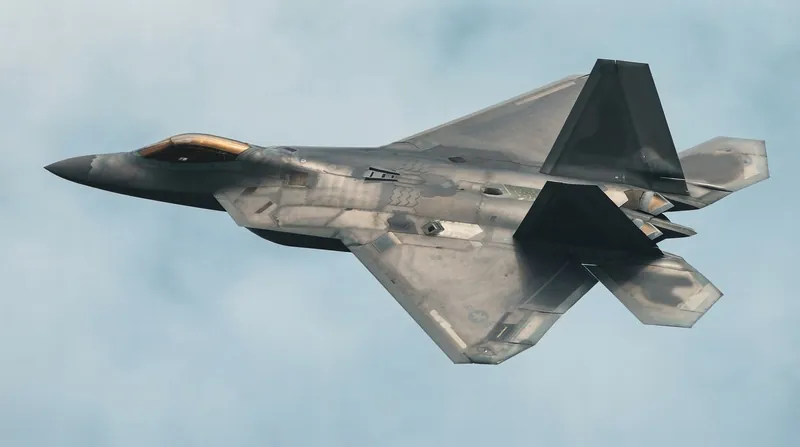
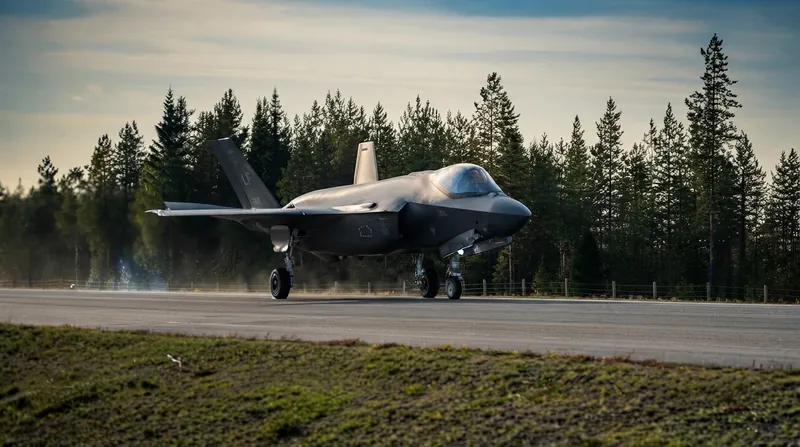
The multi-ship formation flight builds directly upon another landmark demonstration conducted just weeks earlier. On October 8, an airborne U.S. Air Force F-22 Raptor pilot successfully directed an FQ-44A Fury drone using high-level instructions, which the Hivemind software interpreted and executed in real time.[1][3]
That earlier test proved that a human pilot could act as a tactical quarterback, managing an autonomous wingman from the cockpit of a fifth-generation fighter. The October 26 flight proved that the quarterback can now direct an entire team of drones that know how to work together.[2][6]
Service officials envision a future where a single crewed fighter controls a formation of two to five autonomous drones. The human pilot will issue broad mission objectives, such as defending a specific airspace or suppressing an enemy air defense site, while the software handles the granular flight mechanics.[1]
This networked approach fundamentally changes the mathematics of air warfare. By pairing highly advanced, expensive crewed aircraft with dozens of affordable autonomous systems, the military can overwhelm adversary defenses with sheer numbers and coordinated electronic attacks.[1][3]
As software testing continues at the Nevada Test and Training Range, engineers will focus on expanding the size of the drone formations and introducing more complex combat scenarios. The next major hurdle will be integrating these autonomous multi-ship formations into large-scale exercises alongside human pilots.[2][4]
Sources
- [1]Air & Space Forces Magazine — In First, Two CCAs Fly Air Combat Maneuvers Using Autonomy Software Read on Air & Space Forces Magazine →
- [2]Military Times — First-ever Collaborative Combat Aircraft fly in formation, demonstrate air combat maneuvers Read on Military Times →
- [3]Army Recognition — Shield AI's Hivemind Enables U.S. Air Force Drones to Fly Coordinated Air Combat Maneuvers for the First Time Read on Army Recognition →
- [4]Military Embedded Systems — Mission autonomy software coordinates multiple Air Force CCAs in flight Read on Military Embedded Systems →
- [5]Defence Industry Europe — Multiple uncrewed aircraft in the U.S. Air Force's Collaborative Combat Aircraft program flew in formation and carried out coordinated air-to-air maneuvers for the first time on Oct. 26, Shield said Read on Defence Industry Europe →
- [6]Defense News — First-ever Collaborative Combat Aircraft fly in formation, demonstrate air combat maneuvers Read on Defense News →
Charts, maps and images
Timeline
November 2026
U.S. Air Force Autonomous Drones Complete First Coordinated Combat Maneuvers
October 2026
F-22 Pilot Controls Autonomous Fighter Drone From Cockpit in Milestone Flight Test