
full timeline
Iraqi government–Kataib Hezbollah standoff
Iraqi government forces have deployed to the strategic stronghold of Jurf al-Sakhar south of Baghdad after reaching a withdrawal agreement with the Iran-backed militia Kataib Hezbollah.
Follow Iraqi government–Kataib Hezbollah standoff in the Factlen app and get an alert when there is news. Get the app
Share this story
Latest report
Iraqi Federal Police Take Control of Jurf al-Sakhar Following Agreement With Armed Groups
Iraqi government forces have deployed to the strategic stronghold of Jurf al-Sakhar south of Baghdad after reaching a withdrawal agreement with the Iran-backed militia Kataib Hezbollah. The redeployment averts a direct military confrontation following a standoff over alleged oil smuggling operations in the area.
- Iraqi Federal Police units have established a new security command headquarters inside Jurf al-Sakhar, assuming full control of the area.
- The deployment follows a negotiated settlement with Kataib Hezbollah, averting a threatened military confrontation over the militia's stronghold.
- Kataib Hezbollah leadership has ordered its fighters to stand down and resume normal duties outside the contested zone.
- The standoff was triggered by government efforts to dismantle a massive oil smuggling network allegedly operating under militia protection.
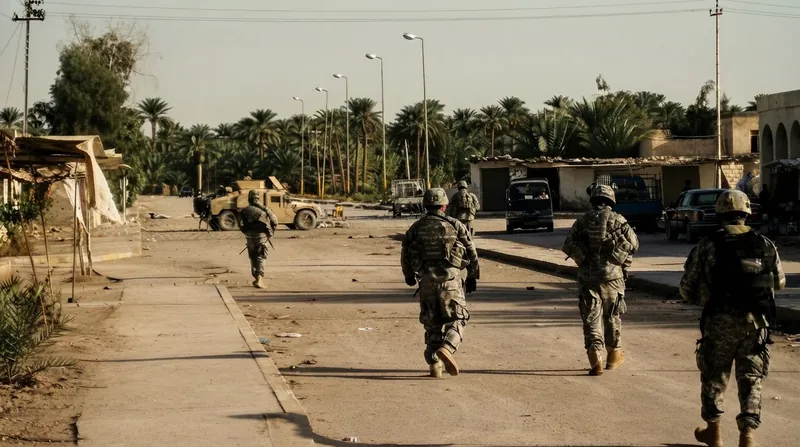
Iraqi Federal Police units have officially entered and taken control of the strategic town of Jurf al-Sakhar, establishing a new security perimeter. The deployment marks the first time federal forces have held primary authority in the area in over a decade.[1][2]
The handover follows a negotiated agreement between the Iraqi government and Kataib Hezbollah, the powerful Iran-backed militia that had controlled the zone. This settlement averts a threatened military confrontation that had loomed over the corridor south of Baghdad for days.[1][3]
Following the finalization of the deal, Kataib Hezbollah leadership instructed its personnel to stand down and vacate their fortified positions. The group ordered its fighters to resume their normal duties outside the contested sector, facilitating the peaceful transfer of power.[5]
To solidify the transition, federal authorities have opened a dedicated security command headquarters inside the town, which is also known as Jurf al-Nasr. This facility will coordinate the ongoing redeployment of state troops and manage local checkpoints.[2][7]
Averting a Military Confrontation
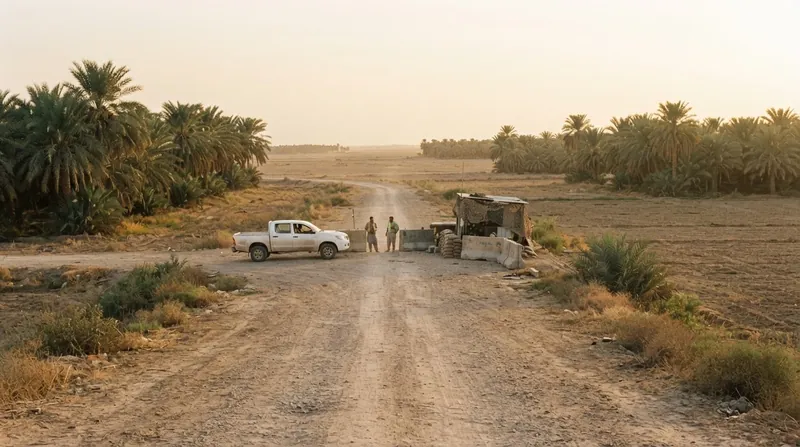
The crisis escalated rapidly earlier this week when the Iraqi military massed heavily armed units on the outskirts of the militia stronghold. Commanders had prepared for a potential breach of the town if the armed factions refused to comply with federal orders.[6]
The standoff was triggered by a government investigation that uncovered a massive, sophisticated oil smuggling network operating within the closed military zone. Authorities determined that the illicit operation was functioning under the direct protection of the armed groups holding the territory.[6]
Baghdad faced mounting pressure from the United States and international partners to rein in the smuggling operations and assert state sovereignty. The illicit revenue streams were reportedly bypassing federal oversight and funding unauthorized paramilitary activities across the region.[6]
Located roughly 60 kilometers south of the capital, Jurf al-Sakhar sits on a critical fault line between Baghdad and the southern provinces. Its geography makes it a highly defensible chokepoint, which complicated any plans for a forced military entry.[1][4]
The Terms of the Withdrawal
The negotiated settlement allows Kataib Hezbollah to withdraw its heavy weaponry and personnel without facing federal arrest warrants or direct combat. In exchange, the militia agreed to dismantle its exclusive checkpoints and hand over the keys to the town's primary infrastructure.[3][4]
Political intermediaries, including figures closely tied to the broader Popular Mobilization Forces, spent 48 hours shuttling between government offices and militia commanders. Their mediation focused on finding a face-saving exit that recognized the state's authority without humiliating the armed factions.[1][4]
"The security plan for Jurf Al-Sakhr has been fully approved and is now in the implementation phase," stated operations commander Al-Zaidi, confirming the federal mandate. He emphasized that the deployment would proceed systematically to ensure no security vacuums were left behind.[7]
Federal Police units are currently conducting block-by-block sweeps of the area to secure abandoned militia facilities and verify the withdrawal. Engineering teams have also been dispatched to clear potential hazards and assess the condition of the local road network.[2]
The complete departure of Kataib Hezbollah's combat elements is expected to conclude by the end of the week. Observers note that the militia's compliance with the withdrawal order has been unusually swift, reflecting the firm consensus reached during the negotiations.[3][5]
Dismantling the Smuggling Networks
The scale of the alleged oil smuggling operation in Jurf al-Sakhar was staggering, involving fleets of modified tanker trucks and hidden storage depots. Investigators estimate that millions of dollars in illicit crude and refined products moved through the corridor monthly.[6]
This shadow economy provided a vital, untraceable financial lifeline for the armed groups, insulating them from federal budget constraints. By controlling the territory, the militias could extract tolls, manage black-market sales, and fund their broader regional operations.[6]
For the Iraqi government, securing the town was as much an economic imperative as a security necessity. Reclaiming control of the transit routes is essential for stabilizing the national energy sector and demonstrating accountability to international financial institutions.[6]
Previous administrations had repeatedly failed to penetrate the Jurf al-Sakhar zone, which had been effectively sealed off from state inspectors since 2014. The successful deployment of the Federal Police marks a significant break from years of institutional paralysis regarding the stronghold.[4]
Kataib Hezbollah's Strategic Calculus
Kataib Hezbollah's decision to step back rather than fight reflects a calculated assessment of its current political and military leverage. Engaging in a protracted shootout with federal forces would have severely damaged the group's standing within the Iraqi political establishment.[3][4]
The militia also had to consider its position within the broader Popular Mobilization Forces, a state-sponsored umbrella organization. A direct clash with the Federal Police could have forced other PMF factions to take sides, risking a fracturing of the coalition.[1]
Regional analysts suggest that Tehran may have played a quiet role in encouraging the militia to accept the government's terms. Iran generally prefers to maintain stability within the Iraqi Shiite political house, avoiding intra-factional warfare that could weaken its overall influence.[4]
By ordering its fighters to "resume normal duties," the militia's leadership effectively framed the withdrawal as a routine redeployment rather than a defeat. This messaging allows the group to maintain internal cohesion while complying with the federal mandate.[5]
Testing State Authority
The peaceful transfer of Jurf al-Sakhar represents a major political victory for the Prime Minister's government, proving it can enforce its writ. It demonstrates a capacity to dismantle entrenched illicit networks without plunging the country into widespread civil violence.[1][6]
However, the operation also sets a complex precedent for how Baghdad handles other militia-controlled zones across the country. The reliance on negotiated settlements rather than unconditional enforcement highlights the enduring power of the armed factions in Iraqi politics.[1]
Political factions in Baghdad have broadly welcomed the deployment, viewing it as a necessary step toward normalizing the security environment. Lawmakers are now calling for parliamentary oversight to ensure the Federal Police maintain absolute control over the newly secured territory.[7]
The long-term challenge for the federal government will be holding the territory against potential infiltration or sabotage. Security forces must now transition from a deployment posture to a sustainable, community-oriented policing model in a highly sensitive environment.[2]
Unresolved Questions in the Corridor
The most pressing humanitarian question remains the fate of the original residents of Jurf al-Sakhar, who were entirely displaced in 2014. It is still unclear whether the federal takeover will finally pave the way for their safe return after a decade in exile.[1][4]
Furthermore, authorities have not detailed how they plan to permanently dismantle the physical infrastructure of the smuggling networks. Until the hidden pipelines and storage depots are destroyed, the economic temptation to resume illicit activities will persist.[6]
There are also lingering concerns that some militia elements may attempt to remain in the area by blending into local security units. Ensuring that the Federal Police ranks in Jurf al-Sakhar are free of divided loyalties will require rigorous vetting and continuous oversight.[3]
The ultimate success of this operation will not be measured by the initial deployment, but by the state's ability to govern the town in the months ahead. The next verifiable checkpoint will be the completion of the new security perimeter and the formal opening of the transit corridor to civilian traffic.[2][7]
Sources
- [1]Al Jazeera — Iraqi forces deploy to Jurf al-Sakhar after deal with Iran-backed group Read on Al Jazeera →
- [2]Anadolu Agency — Iraq opens security command headquarters in Jurf al-Nasr as troops redeploy Read on Anadolu Agency →
- [3]The Cradle — Iraqi govt forces enter Jurf al-sakhar under deal to avoid confrontation with Kataib Hezbollah Read on The Cradle →
- [4]Iran International — Iraq reaches deal with Iran-backed militia over Baghdad stronghold Read on Iran International →
- [5]Rudaw — Kata'ib Hezbollah orders fighters to resume normal duties amid deal over Jurf al-Sakhr Read on Rudaw →
- [6]Euronews — Iraq orders armed factions to withdraw from strategic area amid alleged oil smuggling and US pressure Read on Euronews →
- [7]Shafaq News — Al-Zaidi approves plan to secure Jurf Al-Sakhr Read on Shafaq News →
What to watch
- Baghdad faces a pending choice between enforcing a complete disarmament of Iran-aligned militias or adopting a proposal that would allow factions to retain their weapons under state regulation for four years.
Charts, maps and images
Timeline
November 2026
Iraqi Federal Police Take Control of Jurf al-Sakhar Following Agreement With Armed Groups
Iraq Masses Troops at Kataib Hezbollah Stronghold After Uncovering Massive Oil Smuggling Network
AI
September 2026
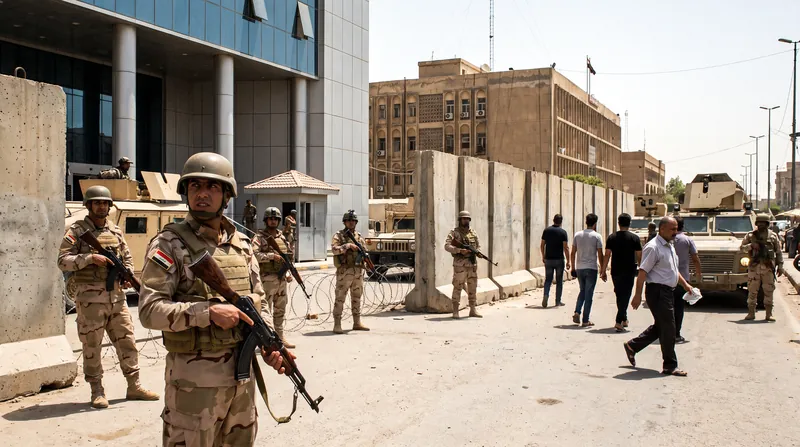
Baghdad's Choice Before the US Withdrawal: Full Militia Disarmament or a Four-Year Compromise
AI
August 2026
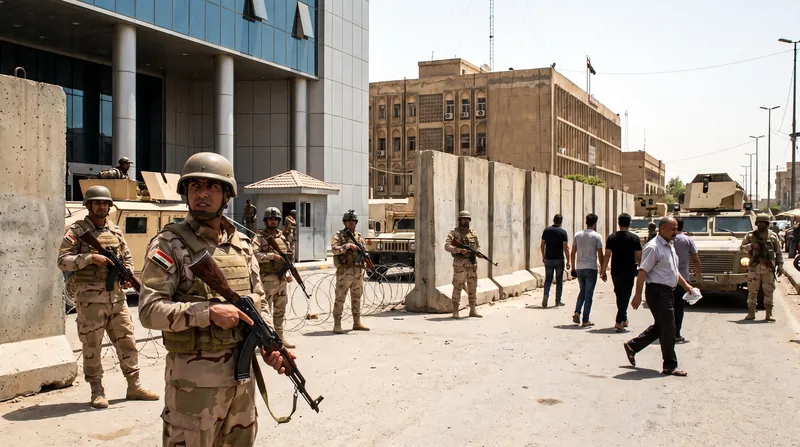
Powerful Iran-Aligned Militia Kataib Hezbollah Openly Rejects Iraqi PM's Disarmament Deadline
How the story developed
The broader standoff between the Iraqi government and armed factions began following US-Saudi retaliatory strikes that killed 20 Popular Mobilization Forces fighters after drones were launched from Iraq. In response to the escalating security situation, Prime Minister Ali al-Zaidi issued a mandate requiring all armed factions to surrender their weapons to state control by September 30. An initial aborted government raid on a militia facility exposed the limits of Baghdad's ability to enforce the disarmament order.
On August 9, hardline Iran-aligned militias, specifically Kataib Hezbollah and Harakat al-Nujaba, explicitly rejected the Prime Minister's disarmament mandate. Instead of complying, the groups pledged to expand their arsenals. Iraq's governing coalition subsequently warned that any armed activity outside state authority would be prosecuted under the Anti-Terrorism Law.
By September 15, as the September 30 deadline for the US-led coalition's withdrawal approached, international pressure mounted on Baghdad. The United States reportedly threatened to suspend monthly dollar transfers to Iraq if the militias failed to disarm. Hardline factions continued to flatly refuse the weapons handover, raising fears of an internal conflict.
Facing the prospect of armed confrontation and economic sanctions, officials considered alternatives to immediate full disarmament. A new proposal emerged that would allow the factions to retain their weapons under state regulation for a four-year compromise period, though tensions between the government and Kataib Hezbollah remained high leading into the November crisis over Jurf al-Sakhar.