
Scientists Successfully Cultivate Potatoes in Simulated Lunar Soil for Future Moon Bases
Researchers have successfully grown edible potatoes in simulated lunar regolith, achieving yields comparable to Earth-based crops. The breakthrough demonstrates that future lunar colonists could rely on locally grown food by amending the Moon's harsh soil with organic matter.
By Ishani Patel

Share this story
Transporting a single kilogram of food from Earth to the lunar surface costs tens of thousands of dollars. That brutal economic reality has long constrained plans for permanent human settlements in space, forcing mission planners to rely on pre-packaged rations that degrade in nutritional value over time.[1][2]
Researchers at Oregon State University have now demonstrated that future lunar colonists could grow their own staple crops. In a study published this week, scientists successfully cultivated edible potatoes in simulated lunar regolith, proving that the Moon's harsh surface material can be engineered to support calorie-dense agriculture.[6][7]
The agricultural trial utilized a specialized volcanic ash mixture designed to replicate the exact mineral composition and jagged texture of lunar soil. When supplemented with organic matter, the simulated regolith produced potato yields that matched the performance of control crops grown in standard Earth potting soil.[4][7]
Beyond sheer volume, the harvested tubers passed critical safety evaluations. Lunar regolith contains high concentrations of heavy metals and lacks the biological buffering found in terrestrial dirt, raising concerns that space-grown crops might be toxic. The new analysis confirmed the potatoes are entirely safe for human consumption.[5][7]
While the published findings detail the precise agricultural metrics and soil chemistry, the research teams have not yet released direct public commentary on the next phases of the project. The current data focuses strictly on the quantitative yield comparisons and the chemical safety profile of the harvested crops.[6][7]
Engineering the Lunar Soil
True lunar regolith is fundamentally hostile to plant life. Because the Moon lacks an atmosphere and active weathering processes, its surface dust consists of microscopic, razor-sharp glass shards that compact tightly and repel water, suffocating delicate root systems before they can establish themselves.[2][3]
To recreate these punishing conditions in the laboratory, the research team utilized a standardized lunar simulant. This material mimics the basaltic composition of the lunar mare regions, providing the same challenging physical structure and nutrient-poor baseline that future astronauts will face when establishing surface greenhouses.[4][6]
The breakthrough relied on heavily amending the raw simulant. By introducing specific ratios of organic compost and biological matter, the scientists altered the soil's mechanical properties. This organic addition improved water retention and created a porous structure, allowing the potato roots to penetrate the otherwise dense material.[7]
Potatoes were selected for this landmark trial due to their exceptional caloric density and space efficiency. Unlike wheat or corn, which require extensive processing and produce significant inedible biomass, potatoes deliver high carbohydrate yields per square meter and can be consumed with minimal preparation.[1][2]
The experimental crops completed a standard growth cycle of approximately 100 days under controlled environmental conditions. Throughout this period, researchers monitored the plants for signs of physiological stress, tracking how the jagged simulant particles interacted with the expanding tuber structures beneath the surface.[3][7]
Overcoming Toxicity and Stress
One of the primary hurdles in space agriculture is the mobilization of toxic elements. Lunar soil is rich in aluminum, chromium, and other heavy metals that become highly soluble in certain pH environments, threatening to poison the plants or accumulate dangerously in the edible tissues.[2][5]
The addition of organic matter proved crucial in mitigating this chemical threat. The compost acted as a chemical buffer, binding to the heavy metals and preventing the potato plants' root systems from absorbing them in toxic quantities during the critical tuber-filling stage of development.[5][7]
Nutritional profiling of the harvested crop revealed a macronutrient composition nearly identical to terrestrial potatoes. The tubers developed standard levels of starch, vitamin C, and potassium, confirming that the plants did not sacrifice nutritional quality to survive the mechanical stress of the simulant.[5][7]
Water management remains a central challenge for any off-world agricultural system. The amended regolith demonstrated sufficient capillary action to support standard drip irrigation, a vital metric for lunar habitats that will need to recycle nearly 100 percent of their water through closed-loop life support systems.[2][4]
The successful cultivation also highlights the importance of establishing a soil microbiome. Raw lunar dust is entirely sterile, but the organic amendments introduced beneficial bacteria and fungi that helped break down nutrients, essentially terraforming the small batches of simulant into living, productive soil.[6][7]
Logistical Impact for Artemis
NASA's Artemis program aims to establish a sustained human presence on the Moon by the end of the decade. Supporting a permanent crew of four astronauts requires thousands of kilograms of food annually, a logistical burden that currently dictates the frequency and payload capacity of resupply launches.[1][3]
Shifting even a fraction of that caloric requirement to in-situ resource utilization radically alters mission economics. By using local regolith as the primary growth medium, space agencies only need to transport lightweight seeds and concentrated organic fertilizer, saving metric tons of payload mass per mission.[1][2]
Beyond the mathematical mass savings, fresh produce offers documented psychological benefits for isolated crews. Previous experiments aboard the International Space Station have shown that tending to plants and consuming fresh, crunchy food significantly improves astronaut morale during long-duration spaceflights.[3][4]
Until now, space agriculture has largely focused on hydroponic leafy greens, such as the lettuce grown on the ISS. While valuable for morale and micronutrients, leafy greens provide negligible calories. The successful cultivation of a carbohydrate-rich staple crop marks a transition from orbital gardening to true off-world farming.[1][7]
Scaling this laboratory success into a functional lunar greenhouse will require specialized infrastructure. Future habitats will need pressurized agricultural modules equipped with advanced LED lighting arrays to simulate optimal solar cycles, as the Moon experiences 14 days of continuous sunlight followed by 14 days of darkness.[2][6]
The Next Phase of Testing
The current study validates the soil chemistry and biological viability, but significant variables remain untested. The laboratory trials were conducted under Earth's gravity, leaving open questions about how the potato plants will orient their root systems and manage water distribution in the Moon's one-sixth gravity environment.[3][4]
Researchers also need to evaluate the impact of the lunar radiation environment. While surface greenhouses will likely be shielded by layers of regolith or positioned in lava tubes, the ambient radiation could still induce genetic mutations in the crops over multiple generations of seed saving.[2][5]
The methodologies developed for this lunar simulant trial are already informing parallel research into Martian agriculture. Martian regolith presents a different set of chemical challenges, notably the presence of toxic perchlorates, but the core principle of amending sterile dust with organic matter remains identical.[1][7]
Engineering teams are currently designing automated agricultural pods that could be deployed on the lunar surface ahead of crewed missions. These robotic systems would begin processing the regolith and initiating the first crop cycles, ensuring a mature food source is waiting when astronauts arrive.[2][6]
Engineering teams are currently designing automated agricultural pods that could be deployed on the lunar surface ahead of crewed missions.
The next verifiable checkpoint for this research involves testing the amended soil mixtures in partial-gravity simulators and parabolic flights. Those upcoming trials will determine exactly how much water and organic fertilizer must be manifested on the first cargo landers bound for the lunar south pole.[4][7]
Key points
- Scientists successfully cultivated edible potatoes in simulated lunar regolith, achieving yields comparable to crops grown in standard Earth soil.
- The simulated lunar dust required amendments with organic matter to improve water retention and buffer against toxic heavy metals.
- Nutritional analysis confirmed the space-grown tubers are safe for human consumption and contain standard levels of starch and vitamins.
- Growing calorie-dense staple crops on the Moon could save space agencies millions of dollars by reducing the need to launch food from Earth.
What we don’t know
- How the potato plants will orient their root systems and manage water distribution in the Moon's one-sixth gravity environment.
- Whether ambient lunar radiation will induce harmful genetic mutations in the crops over multiple generations of seed saving.
- The exact mass of organic fertilizer that must be transported from Earth to sustain the initial crop cycles before a closed-loop compost system is established.
How we got here
2015
NASA and the International Space Station conduct the first successful harvests of hydroponic leafy greens in orbit.
2022
Researchers successfully grow a small flowering weed in actual lunar regolith brought back by the Apollo missions.
Nov 2026
Scientists demonstrate the successful cultivation of calorie-dense potatoes in organically amended lunar simulant.
- Space Agricultural Researchers
- Scientists focused on the biological and chemical mechanics of growing crops in extraterrestrial soils.
- Mission Logisticians
- Planners focused on the economic and payload constraints of deep space exploration.
- Lunar Habitat Engineers
- Specialists designing the infrastructure and closed-loop systems required to support off-world farming.
Perspectives this story doesn't cover
- Astronaut Nutritionists
- Commercial Spaceflight Operators
Sources
Source coverage
7 outlets
3 viewpoints surfaced







- [1]The GuardianMission Logisticians
Spuds in space: scientists say potatoes could be key food source for future moon base
Read on The Guardian → - [2]NautilusMission Logisticians
How Future Lunar Colonists Can Farm Potatoes on the Moon
Read on Nautilus → - [3]The MirrorLunar Habitat Engineers
The possibility of humans living on the moon isn't as far off as cynics predict as new study finds potatoes grown in simulated lunar soil match those seeded on earth
Read on The Mirror → - [4]CTV NewsLunar Habitat Engineers
Scientists succeed in growing potatoes in simulated moon soil
Read on CTV News → - [5]Talker NewsLunar Habitat Engineers
Study says potatoes grown in moon-like soil safe to eat
Read on Talker News → - [6]PRESDASpace Agricultural Researchers
Scientists Grow Edible Potatoes in Simulated Moon Soil
Read on PRESDA → - [7]Bioengineer.orgSpace Agricultural Researchers
Potatoes cultivated in simulated lunar soil supplemented with organic matter are safe to eat and can achieve growth and yields comparable to those produced on Earth
Read on Bioengineer.org →

More in Science
See all →Stellar Evolution
Astronomers Observe Rare Stellar Merger as Giant Star Engulfs Companion in Andromeda
5 sources

Space Exploration
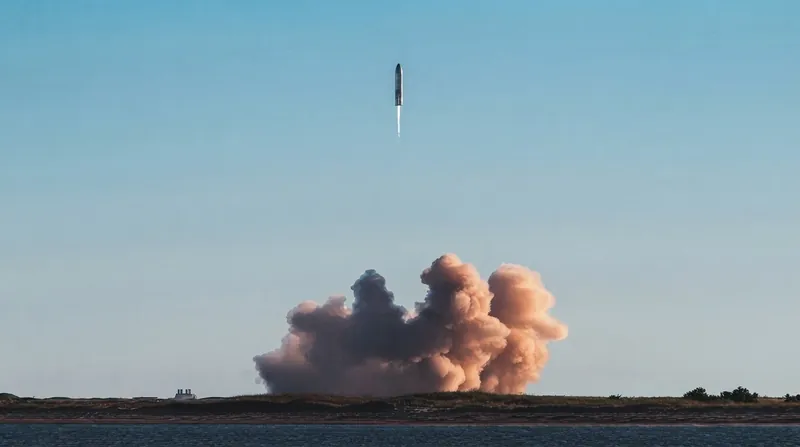
SpaceX Catches Starship Upper Stage With Mechanical Arms After Booster Aborts
7 sources
Planetary Defense
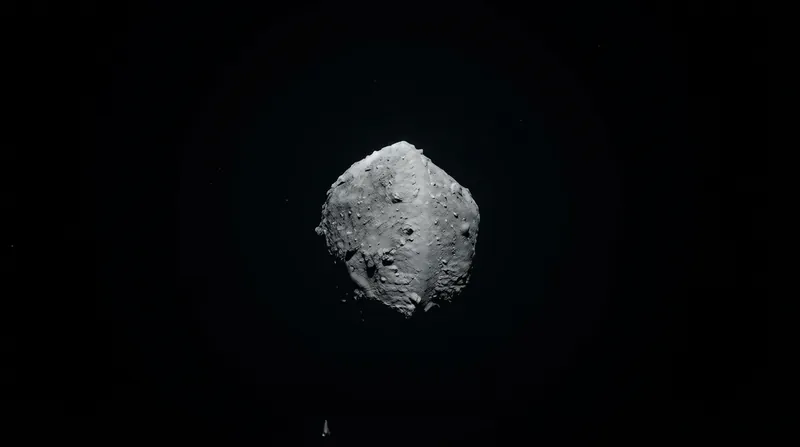
Europe's Hera Spacecraft Begins Close Inspection of Asteroid Rammed by NASA
5 sources
Human Spaceflight
NASA Opens Astronaut Applications for Future Lunar and Mars Missions
5 sources

Comments
Every angle. Every day.
Get Science stories with full source coverage and perspective breakdowns, free every day.