
full timeline
Haiti gang and security crisis
El Salvador's military deployed attack helicopters to destroy the stronghold of the 400 Mawozo gang in Haiti, escalating its intervention.
Follow Haiti gang and security crisis in the Factlen app and get an alert when there is news. Get the app
Share this story
Latest report
Salvadoran Forces Destroy Haiti Gang Headquarters in Helicopter Strike
El Salvador's military deployed attack helicopters to destroy the stronghold of the 400 Mawozo gang in Haiti, escalating its intervention. The operation killed roughly 20 gang members but missed its notorious leader, who had recently appealed to the UN for dialogue.
- Salvadoran attack helicopters and Haitian police destroyed the Croix-des-Bouquets headquarters of the 400 Mawozo gang on November 8.
- The strike reportedly killed 20 gang members, though leader Wilson Joseph survived the bombardment.
- President Nayib Bukele ordered the attack after soliciting the compound's exact coordinates on social media.
- The operation occurred days after Joseph appealed to the United Nations for dialogue and mediation.
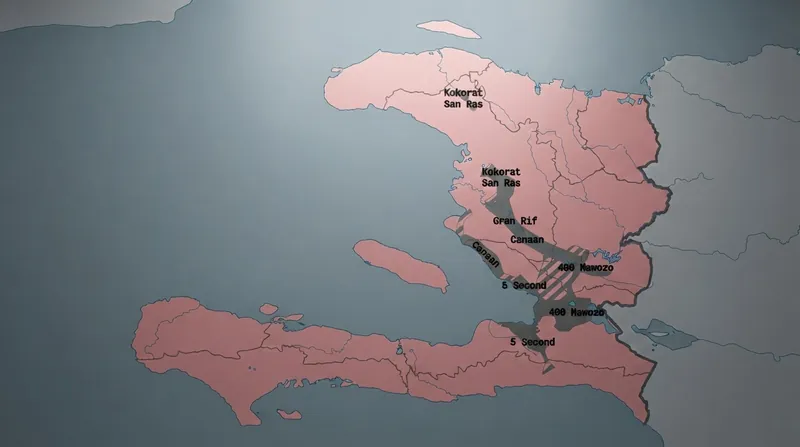
Salvadoran attack helicopters and Haitian police forces leveled the headquarters of one of Haiti’s most notorious criminal syndicates on November 8, 2026. The joint operation targeted a large compound in Croix-des-Bouquets, a suburb east of Port-au-Prince controlled by the 400 Mawozo gang.[2][4]
The aerial bombardment marks a severe escalation in El Salvador’s unilateral military intervention in the Caribbean nation. Salvadoran MD 500E light combat helicopters fired Hydra 70 rockets into the two-story residence, leaving the structure heavily damaged as suspected gang members scattered.[4][6]
The strike was specifically aimed at Wilson Joseph, the leader of 400 Mawozo, who operates under the alias Lanmò San Jou. While the assault reportedly killed approximately 20 gunmen inside the compound, Joseph was not present at the time of the attack.[3][4]
The operation followed an extraordinary public exchange on social media. On November 6, Salvadoran President Nayib Bukele responded to a photograph of the compound posted on X, asking users to supply the exact GPS coordinates so his forces could destroy it.[2][4]
Following the strike, Bukele published footage of the helicopter raid to his millions of followers. "We kept our promise," Bukele wrote on November 10. "We destroyed the home of Lanmo San Jou and the 400 Mawozo gang's headquarters. Most of them ran away without even trying to fight. What cowards!"[2][4]
Expanding the Mission
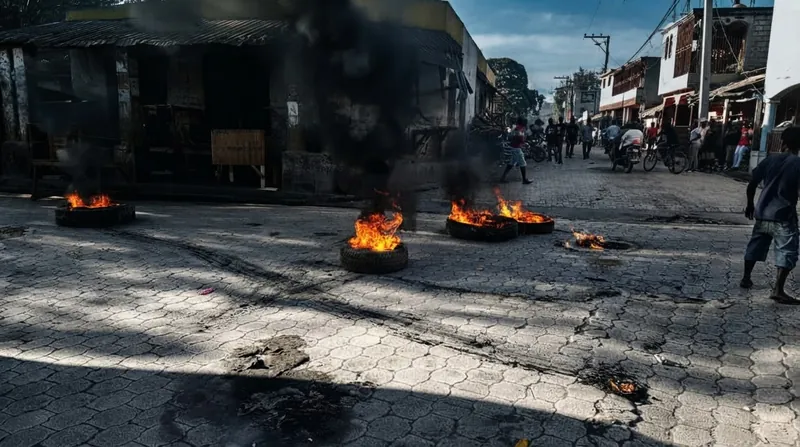
El Salvador initially deployed forces to Haiti following an October 18 ambush in the Plaine du Cul-de-Sac region. During that attack, four Salvadoran military aviation technicians serving with the United Nations-backed Gang Suppression Force went missing after their armored vehicle was set on fire.[4][5]
Since October 22, Bukele has surged approximately 2,500 Salvadoran troops into Haiti, effectively doubling the foreign military presence in the country. The contingent arrived with a fleet of seven helicopters, introducing heavy aerial firepower to a conflict previously fought block-by-block on the ground.[6]
The vast majority of these newly deployed Salvadoran soldiers operate independently of the UN-backed Gang Suppression Force. This parallel command structure has raised alarms among international observers regarding the rules of engagement in densely populated urban environments.[2][5]
Data from the Armed Conflict Location & Event Data Project (ACLED) illustrates the immediate impact of the Salvadoran arrival. In the 21 days following the deployment, security force clashes and drone strikes targeting Haitian gangs increased by 45.8 percent compared to the preceding three weeks.
"The deployment of 2,500 officers from El Salvador that started on 22 October accelerated the increase in security operations," said María Fernanda Arocha, an analyst at ACLED. She noted that the offensive has broadened beyond rescuing the missing officers to encompass sweeping territorial operations.
A Plea for Mediation
The destruction of the 400 Mawozo headquarters occurred just days after the gang attempted to open diplomatic channels. On November 1, Joseph sent a letter to UN Secretary-General António Guterres, requesting that a delegation be sent to facilitate dialogue and mediation.[5]
In the missive, Joseph warned that Bukele’s aggressive rhetoric could trigger a cycle of reprisals that would ultimately harm Haitian civilians. The gang leader denied responsibility for the missing Salvadoran technicians, pointing instead to the rival Chen Mechan gang that operates in the same area.[5]
The United Nations confirmed receipt of the letter but emphasized that acknowledging it did not constitute an endorsement. Security analysts warn that treating a sanctioned criminal enterprise as a legitimate party to a peace process risks validating their violent control over the capital.[5]
Joseph remains under extensive international sanctions and faces hostage-taking charges in the United States. The FBI has offered a $1 million reward for information leading to his arrest, stemming from 400 Mawozo’s 2021 kidnapping of 17 Christian missionaries.[2][5]
The 400 Mawozo syndicate is a core member of the Viv Ansanm gang coalition, which the United States has designated as a Foreign Terrorist Organization. The group finances its operations through mass extortion, arms trafficking, and controlling key transit routes out of the capital.[5]
Operating primarily in the Croix-des-Bouquets district, the gang has systematically dismantled local infrastructure, forcing thousands of residents to flee. Their control over the Plaine du Cul-de-Sac region has effectively severed Port-au-Prince from the northern half of the country.[5]
Regional Repercussions
Despite the gang's overtures, Haitian authorities have fully embraced the Salvadoran military's aggressive tactics. Prime Minister Alix Didier Fils-Aimé publicly praised Bukele's commitment to dismantling the criminal networks that have paralyzed the nation since the 2021 assassination of President Jovenel Moïse.[4][6]
"The contributions of the FRG, the PNH, the Armed Forces of Haiti, and international partners are enabling us to strengthen operations on the ground," Fils-Aimé wrote on X. "The gangs will find no respite on my watch."[6]
The intervention has also drawn logistical support from neighboring nations. Dominican Republic President Luis Abinader announced on November 10 that his government is actively collaborating with El Salvador, providing intelligence and military supplies to sustain the anti-gang offensive.[1][4]
However, human rights organizations are demanding greater transparency. Amnesty International issued a statement urging both El Salvador and Haiti to ensure that all military operations comply with international law, particularly given the Salvadoran military's track record of mass detentions at home.[2]
The lack of a unified command structure complicates the battlefield. Today, five distinct security actors are operating in Port-au-Prince: the Haitian National Police, the national Armed Forces, the UN-backed GSF, a private drone task force, and the independent Salvadoran contingent.[5]
Unresolved Objectives
Haitian officials insist the Salvadoran deployment fits within the broader international framework, but the United Nations has explicitly stated that Bukele's additional troops fall outside the UN Support Office's mandate and reporting mechanisms.[5]
Experts warn that introducing attack helicopters into Port-au-Prince's sprawling slums carries severe risks. "The Salvadoran troops' eagerness to secure quick, symbolic victories entails huge risks for civilians who can be caught in the crossfire," one regional security analyst noted.
There are also concerns that the overwhelming force could inadvertently forge a more unified criminal front. While Haitian gangs frequently war with one another over territory, intense external pressure has previously driven rival factions to form temporary coalitions to repel state forces.[5]
The political stakes are equally high for Bukele. The Salvadoran president has built his international brand on his uncompromising domestic crackdown, which incarcerated more than one percent of his country's population. Failing to rescue his soldiers or pacify Haiti could dent that carefully cultivated image.[4]
Sources
- [1]Associated Press — Dominican president says he backs Bukele and Salvadoran troops in Haiti Read on Associated Press →
- [2]Africanews — Salvadoran troops target headquarters of powerful gang in Haiti Read on Africanews →
- [3]Le Nouvelliste — The house of gang leader Lanmo San jou targeted by airstrikes from the Salvadoran army Read on Le Nouvelliste →
- [4]The Chosun Daily — El Salvador's Bukele Destroys Haiti Gang Headquarters Read on The Chosun Daily →
- [5]Americas Quarterly — El Salvador's Presence and a Gang's Offer Test Haiti's Security Read on Americas Quarterly →
- [6]HaitiLibre — Haiti - Anti-gang : Salvadoran combat air fleet in Haiti Read on HaitiLibre →
What to watch
- Whether the four abducted Salvadoran aviation technicians are returned alive and unharmed.
- Whether Haiti will hold its first elections since 2016 following efforts to neutralize the gangs.
Charts, maps and images
Timeline
November 2026
Salvadoran Forces Destroy Haiti Gang Headquarters in Helicopter Strike
October 2026
El Salvador Deploys Special Forces to Haiti to Rescue Abducted Aviation Technicians
June 2026
UN Chief Visits Haiti as Heavily Armed 'Gang Suppression Force' Deploys to Retake Capital
AI
How the story developed
By mid-2026, gang violence in Haiti had killed over 2,300 people and displaced 1.5 million residents. The Viv Ansanm gang federation controlled an estimated 70 percent of the capital, Port-au-Prince. Haitian officials emphasized that neutralizing the gangs was a necessary step before the country could hold its first elections since 2016.
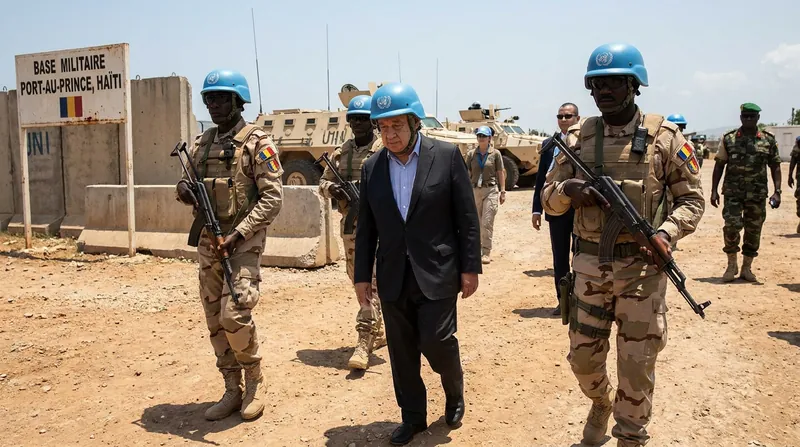
On June 17, United Nations Secretary-General António Guterres arrived in Port-au-Prince to inspect a newly deployed, heavily militarized Gang Suppression Force. This multinational military force was tasked with dismantling the gangs and retaking the capital, replacing a struggling Kenyan-led mission. During his visit, Guterres toured squalid displacement camps where residents pleaded for action to allow them to return home.
The UN-backed Gang Suppression Force faced its first major attack when four Salvadoran military aviation technicians were abducted during a gang ambush in Port-au-Prince. The targeted area, the Croix-des-Bouquets district, was heavily controlled by the 400 Mawozo gang, whose leader had publicly vowed to fight the foreign intervention.
In response to the abduction, El Salvador dispatched 100 special forces operatives to Haiti by October 23 to rescue the personnel. President Bukele threatened a massive military escalation if the hostages were not returned alive and unharmed, leading to the subsequent helicopter strikes on the gang's headquarters in November.