
All Five DNA Nucleobases Confirmed in Asteroid Samples, Bolstering 'Life From Space' Theory
Scientists have definitively identified all five nucleobases essential for DNA and RNA in pristine asteroid samples, resolving a decades-old mystery about the missing building blocks of life. The discovery provides the strongest evidence yet that the chemical precursors to life on Earth were delivered by meteorite impacts.
By Mateo Ramos

Share this story
The building blocks of life are no longer exclusive to Earth. In a landmark analysis of pristine asteroid material, researchers have confirmed the presence of all five nucleobases—the chemical 'letters' that make up the genetic code of DNA and RNA. The discovery resolves a glaring hole in astrobiology and provides a comprehensive evidence pack for how the ingredients for life arrived on our planet.
For decades, scientists analyzing meteorites found only three of the five essential nucleobases: adenine, guanine, and uracil. The missing two—cytosine and thymine—remained stubbornly absent from extraterrestrial samples. This absence led some researchers to theorize that these specific molecules could only be synthesized in the primordial soup of early Earth, casting doubt on the idea that space rocks delivered a complete starter kit for biology.
The new study, published this week, overturns that assumption. 'We now have the complete set,' explains the lead author of the Nature paper. 'The genetic alphabet that codes for all life on Earth is present in these extraterrestrial rocks, completely independent of terrestrial biology.' The findings confirm that the cosmos is a vast chemical factory capable of synthesizing complex organic molecules.
The breakthrough did not come from finding new meteorites, but from inventing a gentler way to examine them. Previous extraction methods relied on hot formic acid to dissolve the rock and isolate organic compounds. While hot acid successfully extracted robust, double-ringed purines like adenine and guanine, it inadvertently destroyed the more fragile, single-ringed pyrimidines—cytosine and thymine.[2]
In essence, the very process designed to find the nucleobases was erasing them. To solve this, the international team developed a 'cold extraction' technique using cool water and ultrasonic baths. This gentler approach preserved the delicate molecular structures, finally revealing the missing pyrimidines hiding in the rock at concentrations of parts per billion.[2]
The samples analyzed were exceptionally pristine, sourced directly from the near-Earth asteroids Ryugu and Bennu via the Hayabusa2 and OSIRIS-REx return missions, alongside carefully preserved fragments of the Murchison meteorite. Because the Ryugu and Bennu samples were collected in the vacuum of space and sealed in specialized capsules, they eliminate the persistent threat of terrestrial contamination that plagues traditional meteorite research.[1]
The presence of these molecules in space rocks strongly bolsters the theory of pseudo-panspermia, which suggests that the chemical precursors to life were delivered to Earth by a heavy bombardment of asteroids and comets roughly 4 billion years ago. During the Late Heavy Bombardment, millions of tons of carbonaceous chondrites rained down on the young Earth.[1]
This new data allows scientists to calculate that this cosmic downpour could have delivered millions of tons of ready-made nucleobases to the planet's surface. The chemical pathways that create these nucleobases in space are also becoming clearer. Laboratory simulations of interstellar ice clouds, bombarded by ultraviolet radiation, have shown that simple molecules like ammonia and carbon monoxide can spontaneously form complex nucleobases.
However, the evidence pack comes with transparent uncertainty. A critical question remains: Did these space-delivered molecules actually jumpstart life, or were they merely a drop in the bucket compared to what Earth was synthesizing on its own? The concentrations found in the meteorites are incredibly small, leading to intense debate among chemists.
Some prebiotic chemists argue that while extraterrestrial delivery is fascinating, parts-per-billion concentrations are too low to have driven the origin of life without a localized concentration mechanism on Earth. They propose that evaporating tidal pools, freezing ice shelves, or deep-sea hydrothermal vents were still required to gather these cosmic deliveries and force them to link into the first RNA chains.[1][2]
Other researchers point out that the continuous rain of micrometeorites over hundreds of millions of years could have created a steady, global supply of organic material, bypassing the need for highly specific local environments. The cold extraction method is now being applied to dozens of archived meteorite samples to map exactly how widespread these molecules are across different classes of space rocks.
Regardless of their ultimate role in Earth's specific history, the confirmation of all five nucleobases in asteroids represents a paradigm shift. It proves that the ingredients for DNA are ubiquitous across the cosmos. If the chemical alphabet of life is routinely manufactured in the cold depths of space, the recipe for biology may be far more common than humanity ever dared to imagine.
Key points
- Scientists have confirmed the presence of all five DNA and RNA nucleobases in pristine asteroid samples.
- Cytosine and thymine were previously missing because traditional hot-acid extraction methods destroyed them.
- A new cold extraction technique preserved the fragile molecules, revealing their presence in parts-per-billion concentrations.
- The discovery strongly supports the theory that meteorite impacts delivered the chemical building blocks of life to early Earth.
Unanswered questions
- Whether these space-delivered nucleobases were the primary source for life on Earth, or if terrestrial synthesis played a larger role.
- The exact chemical pathways that form fragile pyrimidines in the extreme cold and radiation of interstellar clouds.
- How these trace molecules became concentrated enough in Earth's primordial oceans to link together into the first genetic chains.
How we got here
1969
The Murchison meteorite falls in Australia, later revealing the first evidence of extraterrestrial amino acids and purine nucleobases.
2020
Japan's Hayabusa2 mission successfully returns pristine samples from the carbon-rich asteroid Ryugu.
2023
NASA's OSIRIS-REx mission delivers samples from the asteroid Bennu, providing uncontaminated material for analysis.
July 2026
Researchers publish definitive evidence of all five nucleobases using a novel cold-extraction technique.
- Astrobiologists
- Argue that the cosmos is a vast chemical factory that seeded early Earth with ready-made genetic building blocks.
- Prebiotic Chemists
- Emphasize that delivering the ingredients in trace amounts is not the same as assembling life, requiring Earth-based concentration.
- Analytical Methodologists
- Focus on how the breakthrough in cold extraction techniques exposes a blind spot in decades of previous meteorite research.
Perspectives this story doesn't cover
- Philosophers discussing the implications for human uniqueness
- Theologians addressing the cosmic origins of biological ingredients
Sources
Source coverage
2 outlets
3 viewpoints surfaced


- [1]The New York TimesAnalytical Methodologists
Meteorites Delivered the Blueprint for Life, New Study Suggests
Read on The New York Times → - [2]SciencePrebiotic Chemists
Cold extraction reveals elusive pyrimidines in extraterrestrial samples
Read on Science →
More in Science
See all →Habitable Zone
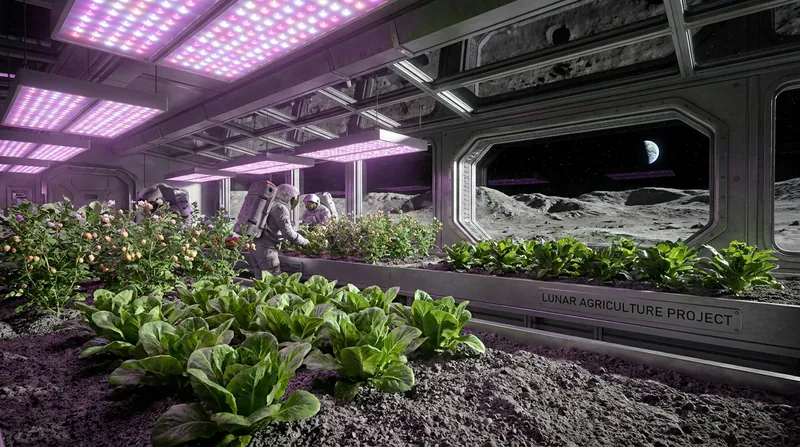
The Runaway Greenhouse Threshold: How Water Vapor Feedback Sets the Inner Edge of the Habitable Zone
8 sources
Venusian Atmosphere
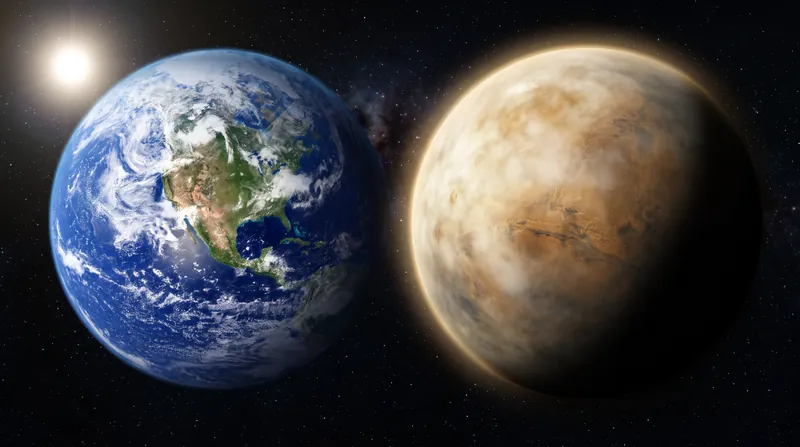
Venus's Pale Clouds Hide a Substance as Dark as Tar, New Optical Model Shows
4 sources
Quantum Astrophysics
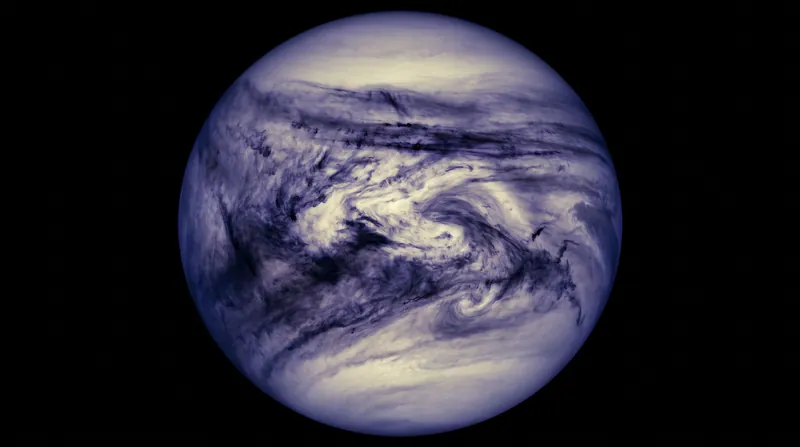
Magnetar's Colossal Field Provides First Observational Proof of 90-Year-Old Heisenberg Quantum Effect
6 sources
Galactic Astronomy
Astronomers Find Evidence of a 'Missing Link' Black Hole Hiding at the Center of the Milky Way
3 sources
Comments
Every angle. Every day.
Get Science stories with full source coverage and perspective breakdowns, free every day.