
Pentagon and Lockheed Martin Finalize 10-Year Framework for 850 F-35 Fighter Jets
The Department of Defense and Lockheed Martin have reached a decade-long agreement to produce and sustain at least 850 F-35 aircraft through 2036. The framework aims to stabilize the aerospace supply chain, though it remains subject to congressional funding approval.
By Aarav Khanna

Share this story
Congressional watchdogs and defense analysts have repeatedly characterized the F-35 procurement cycle as a year-to-year scramble vulnerable to budget shocks. The Pentagon and Lockheed Martin countered that narrative on Thursday, finalizing a decade-long framework agreement to purchase at least 850 of the fifth-generation fighters.[1][4]
The arrangement establishes a long-term production baseline running through 2036, moving away from the annualized contracting battles that have historically defined the program. It covers both the manufacturing of new airframes and the sustainment of the existing global fleet.[2][11]
While the framework sets the ceiling and terms for the next ten years, it does not immediately obligate the full funding. The actual purchases remain pending congressional approval and the annual appropriations process.[3][10]
"The tentative agreement, which still needs lawmakers' blessing, covers production and sustainment over the next 10 years," Breaking Defense noted in its assessment of the deal's structure.[11]
Stabilizing the Supply Chain
A primary driver behind the extended commitment is the fragility of the aerospace supply chain. Sub-tier manufacturers require predictable demand signals to invest in tooling, raw materials, and specialized labor.[5][6]
By guaranteeing a floor of 850 aircraft over a decade, the Department of Defense provides those suppliers with the financial security necessary to maintain active production lines. This predictability is designed to prevent the parts shortages that have previously grounded squadrons.[1][8]
Lockheed Martin executives highlighted the agreement during their third-quarter earnings call, noting that the framework allows the company to negotiate better rates with its own vendors. The initial phase of the deal is valued at approximately $7 billion.[3]
The timing of the agreement follows a turbulent period for the F-35 program, which recently experienced a year-long pause in deliveries. That halt was triggered by delays in validating the Technology Refresh 3 hardware and software upgrades.[2][4]
Fleet Modernization Pressures
The Pentagon resumed accepting the jets earlier in 2026, albeit with truncated software capabilities, to clear a backlog of dozens of airframes parked at Lockheed's Fort Worth facility. The new framework signals institutional confidence that the TR-3 hurdles are largely resolved.[1][10]
The 850-jet figure encompasses orders for the United States military as well as international partners and Foreign Military Sales customers. Pooling these requirements into a single decade-long structure helps stabilize the unit cost for all participants.[5][8]
The U.S. Air Force remains the largest single customer for the F-35A variant, and its long-term force structure depends heavily on consistent delivery rates. The service is currently balancing its fifth-generation procurement against the need to maintain older platforms.[11][12]
Testifying before Congress earlier this week, Air Force leadership outlined the scale of their future requirements. The service stated it needs 1,509 combat-ready jets by 2035 to meet its global operational mandates.[12]
During that same hearing, Lt. Gen. David Tabor confirmed reporting that the Air Force is considering a new build F-16 to supplement its fleet numbers. However, he clarified that the decision wasn't "urgent," keeping the immediate focus on the F-35 pipeline.[12]
Strategic Competition and Capacity
The Department of Defense's push for a 10-year lock-in reflects broader anxieties about defense industrial capacity amid rising geopolitical tensions. Planners are prioritizing hot production lines that can surge if necessary.[4][6]
The F-35 serves as the primary sensor node and strike platform for the U.S. and its allies in both the European and Indo-Pacific theaters. Ensuring a steady flow of these aircraft is central to the Pentagon's strategy for deterring near-peer adversaries.[8][9]
International demand for the fighter has surged over the past 24 months, with several European nations joining the program following the outbreak of war in Ukraine. This expanded user base complicates the production schedule but lowers the shared sustainment costs.[5][7]
Lawmakers on the House and Senate Armed Services Committees will now review the framework as they draft the upcoming National Defense Authorization Act. Their approval is required to authorize the multi-year procurement authorities embedded in the deal.[6][10]
The Appropriation Hurdle
While the authorizing committees generally support multi-year munitions and aircraft buys, the appropriations committees hold the actual purse strings. They must allocate the specific funds year by year, which can still introduce friction.[4][11]
Key points
- The Pentagon and Lockheed Martin finalized a 10-year framework to produce and sustain at least 850 F-35 aircraft through 2036.
- The initial phase of the agreement is valued at approximately $7 billion, according to Lockheed Martin executives.
- The deal aims to stabilize the aerospace supply chain by giving sub-tier manufacturers predictable, long-term demand signals.
- The framework remains subject to annual congressional appropriations and formal authorization in the National Defense Authorization Act.
What we don’t know
- It is unclear exactly how the 850 aircraft will be divided between the U.S. military branches and international Foreign Military Sales customers.
- The specific unit cost reductions achieved by locking in a 10-year supply chain commitment have not been publicly detailed.
- It remains to be seen how potential continuing resolutions in Congress might delay the funding for the initial Lot 18 and 19 orders.
How we got here
2001
Lockheed Martin wins the Joint Strike Fighter contract to develop the F-35.
2023–2024
The Pentagon pauses F-35 deliveries due to delays in validating the Technology Refresh 3 hardware and software upgrades.
Oct 2026
The Department of Defense and Lockheed Martin announce a 10-year framework for at least 850 aircraft.
- Aerospace Industry
- Argues that long-term procurement frameworks are essential to stabilize the fragile sub-tier supply chain and lower unit costs.
- Military Planners
- Focuses on the necessity of a guaranteed aircraft pipeline to meet global operational mandates and deter near-peer adversaries.
- Fiscal Watchdogs
- Maintains that while multi-year deals offer savings, they lock the government into long-term commitments that still require annual congressional appropriations.
Perspectives this story doesn't cover
- Sub-tier component suppliers
- Taxpayer advocacy groups
Sources
Source coverage
12 outlets
3 viewpoints surfaced











- [1]Air & Space Forces MagazineMilitary Planners
Pentagon, Lockheed Agree on 10-Year Framework for Buying F-35s
Read on Air & Space Forces Magazine → - [2]Aviation WeekAerospace Industry
Pentagon, Lockheed Agree To 10-Year Ordering Commitment For F-35s
Read on Aviation Week → - [3]Manufacturing DiveAerospace Industry
Lockheed, Pentagon reached F-35 fighter jet deal for $7B
Read on Manufacturing Dive → - [4]Army TimesMilitary Planners
Pentagon, Lockheed agree to 10-year deal for 850 F-35 jets
Read on Army Times → - [5]Aerospace Global NewsAerospace Industry
Lockheed Martin and Department of War unveil framework for 850 F-35 fighter jets
Read on Aerospace Global News → - [6]Washington ExaminerFiscal Watchdogs
Pentagon and Lockheed Martin finalize framework for 10-year deal for 850 F-35 aircraft
Read on Washington Examiner → - [7]Defense Mirror
Lockheed Martin, Pentagon Agree on 10-Year Framework for at Least 850 F-35 Jets
Read on Defense Mirror → - [8]The Jerusalem Post
Lockheed Martin enters deal with US Defense Department for 850 F-35 Lightning II fighter jets
Read on The Jerusalem Post → - [9]Voz Media
Department of War and Lockheed Martin agree to produce 850 F-35 fighter jets
Read on Voz Media → - [10]Defense NewsMilitary Planners
Pentagon, Lockheed agree to 10-year deal for 850 F-35 jets
Read on Defense News → - [11]Breaking DefenseMilitary Planners
Pentagon, Lockheed agree to decade-long F-35 framework deal for hundreds of jets
Read on Breaking Defense → - [12]Breaking DefenseMilitary Planners
Air Force needs 1,509 combat-ready jets by 2035, service tells Congress
Read on Breaking Defense →
More in Defense & Security
See all →Next-Gen Fighters
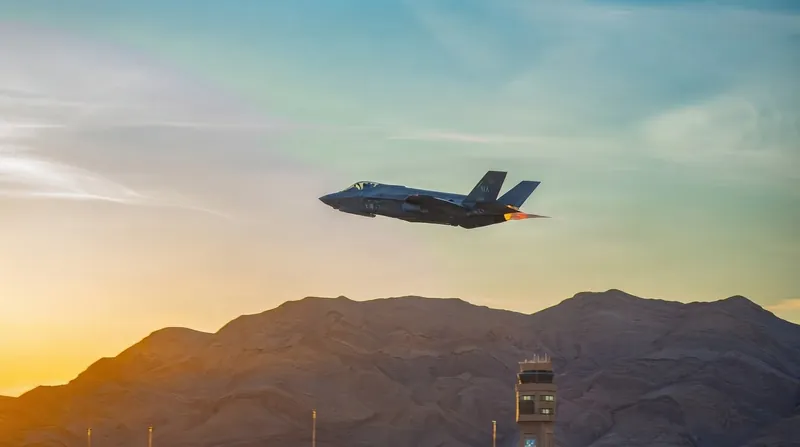
Boeing Wins $20 Billion US Navy Contract to Build F/A-XX Sixth-Generation Strike Fighter
4 sources
Military Logistics
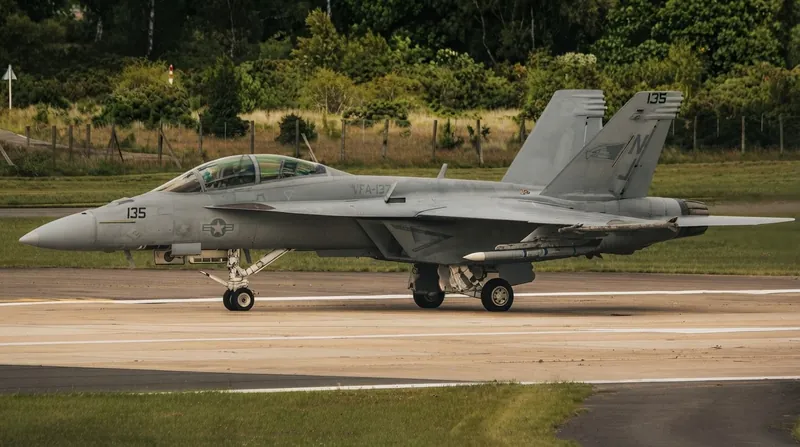
The Ten Classes of Supply: How the Military Categorizes Sustainment and Where the System is Breaking Down
6 sources
Drone Warfare
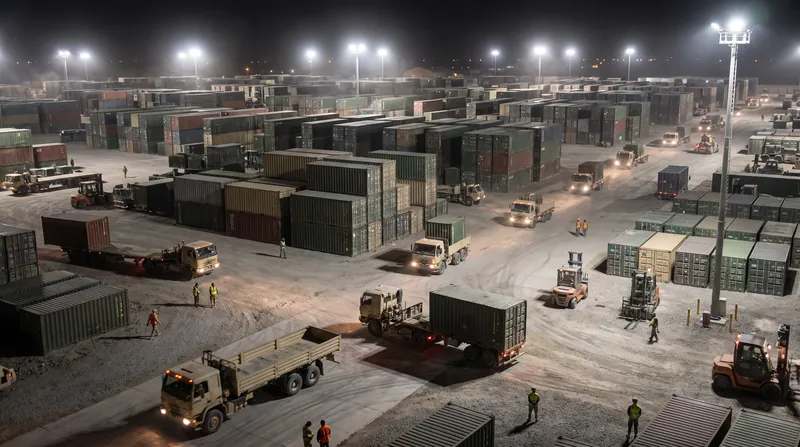
Air Force Accelerates $10 Million Reaper Replacement as General Atomics Unveils 'Wildfire' Drone
6 sources

Border Fortification
Finland Plans Domestic Production of One Million Landmines to Counter Border Threats
6 sources

Comments
Every angle. Every day.
Get Defense & Security stories with full source coverage and perspective breakdowns, free every day.