
Air Force Tells Congress It Needs 1,509 Combat-Coded Fighters by 2035
The U.S. Air Force has delivered a revised force structure report to lawmakers, establishing a moderate-risk baseline that demands a significant expansion of the tactical fleet. The plan accelerates the transition to fifth-generation aircraft while excluding autonomous drone wingmen from the core capacity calculation.
By Marina Lopez

Share this story
When the United States Air Force submitted its long-term fighter plan to lawmakers last year, it anchored its projections on a low-risk scenario that demanded 1,558 combat-coded jets by 2035. The updated force structure report delivered to Congress this week models the same timeframe but shifts the baseline to a moderate-risk threshold.[2][6]
This adjustment establishes a firm requirement for 1,509 frontline fighters. Hitting that target demands an addition of more than 200 airframes to the 1,271 combat-coded aircraft the service currently operates. It also represents a 140-jet increase over the 1,369 aircraft the Air Force had previously set as its 2030 goal.[2][6]
Lieutenant General David Tabor, the deputy chief of staff for plans and programs, outlined the classified assessment during a Pentagon briefing on Tuesday. The 1,509 figure represents the minimum capacity regional combatant commanders require to execute their operational plans without assuming significant strategic vulnerabilities.[2][7]
Tabor noted that while the military prefers to operate at lower risk levels, the moderate-risk calculation provides a more realistic procurement target for the coming decade. A parallel low-risk calculation in the same document concluded that the Air Force would need 1,723 combat-ready aircraft to comfortably execute its global mandate.[5][6]
Reshaping the tactical inventory
The projection fundamentally reshapes the composition of the American tactical fleet, accelerating the transition away from fourth-generation platforms. The F-16 currently dominates Air Force flight lines, accounting for roughly 45 percent of the combat-coded inventory. Under the 2035 framework, the F-35A will overtake it to become the most numerous aircraft in the service.[2]
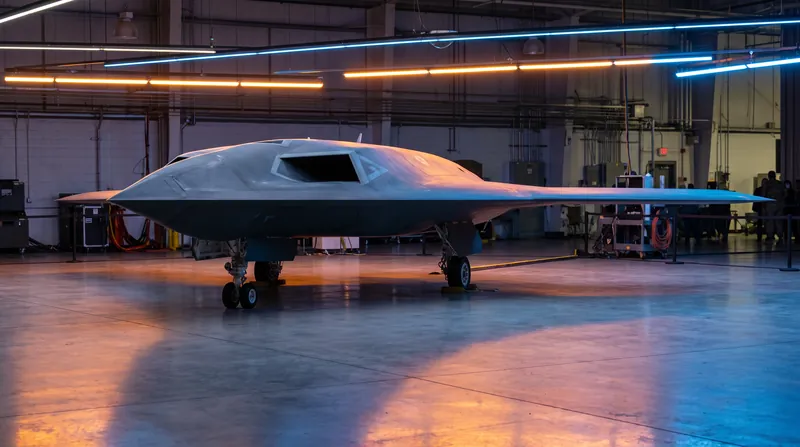
By the middle of the next decade, the F-35A will expand from 30 percent of the current force to approximately 40 percent of the future fleet. The F-22 Raptor and its designated sixth-generation replacement, the F-47, will together comprise 20 percent of the combat-coded force.[3][7]
The service plans to replace its existing F-22s with the new F-47 on a roughly one-for-one basis. The final 40 percent of the 2035 inventory will be divided evenly between the F-15EX and the remaining F-16s, as older F-16 airframes reach the end of their structural service life in the mid-2030s.[2][5]
The A-10 Thunderbolt II is entirely excluded from the future force structure, reflecting the service's pivot away from dedicated close air support platforms toward multirole fighters. The 1,509 requirement strictly counts manned, combat-coded jets assigned to operational squadrons, completely excluding aircraft dedicated to training or testing.[2][5]
Accounting for combat capacity
This accounting method provides a broader measure of fleet health than the statutory floor set by federal law. The congressional mandate requires the Air Force to maintain 1,145 primary mission aircraft, a metric that excludes backup and attrition reserve jets.[2]
In May, the service informed lawmakers it had slipped below that legal minimum, operating just 1,098 primary mission fighters. The force structure analysis deliberately isolates crewed tactical aviation from emerging autonomous systems to establish a baseline for human-operated combat power.[2]
The report omits the Collaborative Combat Aircraft program, the drone wingmen currently undergoing testing in Nevada and California. The Air Force is treating these autonomous platforms, along with potential bomber support, as additive capabilities rather than direct replacements for crewed fighters in its capacity calculations.[2][4]
Procurement constraints and production
Achieving the 1,509-aircraft threshold requires a sustained acceleration in acquisition rates that the Air Force is currently struggling to fund. Service leaders have consistently stated that maintaining fleet capacity requires purchasing 72 new fighters annually. However, the fiscal year 2027 budget request includes funding for only 62 airframes.[3][5]
That 62-aircraft request comprises 38 F-35As and 24 F-15EXs, leaving a persistent shortfall in the replacement cycle. Financial constraints are further complicated by industrial base limitations at Lockheed Martin and Boeing. Tabor indicated that the Air Force intends to increase purchase volumes in subsequent budget cycles.[3][5]
Those future increases depend entirely on the manufacturers demonstrating the capacity to deliver the aircraft on schedule. "They've assured us that they can, and we believe them," Tabor told reporters, noting that sustained congressional funding is the primary variable in reaching the 2035 target.[3][5]
The service is also evaluating the potential procurement of newly built F-16s to bolster numbers. Tabor characterized that option as a non-urgent consideration, though it remains available if fifth-generation deliveries lag or if the F-47 development timeline extends further into the 2030s.[1][4][6]
Strategic assumptions and risk
The Pentagon calculates operational risk across four tiers—low, medium, significant, and high—to measure the likelihood of achieving strategic objectives during a conflict. At the moderate-risk level modeled in the new report, American forces are projected to accomplish their primary missions but could face severe strain during prolonged operations.[7]
The immediate challenge for the Air Force remains securing the appropriations necessary to execute the transition. Funding for 14 of the 38 requested F-35As in the current budget cycle depends on $2.34 billion sought through a congressional reconciliation process.[3][5]
Without that capital, the service will be forced to either cannibalize other modernization programs or defer the fighter purchases until 2028. "We just lose 14 times an F-35's worth of other capabilities that we were planning on," Tabor said regarding the potential redirection of existing funds.[3]
Delaying those acquisitions would push the Air Force further behind its replacement schedule, compounding the difficulty of reaching the 2035 fleet design. The strategic assumptions underpinning the entire model were formalized before the outbreak of direct hostilities with Iran earlier this year.[3][5]
Tabor emphasized that the 1,509 target is a snapshot of current combatant command requirements rather than an immutable ceiling. Shifts in the international security environment, the maturation of autonomous drone technologies, and the operational lessons drawn from recent Middle Eastern engagements could all force subsequent revisions to the fleet architecture.[5]
Key points
- The U.S. Air Force has established a new requirement for 1,509 combat-coded fighters by 2035 to meet moderate-risk operational plans.
- The F-35A will overtake the F-16 to become the most numerous aircraft in the fleet, comprising 40 percent of the future inventory.
- The projection excludes drone wingmen and the A-10 Thunderbolt II, focusing strictly on manned tactical aviation.
- Achieving the target requires purchasing 72 fighters annually, but current budget requests fund only 62, creating a persistent replacement shortfall.
What we don’t know
- Whether Congress will approve the $2.34 billion in reconciliation funding required to purchase 14 of the requested F-35As this cycle.
- How the integration of Collaborative Combat Aircraft (drone wingmen) will ultimately alter the baseline requirement for crewed fighters.
- Whether the Air Force will formally initiate procurement of newly built F-16s if fifth-generation deliveries fall behind schedule.
- Air Force Planners
- Prioritizes modernizing the fleet to meet combatant command requirements at acceptable risk levels.
- Defense Industrial Base
- Emphasizes the need for stable, predictable funding to expand production capacity.
- Defense Analysts
- Focuses on the gap between stated requirements and actual procurement realities.
Perspectives this story doesn't cover
- Taxpayer Advocacy Groups
- Autonomous Systems Developers
Sources
Source coverage
7 outlets
3 viewpoints surfaced







- [1]TWZDefense Analysts
Any Decision To Buy New-Build F-16s Not An “Urgent” Priority: USAF
Read on TWZ → - [2]Defence BlogDefense Analysts
U.S. Air Force sets new 1,509-fighter goal for 2035
Read on Defence Blog → - [3]Defence Industry EuropeDefense Industrial Base
U.S. Air Force projects larger F-35 role in expanded fighter fleet of 1,509 combat-coded aircraft by 2035
Read on Defence Industry Europe → - [4]Aviation WeekDefense Industrial Base
USAF Outlines New Fighter Goals, May Eye Bombers, CCAs For Help
Read on Aviation Week → - [5]Military TimesAir Force Planners
US Air Force outlines the fighter fleet it needs by 2035
Read on Military Times → - [6]Breaking DefenseDefense Analysts
Air Force needs 1,509 combat-ready jets by 2035, service tells Congress
Read on Breaking Defense → - [7]Defense NewsAir Force Planners
US Air Force outlines the fighter fleet it needs by 2035
Read on Defense News →
More in Defense & Security
See all →Border Fortification
Finland Plans Domestic Production of One Million Landmines to Counter Border Threats
6 sources

Combat Medicine
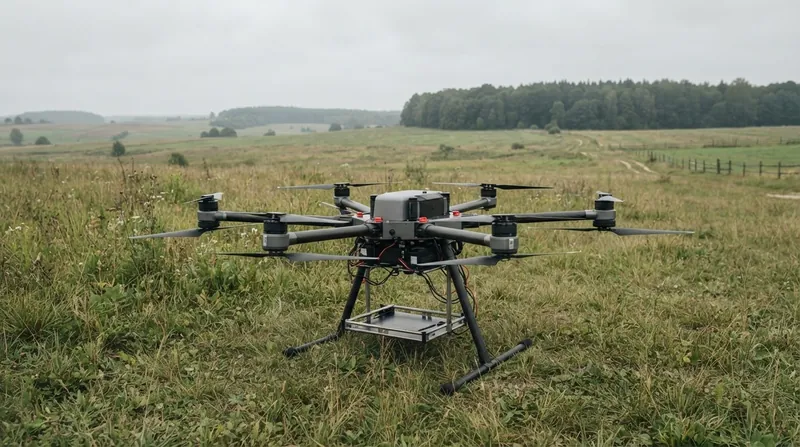
Ukrainian Forces Use Heavy-Lift Drone for First Battlefield Casualty Evacuation
6 sources
Optical Physics
How Laser Rangefinders Use Last-Pulse Logic to See Through Smoke and Fog
5 sources

Electronic Warfare
How Resonant Half-Wave Dipoles Allow Grams of Chaff to Cast Bomber-Sized Radar Signatures
2 sources

Comments
Every angle. Every day.
Get Defense & Security stories with full source coverage and perspective breakdowns, free every day.