
Russia Frees Detained American Stephen Hubbard During US Envoy's Visit to St. Petersburg
Moscow has released 74-year-old American citizen Stephen Hubbard after more than four years in captivity. The unilateral move coincided with U.S. envoy Steve Witkoff's arrival in St. Petersburg for direct peace negotiations with Vladimir Putin.
Share this story
Russia has released 74-year-old American citizen Stephen Hubbard from a penal colony, ending his four-year detention as U.S. envoy Steve Witkoff arrived in St. Petersburg for direct talks with President Vladimir Putin. The unilateral release removes a long-standing diplomatic irritant just weeks ahead of the U.S. midterm elections.[1][2][4]
Hubbard, a retired schoolteacher from Michigan, was transferred to Pulkovo Airport on Wednesday morning. He is expected to be flown to a military hospital in Texas for medical evaluation, given his reportedly poor health following his imprisonment.[2][7]
During a televised portion of their meeting at the Konstantinovsky Palace, Witkoff directly thanked the Russian leader for the gesture, emphasizing the personal gratitude of the American president.[1][7]
"I wanted to thank you very much. The president sends his thanks. Our whole nation sends its thanks," Witkoff said. "Because of you, he's going home to his family."[2]
The release occurred without a reciprocal prisoner exchange, a departure from the complex, multi-nation swaps that characterized previous American releases. U.S. President Donald Trump stated on his Truth Social platform that Moscow freed Hubbard "out of respect," requiring no concessions in return.[2][4]
A shift in diplomatic leverage
The timing of the release aligns with a broader diplomatic push by the Trump administration to negotiate an end to the war in Ukraine. Witkoff traveled to St. Petersburg immediately following a meeting with Ukrainian President Volodymyr Zelensky in Oslo, Norway.[1][4][7]
Hubbard was captured by Russian forces in April 2022 in the eastern Ukrainian city of Izyum, where he had been living for several years. Russian prosecutors accused him of joining Ukrainian territorial defense forces as a mercenary shortly after the full-scale invasion began.[4][5][6]
In 2024, a Moscow court convicted Hubbard and sentenced him to six years and 10 months in a penal colony. His defense lawyer consistently denied the mercenary charges, arguing that the elderly teacher took no part in hostilities.[4][5][6]
The U.S. State Department formally designated Hubbard as "wrongfully detained" in 2025, a legal classification that shifted responsibility for his case to the Special Presidential Envoy for Hostage Affairs. He was the last American holding that specific designation in Russian custody.[2]
Despite Hubbard's release, as many as 10 other U.S. citizens and dual nationals remain imprisoned in Russia on various charges. The Kremlin characterized Wednesday's release strictly as a humanitarian gesture, separating it from the broader geopolitical negotiations underway.[2][4]
The St. Petersburg negotiations
Witkoff's visit marks his ninth trip to Russia and represents a significant escalation in bilateral engagement between Washington and Moscow. The envoy is reportedly presenting new proposals for trilateral peace talks involving the United States, Russia, and Ukraine.[1][4]
The diplomatic overture has generated unease in Kyiv, where officials fear the U.S. administration might pressure Ukraine into territorial concessions. Trump recently lifted sanctions on Russian diesel exports, a move designed to stabilize global fuel prices ahead of the November midterms.[4]
In exchange for the sanctions relief, Washington has pressured Zelensky's government to halt long-range drone strikes against Russian oil refineries. This policy shift has strained the relationship between Washington and Kyiv, complicating Witkoff's shuttle diplomacy.[4]
During the St. Petersburg meeting, Witkoff notably praised Putin's decision to release Hubbard, employing language rarely used by Western diplomats since the 2022 invasion.[1]
"You talk so much about my president, President Trump, being a humanitarian," Witkoff told Putin during the broadcast. "You are a humanitarian also, sir, and I salute that, I commend you, and I thank you again."[1][4]
Domestic political calculations
The unilateral release provides the Trump administration with a tangible foreign policy victory just weeks before American voters head to the polls. Securing the freedom of a 74-year-old American without giving up a Russian prisoner in return bolsters the administration's negotiating credentials.[2][4]
For Putin, the concession costs very little strategically while signaling a willingness to engage constructively with the current U.S. administration. Russian state media heavily promoted the meeting, framing the release as evidence of Moscow's reasonable posture when treated with respect.[1][2][3]
The absence of Jared Kushner, another key U.S. envoy who was scheduled to attend the St. Petersburg talks but canceled due to illness, left Witkoff as the sole principal negotiator. He was met at the airport by Kirill Dmitriev, Putin's special envoy.[7]
As Hubbard travels back to the United States, attention now turns to the substance of the Konstantinovsky Palace talks. The success of Witkoff's broader mandate—initiating a formal peace process—remains highly uncertain given the entrenched positions on the battlefield.[2][4][7]
The coming weeks will test whether this humanitarian gesture translates into substantive diplomatic progress or simply serves as a standalone political win. Any formal trilateral negotiations would require Kyiv to accept terms it has thus far categorically rejected.[1][4]
The remaining detainees
While Hubbard's family celebrates his return, advocacy groups for other detained Americans are pressing the administration not to abandon their cases. The remaining prisoners lack the "wrongfully detained" designation, making their extraction significantly more complicated under U.S. law.[2]
Russian authorities continue to hold several dual citizens on charges ranging from treason to minor drug offenses. Diplomatic sources indicate that Moscow typically demands high-value Russian operatives held in Western prisons in exchange for these individuals, a price Washington avoided paying today.[2][4]
Key points
- Russia released 74-year-old American Stephen Hubbard after more than four years in captivity, transferring him to Pulkovo Airport for a flight to Texas.
- The unilateral release occurred during a meeting between U.S. envoy Steve Witkoff and Russian President Vladimir Putin in St. Petersburg.
- U.S. President Donald Trump stated the release required no reciprocal concessions, framing it as a diplomatic victory ahead of the midterm elections.
- Witkoff's visit is part of a broader American effort to initiate trilateral peace talks, a move that has generated significant anxiety in Kyiv.
What we don’t know
- Whether the Trump administration offered any private assurances or future sanctions relief to secure Hubbard's unilateral release.
- How the broader trilateral peace proposals presented by Witkoff were received by Putin during the St. Petersburg talks.
- The exact medical condition of Stephen Hubbard following his 54-month detention in the Russian penal system.
How we got here
April 2022
Stephen Hubbard is captured by Russian forces in the eastern Ukrainian city of Izyum.
2024
A Moscow court convicts Hubbard on mercenary charges, sentencing him to six years and 10 months in a penal colony.
2025
The U.S. State Department formally designates Hubbard as "wrongfully detained," shifting his case to the Special Presidential Envoy for Hostage Affairs.
October 2026
U.S. envoy Steve Witkoff meets with Ukrainian President Volodymyr Zelensky in Oslo to discuss peace proposals.
October 21, 2026
Russia unilaterally releases Hubbard as Witkoff meets with Vladimir Putin in St. Petersburg.
- The Trump Administration's View
- Direct engagement with Moscow yields immediate results without sacrificing American assets.
- Kyiv's View
- Bilateral US-Russia engagement risks sidelining Ukrainian interests in pursuit of a rapid political settlement.
- Human Rights Advocates' View
- Hostage releases are welcome, but praising authoritarian leaders normalizes state-sponsored detentions.
Perspectives this story doesn't cover
- Families of remaining American detainees in Russia
- Ukrainian frontline military commanders
Sources
Source coverage
7 outlets
3 viewpoints surfaced







- [1]The GuardianKyiv's View
Putin orders release of jailed American as he meets Trump envoy for Ukraine talks
Read on The Guardian → - [2]CBS NewsThe Trump Administration's View
American Stephen Hubbard released by Russia, Witkoff says
Read on CBS News → - [3]EuronewsHuman Rights Advocates' View
Russia frees detained American Stephen Hubbard during US envoy's visit
Read on Euronews → - [4]South China Morning PostKyiv's View
Putin holds Ukraine peace talks with Trump's envoy Witkoff, frees American Hubbard
Read on South China Morning Post → - [5]The Jerusalem PostHuman Rights Advocates' View
Russia frees American teacher Stephen Hubbard during Witkoff visit
Read on The Jerusalem Post → - [6]Reform.newsHuman Rights Advocates' View
Russia Releases Imprisoned American Stephen Hubbard
Read on Reform.news → - [7]EUTodayThe Trump Administration's View
Russia Releases 74-Year-Old American Prisoner as Witkoff Meets Putin in St Petersburg
Read on EUToday →
More in News & Politics
See all →Maritime Security
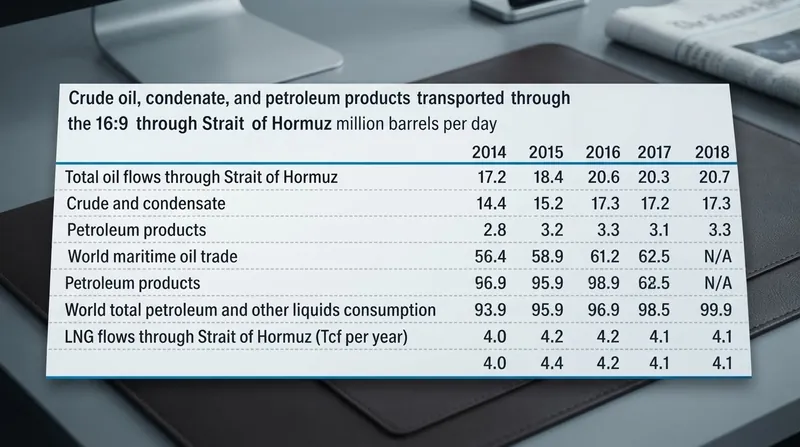
IRGC Claims Naval Mines Disabled Three Oil Tankers in Strait of Hormuz
5 sources
Airspace Security
NATO Deploys Surveillance Aircraft and Radars to Black Sea Following Deadly Drone Incidents
5 sources

Nuclear Standoff
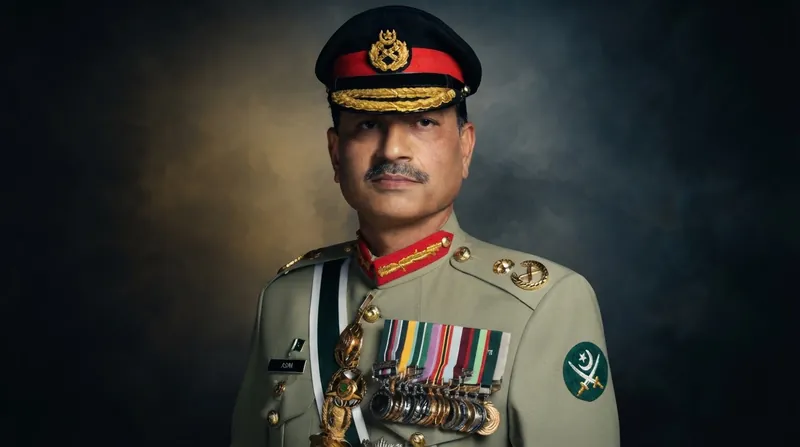
Pakistan Military Chief Concludes Tehran Crisis Talks as Iran Refuses to Export Nuclear Material
8 sources
Mediterranean Disputes
Eastern Libya Approves Maritime Deal With Turkey Over Greek Objections
4 sources

Comments
Every angle. Every day.
Get News & Politics stories with full source coverage and perspective breakdowns, free every day.