
TSMC Suspends Kaohsiung Fab Construction After Steel Beam Collapse Kills Four Workers
Taiwan Semiconductor Manufacturing Company has halted work at its advanced 2-nanometer facility following a fatal structural failure. Local labor authorities are investigating the site before construction can resume.
By Naina Verma

Share this story
The Kaohsiung City Labor Affairs Bureau and Taiwan Semiconductor Manufacturing Company have indefinitely suspended operations at a critical expansion zone. The halt follows a structural failure that killed at least three contractors. Regulators must now clear the site before heavy construction can resume.[3][4]
The incident occurred when screws securing a massive steel beam suddenly snapped during routine assembly. Four workers positioned on the elevated structure fell to the ground below. Emergency responders arrived shortly after the collapse, but the injuries proved fatal for the crew.[5]
Initial reports from regional authorities confirmed three immediate fatalities at the scene. Subsequent updates from local Taiwanese outlets indicated the death toll had risen to four. The exact sequence of the structural failure remains under active investigation by municipal engineers.[1][2][4]
TSMC management immediately ordered a complete stand-down of the affected sector to secure the perimeter. The company stated it is cooperating fully with occupational safety inspectors to determine why the load-bearing hardware failed. Work will not restart until comprehensive structural audits are completed.[3]
Initial reports from the site did not include direct public statements from TSMC executives or local labor officials regarding the specific mechanical failure. The official communications focused entirely on securing the area and confirming the suspension of construction activities.
Advancing the Silicon Frontier
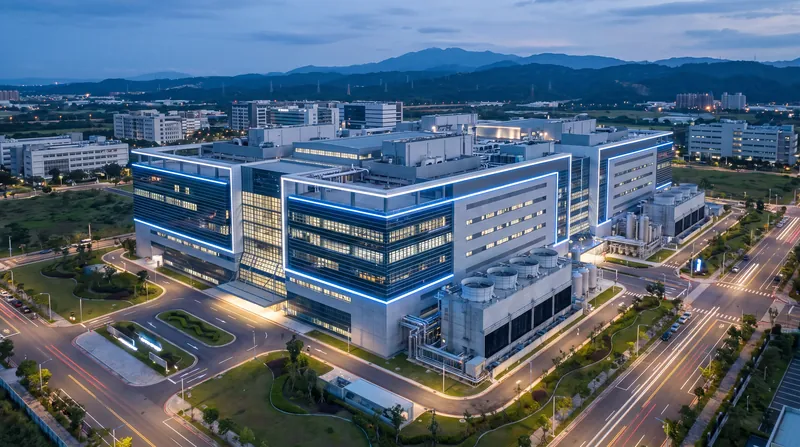
The Kaohsiung facility represents a massive capital investment for the world's largest contract chipmaker. The site is being outfitted to produce 2-nanometer silicon, the next frontier in semiconductor manufacturing. These advanced nodes are essential for upcoming artificial intelligence accelerators and high-performance mobile devices.[3]
TSMC originally announced the $9 billion Kaohsiung project in 2021, initially planning to build mature 28-nanometer and 7-nanometer production lines. The company later pivoted the strategy, upgrading the blueprint to house its most advanced 2-nanometer technology. Mass production at the site is targeted for 2025.
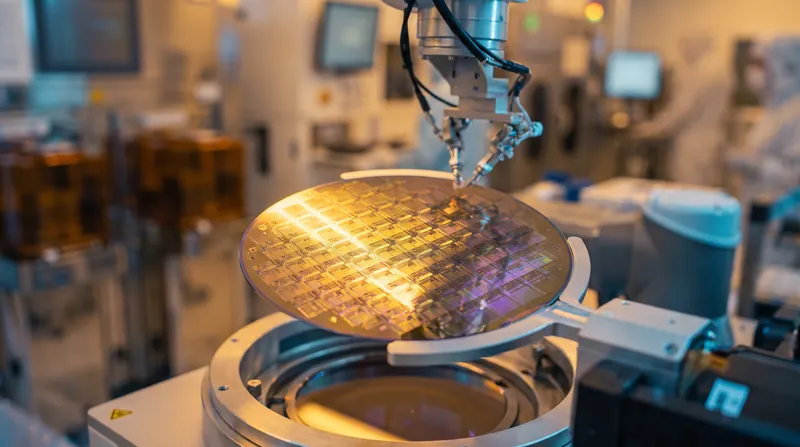
Building a modern semiconductor fabrication plant is one of the most complex engineering tasks in the industrial world. The structural frame must support massive vibration-damping concrete slabs. These specialized floors prevent microscopic tremors from ruining silicon wafers during the lithography process.
The 2-nanometer process, known internally as N2, introduces gate-all-around transistor architecture to the production line. This design allows for significantly higher transistor density and better power efficiency compared to current 3-nanometer chips. The Kaohsiung fab is designed to be a primary volume driver for this new technology.
Halting construction at a semiconductor fabrication plant can disrupt tightly choreographed installation schedules. Cleanroom environments and extreme ultraviolet lithography machines require precise environmental conditions. Any delay in the structural shell directly pushes back the calibration phase for this sensitive equipment.
Safety Scrutiny in Tech Expansion
Workplace safety at rapid-expansion industrial sites has drawn increased scrutiny from Taiwanese regulators. The island's tech sector is racing to expand capacity amid surging global demand for AI infrastructure. This pressure often translates to aggressive construction timelines across multiple regional science parks.
The snapping of steel beam screws points to potential issues with material quality or installation procedures. Industrial safety inspectors will likely examine the torque specifications and the origin of the fasteners used. The findings could trigger broader inspections across other TSMC expansion projects.[5]
Major tech companies rely on specialized construction firms to execute these massive infrastructure projects. The responsibility for site safety is often shared between the facility owner and the primary engineering contractors. The investigation will determine exactly where the oversight failure occurred in this chain of command.
Industrial accidents at this scale typically trigger a multi-agency response in Taiwan. The Occupational Safety and Health Administration will review the contractor's safety logs and site management practices. Financial penalties and mandatory retraining are standard regulatory responses following fatal workplace incidents.
Kaohsiung, traditionally a heavy industry hub in southern Taiwan, has been aggressively courting semiconductor investments. The city government views the TSMC facility as a cornerstone of its economic transformation. Local officials are balancing the need for rapid development with strict enforcement of labor protections.
Global Supply Chain Stakes
The demand for advanced silicon has created a bottleneck in global technology markets. Data center operators are purchasing AI accelerators as fast as they can be manufactured. TSMC's ability to bring the Kaohsiung facility online exactly on schedule is a critical variable in this global supply equation.
TSMC is simultaneously managing a massive global footprint expansion to meet this demand. The company is building new fabrication plants in Arizona, Japan, and Germany. However, the Kaohsiung site remains crucial because Taiwan retains the company's most advanced research and production capabilities.
The global semiconductor supply chain remains highly sensitive to any disruptions in Taiwan. TSMC produces an estimated 90 percent of the world's sub-5-nanometer processors. Clients like Apple and Nvidia rely entirely on these Taiwanese facilities to meet their product launch cycles.
Any perceived vulnerability in Taiwan's semiconductor expansion plans is closely monitored by international markets. Governments in the United States and Europe have cited supply chain concentration as a national security risk. Incidents that delay domestic Taiwanese production often reinforce arguments for geographic diversification.
Once the structural shell is completed, the facility must be sealed to create a pristine cleanroom environment. Only then can engineers begin installing the multi-million-dollar extreme ultraviolet lithography machines. A delay in the steel framework directly compresses the timeline for this delicate installation phase.
The immediate focus remains on securing the Kaohsiung site and supporting the families of the deceased workers. Engineering teams will spend the coming days testing the integrity of the surrounding steel framework. The timeline for resuming full construction will depend entirely on the findings of the municipal safety audit.[3]
Key points
- A structural collapse at TSMC's Kaohsiung construction site killed at least three workers after steel beam screws snapped.
- The Kaohsiung City Labor Affairs Bureau and TSMC have indefinitely suspended work at the affected zone pending safety audits.
- The facility is a critical $9 billion investment designed to mass-produce advanced 2-nanometer semiconductors by 2025.
- Prolonged construction delays could compress the installation timeline for sensitive cleanroom and lithography equipment.
What we don’t know
- Whether the snapped screws were the result of a manufacturing defect or improper installation procedures.
- Exactly how long the Kaohsiung City Labor Affairs Bureau will mandate the site remain closed for inspections.
- If the structural failure will require a broader redesign of the load-bearing framework in that sector.
How we got here
2021
TSMC announces plans to build a new fabrication plant in Kaohsiung, initially targeting mature nodes.
Mid-2023
The company upgrades the facility's blueprint to house its most advanced 2-nanometer production lines.
Oct 2026
A fatal structural collapse forces an indefinite halt to construction at the site.
- Labor Safety Advocates
- Prioritizes strict enforcement of workplace protections over aggressive industrial expansion schedules.
- Industry Analysts
- Focuses on the facility's critical role in the global semiconductor supply chain and production timelines.
- Municipal Regulators
- Balances the economic importance of the tech sector with the legal mandate to investigate fatal accidents.
Perspectives this story doesn't cover
- The primary construction contractors responsible for the site's daily operations.
- Families of the deceased workers.
Sources
Source coverage
5 outlets
3 viewpoints surfaced





- [1]Taipei TimesLabor Safety Advocates
Four dead after collapse at TSMC Kaohsiung site
Read on Taipei Times → - [2]Taiwan NewsLabor Safety Advocates
Four workers die after fall at TSMC's Kaohsiung construction site
Read on Taiwan News → - [3]The IndependentIndustry Analysts
Taiwanese chipmaking giant halts work after four workers killed at factory site
Read on The Independent → - [4]XinhuaMunicipal Regulators
Three killed in workplace accident at TSMC Kaohsiung construction site
Read on Xinhua → - [5]The StandardIndustry Analysts
4 workers fall at TSMC's Kaohsiung plant after steel beam screws snap, 3 dead
Read on The Standard →

More in Technology
See all →Supply Chain
TSMC Commits to Five Additional Advanced Packaging Plants in Chiayi Science Park
5 sources
Process Node
TSMC Reportedly Begins Pilot Production of 1.4nm Chips Ahead of 2028 Target
6 sources
AI Hardware
Nvidia Mandates TSMC 3nm Process for Next-Generation HBM Base Dies
4 sources
AI Hardware
Tenstorrent Secures $1.5 Billion to Scale Open-Weight AI Silicon Production
6 sources

Comments
Every angle. Every day.
Get Technology stories with full source coverage and perspective breakdowns, free every day.