
Trump Proposes Trilateral Nuclear Arms Control Pact With Russia and China
President Donald Trump has announced a push for a three-way nuclear disarmament agreement, seeking to bring Beijing into a strategic framework alongside Washington and Moscow. The initiative faces immediate hurdles over mutual verification protocols and China's historical refusal to cap its expanding arsenal.
By Anaya Sharma

Share this story
The viability of a new global nuclear framework now rests entirely on whether Beijing and Moscow will accept mutual verification inspections. President Donald Trump proposed a trilateral arms control pact on October 16, shifting the burden of compliance onto foreign capitals.[2]
The initiative attempts to replace decades of bilateral treaties with a three-way agreement capping the arsenals of the United States, Russia, and China. The White House confirmed that preliminary discussions regarding the framework have already commenced with foreign counterparts.[1][2]
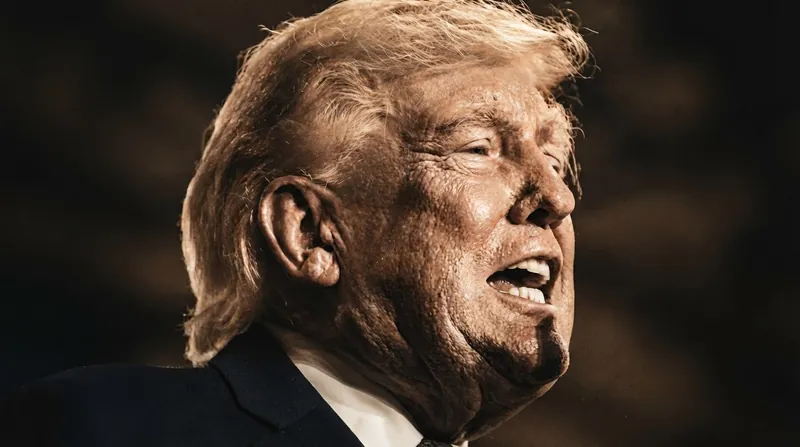
"We are talking to Russia and China about denuclearisation, and we are going to do something about it," Trump stated during his announcement. The administration views the inclusion of Beijing as a non-negotiable condition for future strategic stability.[2][4]
He characterized the current nuclear landscape as a severe threat, arguing that a comprehensive deal is necessary to prevent an unconstrained arms race. The administration has not yet released a formal draft text outlining the specific limits of the proposed treaty.[3][5]
The structural challenge for American negotiators is that the three nations possess vastly different nuclear postures and strategic incentives. Washington and Moscow hold roughly 88 percent of the world's nuclear inventory, while Beijing maintains a smaller but rapidly expanding force.[1]
The Verification Hurdle
Arms control agreements rely on intrusive on-site inspections to confirm that signatories are dismantling warheads and capping delivery systems. The success of the trilateral proposal depends on establishing a verification regime that all three militaries find acceptable.[1]
Russia suspended its participation in bilateral treaty inspections in 2023, citing geopolitical tensions and American support for Ukraine. Moscow has consistently linked the resumption of strategic dialogue to broader security concessions regarding NATO infrastructure in Eastern Europe.[5]
China has historically rejected any binding limits on its nuclear forces, arguing its arsenal is strictly defensive and significantly smaller than those of the United States and Russia. Beijing maintains a policy of minimum deterrence and opacity regarding its exact warhead count.[2]
The Pentagon estimates that China currently possesses more than 500 operational nuclear warheads and is on track to field over 1,000 by 2030. American defense planners argue this trajectory necessitates bringing Beijing into a formal arms control architecture immediately.[1]
Financial and geopolitical risk analysts noted following the announcement that the mechanics of the deal are highly uncertain. "The details remain elusive on how the administration plans to incentivize Chinese participation without requiring the United States to drastically reduce its own deployed forces," one brief stated.[5]
The Expiration Clock
The push for a new treaty arrives as the existing bilateral framework between Washington and Moscow has effectively collapsed. The New START agreement, which limited both sides to 1,550 deployed strategic warheads, expired in February 2026 without a successor in place.[1]
Without a binding treaty, the United States and Russia are legally free to upload thousands of reserve warheads onto existing intercontinental ballistic missiles, submarines, and heavy bombers. This absence of constraints has heightened anxieties among international security researchers.[1][3]
The Arms Control Association warned that the lack of a verifiable agreement increases the risk of miscalculation during crises. The organization has repeatedly urged the White House to pursue immediate, verifiable limits while negotiating the broader, more complex trilateral pact.[1]
Trump previously attempted to negotiate a three-way nuclear agreement during his first term in 2020. That effort stalled when Chinese diplomats declined invitations to join talks in Vienna, insisting that Washington and Moscow must first reduce their arsenals to Chinese levels.[2]
The current proposal appears to revive that first-term ambition, though the geopolitical environment has fractured significantly since the initial attempt. The deepening strategic partnership between Russia and China complicates American efforts to negotiate with them as separate entities.[4]
Strategic Incentives
For the United States, a trilateral pact would address the dual-deterrence problem of facing two nuclear-armed adversaries simultaneously. Defense planners argue that capping China's growth is essential to maintaining strategic stability in the Indo-Pacific region over the next decade.[1][5]
Russia seeks to use arms control negotiations to constrain American missile defense systems and conventional precision-strike capabilities. Moscow views these non-nuclear systems as a direct threat to the survivability of its strategic deterrent and demands their inclusion in any comprehensive treaty.[3]
China's primary objective is ensuring its smaller arsenal can survive a first strike and penetrate American missile defenses. Beijing has signaled it will not engage in quantitative arms control until the massive numerical disparity between its forces and the American arsenal is resolved.[2]
Ukrainian media highlighted the announcement with skepticism, noting that any grand bargain with Moscow could impact the ongoing conflict in Eastern Europe. Kyiv remains concerned that nuclear negotiations might be leveraged by Russia to force territorial concessions on the battlefield.[4]
Key points
- President Donald Trump proposed a trilateral nuclear arms control pact involving the United States, Russia, and China.
- The initiative seeks to replace expired bilateral treaties with a framework that caps Beijing's expanding nuclear arsenal.
- China has historically rejected binding limits, arguing its forces are strictly defensive and significantly smaller than American and Russian inventories.
- The expiration of the New START treaty in February 2026 has left the world's largest nuclear arsenals without binding constraints.
Open questions
- Whether Beijing will agree to send a delegation to preliminary working-level discussions in Geneva.
- What specific numerical limits the Trump administration intends to propose for the three arsenals.
- How the United States plans to incentivize Chinese participation without drastically reducing its own deployed forces.
Timeline
2020
The Trump administration attempts to negotiate a three-way nuclear agreement, but Chinese diplomats decline to join the talks.
2023
Russia suspends its participation in New START treaty inspections, citing geopolitical tensions over Ukraine.
February 2026
The New START agreement expires without a successor, leaving US and Russian arsenals legally unconstrained.
October 16, 2026
President Trump publicly proposes a new trilateral arms control pact to bring Beijing into a strategic framework.
- US Administration
- Argues that capping China's growing nuclear arsenal is essential for maintaining global strategic stability.
- Russian Leadership
- Links any resumption of strategic arms control to broader security concessions and limits on American missile defense.
- Chinese Leadership
- Maintains that its arsenal is strictly defensive and refuses to accept caps until the US and Russia reduce their forces to parity.
- Non-Proliferation Advocates
- Warns that the absence of a binding treaty increases the risk of miscalculation and urges immediate, verifiable limits.
Perspectives this story doesn't cover
- European NATO Allies
- Non-Nuclear Weapon States
Sources
Source coverage
5 outlets
4 viewpoints surfaced



- [1]Arms Control AssociationNon-Proliferation Advocates
White House Renews Call for Trilateral Arms Control Talks
Read on Arms Control Association → - [2]CNAUS Administration
Trump says he is talking to Russia and China about denuclearisation
Read on CNA → - [3]Breaking The NewsUS Administration
Trump teases nuclear arms deal with Russia, China
Read on Breaking The News → - [4]UA.NEWSRussian Leadership
Trump announced the nuclear disarmament of Russia and China
Read on UA.NEWS → - [5]ROIC.aiNon-Proliferation Advocates
Trump Says He Will Secure Nuclear Arms Deal with Russia and China, but Details Remain Elusive
Read on ROIC.ai →
More in News & Politics
See all →International Law
How Uti Possidetis Juris Converts Internal Administrative Lines Into Sovereign Borders
5 sources

Federal Intervention
Pakistan Imposes Emergency and Governor's Rule in Khyber Pakhtunkhwa, Suspending PTI Administration
9 sources

Airspace Law
Unilateral Air Defense Identification Zones Confer No Sovereign Authority Over Foreign Military Aircraft
5 sources
Sanctions Impact
UAE and Turkey Sever Major Iranian Financial and Air Links Amid US Sanctions Campaign
6 sources
Comments
Every angle. Every day.
Get News & Politics stories with full source coverage and perspective breakdowns, free every day.