
Nvidia Secures Samsung Substrate Production to Relieve GPU Supply Chain Bottlenecks
Nvidia has signed a multi-year agreement with Samsung Electro-Mechanics to build dedicated production lines for AI chip substrates in South Korea. The joint investment is part of a broader strategy to increase Nvidia's global component supply by 250 percent over three years.

Share this story
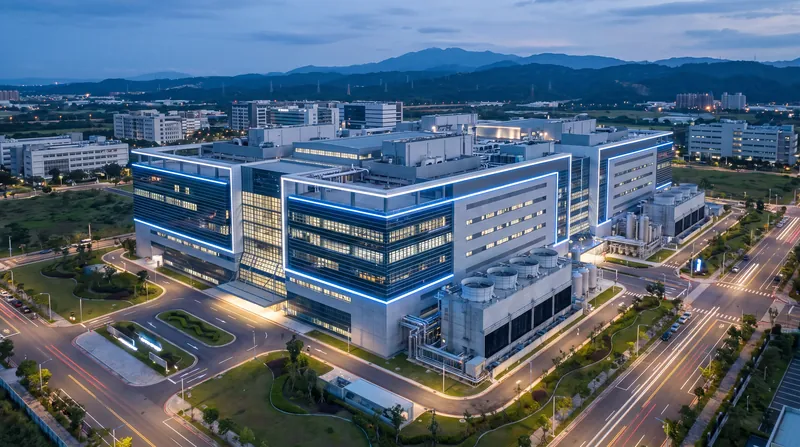
At manufacturing sites in Sejong and Busan, South Korea, new production lines are being cleared and calibrated for a single customer. Samsung Electro-Mechanics confirmed a multi-year agreement on Wednesday to build dedicated manufacturing capacity specifically for Nvidia. The deal secures a critical, unglamorous component that threatens to throttle the global rollout of artificial intelligence hardware.[1][7]
The component in question is the ABF package substrate, a highly specialized insulating material originally developed by a Japanese food company. Before a high-performance graphics processing unit can be installed in a data center, the fragile silicon die must be mounted onto this resin board. The substrate translates the microscopic connections on the chip to the larger scale of a server motherboard.[2][6]
As artificial intelligence processors grow larger and incorporate more high-bandwidth memory, they require substrates with significantly larger surface areas and more internal layers. Manufacturing these expanded boards is notoriously difficult, as the composite material is highly prone to warping under intense thermal stress. Maintaining absolute flatness across a large surface area ultimately dictates the final production yield.[1]
The financial scale required to overcome these manufacturing hurdles is staggering. Securing future capacity requires massive capital expenditures to outfit new cleanrooms with specialized lithography and lamination equipment. A significant portion of that funding is now being derived from advance payments made by global technology companies desperate to secure their own future supply lines.[3][4]
Buying the queue
Nvidia is no longer waiting for suppliers to build capacity on their own conservative schedules. The company is actively funding the expansion of its own supply chain, effectively buying its way to the front of the manufacturing queue. The joint investment with Samsung Electro-Mechanics will establish dedicated lines specifically for Nvidia's hardware.[1][6]
The South Korean manufacturer expects its delivery volumes to Nvidia to grow at a double-digit annual rate starting in 2026. By 2028, the California-based chip designer is projected to consume a substantial portion of Samsung Electro-Mechanics' total global substrate production capacity. The exact financial terms of the joint investment were not disclosed in the initial announcement.[1][7]
The Samsung agreement is part of a broader, aggressive capacity grab by the dominant AI chipmaker. Nvidia has publicly stated a goal to increase its total substrate supply by 250 percent over the next three years. To reach that target, it is distributing multi-billion-dollar capacity reservation advances across the handful of companies capable of producing the boards.[4][5]
A fragile supply chain
Beyond South Korea, Nvidia is financing similar expansions in Japan and Taiwan to diversify its geographic risk. The company is backing a massive capacity increase at IBIDEN's Ono Plant in Japan, targeting three times the facility's current output. That additional Japanese capacity is expected to begin ramping up in the first quarter of 2028.[4][5]
Nvidia is also supporting Unimicron's substrate manufacturing expansion in Taiwan, rounding out a multi-pronged approach to securing the resin boards. The strategy highlights a persistent vulnerability in the artificial intelligence infrastructure boom. While attention focuses on the design of the silicon and the advanced packaging techniques used by foundries like TSMC, the final product cannot ship without the underlying board.[4][5]
A severe shortage of ABF substrates previously constrained global chip supplies during the pandemic, teaching hardware companies a difficult lesson about supply chain depth. By locking in capacity across Samsung, IBIDEN, and Unimicron simultaneously, Nvidia is attempting to insulate itself from future bottlenecks. The move also serves as a formidable defensive barrier against emerging competitors.[3][4]
In a statement confirming the agreement, Samsung Electro-Mechanics framed the joint investment as a necessary step to "strengthen the global AI semiconductor supply chain and accelerate the expansion of next-generation AI infrastructure." The carefully worded release highlights how deeply intertwined the two companies' manufacturing roadmaps have become over the past year.[6]
Beyond the marketing
With the world's premier substrate manufacturers dedicating significant portions of their future output to a single buyer, rival chip designers may struggle to secure the components they need to scale. While corporate announcements frequently frame these agreements as strategic partnerships, in practice, they are straightforward capacity reservations driven by overwhelming market dominance.[4]
Nvidia is utilizing its massive cash reserves to underwrite the capital expenditure of its suppliers. This arrangement transfers some of the financial risk of factory expansion away from the substrate manufacturers while guaranteeing Nvidia's own supply. For companies like Samsung Electro-Mechanics, the guaranteed long-term demand justifies the immense cost of outfitting new cleanrooms.[3][4]
The network switch substrates included in the Samsung deal are particularly notable for data center architecture. As server farms scale up to train massive language models, the speed at which thousands of individual GPUs communicate becomes the primary limiting factor. Nvidia's proprietary NVSwitch hardware is central to maintaining those ultra-high-speed connections across server racks.[1][7]
The timeline to delivery
Those networking chips require their own advanced substrates, which Samsung Electro-Mechanics will now produce on dedicated lines. The South Korean firm had already entered Nvidia's supply chain, but Wednesday's agreement elevates that existing relationship into a dedicated capacity commitment. The shift indicates that Nvidia views networking bottlenecks as a critical threat to its growth.[1][7]
The success of this supply chain expansion will not be visible immediately, despite the urgency of the capital investments. The dedicated lines in Sejong and Busan are still being established and calibrated, while the targeted capacity increases at IBIDEN in Japan remain years away from full production. The physical reality of building semiconductor infrastructure cannot be rushed by software development timelines.[1][4]
Until those new factories come online and achieve stable yields, the availability of high-end artificial intelligence hardware remains tightly constrained by the physical supply chain. Nvidia has secured the future output of the substrate industry, but the broader market must now wait for the concrete to be poured and the cleanrooms to be certified.[1][5]
Key points
- Samsung Electro-Mechanics will build dedicated production lines in South Korea to supply Nvidia with ABF package substrates starting in 2026.
- Nvidia aims to increase its global substrate supply by 250 percent over three years by funding expansions in South Korea, Japan, and Taiwan.
- The multi-year agreement secures components for both AI computing chipsets and the high-speed network switches required in modern data centers.
- By reserving significant future output from top manufacturers, Nvidia effectively limits the substrate capacity available to rival chip designers.
Unanswered questions
- The exact financial value of Nvidia's joint investment with Samsung Electro-Mechanics.
- How rival chipmakers plan to secure their own substrate supplies as top manufacturers dedicate capacity to Nvidia.
- Whether the new dedicated production lines will achieve the high yields required for next-generation AI chips on schedule.
- Nvidia and Supply Chain Partners
- Securing dedicated manufacturing capacity is essential to meet the surging global demand for AI infrastructure.
- Rival Chip Designers
- Nvidia's aggressive capacity reservations threaten to lock competitors out of essential component supplies.
- Industry Analysts
- The bottleneck in AI hardware has shifted from silicon design to advanced packaging and substrate manufacturing.
Perspectives this story doesn't cover
- Smaller AI hardware startups
- Foundry operators like TSMC
Sources
Source coverage
7 outlets
3 viewpoints surfaced







- [1]The Chosun DailyNvidia and Supply Chain Partners
Samsung Electro-Mechanics, NVIDIA Expand AI Substrate Production
Read on The Chosun Daily → - [2]Crypto BriefingRival Chip Designers
Samsung Electro-Mechanics and Nvidia partner on ABF substrates for AI chips
Read on Crypto Briefing → - [3]Investing.comIndustry Analysts
Nvidia expands supply chain capacity with multiple partners
Read on Investing.com → - [4]Securities.ioRival Chip Designers
NVIDIA Reaches Capacity Agreements With Six Supply Chain Partners
Read on Securities.io → - [5]Techno TimeIndustry Analysts
Nvidia Expands Global Manufacturing Capacity to Meet Rising Demand for AI Infrastructure
Read on Techno Time → - [6]PR NewswireNvidia and Supply Chain Partners
Samsung Electro-Mechanics announces strategic partnership with NVIDIA
Read on PR Newswire → - [7]MKNvidia and Supply Chain Partners
Samsung Electro-Mechanics, NVIDIA to expand dedicated production lines
Read on MK →
More in Technology
See all →AI Hardware
Tenstorrent Secures $1.5 Billion to Scale Open-Weight AI Silicon Production
6 sources
AI Chip Demand
TSMC Reports Record Quarterly Profit Up 69% and Hikes 2026 Guidance on Surging AI Demand
4 sources
Chip Manufacturing
TSMC Evaluates Multibillion-Dollar Texas Campus to Expand US Chip Manufacturing
7 sources
Supply Chain
TSMC Commits to Five Additional Advanced Packaging Plants in Chiayi Science Park
5 sources
Comments
Every angle. Every day.
Get Technology stories with full source coverage and perspective breakdowns, free every day.