
The Race to Financialize AI: How Compute is Becoming the New Oil
Major financial exchanges are launching the first futures markets for AI processing power, treating GPU compute as a tradable commodity. The move aims to help startups and data centers hedge against massive price volatility in the multi-billion-dollar AI infrastructure sector.

Share this story
For decades, the raw processing power that runs the digital world was treated as a mundane operational expense. Companies rented server space, ran their applications, and paid their monthly cloud bills. But the generative artificial intelligence boom has fundamentally altered that equation, transforming server racks into strategic assets.
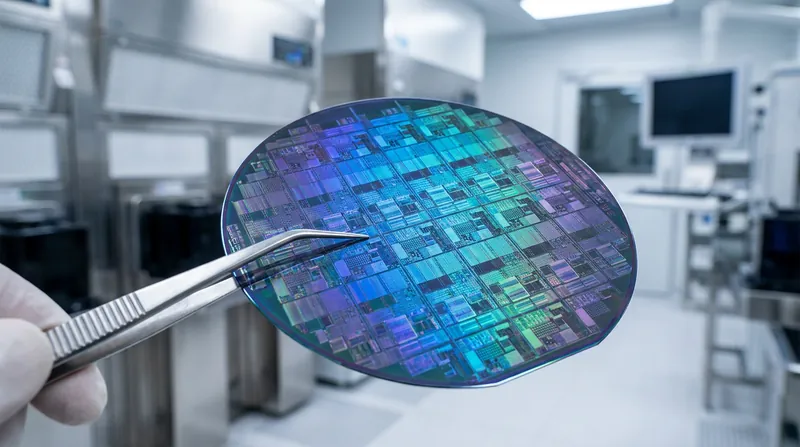
Today, the specialized graphics processing units (GPUs) required to train and run AI models are scarce, fiercely contested, and subject to wild price swings. Global capital expenditure on GPUs surged to roughly $110 billion in 2024, with major tech firms committing hundreds of billions more in the coming years to secure their digital supply chains.[1][2]
This insatiable demand has triggered a structural shift in how the global economy values processing power. Financial titans and market makers are no longer viewing compute as mere IT infrastructure. Instead, they are racing to financialize it, treating AI processing power as a tradable commodity with its own dedicated markets.[1]
The rhetoric from Wall Street is unambiguous. BlackRock CEO Larry Fink recently declared that a new asset class will emerge around the buying and selling of compute futures. Terry Duffy, Chairman and CEO of the CME Group, went a step further, describing compute as "the new oil of the 21st century."[2]
That comparison is more than just a metaphor; it is the blueprint for a new financial ecosystem. Just as the 1970s oil shocks transformed petroleum from an abundant resource into a strategic, heavily traded asset, the AI boom is forcing a similar evolution for silicon.[3]
The core problem driving this financialization is volatility. AI startups and enterprise developers face unpredictable compute costs that can swing dramatically based on supply bottlenecks and regional power constraints. A sudden spike in the spot market price for GPU rentals can wipe out a startup's operating margins overnight.
Conversely, the companies building the massive data centers to house these chips face their own existential risks. A facility with 10,000 Nvidia H100 GPUs might generate $228 million a year in rental revenue at a rate of $2.60 per hour. But the infrastructure providers must finance the chips, land, and power contracts upfront, leaving them exposed if rental rates plummet.[3]
To solve this, the financial industry is building the exact same risk-management tools used by airlines to hedge jet fuel and farmers to hedge wheat: futures contracts. A futures contract allows a buyer and a seller to lock in a price for a commodity to be delivered at a specific date in the future.
In May 2026, the CME Group—the world's largest derivatives exchange—announced a partnership with the benchmarking firm Silicon Data to launch the first compute futures market. The cash-settled contracts will be tied to Silicon Data's daily indices, which track the on-demand rental rates for high-end GPUs.
The move sparked an immediate arms race among global exchanges. Shortly after the CME announcement, the Intercontinental Exchange (ICE) unveiled a competing partnership with Ornn, another compute data firm, to launch its own suite of GPU futures contracts.
"Compute markets today are still highly fragmented, with pricing that can vary dramatically across providers, regions and contract structures," said Carmen Li, CEO of Silicon Data and Compute Exchange. By creating a standardized index, these firms aim to bring financial-grade transparency to an opaque market.
If successful, a liquid futures market would allow an AI company to lock in its compute costs for a model training run scheduled for 2027. Simultaneously, a data center operator could sell those futures to guarantee their revenue, making it easier to secure bank financing for new construction.[1]
However, transforming a piece of silicon into a standardized financial instrument presents a massive technical hurdle: fungibility. For a commodity market to function, one unit of the asset must be broadly interchangeable with another. A barrel of West Texas Intermediate crude is largely the same regardless of who pumped it.[3]
GPUs, however, are not perfectly fungible. The value of an Nvidia H100 chip is inextricably linked to the physical environment in which it operates. An H100 housed in a premium facility with cheap, reliable power, direct fiber-optic networking, and advanced liquid cooling is vastly more productive than the exact same chip in a constrained environment.[3]
The performance gap is not theoretical. Silicon Data's research revealed a 38% performance variance between identical GPU chips based entirely on their surrounding data center infrastructure. This variability introduces significant "basis risk" for anyone trying to trade compute as a uniform commodity.
To account for this, the emerging market is beginning to price compute much like the oil industry prices different grades of crude. Premium, highly networked GPU clusters are already trading at a premium spread above the baseline index, reflecting their scarcity and superior performance.[3]
The daily volatility for a benchmark H100 GPU currently hovers between 20% and 30%, a range that market makers consider healthy for a maturing commodity. This volatility is driving a broader shift in procurement, pushing companies away from on-demand rentals and toward long-term reserve contracts.
As the market matures, the implications extend far beyond Wall Street trading desks. The ability to accurately price and hedge compute will dictate which AI companies survive, which data centers get built, and how quickly the next generation of artificial intelligence can be deployed.[2]
The financialization of compute is still in its infancy, and regulatory hurdles remain before these contracts see widespread institutional adoption. Yet, the trajectory is clear, and the infrastructure to support it is being built at breakneck speed.[1]
Processing power has crossed the threshold from a bespoke technological service to a fundamental global resource. In the AI-driven economy of the 2020s, compute is no longer just the engine of innovation; it is the currency that powers it.[1]
Key points
- Major financial exchanges, including the CME Group and ICE, are launching the world's first futures markets for AI processing power.
- The contracts aim to help AI startups and data center operators hedge against massive daily price volatility in GPU rental rates.
- Industry leaders are increasingly comparing compute to oil, viewing it as a strategic, tradable commodity rather than mere IT infrastructure.
- A major hurdle to commoditization is fungibility, as identical GPU chips can perform vastly differently based on their physical data center environment.
Unanswered questions
- Whether regulatory bodies like the CFTC will approve cash-settled compute futures without physical delivery mechanisms.
- How the market will standardize pricing across rapidly evolving generations of silicon, such as the transition from Nvidia's H100 to Blackwell architectures.
- If premium, highly networked GPU clusters will eventually trade on entirely separate indices from baseline compute.
How we got here
March 1983
NYMEX lists the first WTI crude oil futures contract, establishing the blueprint for modern commodity trading.
Late 2023
Spot market rates for H100 GPU clusters spike as generative AI demand overwhelms global supply.
May 2026
CME Group and Silicon Data announce a partnership to launch the world's first compute futures market.
June 2026
Intercontinental Exchange (ICE) unveils a competing partnership with Ornn to launch GPU futures contracts.
- Financial Exchanges & Market Makers
- Exchanges view compute as a massive, untapped asset class that requires financialization to mature.
- AI Infrastructure Providers
- Data center operators and index providers focus on the need for transparent pricing to stabilize the AI economy.
- Market Skeptics & Analysts
- Analysts caution that the physical realities of data centers make compute uniquely difficult to commoditize.
Perspectives this story doesn't cover
- Environmental advocates monitoring data center energy use
- Smaller AI developers priced out of premium clusters
Sources
Source coverage
3 outlets
3 viewpoints surfaced



- [1]BloombergAI Infrastructure Providers
Inside the Race to Build a Compute Futures Market Bigger Than Oil
Read on Bloomberg → - [2]AI StreetFinancial Exchanges & Market Makers
CME Bets on Compute Futures
Read on AI Street → - [3]Katusa ResearchMarket Skeptics & Analysts
Compute as a Commodity
Read on Katusa Research →
More in Technology
See all →AI Supply Chain
Samsung and SK Hynix Announce $518 Billion Chipmaking Hub to Meet Global AI Demand
2 sources

AI Export Controls
US Congress Introduces Bipartisan Bill to Close Cloud Computing Loophole in AI Chip Export Controls
5 sources
Advanced Packaging
Intel Carves Out Advanced Packaging as Independent Division, Appointing Former SK Hynix CEO to Lead Effort
4 sources

Supply Chain Resiliency
US and Taiwan Finalize $500 Billion Trade Deal to Shift Semiconductor Supply Chain to North America
4 sources
Comments
Every angle. Every day.
Get Technology stories with full source coverage and perspective breakdowns, free every day.