
The 'Fabric First' Revolution: How Deep Energy Retrofits Are Transforming Home Remodeling
Homeowners are increasingly turning to 'EnerPHit' and deep energy retrofits to slash energy bills by up to 90%, driven by new 2026 federal rebate rules that prioritize insulation over new appliances.
By Factlen Editorial Team
- Building Scientists & Architects
- Advocate for a 'fabric first' approach, arguing that super-insulation and airtightness are the only mathematically viable ways to reach net-zero emissions.
- Policy Makers & Regulators
- Focus on maximizing the efficiency of federal rebate dollars by mandating weatherization before funding expensive appliance upgrades.
- Industry & Contractors
- Support consumer choice in heating fuels and emphasize the practical and financial constraints homeowners face when undertaking massive retrofits.
What's not represented
- · Low-income homeowners who may struggle with the upfront capital required even with rebates.
- · Historic preservation boards that often block exterior insulation on heritage properties.
Why this matters
As energy costs fluctuate and extreme weather becomes more common, cosmetic home renovations are giving way to performance-based upgrades. Understanding the 'fabric first' approach ensures homeowners don't waste thousands of dollars—and federal rebate eligibility—on the wrong improvements.
Key points
- Deep energy retrofits prioritize a home's physical envelope—insulation and airtightness—over cosmetic upgrades.
- The EnerPHit standard adapts rigorous Passive House principles for the physical constraints of existing buildings.
- Retrofits can reduce a home's space heating and cooling demand by up to 90%.
- Updated 2026 federal guidance now requires insulation and air sealing before homeowners can access HVAC rebates.
- The DOE has removed IRA incentives that previously encouraged switching from fossil-fuel heaters to electric heat pumps.
- Phased 'step-by-step' retrofit plans allow homeowners to spread the high upfront costs over several years.
For decades, the American home remodeling dream centered on cosmetic upgrades: granite countertops, open floor plans, and spa-like bathrooms. But as energy prices remain volatile and extreme weather events test the limits of aging residential infrastructure, a quiet revolution is reshaping the renovation industry. Homeowners are increasingly prioritizing performance over aesthetics, turning to "deep energy retrofits" to fundamentally alter how their houses consume power and retain temperature.[6]
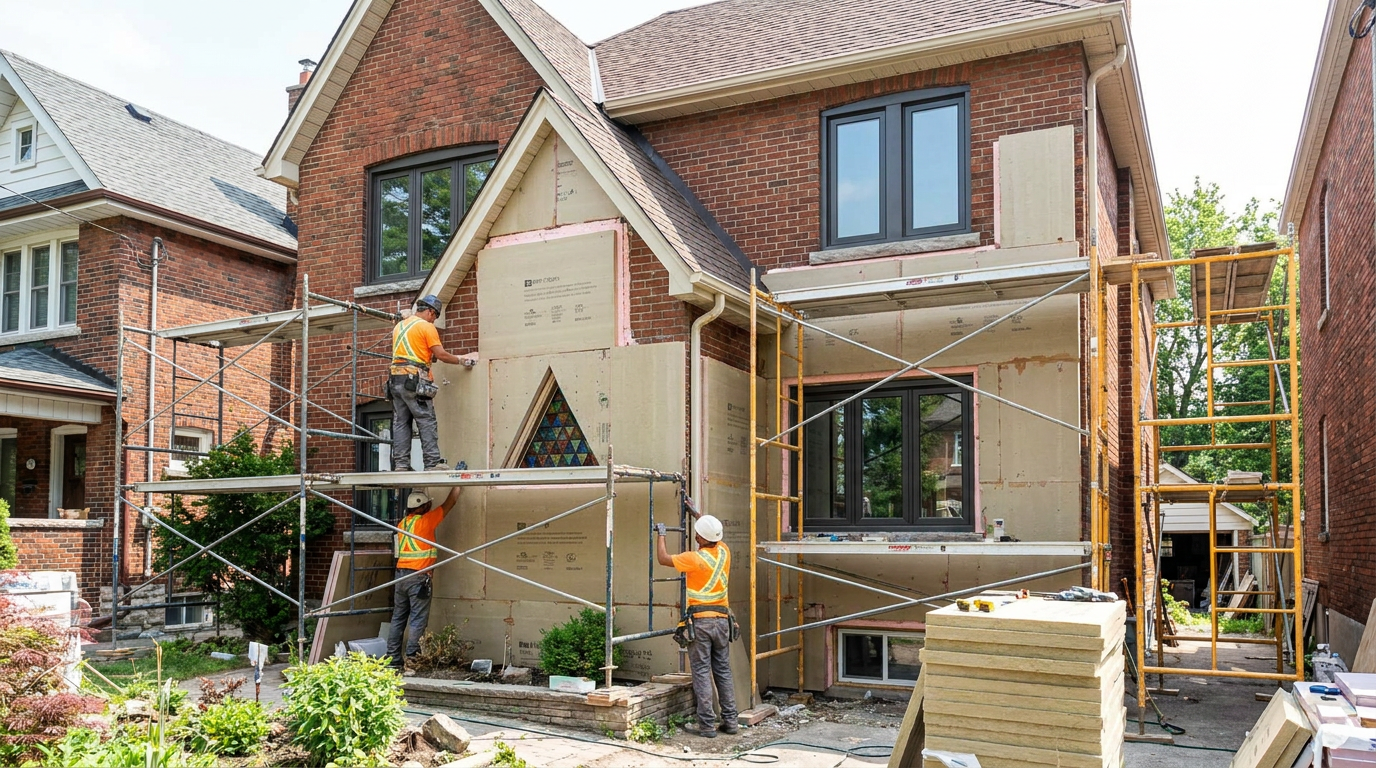
At the heart of this shift is a building science philosophy known as "fabric first." The premise is simple but often overlooked: before installing expensive solar panels or high-tech heating systems, a home's physical envelope—its walls, roof, windows, and foundation—must be optimized. Building scientists argue that trying to achieve net-zero energy on a drafty, poorly insulated house is both difficult and expensive, requiring a massive solar array just to offset the waste of a leaky building.[5][6]
The gold standard for this approach is "EnerPHit," a rigorous certification developed by the Passive House Institute specifically for existing buildings. While the classic Passive House standard is designed for new construction, EnerPHit acknowledges the physical constraints of retrofitting older homes, such as fixed foundations, shared party walls, and historic preservation rules. It relaxes the energy demand requirements slightly while still demanding the same high quality of components and health benefits.[3][4][5]

A deep energy retrofit to the EnerPHit standard is not a weekend DIY project. It is a comprehensive, engineered overhaul that typically achieves a 75% to 90% reduction in space heating and cooling demand. This is accomplished through a meticulous combination of super-insulation, high-performance triple-glazed windows, and extreme airtightness to eliminate drafts and cold spots.[3][4]
One of the most critical mechanisms in this process is the elimination of "thermal bridges." In a standard home, structural elements like wood studs or concrete balconies act as conductive highways, pulling heat out of the house in winter and drawing it in during summer. A deep retrofit wraps the exterior of the home in a continuous layer of insulation, effectively putting a thermal sweater over the entire building structure to sever these bridges.[3][6]
Because an EnerPHit home is virtually airtight, it requires a mechanical lung to breathe. This is achieved through Mechanical Ventilation with Heat Recovery (MVHR). An MVHR system continuously extracts stale, moisture-laden air from kitchens and bathrooms while drawing in fresh, filtered air from outside. Crucially, the system uses a heat exchanger to transfer the thermal energy from the outgoing air to the incoming air, ensuring fresh indoor air quality without the heat loss associated with opening a window.[3][6]
The benefits extend far beyond lower utility bills. By maintaining consistent indoor temperatures and controlling moisture, deep retrofits eliminate the surface condensation that leads to mold growth. Furthermore, the robust building envelope provides significant climate resilience; during a winter power outage or a summer heatwave, an EnerPHit-certified home can maintain safe, comfortable interior temperatures for days without active heating or cooling.[3][4]

By maintaining consistent indoor temperatures and controlling moisture, deep retrofits eliminate the surface condensation that leads to mold growth.
This performance-first philosophy is now being codified into federal policy. In late May 2026, the U.S. Department of Energy (DOE) issued updated guidance for the Inflation Reduction Act (IRA) Home Energy Rebate Programs, fundamentally changing how billions of dollars in federal incentives will be distributed to homeowners.[1][2]
Under the new Program Notice 26-2, states must now require homeowners to prioritize weatherization measures—specifically insulation and air sealing upgrades—before they can access rebates for new heating and cooling equipment. The DOE's explicit goal is to ensure that expensive HVAC upgrades do not inadvertently increase consumer energy costs by pumping heat into poorly insulated spaces.[1][2]
The revised guidance also marks a significant pivot in the government's electrification strategy. Previously, the nearly $9 billion allocated to the HOMES and HEEHR programs was heavily weighted toward incentivizing homeowners to rip out existing fossil-fuel heating systems and replace them with electric heat pumps. The updated 2026 rules eliminate this fuel-switching incentive structure entirely.[1]
Going forward, federal rebates are limited to upgrading existing electric equipment to more efficient electric models, or outfitting new construction projects. Households heated by natural gas, propane, or heating oil are no longer eligible for rebates intended to force a conversion to electric heat pumps, a move praised by industry groups like the American Supply Association for preserving consumer choice while focusing federal dollars on genuine efficiency gains.[1]

Despite the clear environmental and comfort benefits, the primary barrier to deep energy retrofits remains the upfront cost. Achieving Passive House levels of performance typically carries a 5% to 10% cost premium over a standard gut renovation, driven by the need for specialized labor, thicker insulation, and imported high-performance windows.[5]
To make the process more accessible, the Passive House Institute introduced the EnerPHit Retrofit Plan (ERP). This framework allows homeowners to execute a deep retrofit in phased, step-by-step increments over several years. A master plan is created using energy modeling software, ensuring that a roof replacement done in 2026 will perfectly integrate with exterior wall insulation added in 2029, avoiding the "lock-in" of poor, incompatible upgrades.[4][6]
The long-term math heavily favors the deep retrofit approach. While the initial capital expenditure is high, the operational costs for heating and cooling drop so precipitously that the investment reliably pays for itself over the lifecycle of the building. Furthermore, real estate markets are increasingly pricing in the value of climate-resilient, low-energy homes, offering a premium upon resale.[5][6]

Ultimately, the push toward EnerPHit and deep energy retrofits acknowledges a stark reality: roughly 80% of the buildings that will exist in 2050 have already been built. Because the embodied carbon of new construction is so high, the most sustainable building is almost always the one that already exists. By applying modern building physics to aging housing stock, homeowners are proving that the homes of the past can be engineered to meet the demands of the future.[4][6]
How we got here
August 2022
The Inflation Reduction Act (IRA) is signed into law, allocating nearly $9 billion for home energy rebates.
2024–2025
States begin rolling out initial HOMES and HEEHR rebate programs, heavily focused on heat pump adoption.
May 29, 2026
The DOE issues Program Notice 26-2, fundamentally altering the federal rebate rules.
June 2026
New guidance takes effect, mandating weatherization prerequisites and ending fuel-switching incentives.
Viewpoints in depth
Building Scientists' View
Advocates for strict adherence to building physics to solve the residential emissions crisis.
Building scientists and architects trained in the Passive House methodology argue that the remodeling industry has historically approached energy efficiency backward. They maintain that adding solar panels or a highly efficient heat pump to a leaky, poorly insulated home is a fundamental waste of resources. By focusing on the 'fabric first'—eliminating thermal bridges, maximizing insulation, and ensuring airtightness—they believe existing homes can achieve near-zero energy demand, making renewable energy additions a final, minor step rather than a heavy-lifting primary strategy.
Federal Regulators' View
Focuses on optimizing the impact of taxpayer-funded rebates and protecting grid infrastructure.
For the Department of Energy, the 2026 pivot in the IRA rebate rules represents a course correction based on early program data. Regulators recognized that incentivizing the mass installation of electric heat pumps without first ensuring homes were properly insulated risked driving up consumer electricity bills and placing unnecessary strain on the winter power grid. By mandating weatherization as a prerequisite, federal policy now aligns with the building science consensus, ensuring that taxpayer dollars fund holistic efficiency rather than just appliance swapping.
Contractors & Homeowners' View
Balances the desire for energy efficiency with the practical realities of budgets and existing architecture.
While supportive of lower energy bills, many homeowners and general contractors point out the daunting logistics of a deep energy retrofit. Wrapping an existing home in exterior insulation often requires extending roof eaves, moving windows outward, and navigating local zoning or historic preservation laws. Furthermore, the 5% to 10% cost premium for Passive House components can be prohibitive. This camp heavily advocates for the step-by-step EnerPHit Retrofit Plan, which allows them to tackle upgrades logically over time as budgets permit, rather than requiring a massive single capital outlay.
What we don't know
- How the new weatherization prerequisites will impact the overall adoption rate of federal IRA rebates in late 2026.
- Whether the removal of fuel-switching incentives will significantly slow the national transition to electric heat pumps.
- How quickly the domestic supply chain can scale to provide affordable, high-performance triple-glazed windows and MVHR units.
Key terms
- EnerPHit
- A rigorous building certification developed by the Passive House Institute specifically tailored for the energy retrofitting of existing buildings.
- Fabric First
- A building design philosophy that prioritizes maximizing the performance of the components and materials that make up the building envelope itself, before relying on mechanical systems.
- Thermal Bridge
- An area or component of a building that has significantly higher heat transfer than the surrounding materials, resulting in energy loss and potential condensation.
- MVHR
- Mechanical Ventilation with Heat Recovery; a system that provides continuous fresh air while extracting heat from the outgoing stale air to warm the incoming fresh air.
- Building Envelope
- The physical separator between the conditioned and unconditioned environment of a building, including the resistance to air, water, heat, light, and noise transfer.
Frequently asked
Can I open the windows in a Passive House?
Yes. It is a common myth that windows must remain sealed. While you can open them whenever you want, the continuous fresh air provided by the mechanical ventilation system means you rarely need to.
How much does an EnerPHit retrofit cost?
Achieving the standard typically carries a 5% to 10% upfront cost premium compared to a standard gut renovation, due to specialized labor, thicker insulation, and high-performance windows.
Do I have to renovate my entire house at once?
No. The EnerPHit Retrofit Plan (ERP) allows homeowners to execute the upgrades in a phased, step-by-step manner over several years, spreading out the financial investment.
What changed with the 2026 IRA home energy rebates?
The Department of Energy updated its guidance to require that homes undergo weatherization (insulation and air sealing) before homeowners can access federal rebates for new heating and cooling equipment.
Sources
Source coverage
6 outlets
3 viewpoints surfaced




[1]American Supply AssociationIndustry & Contractors
DOE revises IRA Home Energy Rebates, ending incentives for heating system fuel switching
Read on American Supply Association →[2]U.S. Department of EnergyPolicy Makers & Regulators
Home Energy Rebates Program Notice 26-2
Read on U.S. Department of Energy →[3]Passivhaus TrustBuilding Scientists & Architects
Passivhaus Retrofit & EnerPHit
Read on Passivhaus Trust →[4]NeutralXBuilding Scientists & Architects
Passive House Retrofit: The EnerPHit Standard and Deep Energy Upgrades
Read on NeutralX →[5]Revive RetrofitBuilding Scientists & Architects
The EnerPHit Standard: Passive House for Retrofits
Read on Revive Retrofit →[6]Factlen Editorial TeamPolicy Makers & Regulators
Synthesis by Factlen editorial team
Read on Factlen Editorial Team →

Every angle. Every day.
Get home stories with full source coverage and perspective breakdowns delivered to your inbox.