
How the USL Super League's Second Season Reshaped American Women's Soccer
The Division 1 league just crowned Lexington SC as its 2026 champion, capping a sophomore season that proved the United States can support two top-tier professional women's soccer leagues.
By Factlen Editorial Team
- League Organizers
- Focusing on sustainable expansion and aligning with the domestic soccer calendar.
- Players & Advocates
- Valuing the dramatic increase in professional opportunities and free agency rights.
- Domestic Soccer Analysts
- Monitoring the financial sustainability of a two-league Division 1 ecosystem.
What's not represented
- · NWSL Executives
- · European Club Managers
Why this matters
For decades, elite American female soccer players faced a severe bottleneck: make an NWSL roster, go overseas, or retire. The USL Super League has effectively doubled the number of domestic top-flight roster spots, creating a sustainable new pathway for hundreds of professional athletes.
Key points
- Lexington SC won the 2026 USL Super League championship, completing a worst-to-first turnaround in the league's second season.
- The league holds Division 1 sanctioning from U.S. Soccer, operating at the same tier as the NWSL.
- By eschewing a college draft, the league allows players to negotiate as free agents right out of school.
- The league will transition to a spring-to-fall calendar in 2027 to align with the broader American soccer landscape.
- A transitional 14-match Fall season will begin in August 2026 to bridge the calendar shift.
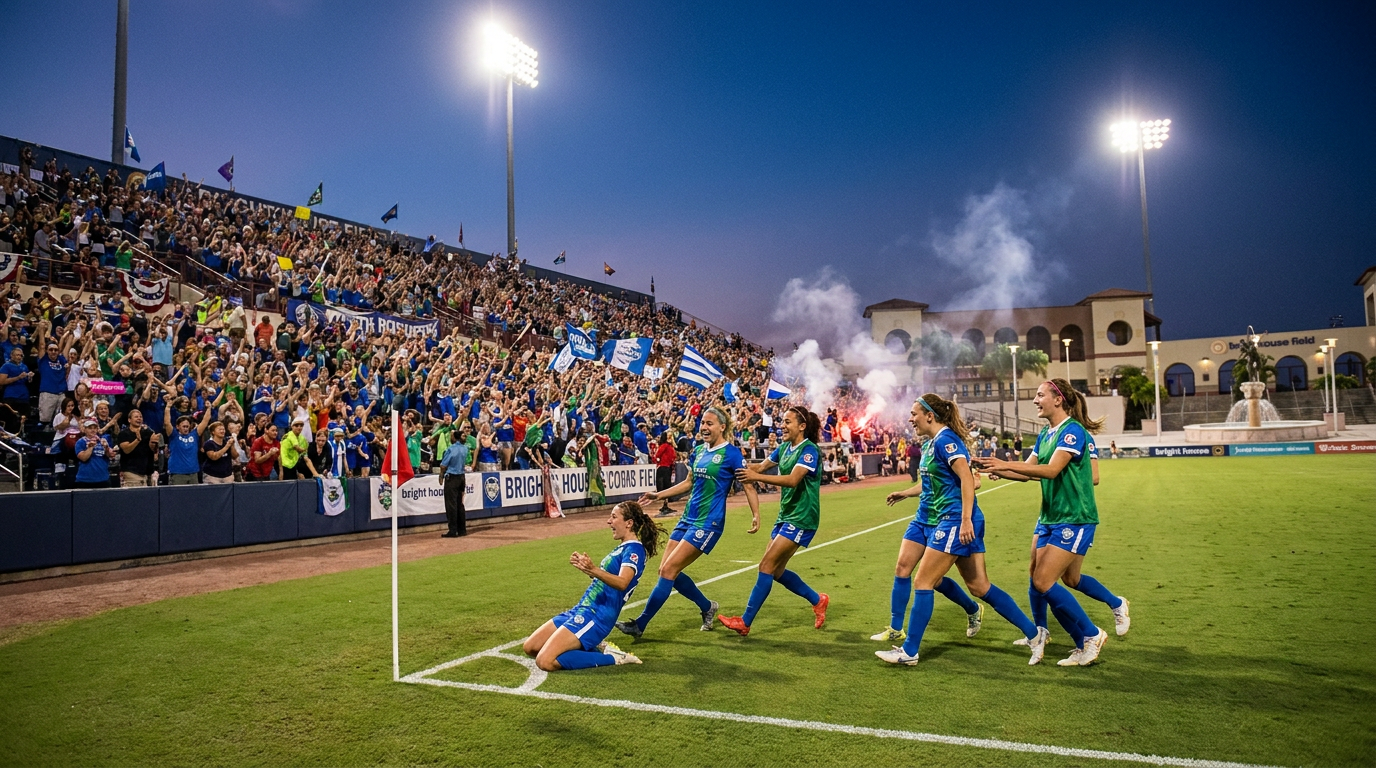
The confetti has settled in Kentucky, marking the end of a sophomore season that firmly established a new era in American women's sports. On May 30, Lexington SC captured the 2026 USL Super League championship with a decisive 3-1 victory over Carolina Ascent FC. The match, played before a raucous crowd at Lexington SC Stadium, crowned a champion that had completely rewritten its own narrative. The victory completed a remarkable worst-to-first turnaround for Lexington, who finished at the bottom of the table in the league's inaugural season but rebounded to win both the regular-season Players' Shield and the ultimate playoff trophy in year two.[3]
But beyond the trophy lift and the local celebrations, the conclusion of the 2025-26 campaign represents a much broader victory for the sport. The USL Super League, which holds official Division 1 sanctioning from U.S. Soccer alongside the established National Women's Soccer League (NWSL), has proven that the American soccer ecosystem is deep enough to support two top-tier professional women's leagues simultaneously. For decades, the narrative was that women's soccer was a fragile enterprise that required a single, monopolistic league to survive. The Super League's successful second season shatters that assumption, proving that demand from both fans and athletes is vast enough to sustain multiple thriving competitions.[1][6]
The most profound impact of the USL Super League is the sheer expansion of opportunity it provides for elite athletes. Historically, the United States' robust collegiate soccer system produced thousands of highly skilled female players every year, but the NWSL's limited number of roster spots created a severe bottleneck. The math was unforgiving: only a fraction of draft-eligible players could secure a domestic professional contract. The alternative was often a daunting move to a lower-tier European league, or, for many, premature retirement from the sport they had dedicated their lives to.[5][6]
By launching with eight teams and expanding its footprint, the Super League has effectively doubled the number of domestic Division 1 roster spots available to women. This creates a sustainable, living-wage pathway for hundreds of professional athletes who now have the option to build their careers at home. The league mandates a minimum salary of approximately $35,000 to $37,000, ensuring a baseline of professional compensation. Crucially, it operates without a salary cap, giving ambitious ownership groups the freedom to invest heavily in top-tier talent and compete aggressively for international stars.[1]

Structurally, the USL Super League also diverges from traditional American sports models in ways that heavily favor player autonomy. Most notably, the league operates without a college draft system. Instead, rosters are built primarily through free agency, aligning the league with global soccer norms rather than the franchise-controlled models typical of US sports. This structure allows young players to choose their markets, negotiate their own terms, and find the best developmental fit for their careers right out of college, fundamentally shifting the balance of power toward the athletes.[1][6]
Structurally, the USL Super League also diverges from traditional American sports models in ways that heavily favor player autonomy.
Visibility and accessibility have been critical to the league's early traction. A multi-year national broadcasting agreement with NBCUniversal ensures that all USL Super League matches are streamed live on Peacock, with select games simulcast on NBC Sports FAST channels. This national media footprint is a massive asset for a startup league, providing the exposure necessary to attract sponsors, build fanbases across different time zones, and legitimize the product in the eyes of the broader sports-consuming public. Individual clubs have also supplemented this by securing local broadcast deals to deepen their community ties.[1][4]

As the league looks to the future, it is preparing for a major structural evolution designed to integrate it more seamlessly into the domestic sports landscape. During its first two seasons, the USL Super League operated on a fall-to-spring calendar, mirroring the traditional European soccer schedule. However, league executives recently announced a strategic pivot: beginning in 2027, the league will transition to a spring-to-fall schedule. This move aligns the Super League with the NWSL and the broader American soccer calendar, reducing friction for fans and optimizing broadcasting windows during the warmer months.[1][4]
To bridge the gap between these two distinct calendars, the league has engineered a transitional phase for the latter half of 2026. On August 15, the Super League will kick off a high-stakes, 14-match Fall season. Each of the league's clubs will play seven home and seven away matches in a sprint to the finish, culminating in a December championship. League officials have emphasized that this condensed format will make every match critical in the race for the Players' Shield and playoff positioning, keeping fan engagement high during the transition.[4]
Expansion remains a core pillar of the league's long-term strategy. The Super League launched with eight founding markets, including Brooklyn, Dallas, and Spokane, and has already begun integrating new franchises. Sporting Club Jacksonville joined the fray as an expansion team, and the league has publicly stated its intention to grow to 11 clubs by 2027. This measured but steady growth indicates strong financial backing and a high level of interest from prospective ownership groups eager to buy into the booming women's sports market.[1][2]

The success of the USL Super League is occurring against the backdrop of an unprecedented global boom in women's soccer. From record-breaking attendances in the English Women's Super League to massive global viewership for the Women's World Cup, the sport is commanding audiences and investment levels that were unimaginable a decade ago. The Super League is not just riding this wave; it is actively expanding the infrastructure required to sustain it, ensuring that the United States remains the deepest and most talent-rich market in the world.[5][6]
Ultimately, the conclusion of the 2025-26 season proves that the USL Super League is far more than a developmental circuit or a secondary option. It is a fully realized Division 1 entity that is reshaping the career trajectories of hundreds of women. By offering free agency, eliminating the draft, and providing a national broadcast platform, the league is pushing the entire American soccer ecosystem forward. As it prepares for its calendar shift and further expansion, the Super League stands as a testament to the limitless potential of women's professional sports.[1][4][6]
How we got here
September 2021
The USL announces plans to launch a professional women's league to complete its youth-to-pro pathway.
February 2024
U.S. Soccer grants the USL Super League Division 1 sanctioning, placing it at the top of the pyramid alongside the NWSL.
August 2024
The league kicks off its inaugural season with eight founding clubs.
May 2026
Lexington SC wins the 2025-26 championship, concluding the league's second season.
August 2026
A transitional 14-match Fall season begins as the league prepares to shift its calendar.
Spring 2027
The league will officially adopt a spring-to-fall schedule, aligning with the broader US domestic soccer calendar.
Viewpoints in depth
League Organizers' View
Focusing on sustainable expansion and aligning with the domestic soccer calendar.
For the architects of the USL Super League, the first two seasons were about proving the concept: establishing a viable Division 1 product that could attract both talent and viewership. Now, the focus shifts to long-term integration within the American soccer landscape. By transitioning to a spring-to-fall calendar in 2027, organizers aim to reduce friction with the NWSL and domestic broadcasting windows, ensuring the league operates in rhythm with the rest of US soccer rather than competing against the European calendar.
Players' Perspective
Valuing the dramatic increase in professional opportunities and free agency rights.
For athletes, the Super League's existence is a game-changer. The absence of a college draft system allows players to choose their markets and negotiate as free agents—a rarity in American franchise sports. Combined with a guaranteed minimum salary and the sheer creation of hundreds of new Division 1 roster spots, the league provides a lifeline for elite college graduates who previously faced a stark choice between moving overseas or abandoning their professional dreams entirely.
Industry Analysts' View
Monitoring the financial sustainability of a two-league Division 1 ecosystem.
Sports business analysts note that while the USL Super League has successfully launched, the true test will be its upcoming expansion phase. Operating without a salary cap allows ambitious ownership groups to spend freely, but it also risks creating competitive imbalances. Analysts are closely watching the league's national streaming deal with Peacock and local attendance figures to gauge whether the American market can sustainably support two top-tier women's leagues in the long run.
What we don't know
- How the NWSL will strategically respond to the Super League's continued expansion and competition for domestic talent.
- Whether the league's lack of a salary cap will eventually lead to competitive imbalances between high-spending and lower-spending clubs.
- Which specific cities will be awarded the remaining expansion franchises to reach the league's 11-team goal by 2027.
Key terms
- Division 1 Sanctioning
- The highest level of professional classification granted by U.S. Soccer, requiring specific standards for stadium size, financial backing, and market reach.
- Players' Shield
- The trophy awarded to the team that finishes the regular season with the best overall record, prior to the playoffs.
- Free Agency
- A system where players are free to negotiate and sign with any team, rather than being assigned to a club through a draft.
Frequently asked
Is the USL Super League a minor league?
No. The USL Super League holds Division 1 sanctioning from U.S. Soccer, placing it at the exact same tier as the NWSL.
How much do the players get paid?
The league mandates a minimum salary of around $35,000 to $37,000, and uniquely features no salary cap, allowing teams to spend freely on top talent.
Where can I watch the games?
All USL Super League matches are streamed nationally in the United States on Peacock, NBCUniversal's streaming platform.
Sources
Source coverage
6 outlets
3 viewpoints surfaced




[1]Wikipedia: USL Super LeagueLeague Organizers
USL Super League
Read on Wikipedia: USL Super League →2025–26 USL Super League season
Read on Wikipedia: 2025–26 Season →2026 USL Super League final
Read on Wikipedia: 2026 Final →[4]Brooklyn FCLeague Organizers
Gainbridge Super League 2026 Fall Season Format Announced
Read on Brooklyn FC →[5]Red BullPlayers & Advocates
The rise of women's soccer: Breaking records and stereotypes
Read on Red Bull →[6]Factlen Editorial TeamPlayers & Advocates
Synthesis by Factlen editorial team
Read on Factlen Editorial Team →
More in sports
See all 8 stories →Coaching Carousel
Chicago Bulls Finalize Hiring of Tiago Splitter as New Head Coach
0 sources
Roster
World Cup 2026 Rosters Finalized: Historic Milestones, Bold Gambles, and Major Snubs
0 sources
Injury
World Cup 2026 Injury Tracker: Neymar Misses Opener as Late Withdrawals Reshape Tournament
0 sources

Storyline
The Ultimate Last Dance: Messi and Ronaldo Make History at Their Sixth World Cup
0 sources
Every angle. Every day.
Get sports stories with full source coverage and perspective breakdowns delivered to your inbox.