
British Retail Sales Jump 0.7% as Households Stockpile Emergency Supplies
A government campaign urging citizens to prepare for crises triggered a sudden spike in supermarket spending during October. The rush for long-life food and batteries masked a broader decline in discretionary high-street purchases.

Share this story
British retail sales unexpectedly climbed 0.7% in October 2026, driven almost entirely by a sudden consumer rush to stockpile household essentials. The Office for National Statistics recorded a sharp divergence between booming supermarket receipts and struggling high-street apparel stores.[4][5]
The spending spike directly followed the launch of a new government resilience campaign urging citizens to maintain a three-day emergency supply kit. Shoppers responded by clearing shelves of bottled water, tinned meat, and batteries across the country.[1][2]
"Retail sales grew by 0.7% in October, with supermarkets reporting a noticeable boost from consumers purchasing emergency supplies," said ONS senior statistician Hannah Finselbach in the agency's morning release. Food store sales volumes rose by 1.4% during the month.[5]
The sudden injection of grocery spending reversed a 0.3% decline recorded in September. However, economists warn the headline figure obscures a more fragile reality for the broader British retail sector heading into the winter.[4][5]
The resilience campaign effect
The catalyst for the October surge was the "Prepare" website, launched by the government to encourage household readiness for power outages, cyberattacks, or severe weather. The guidance recommended storing 10 liters of water per person and non-perishable food.[3][6]
Almost immediately, major grocers reported anomalous purchasing patterns. Sales of UHT milk, canned vegetables, and ready-to-eat meals jumped by double digits in the final two weeks of the month compared to the same period in 2025.[2][3]
"We have seen a distinct shift in purchasing patterns over the last two weeks, heavily weighted toward long-life pantry staples," noted the British Retail Consortium in a trading update. The consortium emphasized that supply chains remain fully operational despite the localized surges.[4][6]
Hardware stores also benefited from the government messaging. Sales of battery-powered radios, torches, and first-aid kits pushed household goods store volumes up by 0.9%, providing a rare bright spot for the non-food sector.[1][5]
The stockpiling phenomenon mirrors early pandemic behavior, though at a much lower intensity. Retailers have largely avoided implementing purchasing limits, relying instead on automated inventory systems to restock depleted regional distribution centers.[2]
Masking high-street weakness
Beneath the grocery boom, discretionary spending continued to contract. Clothing and footwear stores reported a 1.2% drop in sales volumes, blaming unseasonably mild October weather and cautious consumer sentiment.[4][5]
Department stores similarly struggled, seeing a 0.5% contraction as shoppers delayed purchasing winter coats and early holiday gifts. The divergence highlights a growing divide in the UK economy between essential and non-essential retail performance.[1][5]
"If you strip out the emergency preparedness buying, the underlying picture for UK retail is actually quite stagnant," said retail analyst Richard Lim in a morning note. "Consumers are prioritizing necessities and government advice over discretionary treats."[6]
Online retail sales also reflected the shift, with internet food sales rising while online fashion purchases dipped. The proportion of retail sales taking place online held relatively steady at 26.8%, slightly above the pre-pandemic average.[5]
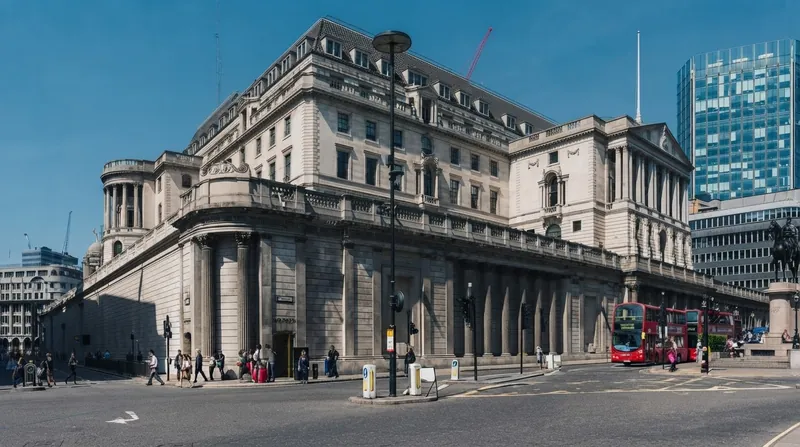
The Bank of England is closely monitoring these consumption patterns as it weighs its next interest rate decision. Policymakers must determine whether the October bump represents a temporary distortion or a sustained shift in household spending velocity.[1]
Supply chain mechanics
The sudden demand for specific long-life goods tested the agility of British supermarket logistics. Unlike fresh produce, which operates on a just-in-time delivery model, tinned goods and bottled water are typically held in larger warehouse reserves.[2][3]
Supermarket executives confirmed that while some individual stores saw empty shelves by late afternoon, national stock levels remained robust. The primary challenge was physical transportation—moving heavy pallets of water and canned goods from regional hubs to local branches.[2][6]
"Our logistics networks are designed to handle seasonal peaks like Christmas, so this unexpected October surge was manageable," a spokesperson for a major UK supermarket chain told The Standard. "We simply accelerated our ambient goods delivery schedules."[2]
The government has faced some criticism for the timing of the campaign, which coincided with the start of the crucial golden quarter for retailers. Some business groups argued the messaging inadvertently diverted household budgets away from struggling high-street businesses.[4]
However, resilience officials maintain the advice is a necessary precaution in an increasingly volatile global environment. The campaign aligns the UK with similar long-standing household preparedness recommendations in Nordic countries and the United States.[1][6]
Inflationary pressures
The concentration of spending on specific grocery categories has raised minor concerns about localized price inflation. When demand for specific items like batteries and tinned meat spikes unexpectedly, promotional discounting typically vanishes.[3][4]
Early pricing data suggests supermarkets held the line on basic essentials, avoiding the price-gouging accusations that plagued the industry during previous supply shocks. The British Retail Consortium reported that shop price inflation actually fell to 0.6% in October.[4]
"Retailers are acutely aware that consumers are still recovering from the cost-of-living crisis," Lim noted. "Raising prices on emergency supplies during a government campaign would be a catastrophic public relations error."
The broader economic impact of the stockpiling remains to be seen. If households have simply pulled forward their grocery spending, November and December could see a corresponding dip in food sales as families consume their reserves.[1][5]
Alternatively, if the emergency kits are genuinely stored away as advised, the October spending represents a net addition to annual retail consumption. This would provide a minor, unexpected boost to fourth-quarter GDP figures.[5][6]
Looking toward the holidays
Retailers are now pivoting aggressively toward the holiday season, hoping to recapture the discretionary spending that vanished in October. Black Friday promotions are launching earlier than ever to tempt cautious shoppers back to the high street.[4]
The success of the golden quarter will likely depend on whether the mild autumn weather breaks, prompting delayed purchases of winter clothing. Retailers are also banking on a psychological shift as the focus moves from emergency preparedness to festive celebration.[1][4]
For now, the UK retail sector finds itself in a strange holding pattern. The headline numbers look healthy, but the composition of that spending reveals a deeply pragmatic, cautious consumer base reacting to external prompts.[5]
The Office for National Statistics will release its November retail figures just before Christmas. That data will definitively show whether the October stockpiling surge was a temporary blip or the start of a more defensive era in British consumer behavior.[5]
Key points
- UK retail sales volumes rose by 0.7% in October, reversing a 0.3% decline in September.
- The growth was driven by a 1.4% jump in food store sales following a government campaign urging households to stockpile emergency supplies.
- Sales of clothing and footwear contracted by 1.2%, highlighting ongoing weakness in discretionary high-street spending.
- Supermarket supply chains absorbed the sudden demand for long-life goods without implementing purchasing limits or raising prices.
What we don’t know
- Whether the October stockpiling represents pulled-forward spending that will result in a corresponding drop in November grocery sales.
- How much the mild autumn weather, rather than the government campaign, contributed to the 1.2% drop in clothing sales.
- If the Bank of England will view the 0.7% retail jump as a temporary distortion or a sign of underlying economic resilience.
How we got here
September 2026
UK retail sales volumes decline by 0.3% amid cautious consumer sentiment.
October 2026
The UK government launches the 'Prepare' website, advising households to stock three days of emergency supplies.
Late October 2026
Supermarkets report double-digit sales growth for long-life items like UHT milk and tinned meat.
Nov 20, 2026
The Office for National Statistics confirms a 0.7% jump in overall retail sales driven by the grocery sector.
- Retail Analysts
- Warn that the grocery spending spike masks underlying economic weakness and diverts crucial discretionary spending away from the high street.
- Government Officials
- Argue that household preparedness is a necessary precaution in a volatile world and aligns the UK with international standards.
- Supply Chain Managers
- Emphasize the resilience of modern logistics networks, noting that the sudden demand was handled without systemic shortages.
Perspectives this story doesn't cover
- Low-income households unable to afford stockpiling three days of supplies
Sources
Source coverage
6 outlets
3 viewpoints surfaced






- [1]The GuardianGovernment Officials
Household rush to stockpile emergency supplies sends British retail sales soaring
Read on The Guardian → - [2]The StandardSupply Chain Managers
Stockpiling campaign drives sudden surge in supermarket sales
Read on The Standard → - [3]The IndependentSupply Chain Managers
Sales of tinned meat and UHT milk surge after government campaign
Read on The Independent → - [4]Business LiveRetail Analysts
UK retail sales jump 0.7% in October as shoppers stockpile
Read on Business Live → - [5]Office for National Statistics
Retail sales, Great Britain: October 2026
Read on Office for National Statistics → - [6]Sky NewsGovernment Officials
Supermarket sales spike following 'prepare for emergencies' government website launch
Read on Sky News →

More in Finance
See all →Services Sector
UK Services Sector Growth Hits Eight-Month High as AI Investment Ends Two-Year Hiring Slump
7 sources
Economic Forecasts
Goldman Sachs Projects Indian GDP Growth Will Cool to 7.2% Amid Rebounding Inflation
4 sources
Global Inflation
IMF Chief Georgieva Urges Tighter Monetary Policy as Global Inflation Hits 4.7%
4 sources

Monetary Policy
Federal Reserve Minutes Reveal Deepening Unease Over Inflation and Debate on 50-Basis-Point Hike
8 sources

Comments
Every angle. Every day.
Get Finance stories with full source coverage and perspective breakdowns, free every day.