full timeline
Deep-sea mining regulations debate
Follow Deep-sea mining regulations debate in the Factlen app and get an alert when there is news. Get the app
Share this story
Latest
On August 13, a new NOAA rule fast-tracked deep-sea mining permits for US companies in international waters. The rule consolidates exploration and commercial recovery applications into a single process, bypassing the UN's International Seabed Authority, with the US citing its non-participation in UNCLOS.
Environmentalists warned that the fast-tracked process skips crucial ecological baselines in fragile deep-sea habitats. Legal scholars expressed fear that the unilateral action will fracture the principle that designates the ocean floor as the "common heritage of mankind."
How the story developed
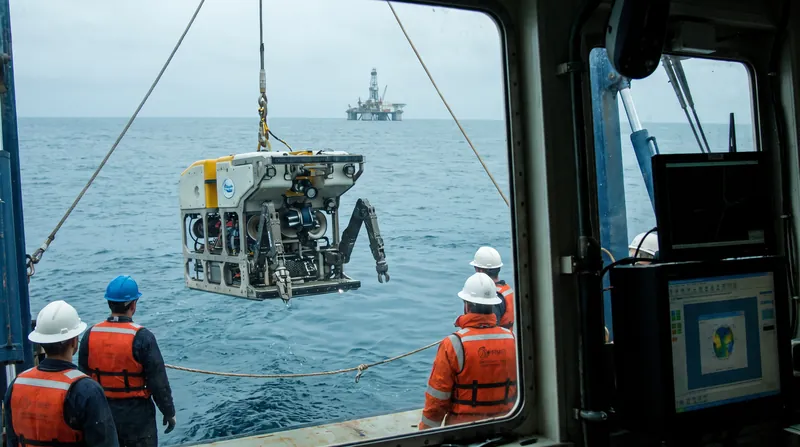
The debate over deep-sea mining centers on the Clarion-Clipperton Zone, a Pacific abyssal plain holding vast reserves of cobalt, nickel, and copper. Industry frontrunners, including The Metals Company, have pushed to begin commercial extraction, citing an urgent need for electric vehicle battery materials.
Environmental concerns have grown alongside the push for extraction. A five-year scientific study documented a 37 percent decline in animal numbers in areas disturbed by mining equipment, highlighting the potential impact on fragile deep-sea ecosystems.
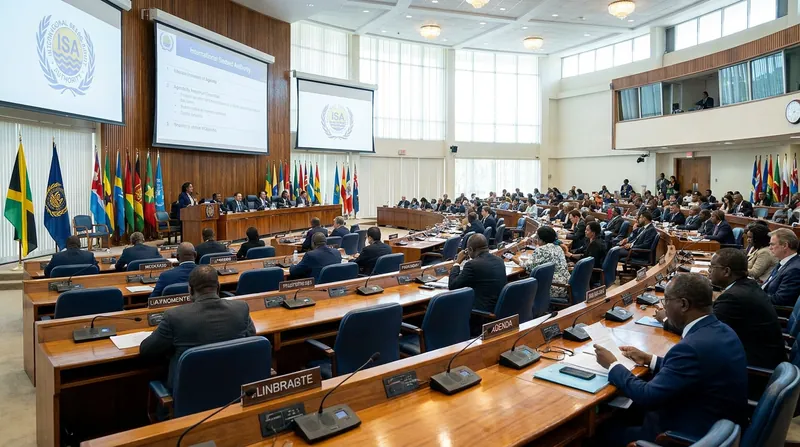
On August 6, the 31st assembly of the International Seabed Authority concluded without finalizing the regulatory Mining Code for commercial extraction. At the assembly, a growing coalition of 46 nations supported a precautionary pause or moratorium on deep-sea mining to protect the ocean floor.
Following the assembly's conclusion, geopolitical tensions rose as mining companies attempted to bypass the UN framework by applying for US domestic exploration permits. This dynamic forced a collision between multilateral idealism and the race for critical minerals, setting the stage for international legal standoffs.
What to watch
- Industry frontrunners like The Metals Company are pushing to begin extraction by 2027.
- China, Russia, and environmental coalitions are moving to challenge the US's domestic permitting of deep-sea mining in international waters.
Key numbers
- 46
- Nations supporting a moratorium
- 4.5M sq km
- Size of the Clarion-Clipperton Zone
- 4,000–5,500m
- Depth of the CCZ abyssal plain
- 37%
- Decline in animal numbers from mining disturbance
- ~800
- New species discovered in recent CCZ study
From: UN Seabed Authority Vote Looms: The Global Debate Over Mining the Deep Ocean Floor
Charts, maps and images
Timeline
August 2026
Is the US's fast-track deep-sea mining rule the final nail in the coffin for the 'common heritage of mankind'?
AI-generatedAI-generatedAI-generatedUN Seabed Authority Vote Looms: The Global Debate Over Mining the Deep Ocean Floor
AI-generatedAI-generatedAI-generatedAI-generated- UN Seabed Authority Vote Looms: The Global Debate Over Mining the Deep Ocean FloorThe 31st assembly of the International Seabed Authority concluded without a finalized regulatory code, intensifying the standoff between mining companies eager to extract critical minerals and a growing coalition of 46…
- UN Seabed Authority Talks End in Legal Standoff Over US Unilateral Mining PushThe 31st Assembly of the International Seabed Authority concluded with a looming legal confrontation as China, Russia, and environmental coalitions move to challenge the United States' domestic permitting of deep-sea…