
Bitcoin and Ethereum Face Price Pressures Amid Cooling ETF Demand and Macro Headwinds
Major cryptocurrencies are experiencing a market cooldown in late May 2026, driven by consecutive weeks of spot ETF outflows, geopolitical uncertainty, and shifting macroeconomic conditions.

In short
- Bitcoin and Ethereum are facing price pressures in late May 2026 due to a broader market cooldown.
- Spot cryptocurrency ETFs have experienced consecutive weeks of net outflows, signaling normalized demand.
- Macroeconomic headwinds, particularly elevated interest rates, are drawing capital toward traditional yield-bearing assets.
The digital asset landscape is undergoing a significant transition in late May 2026, as major cryptocurrencies like Bitcoin and Ethereum face sustained price pressures. After periods of intense enthusiasm and rapid price appreciation earlier in the decade, the market is currently experiencing a pronounced cooldown. This shift is not characterized by the chaotic sell-offs of previous crypto winters, but rather by a measured recalibration of asset values in response to shifting global realities.
Investors who previously relied on the perpetual upward momentum of digital assets are now navigating a more complex environment where traditional financial metrics play a dominant role. The current stagnation reflects a broader maturation of the asset class, moving away from pure speculation toward a model where macroeconomic fundamentals dictate price action. For market participants, this represents a crucial pivot point, demanding a more sophisticated understanding of how global economic forces interact with decentralized networks.[1][2]
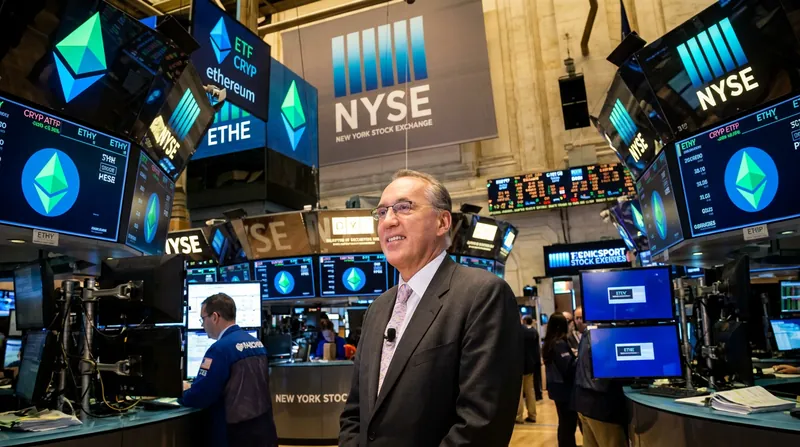
A primary driver of this recent price pressure is the noticeable cooling of demand for spot Exchange-Traded Funds (ETFs). When these financial instruments were initially introduced to the market, they served as massive conduits for institutional capital, driving unprecedented inflows and buoying the prices of both Bitcoin and Ethereum. However, late May 2026 has brought consecutive weeks of net outflows from these very same funds.
This reversal suggests that the initial wave of pent-up institutional demand has been largely satisfied, and asset managers are now taking a more tactical, wait-and-see approach. The outflows indicate a period of digestion, where the market must find a new equilibrium without the constant upward pressure of daily, massive ETF allocations. While some retail observers might view this as a bearish signal, institutional analysts frequently interpret this stabilization as a necessary phase for long-term market health.[1][2]
Compounding the effects of ETF outflows are significant macroeconomic headwinds that have altered the risk appetite of global investors. Central banks around the world, grappling with persistent inflation metrics, have maintained or signaled a commitment to elevated interest rates. In a high-interest-rate environment, the "risk-free" rate of return offered by government bonds and traditional savings vehicles becomes highly attractive.
Consequently, capital that might otherwise flow into risk-on assets like Bitcoin and Ethereum is being redirected toward these safer, yield-bearing instruments. This dynamic demonstrates that cryptocurrencies are no longer operating in an isolated speculative bubble; they are deeply integrated into the global financial ecosystem and are highly sensitive to the cost of capital. The current price pressures are a direct reflection of this integration, highlighting the asset class's vulnerability to traditional monetary policy tightening.[1][2]
Geopolitical uncertainty is also playing a crucial role in the current market cooldown, adding a layer of caution to investor behavior. As international tensions simmer and trade relations face ongoing complexities in 2026, institutional capital is instinctively retreating to established safe havens. Historically, some proponents argued that Bitcoin would serve as a digital gold, attracting capital during times of global distress.
However, the current market data suggests that, in the short term, major cryptocurrencies are still trading predominantly as risk assets rather than reliable hedges against geopolitical instability. When global headlines induce anxiety, large-scale allocators are choosing to reduce their exposure to volatile digital assets, contributing to the downward pressure on prices. This behavioral pattern underscores the ongoing debate about the true utility and classification of cryptocurrencies in a diversified institutional portfolio.[1][2]
Despite these downward pressures, the underlying narrative of the late May 2026 market is surprisingly constructive, offering a uniquely useful perspective for long-term investors. Unlike the catastrophic crashes of 2018 or 2022, the current cooldown is remarkably orderly, devoid of the systemic liquidations and platform collapses that previously plagued the industry. This stability is a testament to the improved market structure and the presence of regulated, institutional-grade infrastructure.
The fact that Bitcoin and Ethereum can absorb consecutive weeks of ETF outflows and macro shocks without experiencing a total price collapse indicates a deeply entrenched baseline of support. For everyday investors, this resilience is a hopeful indicator; it suggests that the asset class has achieved a level of permanence and maturity that can weather standard economic cycles without facing existential threats. The current environment is less about surviving a crisis and more about navigating a standard financial contraction.[1][2]
Ethereum, while facing similar macro pressures to Bitcoin, is also navigating its own unique set of internal and external dynamics during this period. As a smart contract platform, Ethereum's valuation is closely tied to network activity, decentralized finance (DeFi) yields, and the broader utility of its ecosystem. The cooling demand for Ethereum-based ETFs is partially offset by the ongoing structural developments within its network, though these internal catalysts are currently being overshadowed by the overarching macro headwinds.
Furthermore, the regulatory environment surrounding staking yields and the classification of various DeFi protocols continues to create friction for institutional adoption. Consequently, Ethereum's price action in late May 2026 reflects a complex tug-of-war between its technological advancements and the restrictive realities of global monetary policy and regulatory scrutiny. Understanding this duality is essential for investors looking to differentiate between various digital assets.[1][2]
Behind the scenes, the lull in price action is providing traditional financial institutions with a valuable window to build and refine their cryptocurrency operations. During periods of hyper-volatility and rapid price appreciation, compliance teams and risk managers often struggle to keep pace with market demands. The current stabilization allows major banks, wealth management firms, and pension funds to thoughtfully construct the necessary custodial solutions, audit frameworks, and client onboarding processes required for large-scale digital asset integration.
Rather than viewing the ETF outflows as a permanent retreat, many of these entities are using the quiet period to lay the groundwork for future allocations. This quiet accumulation of infrastructure is perhaps the most bullish long-term signal hidden within the current market cooldown, suggesting that the next wave of capital entry will be supported by far more robust institutional plumbing. The focus has shifted from rapid acquisition to sustainable integration.[1][2]
Ultimately, the price pressures facing Bitcoin and Ethereum in late May 2026 represent a critical evolutionary step for the cryptocurrency market. The transition from a retail-driven, hype-fueled ecosystem to a macro-sensitive, institutionally dominated asset class is inherently bumpy. However, this normalization is exactly what is required for digital assets to secure a permanent place in global investment portfolios.
Ultimately, the price pressures facing Bitcoin and Ethereum in late May 2026 represent a critical evolutionary step for the cryptocurrency market.
As cryptocurrencies increasingly trade in tandem with tech equities and respond predictably to interest rate announcements, they become legible to traditional financial analysts and portfolio managers. While the immediate lack of explosive price action may disappoint short-term speculators, the establishment of a predictable, macro-responsive market structure is a profoundly positive development. It paves the way for a future where digital assets are evaluated on their fundamental utility and economic integration, rather than their capacity for irrational exuberance.[1][2]
Terms to know
- Spot ETF
- An exchange-traded fund that directly holds the underlying cryptocurrency, allowing investors to gain price exposure without managing digital wallets.
- Macro Headwinds
- Broad economic conditions, such as high interest rates or persistent inflation, that create challenging environments for asset growth.
- Risk-on Asset
- Investments like stocks or cryptocurrencies that carry higher volatility and risk, typically favored when economic confidence is high.
- Outflows
- The movement of capital out of an investment fund, indicating that investors are selling their shares and withdrawing money.
- Yield-bearing Instruments
- Financial assets, like bonds or savings accounts, that pay out a regular interest rate to the investor.
Questions readers ask
Why are Bitcoin and Ethereum prices dropping?
Prices are facing pressure due to a combination of investors pulling money from crypto ETFs and broader economic challenges like high interest rates.
Does this mean the crypto market is crashing?
No. Analysts view this as a healthy cooldown and a sign of market maturity, noting there is far less panic selling than in previous market cycles.
How do interest rates affect cryptocurrency?
When traditional interest rates are high, safer investments like government bonds offer better returns, making riskier assets like cryptocurrencies less attractive to large investors.
Are institutions abandoning cryptocurrency?
Not necessarily. Many traditional financial institutions are using this period of lower volatility to build long-term infrastructure and compliance frameworks behind the scenes.
Different angles
Institutional Accumulators
Viewing the market cooldown as a healthy consolidation phase.
Large-scale wealth managers and pension funds often view periods of low volatility and price stagnation as ideal windows for infrastructure development. Rather than chasing rapidly appreciating assets, these entities utilize the cooldown to build robust custodial frameworks, navigate compliance requirements, and slowly accumulate positions without the pressure of a retail-driven bubble. For them, the lack of chaotic sell-offs proves the asset class is maturing.
Macroeconomists
Pointing to crypto's sensitivity to interest rates as proof of financial integration.
Traditional economists argue that the current price pressures on Bitcoin and Ethereum perfectly illustrate that digital assets are not immune to global monetary policy. By reacting negatively to sticky inflation and sustained high interest rates, cryptocurrencies are behaving exactly like high-growth tech equities. This viewpoint emphasizes that crypto has lost its 'isolated' status and must now be analyzed through the same macroeconomic lens as any other risk-on asset.
Retail Traders
Experiencing frustration over the lack of historical volatility and quick gains.
For everyday traders who entered the market expecting the explosive, exponential growth seen in previous cycles, the current institutionalized environment is a source of friction. The stabilization of prices and the dominance of ETF flows mean that market movements are slower and more heavily dictated by Wall Street hours and macroeconomic data releases, fundamentally changing the nature of retail cryptocurrency trading.
- Institutional Builders
- The cooldown is a necessary phase to build robust financial infrastructure.
- Macro Skeptics
- Elevated interest rates will continue to suppress all risk-on assets, including crypto.
- Retail Holdouts
- Waiting for the next major technological or network catalyst to drive volatility.
Perspectives this story doesn't cover
- Cryptocurrency miners and network validators, whose operational profit margins are directly impacted by prolonged price stagnation.
- Financial regulators, who might view the cooling demand as a successful deflation of speculative risk in the markets.
Sources
Source coverage
2 outlets
3 viewpoints surfaced


- [1]Investing.com
Bitcoin ETF Outflows Show Institutional Risk Appetite Is Cracking
Read on Investing.com → - [2]KuCoin
Bitcoin and Ethereum ETFs Face Continued Outflows in May 2026
Read on KuCoin →
More in Finance
See all →AI Infrastructure
The Mechanics of Infrastructure Arbitrage: How Crypto Miners Are Repurposing Rigs to Power the AI Boom
4 sources

Market Infrastructure
Nasdaq Integrates Proprietary Order Book Data with Pyth Network to Enhance DeFi Transparency
5 sources

Digital Dollars
The Mechanics of the Revenue-Sharing Stablecoin: How BlackRock, Coinbase, and Ripple Are Reshaping Crypto Payments
4 sources

Crypto Regulation
The Mechanics of Crypto Custody: How the SEC's Rescission of SAB 121 Reshapes Bank Balance Sheets
3 sources

Comments
Every angle. Every day.
Get Finance stories with full source coverage and perspective breakdowns, free every day.