full timeline
US–China trade and summit negotiations
Follow US–China trade and summit negotiations in the Factlen app and get an alert when there is news. Get the app
Share this story
Latest
On September 28, the United States and China finalized lists for $60 billion in reciprocal tariff cuts, covering roughly $30 billion in non-sensitive goods for each nation. The U.S. list encompasses 77 Chinese product categories, primarily consumer goods such as appliances and toys, while China's list includes 1,619 U.S. goods, focusing on agricultural products, timber, and medical devices. On the same day, China committed to importing 10 million metric tons of U.S. coal annually in 2027 and 2028.
Alongside the tariff reductions, the two nations formally extended their bilateral trade truce by two months to January 10, 2027. The extension, agreed upon on September 27, preserves the Busan Agreement, which previously reduced specific import duties by up to 80 percent, and provides operational stability for automotive and transportation supply chains through the end of the year.
How the story developed
On August 23, the U.S. and China established a Board of Trade to negotiate tariff reductions on up to $30 billion in non-sensitive goods, marking a shift toward politically negotiated managed trade. At the time, only 16 percent of 2025 U.S. imports from China were free of both recent duties and underlying Section 301 tariffs. The Office of the United States Trade Representative opened a public comment period for companies to advocate for their products to be deemed non-sensitive, while Chinese officials proposed expanding the tariff-free basket to $300 billion based on the $414 billion total bilateral trade volume.
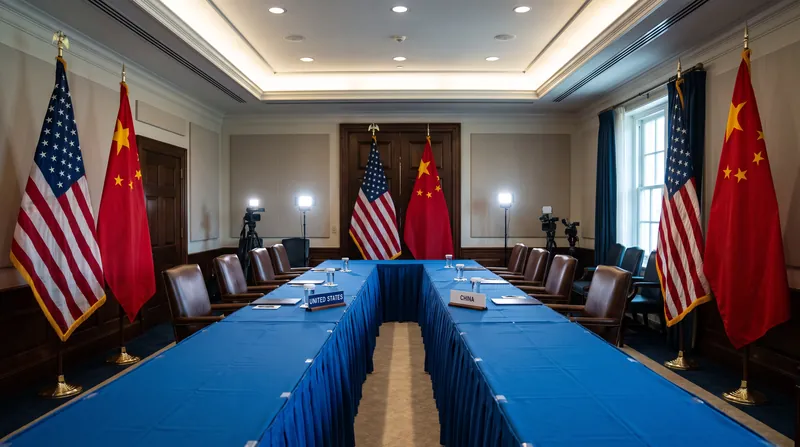
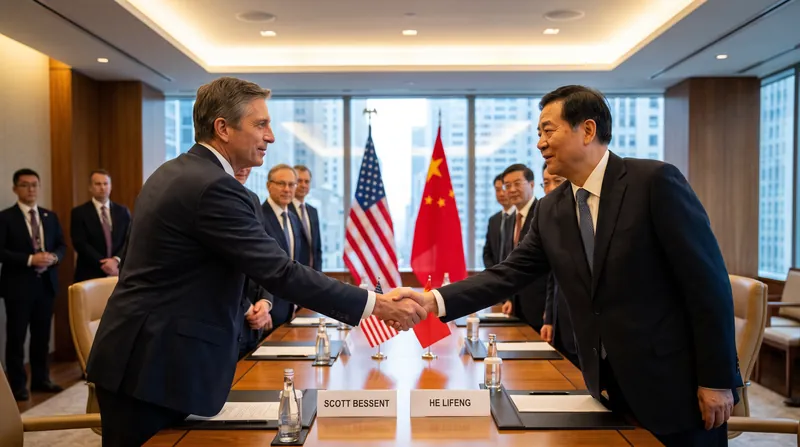
During high-level economic negotiations in New York on September 20, U.S. and Chinese economic teams operationalized the bilateral Board of Trade. The mechanism aimed to compartmentalize commerce by protecting non-sensitive goods from broader strategic disputes ahead of a previously scheduled November 10 tariff deadline.
At the September 20 talks, negotiators also formally established a U.S.-China artificial intelligence dialogue. Washington proposed a notification mechanism for national security incidents, setting the stage for a September 24 summit between President Donald Trump and Chinese President Xi Jinping in Washington.
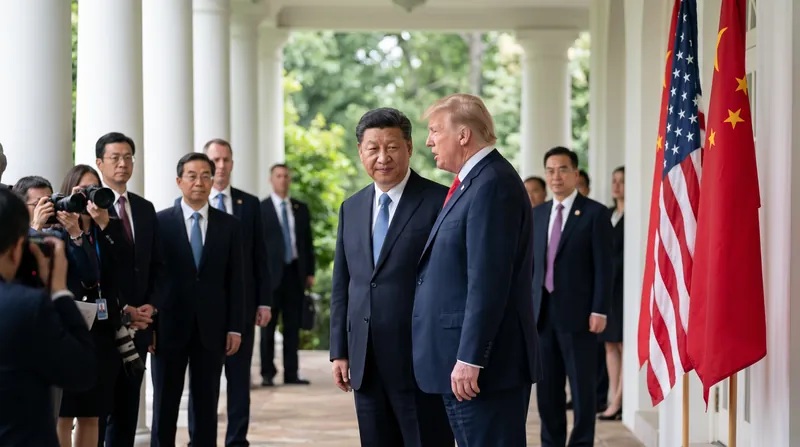
During the White House summit, President Xi urged comprehensive human control over artificial intelligence and established red lines regarding U.S. involvement with Taiwan and Iran. President Trump resisted binding international curbs on AI, favoring domestic innovation, and dismissed existential threat warnings.
Following the state visit, the United States and China agreed on September 26 to create a dedicated bilateral communication channel and incident hotline for AI-related crises. During the summit, the nations also reached the initial agreement on the reciprocal tariff reduction for non-sensitive goods that was subsequently finalized.
What to watch
- Leaders are preparing for upcoming bilateral talks that align with the U.S. presidential transition.
Charts, maps and images
Show 4 moreShow fewer
Timeline
September 2026
US and China Finalize $60 Billion Reciprocal Tariff Reduction and Extend Trade Truce
US and China Extend Tariff Truce to January 2027 Ahead of Presidential Summit
US and China Agree to Establish Bilateral AI Incident Communication Channel After Summit
Xi Jinping Urges 'Human Control' Over AI at White House Summit as Trump Resists Curbs
US and China Operationalize Board of Trade in High-Level Economic Talks Ahead of Summit
August 2026
Does the U.S.-China Board of Trade Signal the Permanent End of Free Trade?