
FISA Surveillance Powers Expire as Trump Demands Attachment of Voting Overhaul Bill
A key U.S. intelligence gathering authority lapsed over the weekend after Congress deadlocked over President Trump's demand to attach the SAVE America Act to the renewal legislation.
By Factlen Editorial Team
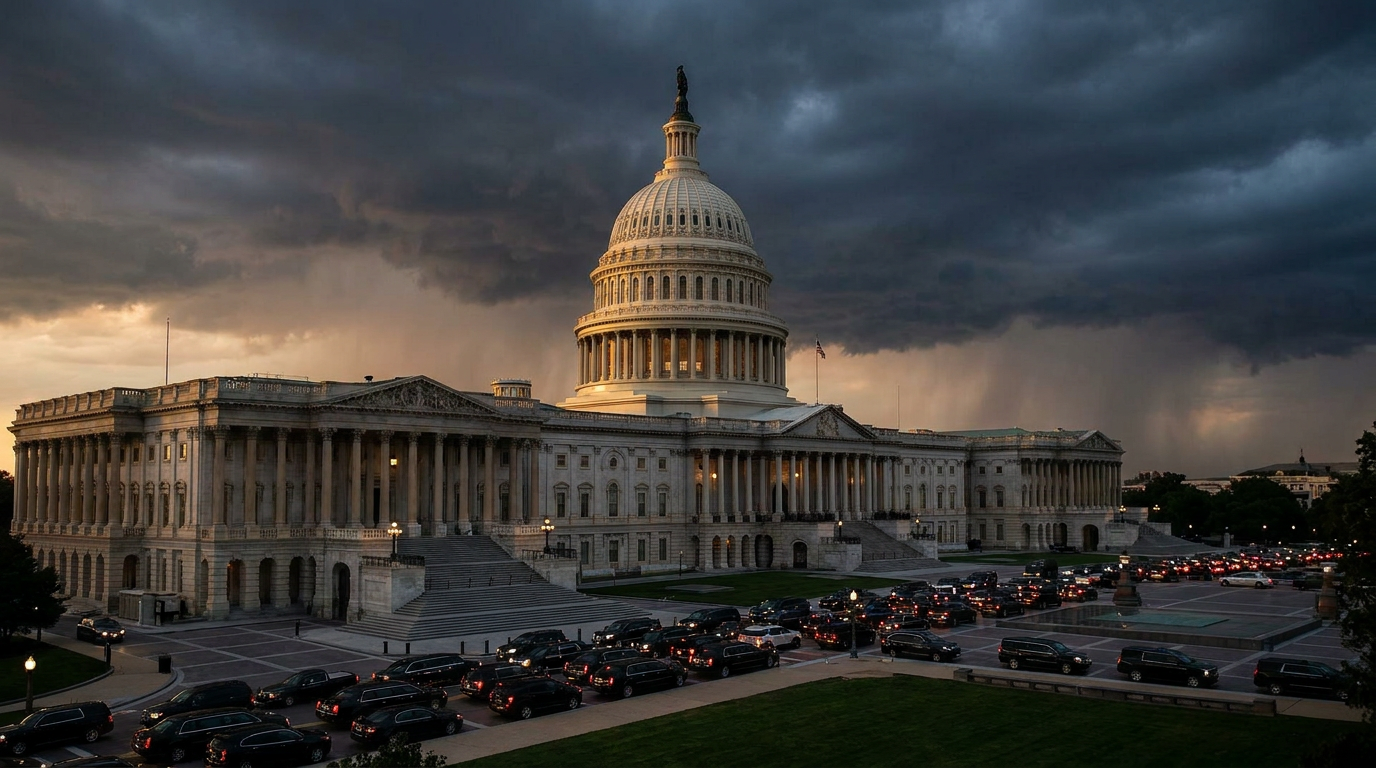
- Conservative Hardliners
- Demand the SAVE America Act be attached to FISA and are willing to let surveillance powers lapse to force the issue.
- Democratic Opposition
- Oppose the voting bill as disenfranchisement and refuse to grant surveillance powers to the current acting DNI.
- National Security Hawks
- Prioritize the immediate, clean reauthorization of Section 702 to prevent intelligence blind spots.
What's not represented
- · State Election Officials
- · Civil Liberties Organizations
Why this matters
The expiration of Section 702 degrades the U.S. government's ability to monitor foreign threats and track terrorist plots. Furthermore, the standoff ties national security directly to a sweeping election overhaul that could fundamentally change how Americans register and vote in the 2026 elections.
Key points
- FISA Section 702, a vital foreign intelligence gathering tool, expired at midnight on Friday.
- President Trump is demanding that Congress attach the SAVE America Act, a strict voting overhaul bill, to any FISA renewal.
- Conservative hardliners are holding the surveillance bill hostage to force the Senate to pass the election integrity measures.
- Democrats are refusing to support a clean FISA extension due to concerns over acting Director of National Intelligence Bill Pulte.
A critical U.S. intelligence-gathering authority expired over the weekend after Congress deadlocked on a renewal package, plunging the nation's surveillance apparatus into uncertainty. Section 702 of the Foreign Intelligence Surveillance Act (FISA), which allows the government to monitor the communications of foreign targets overseas, lapsed at midnight on Friday. The expiration follows a high-stakes legislative standoff triggered by President Donald Trump, who demanded that his sweeping election overhaul legislation, the SAVE America Act, be firmly attached to any surveillance reauthorization.[1][2][6]
The lapse leaves the U.S. intelligence community without one of its most heavily relied-upon tools. National security officials have long maintained that Section 702 generates roughly half of all U.S. foreign intelligence and is vital for disrupting terrorist plots, monitoring adversarial nations, and securing major international events. Because the law targets foreigners abroad, intelligence agencies do not need a warrant to intercept their communications, making it a highly efficient collection mechanism for the defense establishment.[6]
However, the authority has faced intense bipartisan criticism for years because it incidentally captures the communications of Americans who interact with those foreign targets. This "incidental collection" has led to documented abuses by the FBI, which has improperly searched the FISA database for information on U.S. citizens, including political figures and activists. These missteps have fueled deep skepticism among civil liberties advocates on the left and populist conservatives on the right, creating an unusual coalition of lawmakers willing to let the program die.[4][6]
The current impasse, however, is driven less by privacy debates and more by election-year brinkmanship. On Sunday, President Trump reiterated his hardline stance on Truth Social, declaring his opposition to any FISA extension that does not include the full version of the SAVE America Act. The voting bill, which has stalled in the Senate, would mandate documentary proof of U.S. citizenship for voter registration, implement strict national voter ID requirements, and seek to severely restrict mail-in voting across all fifty states.[1][2][3]

"I'm against FISA if it doesn't come with The Save America Act (Full version!) firmly attached to it," Trump posted, effectively ordering conservative lawmakers to hold the surveillance reauthorization hostage. Hardline House Republicans, including Representative Anna Paulina Luna, have rallied behind the strategy, vowing to vote down any "must-pass" legislation that omits the election integrity measures. For these conservatives, forcing the Senate establishment to choose between warrantless surveillance and strict voting laws is a necessary tactic to secure the ballot box ahead of the upcoming elections.[2][4][6]
The strategy relies on the assumption that the intelligence community and defense hawks will eventually cave to secure FISA's return. Ken Cuccinelli and other conservative election integrity advocates have publicly urged the House to "hold the Senate hostage," arguing that if Congress can rush to protect America's security through surveillance, it must also rush to protect its elections. They view the expiration not as a crisis, but as leverage.[5]
The strategy relies on the assumption that the intelligence community and defense hawks will eventually cave to secure FISA's return.
The SAVE America Act itself remains a non-starter for Democrats, who view the legislation as a coordinated effort to disenfranchise millions of eligible voters. Voting rights organizations point out that millions of Americans lack immediate access to the specific documents required by the bill, such as passports or original birth certificates. They argue the legislation is designed to wrest control of election administration away from the states and purge voter rolls under the guise of security, making any compromise that includes the bill politically impossible for the left.[3][7]
The standoff is further complicated by a secondary, equally intractable dispute involving congressional Democrats. In the past, bipartisan coalitions have managed to push clean FISA extensions across the finish line when conservative populists rebelled. This time, however, Democrats are refusing to provide the necessary votes to bail out the Republican leadership. Their opposition stems from President Trump's recent appointment of Bill Pulte—the former head of the Federal Housing Finance Agency—to serve as the acting Director of National Intelligence.[1][6]
Democratic lawmakers argue that Pulte lacks the requisite national security experience for the role and fear he will weaponize the intelligence apparatus to target the president's political opponents. Representative Gabe Amo bluntly summarized the Democratic position following a failed procedural vote last week, stating that his party would not grant surveillance powers to a "political hatchet man." Consequently, a clean 18-month extension favored by some White House officials and Republican defense hawks failed on the House floor, with 199 Democrats and 19 Republicans voting against it.[6]

With Section 702 now officially expired, the immediate operational impact remains somewhat opaque. While the government cannot initiate new surveillance targets under the lapsed authority, existing surveillance orders approved by the secretive FISA court typically remain active until they individually expire. This provides a temporary, albeit shrinking, buffer for intelligence agencies to continue monitoring already-established targets, though they are blind to newly emerging threats that require fresh authorizations.[6]
The path forward is highly uncertain. The House and Senate are deeply fractured, with the Republican caucus split between national security traditionalists desperate to restore the intelligence tool and populists determined to secure the SAVE America Act. With Democrats uniformly opposed to both the voting bill and the current acting intelligence director, there is no clear legislative off-ramp. Until one side blinks, or a novel compromise emerges, the United States will continue to operate with a degraded foreign surveillance capability.[1][6][7]
How we got here
April 2026
The House overwhelmingly passes a clean renewal of Section 702, but conservative opposition begins to mount.
May 2026
President Trump begins publicly demanding that the SAVE America Act be attached to housing and FISA legislation.
June 11, 2026
A motion to pass a clean FISA extension fails in the House 197-218 amid bipartisan opposition.
June 12, 2026
FISA Section 702 officially expires at midnight after Congress adjourns without a deal.
June 14, 2026
President Trump reiterates his threat to veto any FISA extension that does not include his voting bill.
Viewpoints in depth
Conservative Republicans
View the FISA expiration as necessary leverage to force the passage of strict election integrity laws.
For the populist wing of the GOP, the SAVE America Act is an existential priority. They argue that requiring documentary proof of citizenship and strict voter ID is the only way to ensure faith in the 2026 elections. Because the Senate has blocked the measure, these lawmakers believe attaching it to a 'must-pass' national security bill is their only viable strategy. Furthermore, many in this camp are deeply skeptical of the intelligence community following the FBI's handling of the Carter Page surveillance in 2016, making them entirely comfortable letting Section 702 lapse if their demands are not met.
Congressional Democrats
Oppose the voting legislation as voter suppression and refuse to authorize surveillance under the current acting intelligence director.
Democrats view the SAVE America Act as a draconian attempt to disenfranchise minority and low-income voters who may lack immediate access to passports or birth certificates. Beyond the voting bill, their refusal to support a clean FISA extension is rooted in deep distrust of acting Director of National Intelligence Bill Pulte. They argue Pulte is an unqualified political loyalist installed to weaponize the intelligence apparatus against domestic opponents, making it too dangerous to hand the administration sweeping, warrantless surveillance powers.
The Intelligence Community
Warns that the expiration of Section 702 creates a dangerous blind spot for national security.
National security officials and defense-oriented lawmakers argue that playing politics with Section 702 is reckless. They point out that the authority is responsible for disrupting terror plots, tracking cyber threats, and monitoring hostile foreign nations. From their perspective, the incidental collection of American data can be managed through internal reforms and oversight, but allowing the core foreign surveillance capability to go dark actively endangers American lives and degrades the country's geopolitical standing.
What we don't know
- It is unclear how long existing FISA court orders will provide a buffer before intelligence gathering is severely degraded.
- It remains to be seen if Republican leadership will attempt to bypass conservative hardliners by offering concessions to Democrats.
Key terms
- FISA Section 702
- A provision of the Foreign Intelligence Surveillance Act that permits the warrantless surveillance of non-U.S. citizens located abroad.
- Incidental Collection
- The unintentional gathering of Americans' communications when they interact with a foreign target who is under surveillance.
- SAVE America Act
- A proposed legislative package aimed at overhauling federal election rules, primarily by mandating proof of citizenship and strict voter ID.
- Director of National Intelligence (DNI)
- The cabinet-level official who serves as the head of the U.S. Intelligence Community and advises the president on national security.
Frequently asked
What is FISA Section 702?
It is a legal authority that allows U.S. intelligence agencies to monitor the communications of foreign targets located outside the United States without a warrant.
Why did Section 702 expire?
Congress failed to pass a renewal bill before the Friday deadline due to a standoff over President Trump's demand to attach a controversial voting bill to the legislation.
What is the SAVE America Act?
It is a Republican-backed election overhaul bill that would require documentary proof of U.S. citizenship to register to vote and implement strict national voter ID requirements.
Why are Democrats refusing to support a clean FISA extension?
Democrats are withholding their votes because they object to President Trump's appointment of Bill Pulte as acting Director of National Intelligence, fearing he will misuse the surveillance apparatus.
Sources
Source coverage
7 outlets
3 viewpoints surfaced







[1]AxiosDemocratic Opposition
Trump won't back FISA renewal without his SAVE America Act voting bill
Read on Axios →[2]ReutersDemocratic Opposition
Trump says he is against FISA extension if voting bill not attached
Read on Reuters →[3]Democracy DocketDemocratic Opposition
Trump seeks passage of SAVE America Act via housing and FISA bills
Read on Democracy Docket →[4]Washington TimesConservative Hardliners
Conservatives leverage FISA renewal for the SAVE America Act
Read on Washington Times →[5]The FederalistConservative Hardliners
Cuccinelli: Attach SAVE Act To FISA Renewal
Read on The Federalist →[6]Legis1National Security Hawks
FISA Section 702 Surveillance Authority Expires
Read on Legis1 →[7]CBS NewsNational Security Hawks
SAVE America Act faces uphill battle in Senate
Read on CBS News →

More in news politics
See all 6 stories →Election Security
DHS Secretary Markwayne Mullin Refuses to Rule Out ICE Presence at 2026 Midterm Polls
0 sources
U.S.-Iran Deal
U.S. and Iran Reach Deal to End 107-Day War, Reopen Strait of Hormuz
0 sources

US-Iran Peace Deal
U.S. and Iran Reach Deal to End 107-Day War and Reopen Strait of Hormuz
0 sources

U.S.-Iran Ceasefire
U.S. and Iran Reach Ceasefire Agreement to End Four-Month War
0 sources

Every angle. Every day.
Get news politics stories with full source coverage and perspective breakdowns delivered to your inbox.