
The FBI Built a 22,000-Square-Foot Fake Town to Simulate 'Kinetic' Cyberattacks
The FBI has unveiled the Kinetic Cyber Range, a massive physical replica of a U.S. town in Alabama designed to train agents on cyberattacks that cross over into the physical world.
By Tariq Nasser

Tucked away inside the Federal Bureau of Investigation's North Campus on the Redstone Arsenal in Huntsville, Alabama, sits a meticulously constructed American town where nothing is quite as it seems. Spanning 22,000 square feet, the indoor facility features fully furnished houses, a hotel, a gas station, a grocery store, a courthouse, and a hospital.
Traffic lights cycle through their colors, and a local power company manages the grid. But this community was built for a single, destructive purpose: to be relentlessly hacked. Known as the Kinetic Cyber Range, the massive replica town serves as a state-of-the-art training ground for law enforcement agents learning to combat digital threats that bleed into the physical world.[1][2][3][4]
Since quietly opening its doors in February 2025, the facility has hosted more than 1,400 students, including FBI personnel, digital forensic specialists, and partners from federal agencies like NASA and the U.S. Army. The core philosophy behind the range is a radical departure from traditional cybersecurity education.
For years, cyber training was largely theoretical and confined to a classroom, with agents analyzing loose media or cell phones at a desk. The Kinetic Cyber Range flips that model inside out, plunging investigators into immersive, high-stress environments where digital breaches trigger immediate, tangible chaos.[3][4]
The facility's design reflects a growing recognition of "kinetic" cyber warfare—digital attacks that cause direct physical disruption to real-world infrastructure. Every building within the mock town is wired with functioning devices, networks, and industrial control systems that behave exactly as they would in a live U.S. community. Furthermore, the entire network is strictly air-gapped and confined to the premises, ensuring that the highly sophisticated simulated attacks deployed during training cannot accidentally spill over into the public internet.[2][3][4]
The urgency driving the facility's creation is grounded in staggering financial and operational losses. According to the FBI's 2025 Internet Crime Report, cybercrime losses in the United States skyrocketed to a record $20.9 billion, representing a 26 percent increase from the previous year. Within that landscape, ransomware has emerged as the premier ongoing threat to critical infrastructure. The Kinetic Cyber Range allows the Bureau to simulate these exact scenarios, forcing agents to navigate the cascading effects of a breach rather than just staring at lines of code.[2][3]
One of the facility's most intense simulations involves a targeted ransomware attack on the mock hospital. As the malicious software locks down the medical facility's network, the simulation plunges trainees into a high-stakes crisis. Alarms blare through the corridors, and hired role-players acting as medical staff panic as patient care systems go dark. Investigators are forced to manage both the technical challenge of decrypting the network and the human crisis of failing medical equipment, making rapid decisions under the intense pressure of simulated life-or-death consequences.[3]
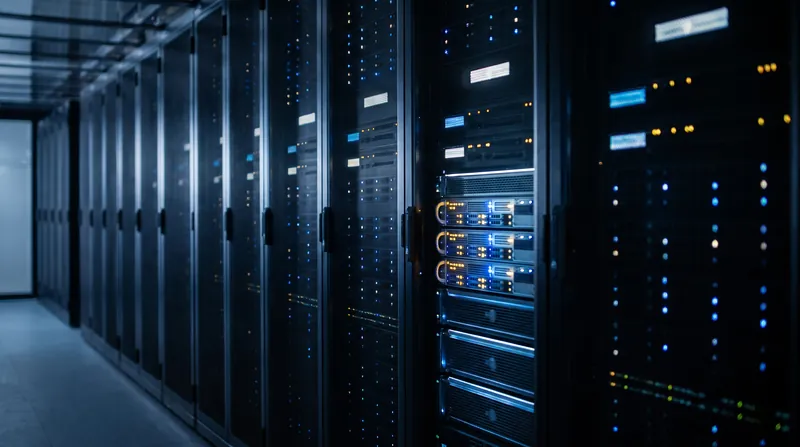
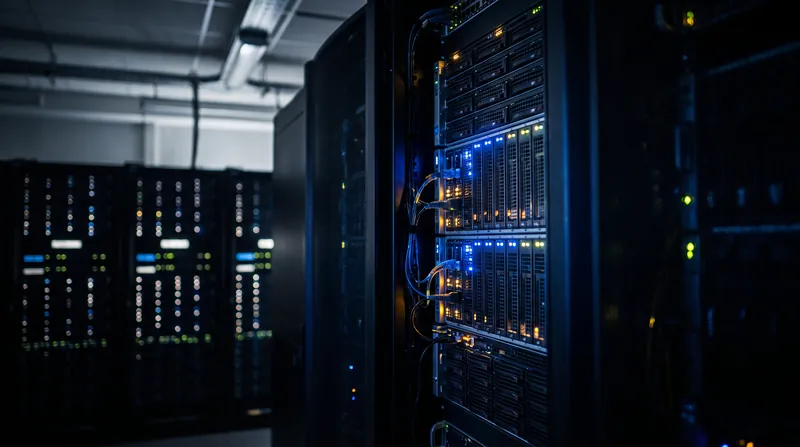
Beyond critical infrastructure, the range also replicates the grueling realities of corporate incident response. The facility houses a massive, fully functional data center equipped with more than 200 physical servers running a mix of Windows and Linux operating systems. Program manager Dave Beachboard noted that the server rooms are deliberately kept "cold, cramped, noisy, and miserable." This environmental realism ensures that agents are prepared for the chaotic, uncomfortable conditions they will inevitably face when executing search warrants or responding to live corporate breaches.[3][4]
The Kinetic Cyber Range also serves as a premier laboratory for advanced digital forensics. In one of the facility's vehicle bays, students practice dismantling the interiors of modern cars to extract the electronic control unit—the vehicle's digital brain. By tracing the complex wiring and pulling the hardware, investigators learn how to reconstruct a vehicle's location history, user data, and operational telemetry, which can be critical evidence in tracking suspects who rely on connected cars.[4]
However, the facility's digital forensics curriculum has not been without controversy. Reports indicate that the training involves teaching agents how to crack the security of encrypted devices using undisclosed vulnerabilities. These zero-day exploits allow law enforcement to bypass the robust privacy protections built into consumer hardware, extracting data for criminal investigations without the knowledge of the device manufacturers.[2][3]
This practice has sparked ongoing debate between law enforcement and privacy advocates. While the FBI maintains that such tools are essential for accessing critical evidence in severe criminal cases, cybersecurity experts argue that hoarding zero-day vulnerabilities leaves the broader public at risk. By deliberately withholding these flaws from companies like Apple and Google, critics warn that the same vulnerabilities could be discovered and exploited by malicious state actors or cybercriminal syndicates.[2][3]
Despite the debate over specific forensic tools, the broader value of immersive simulation is deeply rooted in FBI history. The Kinetic Cyber Range is widely viewed as the modern, digital successor to "Hogan's Alley," the famous mock town built at the FBI Training Academy in Quantico, Virginia, in 1987. Constructed with the help of Hollywood set designers, Hogan's Alley was designed to train agents in physical combat, judgment, and "shoot-don't-shoot" scenarios following a tragic real-world shootout in Miami.[5]
Just as Hogan's Alley revolutionized tactical firearms training by moving it from a static paper range to a dynamic, populated streetscape, the Kinetic Cyber Range is revolutionizing digital defense. It acknowledges that modern cybercrime is no longer an isolated event occurring on a single server. A breach at a local power company can instantly disable the hospital down the street, and a ransomware demand can create pressure that extends far beyond the keyboard.[1][3][5]
By training agents to understand and mitigate these cascading effects, the FBI is preparing its workforce for a future where the line between digital and physical security no longer exists. As the 1,400 graduates of the Huntsville facility return to their respective field offices and partner agencies, they carry with them the hands-on experience of having survived the worst-case scenarios—ensuring they are ready when the alarms sound in the real world.[3][4]
Key points
- The FBI has unveiled the Kinetic Cyber Range, a 22,000-square-foot mock town in Huntsville, Alabama, designed to simulate physical cyberattacks.
- The facility features fully functioning replicas of a hospital, gas station, hotel, and a data center with over 200 physical servers.
- Trainees face high-stress scenarios, such as a ransomware attack shutting down medical equipment while role-players simulate a hospital crisis.
- The range also teaches advanced digital forensics, including the extraction of electronic control units from modern vehicles.
Open questions
- Which specific zero-day vulnerabilities the FBI is utilizing in its digital forensics training, and which consumer devices are most affected.
- The exact cost of constructing and maintaining the 22,000-square-foot Kinetic Cyber Range facility.
- How frequently the facility's infrastructure is updated to reflect the rapidly evolving landscape of new malware and IoT devices.
Timeline
1987
The FBI opens Hogan's Alley in Quantico, Virginia, pioneering the use of a mock town for physical tactical training.
February 2025
The Kinetic Cyber Range officially opens its doors at the FBI's North Campus in Huntsville, Alabama.
April 2026
The FBI conducts large-scale, multi-agency cyber exercises at the Huntsville facility.
June 2026
Details of the 22,000-square-foot facility and its controversial digital forensics training are widely revealed to the public.
- Law Enforcement Trainers
- Immersive, high-stress simulations are essential for preparing agents for real-world crises.
- Critical Infrastructure Analysts
- The primary threat is no longer isolated data theft, but the cascading physical effects of a breach.
- Privacy & Security Advocates
- The use of undisclosed zero-day exploits in forensics training endangers the broader public.
Perspectives this story doesn't cover
- Device Manufacturers (e.g., Apple, Google) whose hardware is targeted in the forensics training.
- Hospital Administrators who manage the real-world fallout of the simulated ransomware attacks.
Sources
Source coverage
5 outlets
3 viewpoints surfaced




- [1]The VergeCritical Infrastructure Analysts
The FBI built a small town to simulate cyberattacks
Read on The Verge → - [2]TechCrunchPrivacy & Security Advocates
The FBI built its own replica small town to simulate real-world cyberattacks
Read on TechCrunch → - [3]CybernewsCritical Infrastructure Analysts
FBI shows every inch of 22,000 sq ft 'cyber range' used to train agents on cyberattacks
Read on Cybernews → - [4]Federal Bureau of InvestigationLaw Enforcement Trainers
Inside the FBI's 22,000 square-foot indoor technical training environment in Huntsville
Read on Federal Bureau of Investigation → - [5]Federal Bureau of InvestigationLaw Enforcement Trainers
Hogan's Alley
Read on Federal Bureau of Investigation →

More in Technology
See all →Enterprise Security
Citrix Confirms Two Unpatched Zero-Day Vulnerabilities in NetScaler Under Active Exploitation
5 sources
OAuth 2.0
The Six Steps of the OAuth 2.0 Authorization Code Flow with PKCE
4 sources

Core Vulnerability
WordPress Patches Critical Core Vulnerability as Attackers Exploit Flaw Within Hours
5 sources

Zero-Day Exploits
Chinese State-Linked Hackers Exploit Chrome-Windows Zero-Day Chain to Deploy CLEANGULP Malware
4 sources
Comments
Every angle. Every day.
Get Technology stories with full source coverage and perspective breakdowns, free every day.