
The Rise of Astrotourism: Why Travelers Are Chasing the Darkest Skies on Earth
As global light pollution increases, a booming travel sector is transforming pristine night skies into a highly sought-after, economically powerful natural resource.
By Factlen Editorial Team
- Conservationists & Astronomers
- Argue that preserving dark skies is essential for wildlife ecology, human health, and scientific observation.
- Tourism Boards & Municipalities
- View dark skies as a lucrative, sustainable economic engine that attracts high-value visitors year-round.
- Hospitality Industry
- Capitalizing on the trend by transforming darkness into a premium luxury amenity through specialized lodging.
What's not represented
- · Urban Planners & Developers
- · Local Residents in Gateway Communities
Why this matters
With 80 percent of North Americans unable to see the Milky Way from their homes, the push to protect dark skies is creating new economic lifelines for rural communities while offering travelers a profound way to reconnect with the natural world.
Key points
- Global light pollution is growing by roughly 10 percent annually, making natural darkness a scarce and valuable resource.
- Astrotourism is surging in 2026, driven by major celestial events like the solar maximum and a European total solar eclipse.
- Communities are securing DarkSky International certifications by retrofitting streetlights and implementing strict outdoor lighting ordinances.
- The trend is providing a massive economic boost to rural gateway communities, turning the off-season into a lucrative tourist draw.
For millennia, gazing up at a star-filled sky was a universal human experience, deeply woven into our storytelling, navigation, and cultural heritage. Today, it is rapidly becoming an exclusive luxury. With global light pollution increasing by roughly 10 percent each year, the Milky Way is now entirely invisible to nearly 80 percent of North Americans and Europeans. But as natural darkness becomes increasingly scarce in our daily lives, a booming and highly organized travel sector has emerged to chase it. "Astrotourism"—the practice of traveling specifically to experience unpolluted night skies, meteor showers, and pristine nocturnal environments—is fundamentally reshaping how rural communities, national parks, and luxury resorts approach the night. Rather than treating darkness as a void to be illuminated, destinations are now protecting it as a precious, highly monetizable natural resource.[1][7]
The astrotourism trend is accelerating dramatically in 2026, driven by a spectacular and highly publicized astronomical calendar. This year features a total solar eclipse visible from parts of Europe in August, alongside heightened auroral activity reaching mid-latitudes due to the peak of the sun's 11-year solar cycle, known as the solar maximum. According to recent market research, the global astrotourism industry is experiencing double-digit year-over-year growth. Millions of travelers are actively prioritizing destinations that have taken concrete steps to protect their nocturnal environments, shifting their vacation schedules away from traditional summer beach trips to align with new moons, meteor showers, and planetary alignments.[2][5]
At the heart of this global movement is a rigorous, science-backed certification process that separates genuine dark-sky destinations from mere rural outposts. DarkSky International, a leading global conservation organization, manages the highly coveted International Dark Sky Places program. Modeled closely after UNESCO World Heritage and Biosphere Reserve designations, the program certifies communities, parks, reserves, and sanctuaries that meet incredibly strict criteria for natural darkness. To earn the badge, a destination must not only prove that its skies are exceptionally clear, but it must also demonstrate a long-term, legally binding commitment to preserving that darkness against future development and urban sprawl.[3][7]

Achieving this elite status is a complex logistical undertaking; it is not as simple as just being located in a remote, unpopulated area. To qualify, communities and park gateways must implement comprehensive outdoor lighting ordinances that fundamentally change how they illuminate their infrastructure. This involves physically retrofitting thousands of municipal streetlights and commercial signs with fully shielded, warm-colored LED fixtures that direct light strictly downward toward the ground, rather than allowing it to scatter horizontally or spill upward into the atmosphere. The primary goal of these engineering efforts is to eliminate "skyglow," the diffuse, artificial amber haze that washes out starlight and obscures the cosmos over populated areas.[3][7]
The objective darkness of a location is typically measured and verified using the Bortle scale, a nine-level numeric system developed by astronomers to quantify light pollution. On this scale, Class 1 represents the darkest, most pristine skies on Earth—where the Milky Way casts visible shadows and the zodiacal light is prominent—while Class 9 represents a heavily polluted inner-city sky where only the moon and a handful of the brightest planets are visible through the haze. Certified Dark Sky Parks and Reserves generally must maintain a Bortle Class of 1 through 3, ensuring that visitors can clearly see complex constellations, faint meteors, and deep-sky objects with the naked eye, exactly as our ancestors did.[7]
The economic incentives for communities to aggressively darken their skies are proving to be substantial and transformative. The U.S. National Park Service reports that visitors drawn specifically to stargazing programs, full-moon hikes, and nocturnal recreation bring billions of dollars in direct spending to local gateway regions. Because astrotourism requires clear, dark skies rather than warm, sunny weather, it naturally extends the traditional tourist season deep into the autumn and winter months. This provides a crucial, year-round revenue stream for rural economies that previously struggled to sustain local businesses, hotels, and restaurants during the colder off-season.[4][7]
The economic incentives for communities to aggressively darken their skies are proving to be substantial and transformative.
In the American Southwest, the financial impact of this nocturnal economy is particularly pronounced and well-documented. The Colorado Plateau—a vast region spanning parts of Utah, Arizona, Colorado, and New Mexico—boasts the highest concentration of certified Dark Sky Parks in the entire world. Economic forecasts project that astrotourists will spend an estimated $5.8 billion in this specific region over the next decade. This massive influx of targeted spending is expected to support thousands of new jobs and generate billions in higher wages for local residents, definitively proving to municipal governments that natural darkness is a highly lucrative and renewable economic asset.[4][6]

The global hospitality industry has aggressively pivoted to meet this surging consumer demand, fundamentally changing how luxury is defined in remote locations. Historically, placing a brass telescope in a hotel lobby or on a balcony was merely a decorative, atmospheric touch. Today, luxury properties worldwide are treating the unpolluted night sky as their most coveted and heavily marketed amenity. Resorts from the remote atolls of the Maldives to the rugged landscapes of the American West are investing millions to build permanent private observatories, hiring full-time resident astronomers to guide guests, and designing custom suites with retractable roofs or glass ceilings specifically for stargazing from the comfort of a heated bed.[2][7]
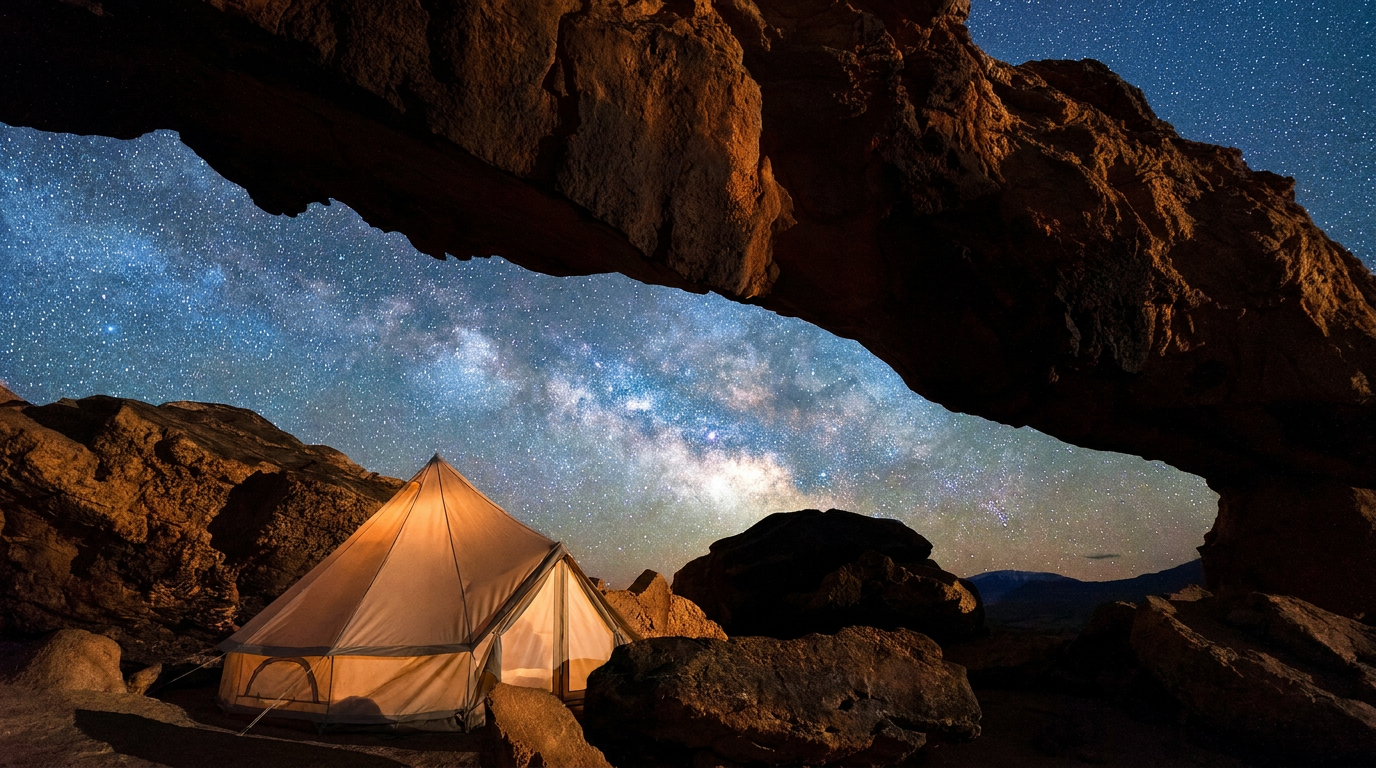
In Utah, which currently leads North America in the sheer number of certified dark sky locations, properties are taking the integration of astronomy and hospitality to unprecedented levels. Specialized lodging companies like Under Canvas have successfully secured official DarkSky Lodging certifications for their remote desert camps. To maintain this status, these resorts utilize highly specific, low-lumen, red-spectrum pathway lighting throughout their properties. This specialized lighting is designed to protect guests' night vision, ensuring that the transition from a brightly lit interior room to the dark outdoors does not hinder their eyes' ability to immediately perceive the faint light of distant stars and galaxies.[1][2]
International destinations are also heavily capitalizing on their unique geographic and atmospheric advantages to draw global travelers. Chile's Atacama Desert, long revered by scientists and home to some of the world's most advanced professional radio and optical observatories, now hosts over 50 organized tour operators catering specifically to the astrotourism market. The region welcomes more than 120,000 dedicated astrotourists annually. The Atacama's extreme high altitude, bone-dry air, and strictly enforced national light pollution laws combine to create some of the most transparent, stable, and breathtakingly clear night skies available anywhere on the planet.[5][7]

In New Zealand, the massive Aoraki Mackenzie International Dark Sky Reserve offers a uniquely integrated approach that blends western optical astronomy with deep Indigenous traditions. Visitors to the sprawling reserve can explore the southern night sky through beautifully restored vintage telescopes while simultaneously learning about Māori cosmological science. Guides explain how the precise movements of the stars, planets, and constellations successfully guided Polynesian navigators across thousands of miles of open Pacific Ocean centuries ago, adding a profound historical and cultural dimension to the modern scientific stargazing experience.[1][5]
Beyond the clear economic and cultural benefits, the global astrotourism boom is quietly scoring massive wins for environmental conservation and ecology. Artificial light at night is increasingly recognized by biologists as a severe environmental pollutant that deeply disrupts fragile ecosystems. Unshielded lighting confuses the navigation systems of migratory birds, alters the feeding and mating habits of nocturnal mammals, and fatally interferes with insect reproduction cycles. By financially incentivizing communities and developers to dim their lights and shield their fixtures to attract tourists, the astrotourism industry inadvertently creates massive, protected dark corridors that allow local wildlife to thrive undisturbed.[3][7]
Furthermore, the widespread reduction of unnecessary outdoor lighting translates directly to massive municipal energy savings and a lower carbon footprint. The National Park Service and environmental economists note that eliminating the wasted component of outdoor lighting—specifically the light that shines uselessly upward into space rather than down onto streets, sidewalks, and signs—could save billions of dollars annually in global energy costs. By transitioning to smart, targeted, and shielded LED systems required for dark-sky certification, cities can drastically reduce their electricity consumption and the associated greenhouse gas emissions required to generate that power.[4][7]

As global urbanization continues its relentless spread, pristine night skies will only become rarer, more sought-after, and more valuable to those who live under a permanent artificial glow. For modern travelers, astrotourism offers a powerful antidote to the overstimulated, screen-heavy, and brightly lit reality of the twenty-first century—a rare chance to experience the profound, quiet awe of the cosmos exactly as humanity has for millennia. For the destinations that host them, it offers a highly sustainable, low-impact economic engine that fundamentally requires protecting and preserving the natural world, rather than paving over it.[1][7]
How we got here
2001
Flagstaff, Arizona becomes the world's first International Dark Sky Community, setting a precedent for municipal lighting codes.
2007
Natural Bridge National Monument (USA) and Mont Mégantic (Canada) become the first certified International Dark Sky Parks.
2023
Under Canvas Lake Powell-Grand Staircase becomes the first-ever certified DarkSky Lodging, signaling a shift in the hospitality industry.
2025
The global astrotourism market sees double-digit growth, with millions traveling to dark-sky reserves in Chile, New Zealand, and the US.
August 2026
A highly anticipated total solar eclipse crosses Europe, driving a massive surge in celestial-focused travel.
Viewpoints in depth
Conservationists & Astronomers
Focus on the ecological and scientific necessity of preserving natural darkness.
For this camp, astrotourism is a means to an end. Organizations like DarkSky International emphasize that artificial light at night is a potent environmental pollutant. It disrupts the migratory patterns of birds, decimates insect populations, and interferes with the circadian rhythms of both wildlife and humans. By tying dark skies to tourism dollars, conservationists can successfully lobby local governments to implement strict lighting ordinances that they might otherwise ignore.
Tourism Boards & Municipalities
View dark skies as a sustainable, year-round economic engine for rural communities.
Gateway communities and regional tourism boards see astrotourism as a solution to seasonal revenue slumps. Because stargazing is often best in the colder, drier months of autumn and winter, it brings visitors during traditional off-seasons. Furthermore, astrotourists must stay overnight to experience the skies, which drives up lodging and dining revenue compared to day-trippers. For these municipalities, retrofitting streetlights is an infrastructure investment with a massive return.
The Hospitality Industry
Transforming the absence of light into a highly monetizable luxury amenity.
Luxury resorts and specialized lodging companies are aggressively marketing darkness. Rather than just offering a remote location, they are building permanent observatories, hiring resident astronomers, and designing architecture specifically for stargazing. This camp views the night sky as a premium feature that differentiates their properties in a crowded travel market, catering to a demographic willing to pay top dollar for guided, comfortable access to the cosmos.
What we don't know
- Whether the rapid influx of astrotourists to remote, ecologically sensitive areas will eventually degrade the very environments they come to appreciate.
- How quickly developing nations will adopt dark-sky lighting ordinances as they build out new urban infrastructure.
Key terms
- Astrotourism
- Travel focused on experiencing unpolluted night skies, stargazing, and astronomical events.
- Light Pollution
- The inappropriate or excessive use of artificial light at night, which washes out starlight and disrupts ecosystems.
- Skyglow
- The diffuse, glowing haze over populated areas caused by artificial light scattering in the atmosphere.
- Bortle Scale
- A nine-level scale used by astronomers to measure the darkness of the night sky and the visibility of celestial objects.
- Solar Maximum
- The period of greatest solar activity in the sun's 11-year cycle, which increases the frequency and intensity of auroras.
Frequently asked
What exactly is astrotourism?
Astrotourism is a form of travel where the primary goal is to observe the night sky, celestial events, or phenomena like the northern lights in areas free from light pollution.
How does a place become a certified Dark Sky Park?
A location must apply through DarkSky International, proving it has exceptional starry nights, and implement strict outdoor lighting policies and community education programs to protect the darkness.
Why is 2026 a significant year for astrotourism?
2026 features major celestial events, including a total solar eclipse visible from parts of Europe in August, and heightened auroral activity due to the solar maximum.
What is the Bortle scale?
The Bortle scale is a nine-level numeric system used to measure the brightness of the night sky, with Class 1 being the darkest and Class 9 being the most light-polluted inner-city sky.
Sources
Source coverage
7 outlets
3 viewpoints surfaced







[1]Outside MagazineHospitality Industry
Best Places for Stargazing and Astrotourism in 2026
Read on Outside Magazine →[2]ForbesHospitality Industry
The Rise Of Astrotourism: 25 Hotels Leading The Stargazing Trend
Read on Forbes →[3]DarkSky InternationalConservationists & Astronomers
International Dark Sky Places Certification Program
Read on DarkSky International →[4]National Park ServiceTourism Boards & Municipalities
Night Skies: An Economic Value
Read on National Park Service →[5]Market InteloHospitality Industry
Astro Tourism Market Research Report 2034
Read on Market Intelo →[6]Colorado Tourism OfficeTourism Boards & Municipalities
Starry Nights: A Guide to Colorado's International Dark Sky Places
Read on Colorado Tourism Office →[7]Factlen Editorial TeamConservationists & Astronomers
Synthesis by Factlen editorial team
Read on Factlen Editorial Team →
Every angle. Every day.
Get travel stories with full source coverage and perspective breakdowns delivered to your inbox.