
Trump Demands Voting Overhaul Bill Be Attached to Expired FISA Surveillance Renewal
President Trump is refusing to support the renewal of the government's primary warrantless surveillance program unless Congress attaches the SAVE America Act, a sweeping voting overhaul requiring proof of citizenship.
By Adel Khoury

The United States' primary foreign intelligence surveillance program has gone dark, caught in an unprecedented legislative standoff that merges national security with election law. Section 702 of the Foreign Intelligence Surveillance Act (FISA) officially expired at midnight on Friday after Congress failed to pass an extension. The lapse was initially triggered by a bitter dispute over President Donald Trump's appointment of a housing official to lead the nation's intelligence apparatus, but the legislative gridlock has now expanded into a broader fight over voting rights.[1]
Over the weekend, President Trump explicitly tied the fate of the nation's surveillance capabilities to his sweeping election overhaul legislation. In a series of social media posts, Trump declared he would oppose any renewal of FISA unless it is firmly attached to the SAVE America Act, a bill that would mandate documentary proof of citizenship for voter registration nationwide. "I'm against FISA if it doesn't come with The Save America Act (Full version!) firmly attached to it," the president wrote.[2]
The ultimatum creates a complex multi-front battle in Washington. Section 702 is widely considered the crown jewel of American intelligence gathering, allowing the government to monitor the communications of foreign nationals overseas without a warrant. However, the program has long faced bipartisan criticism because it routinely sweeps up the communications of American citizens who interact with foreign targets, prompting demands for reform from both privacy advocates and security hawks.[1][3]
The immediate crisis began last week when President Trump announced that Bill Pulte, the director of the Federal Housing Finance Agency, would temporarily serve as the acting Director of National Intelligence (DNI). The move infuriated Democrats and alarmed some national security experts, who argued that Pulte lacks the necessary intelligence experience to oversee the nation's 18 spy agencies and fear the appointment could politicize intelligence gathering.
In response to Pulte's appointment, several Democratic lawmakers threatened to withhold the votes necessary to renew Section 702. With the Senate requiring a 60-vote threshold to advance the renewal, the bipartisan coalition that typically supports intelligence authorizations collapsed, allowing the program to expire.
Seizing on the legislative vacuum, conservative lawmakers and election integrity advocates pivoted to use the must-pass national security bill as leverage for their domestic priorities. The SAVE America Act, which has already passed the Republican-controlled House, has hit a wall in the Senate, where Democrats have utilized the filibuster to block it from receiving a floor vote.[3]
The SAVE America Act represents one of the most significant proposed overhauls to federal election law in decades. Its core provision requires voters to provide documentary proof of U.S. citizenship—such as a passport, original birth certificate, or naturalization papers—at the time of registration. It also mandates strict photo identification requirements for casting a ballot and seeks to severely restrict mail-in voting.[4]
Proponents of the SAVE America Act argue that the measures are essential to restore public trust in the electoral process and prevent non-citizens from participating in federal elections. Organizations like the Election Transparency Initiative have publicly urged House leadership to "hold the Senate hostage," arguing that if Congress can rush to protect national security through FISA, it must apply the same urgency to protecting the integrity of the ballot box.
Conversely, voting rights advocates and Democratic lawmakers warn that the SAVE America Act would result in massive voter disenfranchisement. Civil rights organizations point to data indicating that millions of eligible American citizens—particularly low-income voters, minorities, and the elderly—do not possess readily available passports or original birth certificates. They argue the bill is designed to purge eligible voters from the rolls ahead of the upcoming elections.[4]
The collision of these two unrelated issues has left congressional leadership scrambling for an exit ramp. Intelligence officials, including the directors of the CIA and FBI, have been warning lawmakers that allowing Section 702 to lapse severely degrades the government's ability to detect terrorist plots, monitor adversarial nations like Iran, and secure major upcoming events.[3]
Without Section 702 authority, intelligence agencies cannot legally compel U.S. technology and telecommunications companies to hand over the communications of foreign targets without seeking individual warrants from the secretive Foreign Intelligence Surveillance Court. While existing investigations can continue under grandfather clauses, the initiation of new surveillance targets is now significantly bottlenecked.[3]
Despite the warnings from the intelligence community, the political entrenchment appears deep. President Trump has publicly questioned why Democrats are afraid of Pulte's temporary appointment and has reiterated his vow to veto any standalone FISA renewal. Meanwhile, Senate Majority Leader John Thune has reportedly acknowledged that he lacks the votes within his own conference to force a talking filibuster on the SAVE America Act, leaving the voting bill stalled.
The standoff highlights a growing trend in modern congressional maneuvering, where unrelated, highly partisan domestic legislation is tethered to critical national security reauthorizations. As the intelligence gap widens with each passing day, the pressure will mount on both the White House and Senate Democrats to find a compromise that either delinks the two issues or forces a dramatic concession on election law.[1]
Key points
- FISA Section 702, a critical warrantless surveillance program, expired after Congress failed to pass an extension.
- The initial lapse was triggered by Democratic opposition to President Trump's appointment of an inexperienced acting Director of National Intelligence.
- President Trump is now demanding that any FISA renewal be attached to the SAVE America Act, a sweeping voting overhaul bill.
- The SAVE America Act would require documentary proof of U.S. citizenship to register to vote, which critics argue will disenfranchise millions.
What we don’t know
- It remains unclear if Senate Republicans will attempt to bypass the filibuster to force a vote on the SAVE America Act.
- The exact impact of the intelligence gap on current national security operations is classified and unknown to the public.
- It is uncertain if President Trump would actually veto a standalone FISA renewal if Congress managed to pass one.
How we got here
April 2026
The House of Representatives passes a renewal of FISA Section 702 with bipartisan support.
Early June 2026
President Trump announces the appointment of housing official Bill Pulte as acting Director of National Intelligence, prompting Democratic backlash.
June 12, 2026
FISA Section 702 officially expires at midnight after the Senate fails to reach an agreement on its extension.
June 14, 2026
President Trump publicly demands that the SAVE America Act be attached to any future FISA renewal legislation.
- Election Integrity Advocates
- Argue that documentary proof of citizenship is essential and justify using FISA as leverage to pass the SAVE America Act.
- Voting Rights Defenders
- Oppose the SAVE America Act as voter suppression and resist renewing FISA under an inexperienced acting DNI.
- National Security Hawks
- Prioritize the immediate reauthorization of Section 702 to prevent critical gaps in foreign intelligence gathering.
Perspectives this story doesn't cover
- State Election Administrators
- Telecommunications Companies
Sources
Source coverage
4 outlets
3 viewpoints surfaced




- [1]AxiosNational Security Hawks
Trump won't back FISA renewal without his SAVE America Act voting bill
Read on Axios → - [2]ReutersNational Security Hawks
Trump says FISA extension must include voting bill
Read on Reuters → - [3]Washington TimesElection Integrity Advocates
Conservatives leverage FISA renewal for the SAVE America Act
Read on Washington Times → - [4]Democracy DocketVoting Rights Defenders
Trump seeks passage of SAVE America Act via housing and FISA bills
Read on Democracy Docket →

More in News & Politics
See all →Legislative Standoff
GOP Rebellion Over Trump's 'SAVE Act' Forces House to Recess Early, Stalling Defense Bill
4 sources
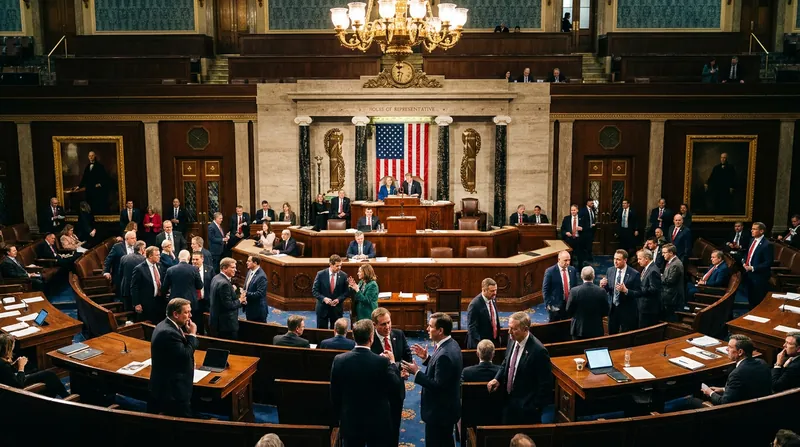
DHS Funding
Senate Advances $70 Billion DHS Funding Bill Despite Intra-Party Revolt Over Immigration 'Slush Fund'
5 sources
Voting Rights
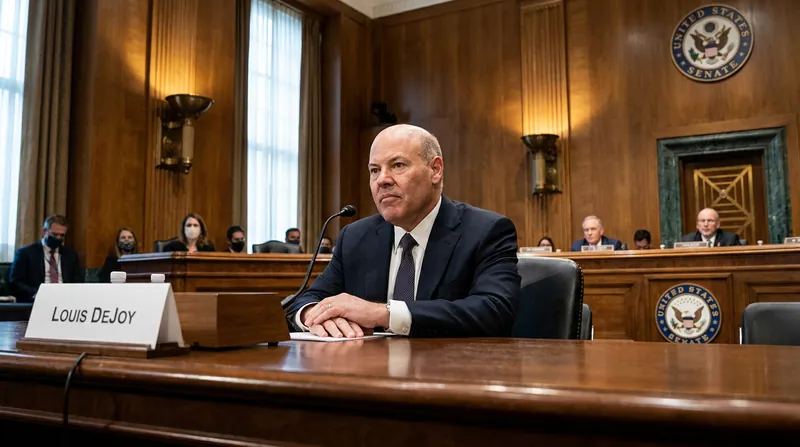
Postmaster General Confirms USPS Will Hold Back Mail Ballots in States That Withhold Voter Data
5 sources
Cuba Economy
Cuba Approves Sweeping Privatization and Banking Reforms in Historic Economic Overhaul
5 sources

Comments
Every angle. Every day.
Get News & Politics stories with full source coverage and perspective breakdowns, free every day.