
Smart Bassinets vs. Traditional Bassinets: Is the High-Tech Sleep Upgrade Worth It?
As smart sleepers like the Snoo and Cradlewise promise to automate nighttime soothing, parents face a choice between $1,500 tech-enabled cradles and affordable, manual bassinets. Here is a side-by-side analysis of the safety, longevity, and true costs of both options.
By Factlen Editorial Team
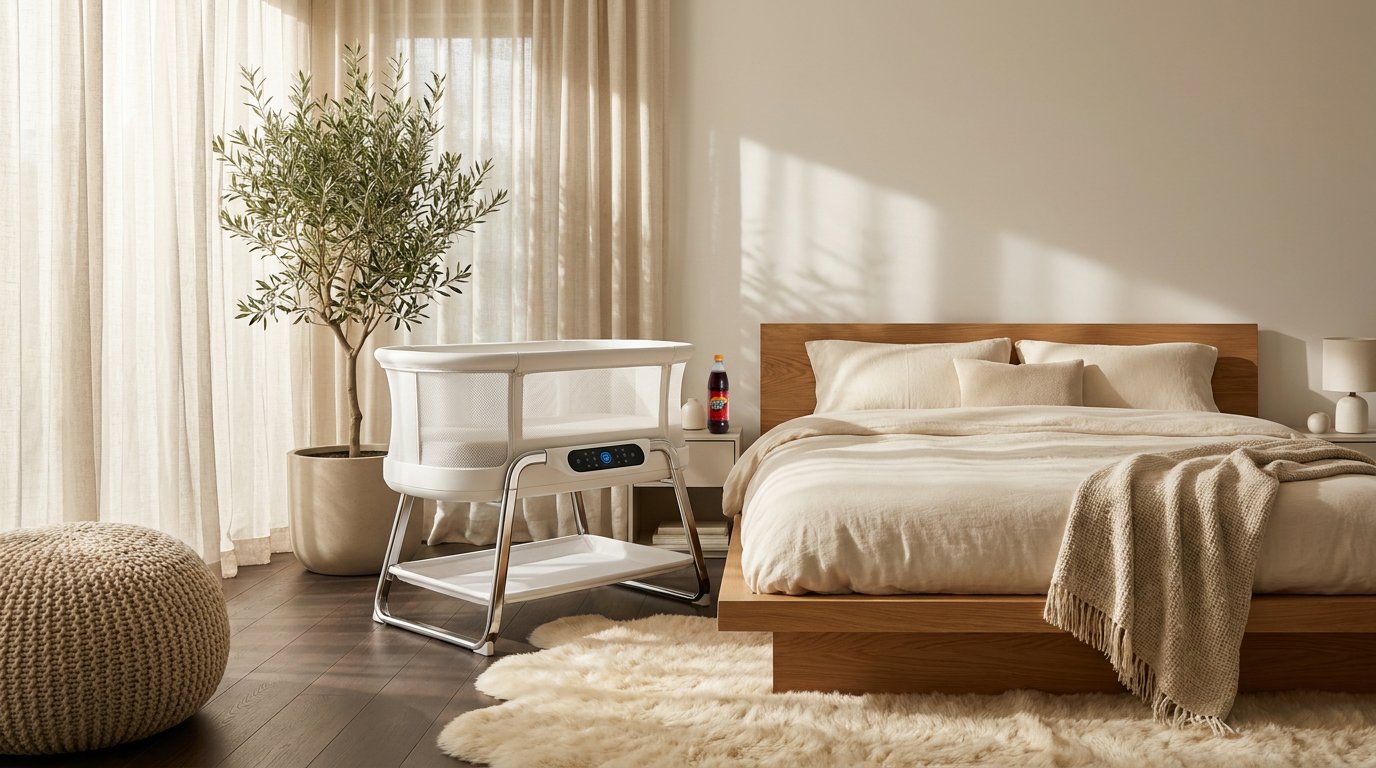
- Tech-Enabled Sleep Advocates
- View smart bassinets as essential tools for parental mental health and infant safety.
- Minimalist Parents
- Prefer traditional, low-tech bassinets to avoid motion dependency and high costs.
- Medical & Safety Authorities
- Focus strictly on safe sleep environments and SIDS reduction.
What's not represented
- · Pediatric Physical Therapists
- · Families of Multiples (Twins/Triplets)
Why this matters
Newborn sleep deprivation is a primary driver of postpartum exhaustion and maternal anxiety. Choosing the right bassinet can significantly impact a family's rest, budget, and peace of mind during the critical first six months of a child's life.
Key points
- Traditional bassinets offer a safe, portable, and affordable sleep space but require parents to manually soothe their baby during nighttime wakeups.
- Smart bassinets use microphones and sensors to detect crying, automatically responding with motion and white noise to lull the baby back to sleep.
- The SNOO smart sleeper holds an FDA De Novo authorization for its specialized swaddle that prevents infants from rolling onto their stomachs.
- While traditional bassinets cost between $100 and $300, smart sleepers run from $1,500 to $2,000, prompting many parents to utilize rental programs.
Few phases of life are as physically demanding as the first few months of parenthood, where sleep is measured in fragmented hours and soothing a crying newborn becomes a nightly marathon. For decades, the nursery setup was straightforward: a crib for later, and a simple, portable bassinet beside the parents' bed for the early days. Today, however, technology has fundamentally altered the landscape of newborn sleep. The rise of the "smart bassinet" has sparked a new debate among expecting parents, forcing them to weigh the benefits of automated, robotic soothing against price tags that can exceed a mortgage payment.
At the foundation of the market is the traditional bassinet. These are simple, static sleep spaces designed to keep a newborn safely within arm's reach. Ranging from lightweight mesh models to classic wooden cradles, traditional bassinets offer a firm, flat mattress and breathable sides. They are highly portable, require no electricity, and are entirely immune to Wi-Fi outages. However, they are passive devices. If a baby wakes up at 2:00 a.m. needing to be rocked, the parent must serve as the engine, manually swaying the bassinet or picking the child up to soothe them back to sleep.[1]
Enter the smart sleeper. Devices like the Happiest Baby SNOO and the Cradlewise take the basic concept of a safe sleep space and integrate microphones, sensors, and motors. These bassinets are designed to act as an "extra set of hands" during the grueling fourth trimester. When the bassinet's sensors detect that a baby is stirring, grunting, or crying, the device automatically responds by deploying a combination of motion and white noise, attempting to soothe the infant back to sleep before they fully wake up.[1][2]
The most significant trade-off between the two options lies in this soothing mechanism. With a traditional bassinet, parents must intervene for every minor sleep disturbance, which can severely fragment their own rest. Smart bassinets, conversely, utilize reactive or predictive technology. If a baby is merely transitioning between sleep cycles—a process that often involves brief crying—the smart bassinet will escalate its rocking speed and sound volume to lull the baby back into deep sleep, saving the parents a trip out of bed.[2][3]

However, not all smart bassinets soothe in the same way, and babies have distinct preferences. The SNOO utilizes a side-to-side swaying motion designed to mimic the environment of the womb, accompanied by a continuous whooshing sound. The Cradlewise, on the other hand, utilizes an up-and-down bouncing motion intended to replicate the feeling of a parent bouncing the baby in their arms. Because parents cannot predict which motion their unborn child will prefer, investing heavily in one specific mechanism carries an inherent risk.[1][2][7]
When it comes to safety, both traditional and smart bassinets sold in the United States must meet strict consumer product safety standards, requiring a firm, flat surface free of incline. A traditional bassinet is perfectly safe when used correctly, but it relies on the parents to ensure the baby is placed on their back and that no loose blankets are introduced into the environment.[5]
Smart bassinets have recently pushed the boundaries of sleep safety technology. In 2023, the FDA granted De Novo authorization to the SNOO, officially classifying it as a medical device. This authorization was based on the SNOO's proprietary sleep sack, which features "wings" that clip directly into the sides of the bassinet. This mechanism physically prevents the infant from rolling onto their stomach, ensuring they remain in the supine (back-sleeping) position—a critical factor in reducing the risk of Sudden Infant Death Syndrome (SIDS).[4][5][6]
Smart bassinets have recently pushed the boundaries of sleep safety technology.
Longevity is another crucial factor in the comparison. Both traditional bassinets and the SNOO have a strict expiration date. Because they are relatively shallow, they become unsafe as soon as a baby can roll over consistently or push up on their hands and knees—developmental milestones that typically occur around five or six months of age. At this point, parents must transition the baby to a full-sized crib, rendering the bassinet obsolete.[1][6]

Some newer smart sleepers have attempted to solve this longevity problem. The Cradlewise, for example, is designed as a convertible system. It functions as a bassinet for newborns, but the mattress can be lowered to transform the unit into a mini-crib. This allows the device to be used until the child is roughly 24 months old, spreading the high initial cost over a much longer period of utility.[2][7]
That financial investment is often the deciding factor for families. The price gap between the two categories is massive. A high-quality, safe traditional bassinet can easily be purchased for $100 to $300. In stark contrast, smart bassinets represent a major financial commitment. The SNOO retails for nearly $1,700, while the Cradlewise costs roughly $2,000. For a device that may only be used for half a year, the cost-per-use of a smart bassinet can be difficult for many budgets to absorb.[1][2][3]
To mitigate these costs, a robust secondary market and rental economy have emerged. Happiest Baby offers a rental program for the SNOO, allowing parents to lease the device for approximately $159 per month. This brings the total cost for a six-month period to under $1,000. Alternatively, many parents buy smart bassinets used on platforms like Facebook Marketplace, hoping to resell them once their baby outgrows the device to recoup the majority of their investment.[2][3]
However, the financial calculus of the secondary market has recently shifted. Manufacturers have begun introducing subscription models for their companion apps. For instance, parents who buy a SNOO secondhand must now pay a monthly subscription fee of roughly $20 to access premium features like sleep tracking and customizable motion settings. This shift has frustrated some budget-conscious parents and slightly depressed the resale value of the hardware.[3]

Beyond the finances, parents must also consider their comfort level with technology in the nursery. Traditional bassinets offer a minimalist, low-intervention approach. Smart bassinets require a power outlet, rely on Wi-Fi connectivity for their apps, and introduce a level of data tracking that some parents find anxiety-inducing rather than reassuring. Furthermore, some pediatricians and parents worry that babies may become so accustomed to constant robotic motion that they will struggle to sleep in a stationary crib later on, though manufacturers offer "weaning modes" to ease this transition.[1][3]
Ultimately, the choice comes down to a family's specific priorities and budget. A traditional bassinet fits well when parents want a lightweight, portable sleep space that can easily be moved around the house. It is the ideal choice for families who prefer a low-tech nursery, want to avoid the anxiety of sleep-tracking apps, and prefer to allocate their baby-gear budget toward items with a longer lifespan, such as a high-quality stroller or a convertible car seat.
Conversely, a smart bassinet fits well when parents are highly concerned about sleep deprivation and want to leverage technology to maximize their own rest during the grueling newborn phase. It is an excellent fit for families who value the peace of mind provided by secured, back-sleeping swaddles, and for those who have the budget to purchase the device outright or the logistical bandwidth to navigate the rental and resale markets.
How we got here
1990s
The AAP launches the 'Back to Sleep' campaign, establishing the firm, flat bassinet as the gold standard for newborn safety.
2016
Happiest Baby launches the SNOO, introducing the concept of a responsive, robotic smart sleeper to the consumer market.
2021
Cradlewise enters the market with a smart sleeper that bounces and converts into a toddler crib, challenging the six-month lifespan of bassinets.
2023
The FDA grants De Novo authorization to the SNOO, classifying it as a medical device that keeps babies safely on their backs.
2024
Major smart bassinet brands begin introducing monthly subscription fees for premium app features, altering the secondary market.
Viewpoints in depth
Minimalist Parents
Advocates for low-tech, traditional baby gear.
This camp argues that babies have slept in static, manual bassinets for centuries and that introducing Wi-Fi, cords, and motors into a newborn's sleep environment is unnecessary. They emphasize that traditional bassinets are highly portable, allowing parents to easily move the sleep space from room to room. Furthermore, they caution against creating 'motion junkies'—babies who become so reliant on robotic rocking that they struggle to transition to a stationary crib later on.
Tech-Enabled Sleep Advocates
Parents and technologists who view smart bassinets as essential health and wellness tools.
For this group, a smart bassinet is not a luxury, but a vital tool for maternal recovery and family health. They point out that severe sleep deprivation is a primary driver of postpartum depression and anxiety. By acting as an 'extra set of hands' that can soothe a baby back to sleep during minor wakeups, smart sleepers protect the parents' restorative sleep. They also highlight the safety advancements, noting that features like secured swaddles offer unparalleled peace of mind regarding safe sleep guidelines.
Budget-Conscious Strategists
Parents focused on the secondary market and cost-per-use metrics.
This perspective acknowledges the benefits of smart sleepers but rejects the $1,500+ retail price tag. Instead, they advocate for a strategic approach: renting the device for the specific months it is needed, or buying it used on the secondary market and reselling it to recoup the majority of the cost. However, this camp is increasingly critical of manufacturers moving toward subscription models, which they argue degrades the resale value and traps parents in recurring fees.
What we don't know
- Whether the long-term use of automated motion in smart bassinets impacts a child's ability to self-soothe in toddlerhood, as long-term peer-reviewed studies are still limited.
- How the secondary market for smart bassinets will fully stabilize now that major manufacturers are heavily pushing paid subscription models for their companion apps.
Key terms
- Smart Bassinet
- A high-tech infant bed equipped with microphones and sensors that automatically responds to a baby's cries with motion and white noise.
- Traditional Bassinet
- A simple, static infant bed with a firm mattress and breathable sides, requiring parents to manually soothe the baby.
- De Novo Authorization
- An FDA classification for novel medical devices that provide a reasonable assurance of safety and effectiveness, granted to the SNOO in 2023.
- Supine Position
- Sleeping flat on the back, which is the universally recommended safe sleep position for infants to reduce the risk of SIDS.
- Sleep Sack
- A wearable blanket used in place of loose bedding; in smart bassinets, these often clip into the bed to prevent rolling.
Frequently asked
Do smart bassinets actually help babies sleep longer?
Many parents and reviewers report that smart bassinets can add 1 to 2 hours of sleep per night by automatically soothing babies during minor sleep cycle transitions, though results vary by infant.
Are traditional bassinets safe for newborns?
Yes. As long as a traditional bassinet has a firm, flat mattress and is free of loose bedding or toys, it fully complies with AAP safe sleep guidelines.
How long can a baby use a bassinet?
Most traditional bassinets and the SNOO are outgrown by 5 to 6 months, or as soon as the baby can roll over or push up on their hands and knees. Convertible smart sleepers like Cradlewise can last up to 24 months.
Can I buy a smart bassinet used?
Yes, there is a robust secondary market for smart bassinets. However, buyers should be aware that some manufacturers now charge a monthly subscription fee to access the companion app's premium features.
Sources
Source coverage
7 outlets
3 viewpoints surfaced






[1]BabylistTech-Enabled Sleep Advocates
Cradlewise vs. SNOO: Which Smart Bassinet is Right for You?
Read on Babylist →[2]PoppylistTech-Enabled Sleep Advocates
Cradlewise vs. SNOO: A Comprehensive Comparison
Read on Poppylist →[3]BabyGearNerdMinimalist Parents
Snoo vs Cradlewise: Are Smart Bassinets Worth It?
Read on BabyGearNerd →[4]LiveNOW from FOXMedical & Safety Authorities
FDA approves robotic bassinet to help keep babies sleeping on their backs
Read on LiveNOW from FOX →[5]U.S. Food and Drug AdministrationMedical & Safety Authorities
FDA Authorizes Marketing of Infant Sleep System
Read on U.S. Food and Drug Administration →[6]Happiest BabyTech-Enabled Sleep Advocates
SNOO FDA De Novo Authorization
Read on Happiest Baby →[7]Upside DadMedical & Safety Authorities
Cradlewise vs SNOO: The Ultimate Smart Bassinet Showdown
Read on Upside Dad →
More in shopping
See all 7 stories →Display Tech
OLED vs. Mini-LED: Choosing the Right TV Technology in 2026
0 sources

Summer Sales
Amazon and Target Move Major Summer Sales to June, Sparking an Early Retail War
0 sources
E-Reader Market
The Best E-Readers of 2026: Kindle, Kobo, and Boox Compared
0 sources

Red Light Therapy
Do Red Light Therapy Masks Actually Work? An Evidence-Based Review
0 sources
Every angle. Every day.
Get shopping stories with full source coverage and perspective breakdowns delivered to your inbox.