
Do Red Light Therapy Masks Actually Work? An Evidence-Based Review
Clinical evidence confirms that high-quality red light therapy masks can stimulate collagen and reduce acne, but results require months of consistent use and strict adherence to specific light wavelengths.
By Factlen Editorial Team
- Clinical Dermatologists
- Medical professionals emphasize the proven mechanisms of photobiomodulation but caution against expecting overnight results.
- Consumer Tech Reviewers
- Product testers focus on the practical realities of using the devices, highlighting the massive gap between premium masks and cheap knockoffs.
- Independent Health Advocates
- Focus on long-term safety, eye protection, and managing consumer expectations regarding at-home medical devices.
What's not represented
- · Ophthalmologists evaluating long-term retinal safety
- · Estheticians integrating masks into holistic routines
Why this matters
Consumers are spending hundreds of dollars on at-home LED masks hoping to reverse aging or cure acne. Understanding the clinical evidence separates the scientifically validated devices from the underpowered marketing hype, ensuring buyers only invest in technology that actually works.
Key points
- Red light therapy uses specific wavelengths to stimulate cellular energy and boost collagen production.
- Clinical trials show a 45% reduction in inflammatory acne when combining red and blue light.
- Results are gradual, typically requiring 8 to 12 weeks of consistent use to become visible.
- Device efficacy depends entirely on irradiance and wavelength accuracy, making cheap knockoffs ineffective.
- The therapy is generally safe, though eye protection is recommended and darker skin tones should monitor for hyperpigmentation.
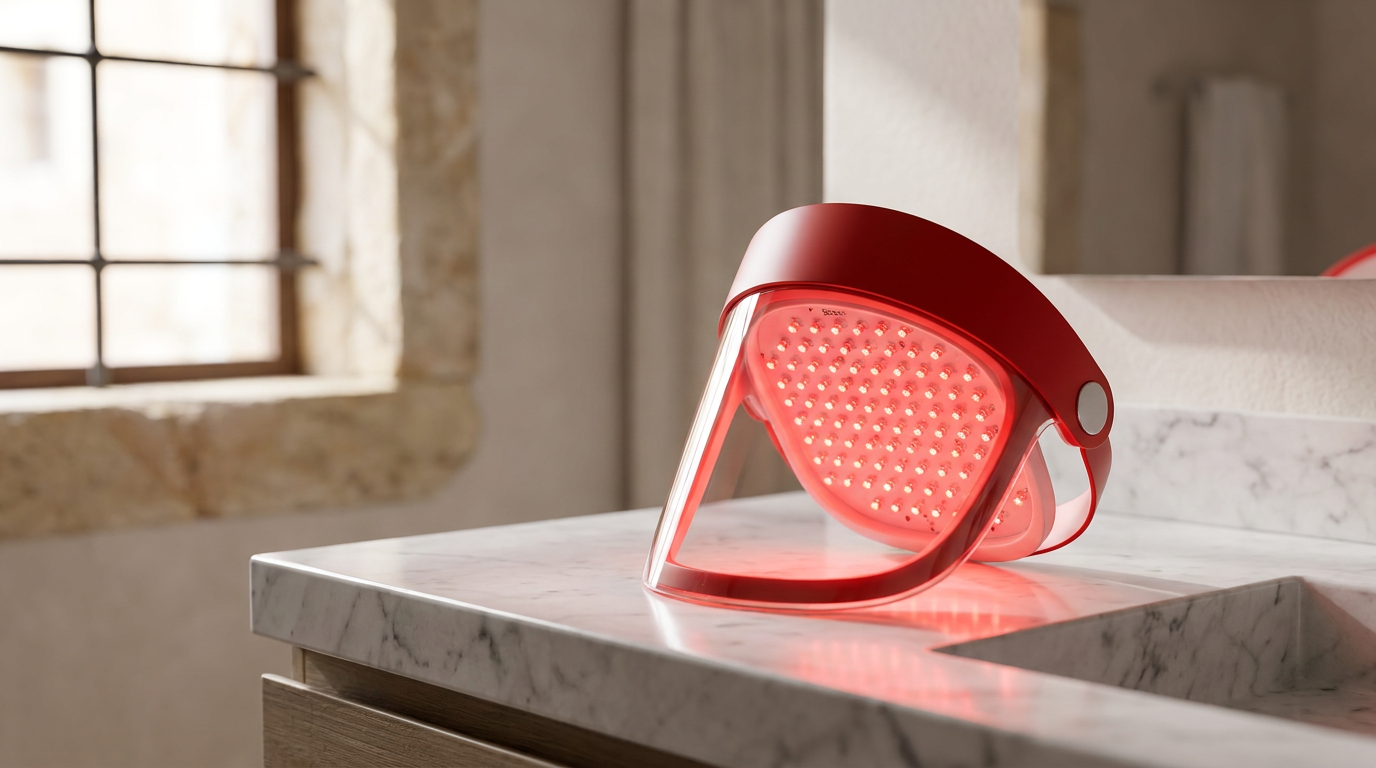
The aesthetic is unmistakable: rigid, glowing silicone or plastic masks that make users look like futuristic welders or sci-fi villains. Over the past few years, at-home red light therapy (RLT) masks have exploded from niche dermatologist recommendations into a mainstream consumer electronics category. Top-tier models from established brands like Omnilux, Dr. Dennis Gross, and CurrentBody routinely command prices ranging from $350 to $600, promising to deliver clinic-level skin rejuvenation from the comfort of a living room couch. The sheer ubiquity of these devices on social media, often modeled by celebrities in plush bathrobes, has naturally sparked skepticism among everyday consumers. Shoppers are left wondering whether these expensive, glowing visors are a legitimate medical breakthrough or simply the latest iteration of high-priced skincare snake oil designed to capitalize on anti-aging anxieties.[1][2][6]
But beneath the aggressive social media marketing and influencer endorsements lies a surprisingly robust and genuine scientific foundation. Unlike many fleeting skincare fads that rely on proprietary botanical blends or unproven serums, photobiomodulation—the clinical term for light therapy—has decades of peer-reviewed research backing its efficacy. The technology was originally pioneered by NASA in the 1990s to help grow plants in space and to accelerate the healing of astronauts' wounds in zero-gravity environments. Since then, the medical community has extensively studied how different wavelengths of light interact with human tissue. Today, dermatologists and researchers widely acknowledge that when applied correctly, specific spectrums of light can fundamentally alter cellular behavior, making red light therapy one of the few at-home aesthetic treatments with a verifiable mechanism of action.[4][7][8]
The core mechanism of red light therapy does not rely on thermal damage or physical abrasion, which is how traditional lasers or chemical peels force the skin to regenerate. Instead, specific wavelengths of light penetrate the skin to stimulate cellular activity without causing trauma. Red light, which typically operates between 630 and 660 nanometers, reaches the upper layers of the skin to target surface-level concerns like fine lines and uneven texture. Meanwhile, near-infrared light, operating at a longer wavelength of 810 to 850 nanometers, penetrates much deeper into the dermis. This deeper penetration is crucial because it reaches the foundational layers of the skin where structural proteins are manufactured and where deep-tissue inflammation resides.[6][7]
When these highly specific wavelengths of light reach the mitochondria—the microscopic powerhouses located inside human skin cells—they trigger a profound biological response. The light energy is absorbed by a light-sensitive enzyme called cytochrome c oxidase, which immediately boosts the cell's production of adenosine triphosphate (ATP). This sudden surge in cellular energy acts as a biological catalyst, driving fibroblast proliferation. Fibroblasts are the specialized cells responsible for synthesizing collagen and elastin, the structural proteins that give young skin its firmness and bounce. By artificially increasing the energy available to these cells, red light therapy effectively shifts the skin into a state of accelerated repair and regeneration, reducing localized inflammation and promoting a thicker, more resilient dermal matrix.[4][8]

The most common and heavily marketed claim for RLT masks is their ability to reverse the visible signs of photoaging, including fine lines, wrinkles, and general skin laxity. The clinical evidence supporting this specific application is robust, though dermatologists consistently emphasize that the results require significant patience and realistic expectations. A 2024 comprehensive review conducted by researchers at Duke University analyzed 59 distinct studies encompassing nearly 2,000 patients. The researchers concluded that consistent exposure to red and near-infrared light measurably improved wrinkle depth, overall skin tone, and structural firmness across diverse patient demographics. However, the data clearly shows that red light therapy is not a quick fix; it is a gradual, cumulative process that builds over time.[4][7]
Clinical trials indicate that the structural changes induced by photobiomodulation take weeks to manifest visibly on the skin's surface. In controlled studies, participants typically used the LED masks three to five times a week, with each session lasting between 10 and 20 minutes. Statistically significant increases in collagen density—often measured objectively via dermal ultrasound—and improvements in skin elasticity only became apparent after 8 to 12 weeks of continuous, uninterrupted use. When participants ceased using the devices, the accumulated benefits slowly began to fade after about a month, underscoring the fact that red light therapy must be maintained as a permanent lifestyle habit rather than a one-time cure for aging skin.[1][6][8]
Beyond anti-aging applications, the strongest dermatological evidence for at-home LED devices actually centers on acne management. This is particularly true when red light is combined with blue light, which operates at a shorter wavelength of around 415 nanometers. A 2025 meta-analysis published in JAMA Dermatology reviewed multiple clinical trials involving over 200 patients suffering from mild to moderate acne vulgaris. The aggregated data demonstrated that patients using at-home LED devices experienced an impressive 45% reduction in inflammatory acne lesions over a four-to-eight-week period. For consumers struggling with persistent breakouts, this represents a highly effective, non-pharmacological intervention that avoids the drying side effects of topical treatments or the systemic risks of oral medications.[5][8]

Beyond anti-aging applications, the strongest dermatological evidence for at-home LED devices actually centers on acne management.
The dual-action mechanism of combined light therapy is well-documented and highly synergistic. Blue light acts as a potent antimicrobial agent; it penetrates the pores and directly neutralizes Cutibacterium acnes, the specific bacteria responsible for causing inflammatory acne breakouts. However, killing the bacteria often leaves the skin red, irritated, and inflamed. This is where the red light component becomes essential. The red wavelengths calm the subsequent inflammatory response, reduce post-acne erythema (redness), and accelerate the healing of the compromised skin barrier. By attacking both the bacterial root cause and the resulting inflammation, dual-wavelength masks offer a comprehensive approach to acne management that is heavily supported by clinical literature.[5][7]
The most undisputed and universally accepted clinical application of red light therapy, however, is in tissue repair and wound healing. Originally studied by NASA for this exact purpose, RLT is now widely utilized by board-certified dermatologists and plastic surgeons to accelerate patient recovery after aggressive in-office procedures. When a patient undergoes a harsh chemical peel, microneedling, or fractional laser resurfacing, the skin is intentionally traumatized to force regeneration. The American Academy of Dermatology notes that patients who receive red light therapy immediately following these abrasive treatments experience significantly less discoloration, swelling, and downtime. The light therapy effectively supercharges the skin's natural healing cascade, cutting recovery times by up to 50% in some clinical observations.[3][7]
If the underlying science of photobiomodulation is so sound, why do a significant number of consumer reviews report zero visible results? The discrepancy lies entirely in the engineering and manufacturing quality of the devices themselves. Efficacy in light therapy depends heavily on a metric called "irradiance"—the total power output delivered over a specific surface area, typically measured in milliwatts per square centimeter. Clinical-grade LED panels used in dermatologist offices deliver exceptionally high irradiance, ensuring that the patient's skin receives an adequate, therapeutic "dose" of light energy (measured in joules) in a very short timeframe.[1][8]
Unfortunately, the consumer market is currently flooded with inexpensive, unverified knockoffs sold on massive e-commerce platforms. These budget devices often use weak, low-quality LED bulbs that simply cannot deliver the required energy dose to penetrate the skin and trigger a mitochondrial response. A user could wear a low-irradiance mask for an hour a day and still not absorb enough joules to stimulate collagen production. Furthermore, wavelength accuracy is absolutely critical; if a cheap device emits light at 610 nanometers instead of the clinically proven 633 nanometers, it will fail to activate the target cellular receptors. Top-rated consumer models are FDA-cleared and independently verified to emit the precise wavelengths and power outputs required for clinical efficacy.[1][2][6]

Regarding safety, the profile of red light therapy is exceptionally strong, making it an appealing option for risk-averse consumers. A recent systematic review found absolutely no association between photobiomodulation and the development of skin cancer. Unlike ultraviolet (UV) rays from the sun or tanning beds, which actively mutate and damage cellular DNA, red and near-infrared light are non-ionizing and completely safe for long-term cellular exposure. The most common side effects reported in clinical trials are incredibly mild, typically limited to temporary redness or a slight, transient warming sensation on the skin immediately following a treatment session.[3][4]
However, there are notable caveats that consumers must be aware of before investing in a device. The American Academy of Dermatology explicitly warns that individuals with darker skin tones may be more susceptible to hyperpigmentation when exposed to intense visible light therapies. Because darker skin contains more melanin, it absorbs light differently, and intense red light can occasionally trigger unwanted dark spots. Dermatologists strongly advise patients with darker complexions, or those with a history of melasma, to consult with a medical professional before beginning a daily red light regimen to ensure the treatment will not inadvertently worsen pigmentation issues.[3]
Additionally, while the risks to the skin are minimal, eye safety remains a point of ongoing debate within the medical community. Some high-intensity red and near-infrared light can cause eye strain, dryness, or potential long-term retinal damage if stared at directly. While many manufacturers claim their masks are safe to use with open eyes, independent consumer safety advocates and ophthalmologists strongly recommend wearing opaque, blackout goggles during every treatment session. Protecting the eyes is a simple, zero-cost precaution that mitigates the only significant physical risk associated with at-home photobiomodulation.[7][8]

Ultimately, the accumulated evidence pack confirms that premium red light therapy masks are not modern snake oil. They are scientifically validated, highly engineered tools capable of genuine collagen stimulation, acne reduction, and accelerated tissue repair. However, they demand a level of daily, unwavering commitment that many consumers simply abandon long before the crucial 12-week mark. For those willing to invest in a verified, high-irradiance device and stick to a rigorous weekly schedule, the clinical data suggests that the futuristic glow is entirely justified.[6][8]
How we got here
1990s
NASA begins experimenting with red light therapy to promote plant growth and accelerate wound healing for astronauts in space.
Early 2000s
Dermatologists begin adopting clinical-grade LED panels for in-office anti-aging and acne treatments.
2018–2020
The FDA clears several at-home LED masks as Class II medical devices, sparking a surge in consumer availability.
2024–2026
Comprehensive meta-analyses confirm the efficacy of at-home devices, while reviewers emphasize the importance of irradiance standards.
Viewpoints in depth
Clinical Dermatologists' View
Medical professionals emphasize the proven mechanisms of photobiomodulation but caution against expecting overnight results.
Dermatologists view red light therapy as a legitimate, evidence-based adjunct to traditional skincare. They point to decades of clinical trials demonstrating that specific wavelengths can stimulate fibroblast activity and reduce inflammation. However, medical professionals frequently warn that at-home devices lack the power of in-office lasers, meaning patients must commit to months of consistent use to see measurable changes in collagen density or acne reduction.
Consumer Tech Reviewers' View
Product testers focus on the practical realities of using the devices, highlighting the massive gap between premium masks and cheap knockoffs.
For consumer reviewers, the primary concern is separating effective hardware from marketing hype. They emphasize that a mask's efficacy is entirely dependent on its irradiance and wavelength accuracy. Reviewers consistently find that while $400 FDA-cleared devices from reputable brands deliver on their promises, the market is flooded with inexpensive, underpowered LED masks that fail to provide the necessary energy dose to trigger cellular changes.
What we don't know
- The exact long-term effects of daily, multi-year at-home red light exposure on the skin barrier.
- Whether the preventative use of LED masks in one's twenties meaningfully delays the onset of photoaging decades later.
- The precise threshold of irradiance required to achieve clinical results, as many consumer brands do not publish their exact power output specifications.
Key terms
- Photobiomodulation
- The clinical term for light therapy, referring to the use of specific light wavelengths to stimulate cellular function and healing.
- Irradiance
- The power output of a light device delivered over a specific area, usually measured in milliwatts per square centimeter; a key factor in a mask's effectiveness.
- Fibroblast
- A type of biological cell that synthesizes the extracellular matrix and collagen, playing a critical role in skin healing and firmness.
- Adenosine Triphosphate (ATP)
- The primary energy carrier in all living organisms; red light therapy stimulates mitochondria to produce more ATP.
Frequently asked
Does red light therapy actually work?
Yes, clinical evidence shows that specific wavelengths of red and near-infrared light can stimulate collagen production and reduce inflammation, though results require weeks of consistent use.
Is red light therapy safe for the eyes?
While generally safe, high-intensity red light can cause eye strain. Many dermatologists and consumer safety advocates recommend wearing opaque goggles during treatment.
Can I use a cheap LED mask from Amazon?
Inexpensive knockoffs often lack the necessary irradiance (power output) and precise wavelengths required to trigger a cellular response, rendering them largely ineffective.
How often do I need to use the mask?
Most clinical studies and manufacturer guidelines recommend using the mask three to five times a week for 10 to 20 minutes per session to see visible results.
Sources
Source coverage
8 outlets
3 viewpoints surfaced








[1]WirecutterConsumer Tech Reviewers
The Best Red-Light Therapy Device
Read on Wirecutter →[2]CNETConsumer Tech Reviewers
Best LED face masks of 2026
Read on CNET →[3]American Academy of DermatologyClinical Dermatologists
Red light therapy: Is it safe and effective?
Read on American Academy of Dermatology →[4]Duke UniversityClinical Dermatologists
Efficacy of red light-emitting diode (LED) therapy for the management of dermatological conditions
Read on Duke University →[5]JAMA DermatologyClinical Dermatologists
Efficacy of At-Home LED Devices for Acne Vulgaris: A Meta-analysis
Read on JAMA Dermatology →[6]Los Angeles TimesConsumer Tech Reviewers
The Best Red Light Therapy Masks Actually Worth the Hype
Read on Los Angeles Times →[7]WebMDIndependent Health Advocates
What Are the Benefits of Red Light Therapy?
Read on WebMD →[8]Factlen Editorial TeamIndependent Health Advocates
Synthesis by Factlen editorial team
Read on Factlen Editorial Team →

More in shopping
See all 6 stories →Auto Tech
EV vs. PHEV in 2026: The Complete Cost, Range, and Lifestyle Comparison
0 sources

TV Tech
OLED vs. Mini-LED in 2026: The Definitive TV Technology Comparison
0 sources

Sustainable Tech
The End of Disposable Tech: How Modular Laptops and New Laws Are Changing Electronics
0 sources

Display Tech
OLED vs. Mini-LED in 2026: Choosing the Right TV for Your Space
0 sources
Every angle. Every day.
Get shopping stories with full source coverage and perspective breakdowns delivered to your inbox.