
Somaliland President Makes Historic Visit to Israel to Open Jerusalem Embassy
Somaliland President Abdirahman Mohamed Abdullahi has arrived in Jerusalem to officially inaugurate his nation's embassy, cementing Israel's unprecedented recognition of the breakaway republic and reshaping Red Sea geopolitics.
By Factlen Editorial Team
- Somaliland Sovereignty Advocates
- Argue that 35 years of democratic self-governance and stability earn them the right to international recognition.
- Israeli Security Establishment
- Views the Horn of Africa as a vital flank against Iranian proxies and a necessary maritime buffer.
- Somali Federal Government
- Warns that altering colonial-era borders violates international law and threatens to balkanize the African continent.
- Status Quo Regional Powers
- See the Israeli-Somaliland pact as an encroachment on their traditional spheres of influence in the Red Sea.
What's not represented
- · Yemeni Houthi leadership
- · Local shipping and logistics companies
- · Citizens of southern Somalia
Why this matters
Israel's unprecedented recognition of Somaliland rewrites the geopolitical map of the Red Sea, directly impacting global shipping security while threatening to ignite new proxy conflicts across the Horn of Africa.
Key points
- Somaliland President Abdirahman Mohamed Abdullahi arrived in Jerusalem for a historic state visit.
- The visit culminates in the opening of the Somaliland Embassy in Jerusalem, following Israel's December 2025 recognition.
- Israel is seeking a strategic intelligence and maritime foothold in the Red Sea to counter Iranian-backed Houthi threats.
- The Somali federal government and the African Union have fiercely condemned the recognition as a violation of territorial integrity.
- The diplomatic pact has accelerated the formation of competing geopolitical blocs in the Horn of Africa.
Somaliland President Abdirahman Mohamed Abdullahi arrived in Jerusalem on Sunday, marking the first-ever state visit by a leader from the Horn of Africa’s breakaway republic to Israel. Greeted by Israeli President Isaac Herzog, the arrival cements a geopolitical earthquake that began in late December 2025, when Israel became the first United Nations member state to officially recognize Somaliland as an independent, sovereign nation. For thirty-five years, the territory has operated as a de facto state with its own currency, passport, and democratic elections, yet it remained invisible on official global maps. "They were asking only one question: to see us," Abdullahi remarked upon his arrival, noting that Israel was the first to answer that call.[1][2][4]
The centerpiece of the multi-day diplomatic mission is the official inauguration of the Somaliland Embassy in Jerusalem's Malha Technology Park, scheduled for Monday evening. Somaliland becomes the eighth nation to open its diplomatic headquarters in the contested city, following countries like the United States and Guatemala. The embassy opening transitions the relationship from a symbolic declaration into a functional bilateral alliance, unlocking direct economic investment, technology transfers, and, crucially, security cooperation.[2][3]
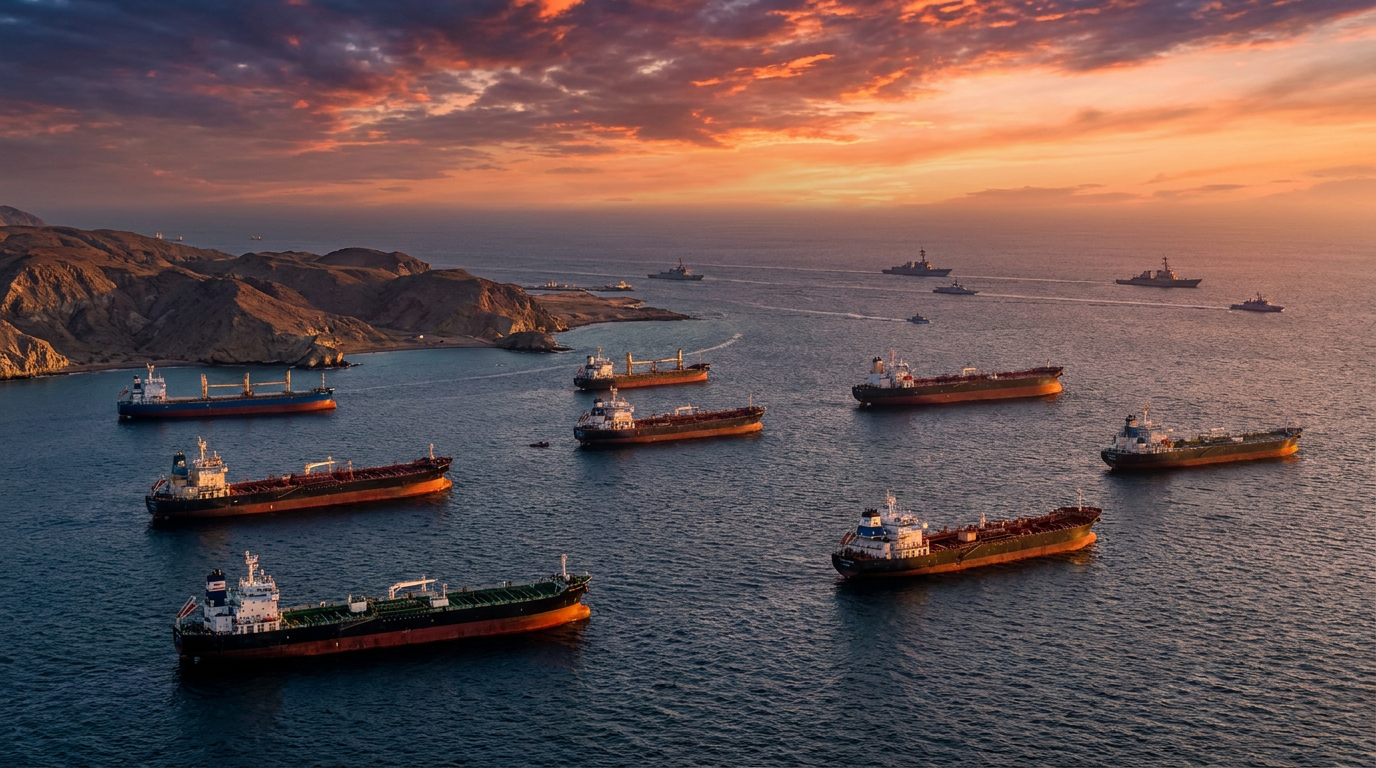
To understand the mechanism of this diplomatic breakthrough, one must look south to the Red Sea. Israel’s decision to break the global consensus on Somaliland is rooted deeply in its own maritime vulnerability. During the prolonged conflict in Gaza, Iranian-backed Houthi militants in Yemen effectively blockaded the Bab al-Mandab Strait, a narrow maritime chokepoint through which roughly 12 to 15 percent of global trade flows. Somaliland’s 530-mile coastline sits directly across the Gulf of Aden from Yemen, offering a pristine vantage point over one of the world's most contested waterways.[6][7][8]

By recognizing Somaliland, Israel secures a vital geostrategic foothold. Intelligence and defense analysts note that the recognition paves the way for enhanced maritime surveillance, signals intelligence coordination, and counter-threat monitoring. While officials in Hargeisa have occasionally offered contradictory statements regarding the potential for an outright Israeli military base, the intelligence-sharing and security cooperation frameworks are already being formalized. For Israel's defense establishment, the Horn of Africa is no longer a peripheral arena, but a direct extension of its shadow war with Iran and its proxy networks.[6][8]
This bilateral pact has acted as an accelerant for a broader realignment of power across the Red Sea basin. Strategic analysts at the FMES Institute and other European think tanks observe the consolidation of two distinct geopolitical axes. On one side sits a "revisionist" bloc comprising Israel, the United Arab Emirates, Ethiopia, and Somaliland. These actors are increasingly bound by shared interests in port infrastructure, maritime security, and a willingness to bypass traditional diplomatic frameworks to secure economic and military access.[7][8]
This bilateral pact has acted as an accelerant for a broader realignment of power across the Red Sea basin.
On the opposing side is a "status quo" coalition anchored by Somalia, Egypt, Turkey, and Saudi Arabia. For this bloc, the Israeli-Somaliland alliance represents a dangerous encroachment. Turkey has spent years building a massive military and economic presence in Mogadishu, viewing Somalia as its primary gateway to East Africa. Egypt, already locked in a bitter dispute with Ethiopia over the Grand Ethiopian Renaissance Dam, views any move that empowers Ethiopia or its regional partners as a direct threat to its own security and its control over the Suez Canal's southern approaches.[7][8]

The fiercest backlash, however, emanates from Mogadishu. The Federal Government of Somalia claims Somaliland as an integral, inalienable part of its sovereign territory. Somali President Hassan Sheikh Mohamud has condemned Israel’s recognition as one of the darkest days in the region's history, describing the diplomatic outreach as a "trap" designed to exploit regional fractures. Mogadishu views any direct engagement with Hargeisa as a severe violation of international law and has warned that the move will only destabilize an already fragile neighborhood.[4][5]
The African Union has echoed Somalia's outrage. The continental body maintains a rigid adherence to the preservation of colonial-era borders, a foundational principle designed to prevent endless separatist conflicts across Africa. The AU fears that Israel’s unilateral recognition sets a dangerous precedent, potentially encouraging other secessionist movements from Cameroon to the Democratic Republic of Congo. Consequently, the AU and the Arab League have issued strong condemnations, warning external powers against importing Middle Eastern conflicts into the African continent.[7]
The diplomatic maneuver has also exposed internal fissures within Somaliland itself. While the government and many citizens celebrated the recognition as a long-overdue validation of their independence, a vocal segment of the population strongly opposes the alliance. Citing the ongoing humanitarian crisis in Gaza and solidarity with the Palestinian cause, protesters have taken to the streets in Hargeisa. Local authorities have responded with a heavy hand, arresting dozens of demonstrators, including religious scholars and youths waving Palestinian flags, highlighting the domestic political risks President Abdullahi faces in courting Jerusalem.[5]

From the perspective of international law, the situation remains highly ambiguous. The 1933 Montevideo Convention defines a state as having a permanent population, a defined territory, a government, and the capacity to enter into relations with other states—criteria Somaliland arguably meets. However, modern international law relies heavily on collective recognition by bodies like the United Nations. Unilateral recognition by a single state, even one as influential as Israel, does not automatically alter Somaliland’s legal status on the global stage, creating a zone of "strategic ambiguity" where practical influence outpaces formal legality.[8]
The ultimate question is whether Israel's move will trigger a domino effect. Somaliland officials are openly hoping that the breakthrough will spur Western powers, particularly the United States and the United Kingdom, to reconsider their stances. Within Washington, policy circles are reportedly divided. A pragmatic, security-focused camp views recognizing Somaliland as a necessary step to counter Chinese and Iranian influence in the Red Sea, while a cautious legal-political faction warns against alienating Mogadishu and fracturing the African Union's consensus.[6][8]
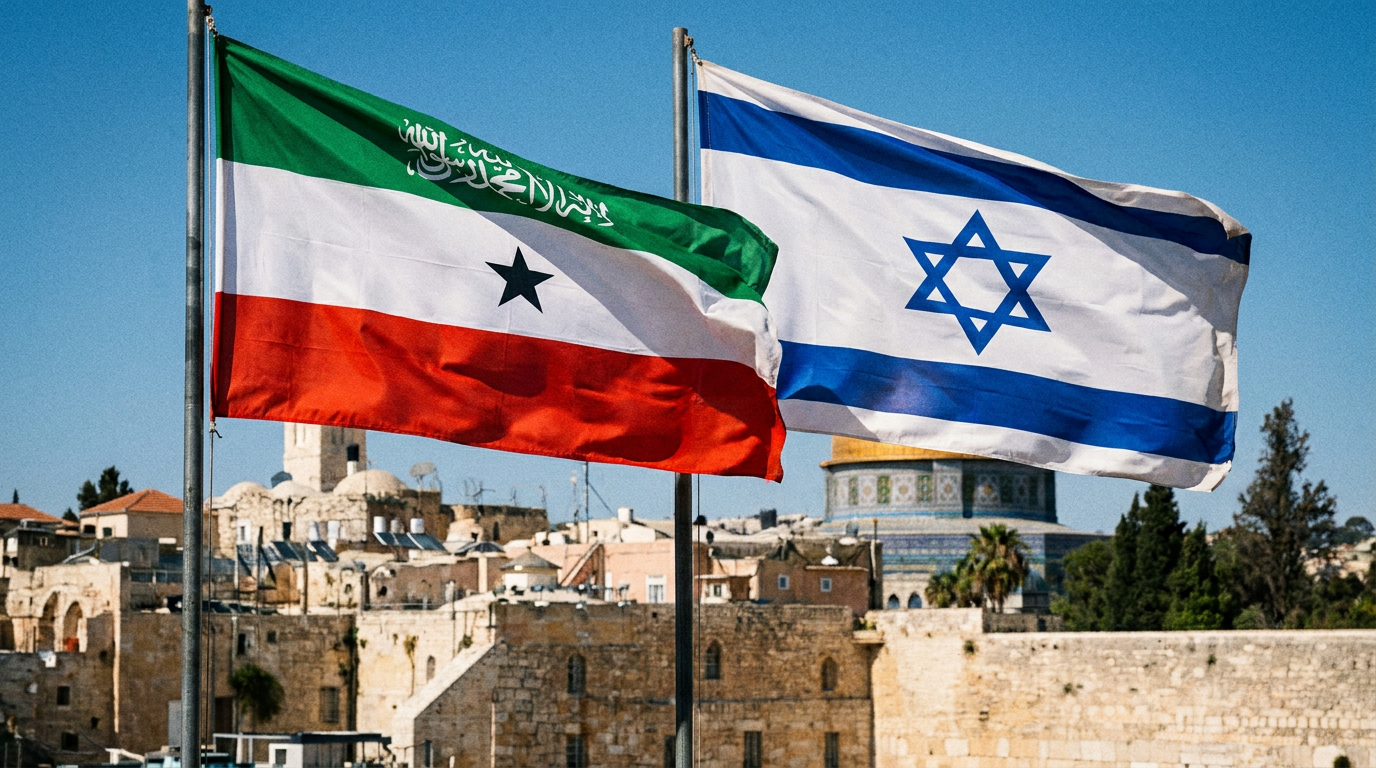
For now, the opening of the embassy in Jerusalem stands as a monumental victory for Hargeisa and a calculated strategic gamble for Israel. As the flags of both nations are raised together, the Red Sea corridor enters a volatile new era. The partnership proves that in the modern geopolitical landscape, the urgent demand for maritime security and military advantage can rapidly rewrite the diplomatic rules that have governed the Horn of Africa for decades.[1][2][7]
How we got here
May 1991
Somaliland unilaterally declares independence from Somalia following the collapse of the Siad Barre regime.
Jan 2024
Ethiopia signs a stalled Memorandum of Understanding with Somaliland for port access in exchange for potential recognition.
Dec 2025
Israel becomes the first UN member state to officially recognize Somaliland as an independent, sovereign nation.
Jan 2026
Israeli Foreign Minister Gideon Sa'ar makes a historic visit to Hargeisa to formalize security and trade cooperation.
June 2026
Somaliland President Abdirahman Mohamed Abdullahi arrives in Jerusalem to officially inaugurate the Somaliland Embassy.
Viewpoints in depth
Somaliland's Sovereignty Advocates
Argue that 35 years of democratic self-governance and stability earn them the right to international recognition.
For decades, Somaliland has operated as a functional democracy with its own currency, passport, and military, standing in stark contrast to the instability that has plagued much of the region. Advocates argue that the international community's refusal to recognize their independence has unfairly stifled economic development and foreign investment. They view Israel's recognition not just as a bilateral win, but as the breaking of a global taboo that will inevitably force Western powers to acknowledge their sovereignty.
Israel's Security Establishment
Views the Horn of Africa as a vital flank against Iranian proxies and a necessary maritime buffer.
Israeli defense strategists see the Red Sea and the Gulf of Aden as critical vulnerabilities, a reality laid bare by Houthi militant attacks on commercial shipping. By establishing a diplomatic and potential intelligence foothold in Somaliland, Israel aims to monitor hostile actors at the Bab al-Mandab Strait before they can threaten Israeli waters. This camp believes that proactive alliances in the Horn of Africa are essential for outflanking Iran's regional proxy network.
The Somali Federal Government
Warns that altering colonial-era borders violates international law and threatens to balkanize the African continent.
Mogadishu views Somaliland as an inseparable part of its sovereign territory and considers any external recognition an illegal act of aggression. Somali officials argue that Israel is exploiting regional vulnerabilities to advance its own security interests at the expense of African unity. They warn that validating a breakaway republic sets a dangerous precedent that could embolden separatist movements across the continent, leading to widespread destabilization.
Status Quo Regional Powers
See the Israeli-Somaliland pact as an encroachment on their traditional spheres of influence in the Red Sea.
Nations like Egypt, Turkey, and Saudi Arabia view the Red Sea as their strategic backyard. Turkey has invested heavily in Somalia's military and infrastructure, while Egypt is highly sensitive to any developments that could empower Ethiopia—a key ally of Somaliland—amid ongoing disputes over Nile water rights. These powers fear that an Israeli presence in the Horn of Africa will militarize the corridor and introduce Middle Eastern rivalries into an already volatile neighborhood.
What we don't know
- Whether the United States, the United Kingdom, or other Western powers will follow Israel's lead in recognizing Somaliland.
- The exact operational extent of Israeli military and intelligence deployments along the Somaliland coast.
- How the African Union might tangibly penalize Somaliland or Israel for bypassing its established diplomatic frameworks.
Key terms
- De facto state
- A political entity that exercises actual control over a territory and functions as a government, despite lacking formal legal recognition from the international community.
- Bab al-Mandab Strait
- A critical, narrow maritime chokepoint connecting the Red Sea to the Gulf of Aden, through which a significant portion of global shipping passes.
- Montevideo Convention
- A 1933 treaty that outlines the traditional legal criteria for statehood: a permanent population, defined territory, government, and capacity to enter relations with other states.
- Horn of Africa
- The easternmost peninsula of the African continent, encompassing countries like Somalia, Ethiopia, Eritrea, and Djibouti, known for its immense strategic importance.
Frequently asked
What is Somaliland?
Somaliland is a self-governing region in the Horn of Africa that declared independence from Somalia in 1991. It operates as a functional democracy with its own currency and military, but lacked international recognition until Israel's move.
Why did Israel recognize Somaliland?
Israel seeks a strategic foothold near the Red Sea and Gulf of Aden to monitor maritime threats, particularly from Iranian-backed Houthi militants in Yemen who have targeted commercial shipping.
How has Somalia reacted to the recognition?
The Somali federal government strongly condemned the move, calling it a violation of its territorial integrity and a threat to regional stability, a stance echoed by the African Union.
Will the United States recognize Somaliland?
The U.S. remains officially uncommitted, balancing the strategic security benefits of an alliance against the diplomatic risks of alienating the African Union and fracturing regional consensus.
Sources
Source coverage
8 outlets
4 viewpoints surfaced








[1]Al JazeeraStatus Quo Regional Powers
Israel welcomes Somaliland president in ‘historic’ visit
Read on Al Jazeera →[2]The Jerusalem PostSomaliland Sovereignty Advocates
Somaliland president makes historic first visit to Israel following country's recognition
Read on The Jerusalem Post →[3]Anadolu AgencySomali Federal Government
President of Somaliland breakaway region makes 1st visit to Israel, to open embassy in Jerusalem
Read on Anadolu Agency →[4]Hiiraan OnlineSomaliland Sovereignty Advocates
Somaliland president lands in Israel, calls visit historic
Read on Hiiraan Online →[5]AfricanewsSomali Federal Government
Somali President says Israel exploiting row with Somaliland
Read on Africanews →[6]The Washington InstituteIsraeli Security Establishment
Israel's Recognition of Somaliland: Red Sea Implications
Read on The Washington Institute →[7]Table.MediaStatus Quo Regional Powers
Israel's recognition of Somaliland is part of a larger shift in the axes of power
Read on Table.Media →[8]FMES InstituteStatus Quo Regional Powers
The Red Sea Power Game: Israel's recognition of Somaliland and the contest for influence in the Horn of Africa
Read on FMES Institute →

More in news politics
See all 6 stories →U.S.-Iran Deal
U.S. and Iran Reach Deal to End 107-Day War, Reopen Strait of Hormuz
0 sources
US-Iran Peace Deal
U.S. and Iran Reach Deal to End 107-Day War and Reopen Strait of Hormuz
0 sources
U.S.-Iran Ceasefire
U.S. and Iran Reach Ceasefire Agreement to End Four-Month War
0 sources
Strait of Hormuz
U.S. and Iran on Verge of Peace Deal to Reopen Strait of Hormuz After 107-Day War
0 sources
Every angle. Every day.
Get news politics stories with full source coverage and perspective breakdowns delivered to your inbox.