
The Science of the Snatch: How Olympic Weightlifting Became a Longevity Protocol
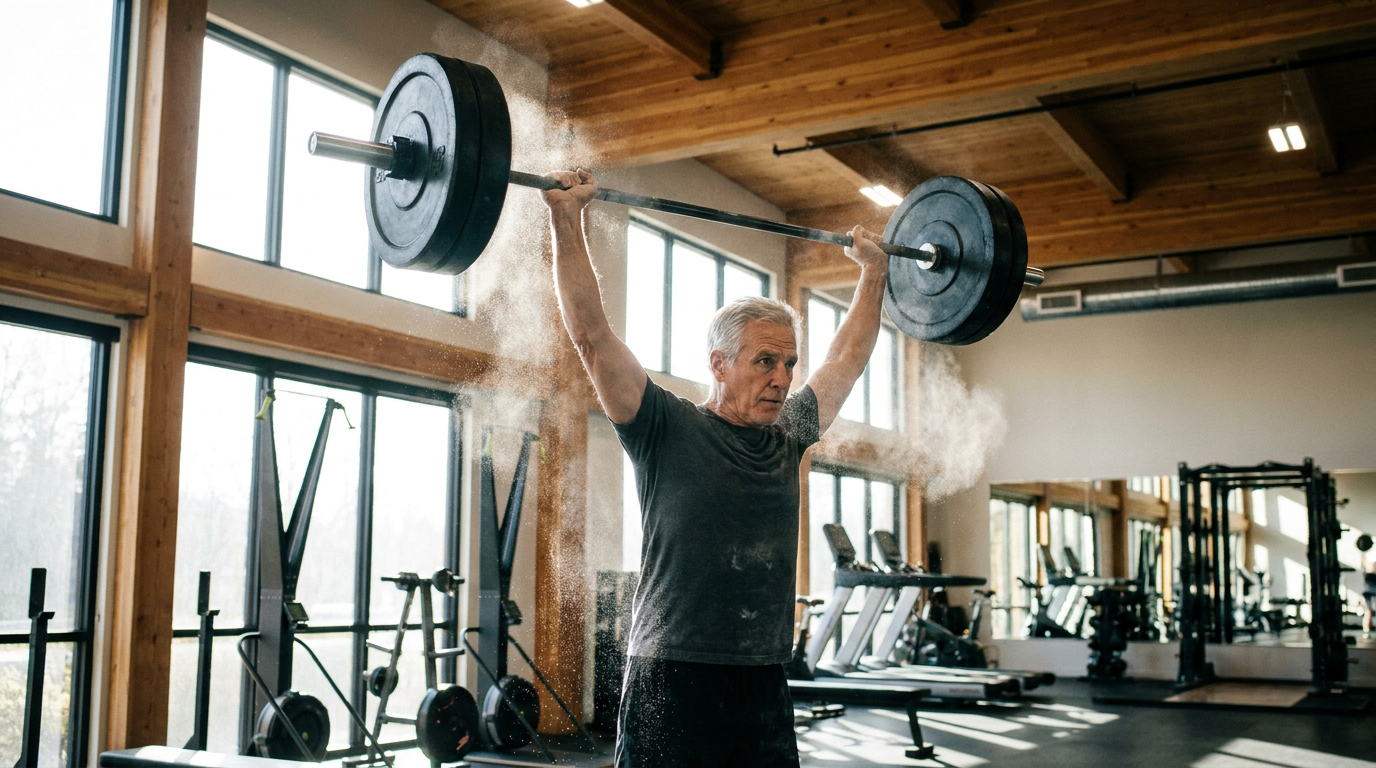
Once viewed strictly as an elite and dangerous sport, Olympic weightlifting is increasingly being adopted by older adults. Biomechanists and aging researchers point to the explosive lifts as a powerful tool to preserve fast-twitch muscle fibers, bone density, and neuroplasticity.
By Factlen Editorial Team
- Longevity & Aging Researchers
- View the lifts as a medical intervention to combat sarcopenia and cognitive decline.
- Biomechanists & Sports Scientists
- Focus on the physics of force production and the efficiency of the barbell trajectory.
- Masters Weightlifters
- Focus on the community, personal growth, and functional independence gained from lifelong lifting.
- Clinical Physical Therapists
- Emphasize safe scaling, mobility, and the use of lift derivatives for older populations.
What's not represented
- · Orthopedic Surgeons treating acute lifting injuries
- · Endurance athletes contrasting cardiovascular vs strength benefits
Why this matters
As the global population ages, finding effective interventions to prevent physical frailty and cognitive decline is critical. Understanding how explosive movement preserves the nervous system offers a new blueprint for maintaining functional independence well into later life.
Key points
- Olympic weightlifting is transitioning from an elite sport to a recognized longevity protocol for older adults.
- The Snatch and Clean & Jerk require explosive power, which preserves fast-twitch muscle fibers that normally deteriorate with age.
- The complex neuromuscular demands of the lifts stimulate neuroplasticity and the release of brain-protecting proteins like BDNF.
- Despite misconceptions, injury rates in weightlifting are lower than in many common recreational sports.
- Coaches use lift derivatives, like the power clean, to provide the benefits of explosive extension without requiring extreme joint mobility.
The visual of Olympic weightlifting is unmistakable: chalk dust hanging in the air, roaring crowds, massive plates bowing the barbell, and a split-second explosion of power. For decades, the Snatch and the Clean & Jerk were viewed strictly as the domain of elite athletes pushing the absolute limits of human physiology.[1]
But a quiet revolution is happening at the intersection of biomechanics and gerontology. Sports scientists and longevity researchers are converging on a surprising consensus: the highly technical, explosive movements of Olympic weightlifting might be one of the most effective protocols for healthy aging.[2][4]
To understand why, one must first look at the physics of the sport. Olympic weightlifting consists of two contested lifts. The first is the Snatch, where the lifter moves the barbell from the floor to a locked-out position overhead in a single, continuous motion.[5]
The Snatch is often described as the most technical movement in all of sports. It requires the lifter to generate maximum vertical acceleration during the "second pull"—a violent extension of the hips, knees, and ankles known as triple extension. The lifter then rapidly pulls their own body underneath the flying barbell, catching it in a deep overhead squat.[5][7]

The second lift is the Clean & Jerk, a two-part movement. The lifter first accelerates the bar to their shoulders, catching it in a front squat. After standing up, they use a dip-and-drive motion to heave the bar overhead, usually splitting their legs fore and aft to drop under the weight.[5]
Both lifts demand a rare combination of brute force, speed, flexibility, and pinpoint neuromuscular coordination. And it is precisely this combination that makes them so valuable for the aging human body.[1]
As humans age, the first physical attribute to decline is not absolute strength, but speed. This is driven by sarcopenia—the age-related loss of muscle mass—and specifically the rapid deterioration of Type II fast-twitch muscle fibers.[4]
As humans age, the first physical attribute to decline is not absolute strength, but speed.
Fast-twitch fibers are responsible for explosive, powerful movements. When they atrophy, older adults lose the ability to react quickly. A stumble becomes a fall because the neuromuscular system cannot generate the rapid force required to catch the body's center of gravity.[4]

Traditional resistance training—like slow, controlled bicep curls or leg presses—builds muscle, but it primarily targets slow-twitch fibers. Olympic lifting, by definition, requires power, which is force multiplied by velocity. The explosive nature of the second pull forces the nervous system to recruit and maintain those crucial fast-twitch fibers.[4][7]
Beyond the musculature, the neurological demands of the lifts offer profound cognitive benefits. The Snatch and Clean & Jerk are complex motor puzzles. Executing them requires the brain to process proprioceptive feedback in milliseconds, coordinating dozens of muscle groups in a precise sequence.[3]
This high-level neuromuscular engagement stimulates the production of Brain-Derived Neurotrophic Factor (BDNF). BDNF is a protein that promotes neuroplasticity—the brain's ability to form new neural connections. Studies suggest that complex, load-bearing movements provide a stronger stimulus for BDNF release than simple aerobic exercise, offering a buffer against cognitive decline.[3]
Then there is the structural impact. The human skeleton responds to axial loading by increasing bone mineral density. The impact of catching a heavy barbell in the clean or snatch sends a powerful osteogenic signal through the spine, hips, and wrists, which are the most common sites for osteoporotic fractures.[2][6]
Despite these benefits, a persistent myth is that Olympic weightlifting is inherently dangerous for older adults. However, epidemiological data tells a different story. Research indicates that the injury rate in weightlifting is roughly 2.4 to 3.3 injuries per 1,000 hours of training—significantly lower than recreational sports like soccer, basketball, or even distance running.[1][2]

The key to safety lies in scaling and coaching. Older adults or beginners do not need to perform a full squat snatch with heavy weights to reap the benefits. Coaches frequently utilize derivatives—such as the power clean, hang snatch, or snatch pulls. These variations remove the extreme mobility requirements of the deep catch while preserving the explosive triple extension that drives the physiological adaptations.[2][7]
Ultimately, the barbell is a tool for preserving functional independence. The ability to generate power from the ground up translates directly to getting out of a chair, climbing stairs, or catching oneself during a slip. By training the body to move fast under a load, lifters are not just adding weight to the bar—they are adding capable, resilient years to their lives.[2][6]
How we got here
1896
Weightlifting is included in the first modern Olympic Games in Athens.
1972
The Olympic weightlifting program is standardized to just two lifts: the Snatch and the Clean & Jerk.
Early 2000s
CrossFit popularizes Olympic weightlifting for the general public, moving it out of niche athletic facilities.
2020s
Longevity researchers begin prescribing explosive strength training to combat age-related neuromuscular decline.
Viewpoints in depth
Biomechanists & Sports Scientists
Focus on the physics of force production and the efficiency of the barbell trajectory.
For sports scientists, the Olympic lifts are a study in applied physics. The goal is to move the heaviest possible weight from the floor to overhead by maximizing vertical acceleration while minimizing horizontal displacement. Researchers analyze the 'triple extension' of the hips, knees, and ankles, noting that the power output generated during the second pull of a snatch is among the highest recorded in any human athletic endeavor. Their focus is on optimizing joint angles and bar path efficiency to maximize force transfer.
Longevity & Aging Researchers
View the lifts as a medical intervention to combat sarcopenia and cognitive decline.
Gerontologists and longevity experts are less concerned with the amount of weight lifted and more interested in the physiological adaptations the movements provoke. They point out that aging primarily strips away fast-twitch muscle fibers, which are responsible for speed and fall prevention. Because Olympic lifts require explosive power, they force the nervous system to recruit these vulnerable fibers. Furthermore, the complex motor coordination required stimulates neuroplasticity, making the lifts a dual intervention for both physical frailty and cognitive decline.
Clinical Physical Therapists
Emphasize safe scaling, mobility, and the use of lift derivatives for older populations.
Physical therapists acknowledge the immense benefits of the sport but caution against the extreme mobility demands of the full lifts. A deep overhead squat requires exceptional ankle, hip, and thoracic mobility, which many older adults lack. Clinicians advocate for 'weightlifting derivatives'—such as the power clean, hang snatch, or high pull. These variations eliminate the deep catch position while still delivering the explosive triple extension that drives the neuromuscular and bone-density benefits, drastically reducing the risk of joint injury.
What we don't know
- The exact minimum effective dose—how few explosive repetitions are required per week to maintain fast-twitch fibers in older adults—remains under active study.
- Longitudinal data tracking cognitive decline specifically in lifelong Olympic weightlifters versus traditional resistance trainers is still limited.
Key terms
- Snatch
- A highly technical lift where the barbell is moved from the floor to a locked-out position overhead in a single, continuous motion.
- Clean and Jerk
- A two-part lift where the barbell is first brought to the shoulders (the clean), then driven overhead (the jerk).
- Triple Extension
- The simultaneous explosive extension of the hips, knees, and ankles, crucial for generating upward force.
- Sarcopenia
- The age-related loss of muscle mass, strength, and function, particularly affecting fast-twitch fibers.
- Fast-Twitch Muscle Fibers
- Muscle fibers responsible for explosive, powerful movements, which deteriorate rapidly with age if not trained.
- BDNF
- Brain-Derived Neurotrophic Factor, a protein that promotes the survival and growth of neurons, stimulated by complex physical exercise.
Frequently asked
Is Olympic weightlifting safe for older adults?
Yes, when properly coached. Research shows injury rates in weightlifting are lower than in many recreational sports, and coaches use scaled variations to match an individual's mobility.
Do I need to lift heavy weights to see benefits?
No. The primary benefits for aging adults come from the speed and coordination of the movement. Moving a light weight explosively still trains the nervous system and fast-twitch fibers.
What is the difference between powerlifting and Olympic weightlifting?
Powerlifting focuses on absolute strength using the squat, bench press, and deadlift. Olympic weightlifting focuses on explosive power and speed using the snatch and the clean and jerk.
Sources
Source coverage
7 outlets
4 viewpoints surfaced







[1]Physical Therapy & Sports Medicine CentersBiomechanists & Sports Scientists
The Demands of Olympic Weightlifting: Power, Precision, and Longevity
Read on Physical Therapy & Sports Medicine Centers →[2]Frontiers in Sports and Active LivingMasters Weightlifters
“I'm not too old to lift”: exploring lifelong involvement in Olympic weightlifting through the serious leisure perspective
Read on Frontiers in Sports and Active Living →[3]TIMELongevity & Aging Researchers
Why Strength Training Is the Best Anti-Ager
Read on TIME →[4]IDEA Health & Fitness AssociationLongevity & Aging Researchers
The Benefits of Olympic Weightlifting in Older Populations
Read on IDEA Health & Fitness Association →[5]Journal of Sports SciencesBiomechanists & Sports Scientists
Biomechanical analysis of the snatch technique
Read on Journal of Sports Sciences →[6]BarBendClinical Physical Therapists
Powerlifting Slows the Aging Process. Here's Why
Read on BarBend →[7]Factlen Editorial TeamClinical Physical Therapists
Synthesis by Factlen editorial team
Read on Factlen Editorial Team →
More in sports
See all 11 stories →NWSL Expansion
NWSL Launches 'Summer of Soccer' Campaign to Capitalize on World Cup Momentum
0 sources
Roster Construction
How the New York Knicks Built a Championship Franchise Under the NBA's Restrictive New Financial Rules
0 sources

Flag Football
How Flag Football is Adapting for Its Olympic Debut at LA 2028
0 sources

Injury
Malaysian Badminton Champion Toh Ee Wei Suffers ACL Tear, Urges Partner to Play On
0 sources
Every angle. Every day.
Get sports stories with full source coverage and perspective breakdowns delivered to your inbox.