
The Science of Temperature Therapy: Cold Plunges vs. Saunas for Athletic Recovery
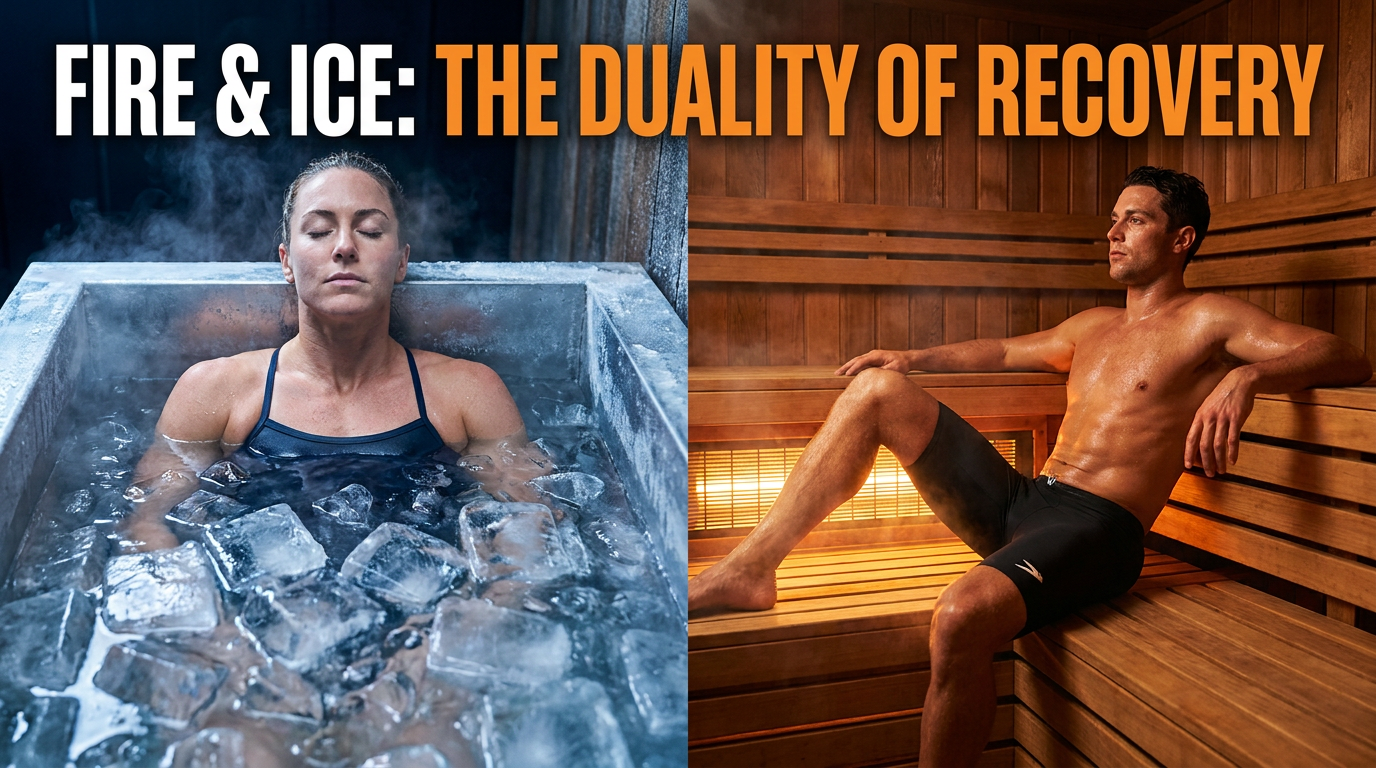
While ice baths provide rapid pain relief for endurance athletes, emerging research shows they can actively hinder muscle growth, making heat therapy the superior choice for strength adaptation.
By Factlen Editorial Team
- Strength & Hypertrophy Athletes
- Prioritizes long-term muscle adaptation and avoids post-workout cold exposure.
- Endurance & Team Competitors
- Focuses on acute recovery to survive grueling, multi-day athletic schedules.
- Longevity & Wellness Advocates
- Views temperature therapy as a tool for systemic health, cardiovascular conditioning, and cellular resilience.
What's not represented
- · Casual Gym-Goers
- · Physical Therapists
Why this matters
As temperature-based recovery tools like cold plunges and infrared saunas become widely accessible, choosing the wrong method can actively sabotage your fitness goals. Understanding the distinct physiological effects of heat and cold ensures that your recovery routine supports, rather than hinders, your hard work.
Key points
- Cold water immersion effectively reduces acute inflammation and delayed onset muscle soreness by constricting blood vessels.
- Using ice baths immediately after resistance training blunts muscle protein synthesis and reduces hypertrophy.
- Heat therapy via saunas promotes vasodilation, increasing blood flow and delivering essential nutrients to damaged muscle tissue.
- Saunas trigger the release of heat shock proteins, which act as cellular chaperones to repair damaged proteins and support muscle growth.
- Contrast water therapy alternates hot and cold to create a vascular pumping effect, though evidence suggests it is on par with active recovery.
- Athletes should periodize their recovery: cold for immediate, acute performance needs, and heat for long-term muscle adaptation.
From elite locker rooms to suburban garages, the pursuit of optimal athletic recovery has spawned a multi-billion-dollar industry. Athletes and weekend warriors alike are no longer satisfied with simply stretching and drinking a protein shake; they are actively seeking out extreme physiological stressors to accelerate healing. At the center of this modern recovery movement are two contrasting extremes: the freezing depths of cold water immersion and the blistering heat of the dry sauna.[6]
For decades, the post-workout ice bath was considered the undisputed gold standard for serious competitors. It was a badge of honor, a grueling ritual that promised to banish soreness and prepare the body for the next day's battle. Recently, however, heat therapy has surged in popularity, backed by a growing body of clinical research highlighting its profound cellular benefits.[6]
The debate between hot and cold is no longer just a matter of personal preference or mental toughness. Sports scientists and physiologists have begun to map exactly what happens to human tissue under extreme temperature stress. The emerging consensus reveals a nuanced reality: neither modality is universally superior. Instead, their efficacy depends entirely on the specific physiological adaptations an athlete is trying to achieve.[6]
To understand this divergence, one must first look at the mechanics of cold water immersion. When the human body is submerged in water below 15 degrees Celsius, it triggers an immediate survival response known as peripheral vasoconstriction. Blood vessels narrow dramatically, shunting blood away from the extremities and toward the vital organs to preserve core body temperature.[6]

This vascular clamping effect is highly effective at managing the aftermath of intense physical trauma. By limiting the rush of fluid and inflammatory markers to micro-tears in the muscle tissue, cold therapy effectively numbs the affected area. This process significantly reduces the swelling and edema that contribute to delayed onset muscle soreness, providing rapid, tangible relief.[3]
For athletes engaged in multi-day tournaments or team sports with short turnaround times, this analgesic effect is an invaluable asset. Systematic reviews have demonstrated that cold water immersion effectively restores neuromuscular power and reduces perceived fatigue within a critical 24-hour window. When a soccer player or sprinter needs to return to the field the very next day, the ice bath delivers the necessary acute recovery.[3]
However, the very mechanism that makes cold therapy effective for acute pain relief makes it actively detrimental for long-term muscle growth. A landmark 2023 meta-analysis published in SportRχiv demonstrated that applying cold water immersion immediately after resistance training significantly attenuates muscle hypertrophy. By artificially suppressing the body's natural inflammatory response, athletes inadvertently signal their muscles to stop growing.[1]
However, the very mechanism that makes cold therapy effective for acute pain relief makes it actively detrimental for long-term muscle growth.
The cold-induced vasoconstriction reduces blood flow to the muscles precisely when they need it most. Researchers at Maastricht University confirmed that immersing limbs in near-freezing water after lifting weights significantly reduces the absorption of dietary protein into muscle tissue. This blunts muscle protein synthesis, effectively throwing cold water on the body's anabolic response and undoing the hard work performed in the gym.[4]

Heat therapy, conversely, operates on the principle of vasodilation. Stepping into a sauna heated to 80 degrees Celsius causes blood vessels to widen, dramatically increasing peripheral blood flow. This enhanced circulation acts as a nutrient highway, delivering oxygen and essential building blocks to damaged muscle tissue while simultaneously accelerating the clearance of metabolic waste products like lactic acid.[5]
Beyond simple vascular plumbing, heat stress triggers a profound molecular response deep within the body's cells. As tissue temperature rises, cells begin to synthesize heat shock proteins. These specialized molecules act as cellular chaperones, repairing misfolded proteins, protecting against oxidative stress, and facilitating the structural remodeling of muscle fibers essential for growth and recovery.[5]
The cardiovascular demands of a sustained sauna session also mimic the effects of moderate aerobic exercise. Heart rates can safely elevate to between 120 and 150 beats per minute, providing a "passive cardio" effect. This conditions the heart, improves endothelial function, and builds long-term cardiovascular resilience without placing any additional mechanical stress on tired joints and ligaments.[5]

For athletes focused on strength, hypertrophy, and long-term adaptation, heat therapy provides a clear and decisive advantage. It supports and enhances the inflammatory cascade necessary for muscle adaptation rather than suppressing it. By utilizing heat, athletes ensure that the micro-trauma inflicted during training translates into actual, measurable tissue growth.[6]
Seeking the best of both worlds, many athletes turn to contrast water therapy, a protocol that involves rapidly alternating between hot and cold immersion. The underlying theory is that shifting between vasodilation and vasoconstriction creates a "vascular pumping" action, forcefully flushing out metabolic waste and driving fresh, oxygenated blood deep into the muscle tissue.[2]
While the physiological theory is mechanically sound, the clinical evidence remains somewhat mixed. A comprehensive systematic review published in PLOS One found that while contrast therapy is superior to passive rest for reducing muscle soreness and strength loss, it does not consistently outperform active recovery modalities, such as light cycling or jogging, in elite sporting populations.[2]

Ultimately, the science of temperature therapy dictates a periodized, goal-oriented approach to recovery. If the primary objective is to maximize muscle size, build strength, and foster long-term cellular adaptation, athletes should strictly avoid cold plunges immediately after lifting weights. Instead, they should opt for heat therapy to support protein synthesis and cellular repair.[1][5]
Conversely, if the goal is to survive a grueling playoff series, a multi-stage endurance race, or a high-intensity functional fitness competition, the anti-inflammatory and analgesic properties of an ice bath remain an unmatched tool. The modern athlete's toolkit requires both fire and ice—but they must be applied with scientific precision, rather than blind habit.[3][6]
How we got here
1900s
Cold water immersion begins to be documented in medical literature as a treatment for acute musculoskeletal trauma.
2013
Systematic reviews confirm that contrast water therapy effectively reduces delayed onset muscle soreness compared to passive rest.
2017
Sports science meta-analyses establish that cold plunges are highly effective for restoring power in team sport athletes within a 24-hour window.
2023
Landmark data reveals that applying cold water immediately after resistance training significantly blunts muscle hypertrophy.
2025
Emerging research highlights the role of heat shock proteins in saunas for long-term cardiovascular conditioning and cellular repair.
Viewpoints in depth
Strength & Hypertrophy Athletes
Prioritizes long-term muscle adaptation and avoids post-workout cold exposure.
For bodybuilders, powerlifters, and athletes whose primary goal is increasing muscle mass, the post-workout window is strictly reserved for anabolic processes. This camp relies on the inflammatory cascade to trigger muscle protein synthesis. Because cold water immersion causes vasoconstriction and reduces the absorption of dietary protein into the muscle, these athletes actively avoid ice baths immediately after lifting. Instead, they favor heat therapy or passive rest to ensure maximum blood flow and nutrient delivery to recovering tissues.
Endurance & Team Competitors
Focuses on acute recovery to survive grueling, multi-day athletic schedules.
Athletes in sports like soccer, basketball, or multi-stage cycling face a different physiological puzzle: they must perform at a high level again within 24 to 48 hours. For this camp, long-term cellular adaptation is secondary to immediate pain relief and the restoration of neuromuscular power. Cold water immersion is a vital tool here, as it rapidly flushes out edema, numbs delayed onset muscle soreness, and allows the athlete to return to the field feeling fresh, even if it slightly compromises long-term tissue growth.
Longevity & Wellness Advocates
Views temperature therapy as a tool for systemic health, cardiovascular conditioning, and cellular resilience.
Beyond the realm of competitive sports, a growing contingent of wellness practitioners utilizes heat therapy for its systemic health benefits. This perspective focuses on the activation of heat shock proteins and the 'passive cardio' effect of saunas. By subjecting the body to controlled thermal stress, they aim to improve endothelial function, lower blood pressure, and promote cellular cleanup, viewing the sauna not just as a recovery tool, but as a foundational pillar of long-term health and disease prevention.
What we don't know
- The exact temperature threshold and duration at which cold water immersion begins to negatively impact muscle hypertrophy.
- Whether the cardiovascular benefits of 'passive cardio' in a sauna translate to the exact same long-term mortality reductions as active aerobic exercise.
- The optimal timing for contrast water therapy to maximize both acute pain relief and long-term tissue adaptation.
Key terms
- Vasoconstriction
- The narrowing of blood vessels, typically in response to cold, which restricts blood flow and reduces acute inflammation.
- Vasodilation
- The widening of blood vessels, typically in response to heat, which increases blood flow and nutrient delivery to tissues.
- Heat Shock Proteins (HSPs)
- Specialized molecules produced by cells in response to stress (like heat) that help repair damaged proteins and support cellular resilience.
- Muscle Hypertrophy
- The increase in the size of skeletal muscle fibers, typically achieved through resistance training.
- Delayed Onset Muscle Soreness (DOMS)
- The muscle pain and stiffness that typically peaks 24 to 72 hours after intense or unaccustomed exercise.
- Contrast Water Therapy
- A recovery protocol that involves rapidly alternating between hot and cold water immersion to create a vascular pumping effect.
Frequently asked
Should I take an ice bath immediately after lifting weights?
No, if your goal is muscle growth. Cold water immersion immediately after resistance training can blunt muscle protein synthesis and reduce long-term hypertrophy.
How long should I stay in a sauna for recovery?
Most protocols suggest 15 to 20 minutes at 80–90°C for traditional saunas, which is sufficient to elevate heart rate and trigger heat shock proteins.
Does contrast therapy work better than an ice bath?
Contrast therapy is effective for reducing muscle soreness, but systematic reviews show it is generally on par with active recovery and not definitively superior to cold immersion alone.
Can a sauna replace cardiovascular exercise?
While a sauna provides a 'passive cardio' effect by raising heart rate and improving vascular function, it does not replace the mechanical and muscular benefits of active aerobic exercise.
Sources
Source coverage
6 outlets
3 viewpoints surfaced






[1]SportRχivStrength & Hypertrophy Athletes
Throwing cold water on muscle growth: A systematic review with meta-analysis of the effects of post-exercise cold water immersion on resistance training-induced hypertrophy
Read on SportRχiv →[2]PLOS OneEndurance & Team Competitors
Contrast water therapy and exercise induced muscle damage: a systematic review and meta-analysis
Read on PLOS One →[3]Journal of Strength and Conditioning ResearchEndurance & Team Competitors
Effects of Cold Water Immersion and Contrast Water Therapy for Recovery From Team Sport: A Systematic Review and Meta-analysis
Read on Journal of Strength and Conditioning Research →[4]Maastricht University ResearchStrength & Hypertrophy Athletes
Cold exposure post-exercise diminishes hypertrophic responses and protein absorption
Read on Maastricht University Research →[5]Mayo ClinicLongevity & Wellness Advocates
Saunas and Your Health: How Heat Therapy Supports Heart, Brain, and Recovery
Read on Mayo Clinic →[6]Factlen Editorial TeamLongevity & Wellness Advocates
Synthesis by Factlen editorial team
Read on Factlen Editorial Team →

Every angle. Every day.
Get fitness stories with full source coverage and perspective breakdowns delivered to your inbox.