
The Science of 'Feeling Good' at Home: How Neuroaesthetics is Rewiring Interior Design
A new intersection of neuroscience and architecture is proving that interior design choices—from lighting to textures—measurably alter brain chemistry and reduce stress.
By Factlen Editorial Team
- Evidence-Based Designers
- Focuses on translating clinical data into practical, functional spaces that move beyond fleeting stylistic trends.
- Clinical Neuroscientists
- Focuses on the measurable biological and neurological markers triggered by spatial environments.
- Sensory Inclusion Advocates
- Emphasizes that because sensory processing varies widely, spaces must be adaptable rather than universally standardized.
What's not represented
- · Traditional interior decorators who prioritize cultural expression and subjective artistic vision over clinical data
- · Real estate developers balancing the higher upfront costs of neuroaesthetic materials with standard construction budgets
Why this matters
As we spend the vast majority of our lives indoors, understanding how our environments subconsciously trigger cortisol or serotonin empowers us to design homes and workspaces that actively support our mental health, rather than just looking stylish.
Key points
- Neuroaesthetics proves that interior design choices trigger measurable biological responses, including changes in heart rate and cortisol levels.
- Elements like natural light, biophilic patterns, and spatial symmetry can actively reduce stress and improve cognitive focus.
- The brain responds positively to fractal patterns—repeating geometric shapes found in nature—even when rendered artificially in decor.
- The design industry is shifting from intuition-based decorating to evidence-based wellness interventions.
- Because sensory processing varies, experts emphasize the need for adaptable, inclusive spaces that cater to neurodiversity.
We all know the feeling of walking into a room and immediately exhaling. For decades, interior designers have relied on intuition, trial and error, and aesthetic training to create these sanctuaries, often attributing the calming effect of a space to a vague sense of "good taste" or an unquantifiable atmosphere.[6]
But a rapidly growing scientific discipline is proving that this phenomenon is not just a matter of subjective preference—it is a measurable, predictable biological response. Welcome to the era of neuroaesthetics in interior design, where beauty is being decoded as a fundamental human need.[6]
Originally coined in the 1990s by neurobiologist Semir Zeki to describe how the brain processes visual art, neuroaesthetics has since expanded far beyond the canvas and into the built environment. It examines how spatial geometry, light, and texture interact with our neural pathways to fundamentally alter our physiology.[2][6]
"We are in, or move through, spaces every moment of our lives, and we now know that our environments have powerful effects on our physical and mental health," explains Susan Magsamen, Executive Director of the International Arts + Mind Lab (IAM Lab) at Johns Hopkins University.[1][2]

The IAM Lab recently released the "Intentional Space Roadmap," an in-depth, multivalent study calling for the establishment of a new field coined "Neuroarchitecture." The report argues that the right acoustic or lighting plan should supersede fleeting stylistic fads, positioning interior design as a highly functional tool for public health and personal well-being.[1][2]
The biological mechanism behind this is profound. When we enter a space, our sensory-motor system processes the physical features, while the limbic system—the brain's emotional and memory center—makes an immediate, subconscious assessment of safety, comfort, and spatial harmony.[4][6]
According to industry research, environments optimized for the human nervous system can yield a 15 to 20 percent reduction in stress hormones like cortisol. Heart rates slow, blood pressure drops, and serotonin levels measurably increase when the brain encounters specific, evidence-based spatial harmonies.[4]
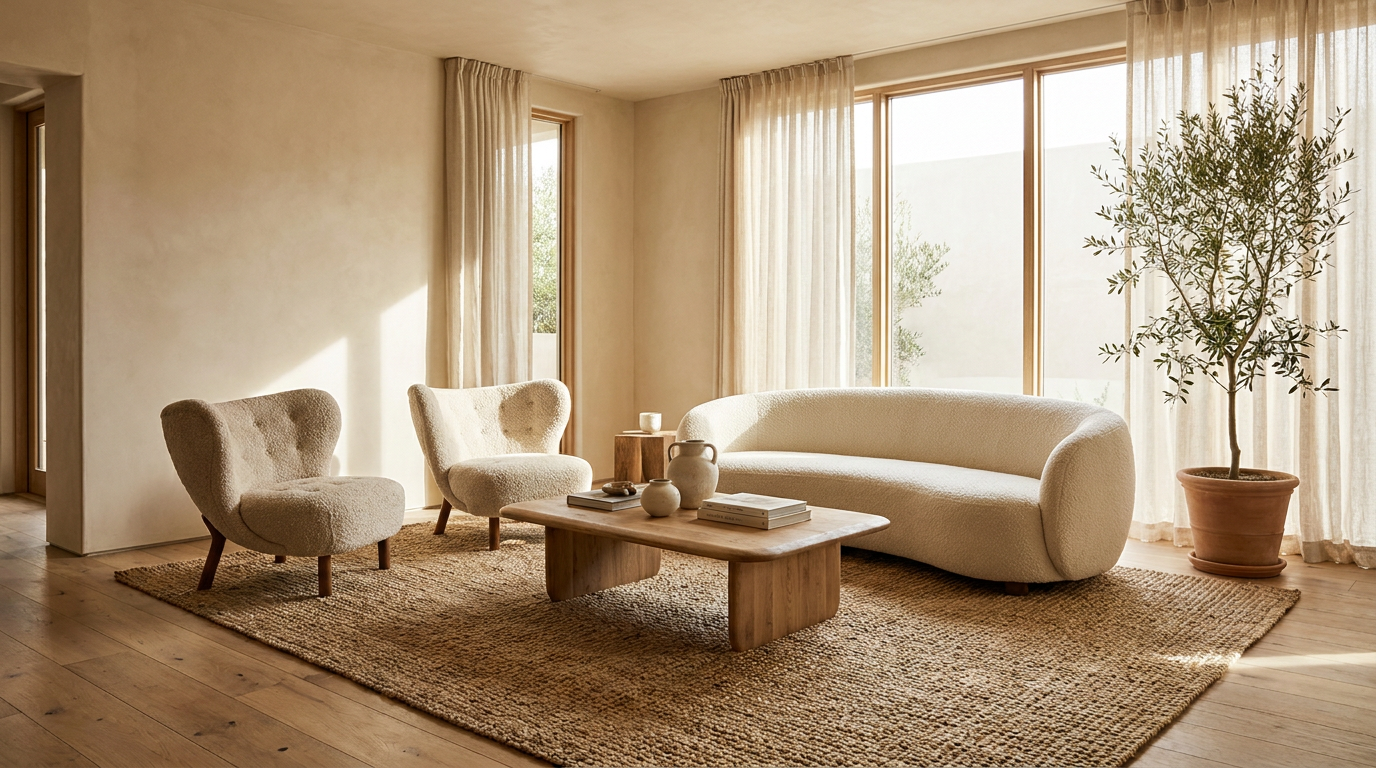
One of the most potent triggers for this neurological relaxation is biophilia—the integration of natural elements into the built environment. However, neuroaesthetics reveals that the brain does not strictly require a literal indoor jungle to reap these restorative benefits.[2][4]

One of the most potent triggers for this neurological relaxation is biophilia—the integration of natural elements into the built environment.
Exposure to fractal patterns—the repeating geometric shapes found in leaves, snowflakes, and ocean waves—can significantly reduce visual stress and improve cognitive performance. Incorporating these organic, repeating shapes into wallpapers, rugs, or architectural curves tricks the brain into a state of evolutionary comfort, mimicking the safety of a natural habitat.[2][6]
Lighting plays an equally critical role, acting as the primary director of our circadian rhythms. Dynamic lighting that mirrors the sun's natural progression—bright and cool in the morning, warm and dim in the evening—synchronizes our internal clocks, enhancing daytime focus and facilitating nighttime restorative sleep without requiring conscious effort.[2][6]
Tactile engagement is another crucial lever in the neuroaesthetic toolkit. The brain constantly scans for physical anchors. Soft, warm-to-the-touch materials like natural wood, jute, and dense textiles provide sensory reassurance, lowering the body's defensive arousal states before we even consciously register the texture.[4][6]
This evidence-based approach is fundamentally changing both the commercial and residential design industries. At the recent Global Wellness Summit, leaders declared that neuroaesthetics has officially made design a "biological as well as cultural intervention," shifting the industry's focus from mere decoration to preventive health.[3]

Organizations like the Business and Institutional Furniture Manufacturers Association (BIFMA) are urging designers to move beyond intuition toward empathy and science. In commercial spaces, acoustic carpet tiles, spatial symmetry, and biophilic textures are being deployed not just for looks, but to actively reduce cognitive load and boost employee focus.[5]
The shift is also spawning new professional credentials. Programs like "Science in Design" are training practitioners to translate complex neuroscience into practical applications, allowing them to communicate the value of their work through documented health outcomes rather than just an aesthetic vision.[4]
Yet, the application of neuroaesthetics is not without its complexities. The most significant challenge facing the field is the reality of neurodiversity. Because sensory processing varies wildly across the population, a visually complex room that stimulates creativity in one person might trigger overwhelming anxiety in another.[5][6]

Inclusive design advocates emphasize that there is no universal "perfect" environment. Instead, the future of neuroaesthetics lies in adaptable spaces—environments where lighting, acoustics, and visual noise can be seamlessly modulated to accommodate the full spectrum of human sensory needs.[5]
Ultimately, the integration of neuroscience and interior design represents a massive paradigm shift. It reframes our homes, offices, and civic spaces not merely as passive backdrops for our lives, but as active participants in our mental and physical health.[3][6]
By translating the brain's subconscious language into tangible design choices, we can construct environments that work in our favor—quietly, consistently, and entirely by design.[6]
How we got here
1990s
Neurobiologist Semir Zeki coins the term 'neuroaesthetics' to describe the neural bases of how the brain perceives visual art.
2013
Neurologist Anjan Chatterjee publishes 'The Aesthetic Brain,' providing a foundational understanding of how beauty is processed by human biology.
2024
The Johns Hopkins International Arts + Mind Lab releases the 'Intentional Space Roadmap,' calling for the formal integration of psychology into architecture.
February 2026
The Global Wellness Summit highlights neuroaesthetics as a major, evidence-based force transforming the global architecture and design industries.
Viewpoints in depth
Clinical Neuroscientists
Focuses on the measurable biological and neurological markers triggered by spatial environments.
Researchers in this camp utilize functional MRI scans, heart rate monitors, and biometric sensors to quantify how the brain reacts to beauty and spatial geometry. They argue that aesthetics are not merely cultural constructs but evolutionary imperatives. By mapping how the orbitofrontal cortex and limbic system respond to light, texture, and proportion, they aim to establish universal biological baselines for what constitutes a 'healthy' environment, effectively turning architecture into a branch of preventive medicine.
Evidence-Based Designers
Focuses on translating clinical data into practical, functional spaces that move beyond fleeting stylistic trends.
For these practitioners, neuroaesthetics provides the empirical validation that their industry has long lacked. Rather than pitching a room's design based solely on a client's subjective taste or the latest magazine trend, they leverage scientific data to justify choices like acoustic dampening, circadian lighting, and biophilic materials. They view their role as environmental health facilitators, arguing that intentional design is an ethical responsibility that can actively reduce cognitive load and enhance daily flourishing.
Sensory Inclusion Advocates
Emphasizes that because sensory processing varies widely, spaces must be adaptable rather than universally standardized.
While acknowledging the biological power of design, this camp cautions against a one-size-fits-all approach to neuroaesthetics. They point out that neurodivergent individuals—such as those with autism or ADHD—process visual complexity, light, and sound differently than neurotypical populations. What might be a 'calming' fractal pattern to one person could be an overwhelming distraction to another. Therefore, they advocate for adaptable, multi-sensory environments that offer users control over their surroundings, ensuring that evidence-based design serves the full spectrum of human neurology.
What we don't know
- How to perfectly standardize 'calming' design principles across a neurodiverse population with vastly different sensory processing baselines.
- The long-term, longitudinal health impacts of living entirely in neuro-optimized environments versus traditional, organically developed spaces.
- How the integration of AI in spatial design will alter the deeply human, emotional connection we have to the environments we build.
Key terms
- Neuroaesthetics
- The scientific study of how the human brain processes and responds to aesthetic experiences, including art, beauty, and architecture.
- Biophilia
- The innate human instinct to connect with nature and other living beings, often utilized in design through the inclusion of natural light, plants, and organic materials.
- Fractal Patterns
- Complex, repeating geometric shapes found in nature—like the branching of trees or the structure of snowflakes—that have been shown to reduce visual stress when incorporated into design.
- Circadian Lighting
- Artificial lighting systems designed to mimic the natural progression of sunlight throughout the day, helping to regulate the body's internal sleep-wake cycle.
- Limbic System
- The set of structures in the brain that deal with emotions and memory, which makes subconscious, split-second assessments about the safety and comfort of a physical space.
Frequently asked
What exactly is neuroaesthetics?
Neuroaesthetics is a scientific discipline that studies how the brain processes and responds to beauty, art, and spatial environments. In interior design, it measures how elements like light, shape, and texture affect our physiological and emotional states.
Can the design of a room really affect my health?
Yes. Research shows that thoughtfully designed spaces can lower blood pressure, reduce stress hormones like cortisol by up to 20%, and increase the production of serotonin, actively supporting mental and physical well-being.
Do I need real plants to get the benefits of biophilic design?
Not necessarily. While living plants are beneficial, the brain also responds positively to representations of nature, such as fractal patterns in artwork, natural wood textures, and organic architectural curves.
How does neurodiversity factor into this science?
Because people process sensory information differently, a design that calms a neurotypical person might overstimulate someone who is neurodivergent. Experts advocate for adaptable spaces that allow individuals to control lighting and acoustic levels to suit their specific needs.
Sources
Source coverage
6 outlets
3 viewpoints surfaced






[1]Johns Hopkins International Arts + Mind LabClinical Neuroscientists
International Arts + Mind Lab: A neuroaesthetics research-to-practice initiative
Read on Johns Hopkins International Arts + Mind Lab →[2]Design MilkEvidence-Based Designers
A new report from John Hopkins University's IAM Lab re-assesses the serious functional value of aesthetics
Read on Design Milk →[3]ArchiExpo e-MagazineEvidence-Based Designers
Global Wellness Summit: Neuroaesthetics is now evidence-based
Read on ArchiExpo e-Magazine →[4]Science in DesignClinical Neuroscientists
What is Neuroaesthetics?
Read on Science in Design →[5]BIFMASensory Inclusion Advocates
A New Frontier in Design Thinking: Neuroaesthetics
Read on BIFMA →[6]Factlen Editorial TeamEvidence-Based Designers
Synthesis by Factlen editorial team
Read on Factlen Editorial Team →

Every angle. Every day.
Get home stories with full source coverage and perspective breakdowns delivered to your inbox.