
The Solid-State Battery Era Arrives: How the 2026 Breakthrough Changes Everything
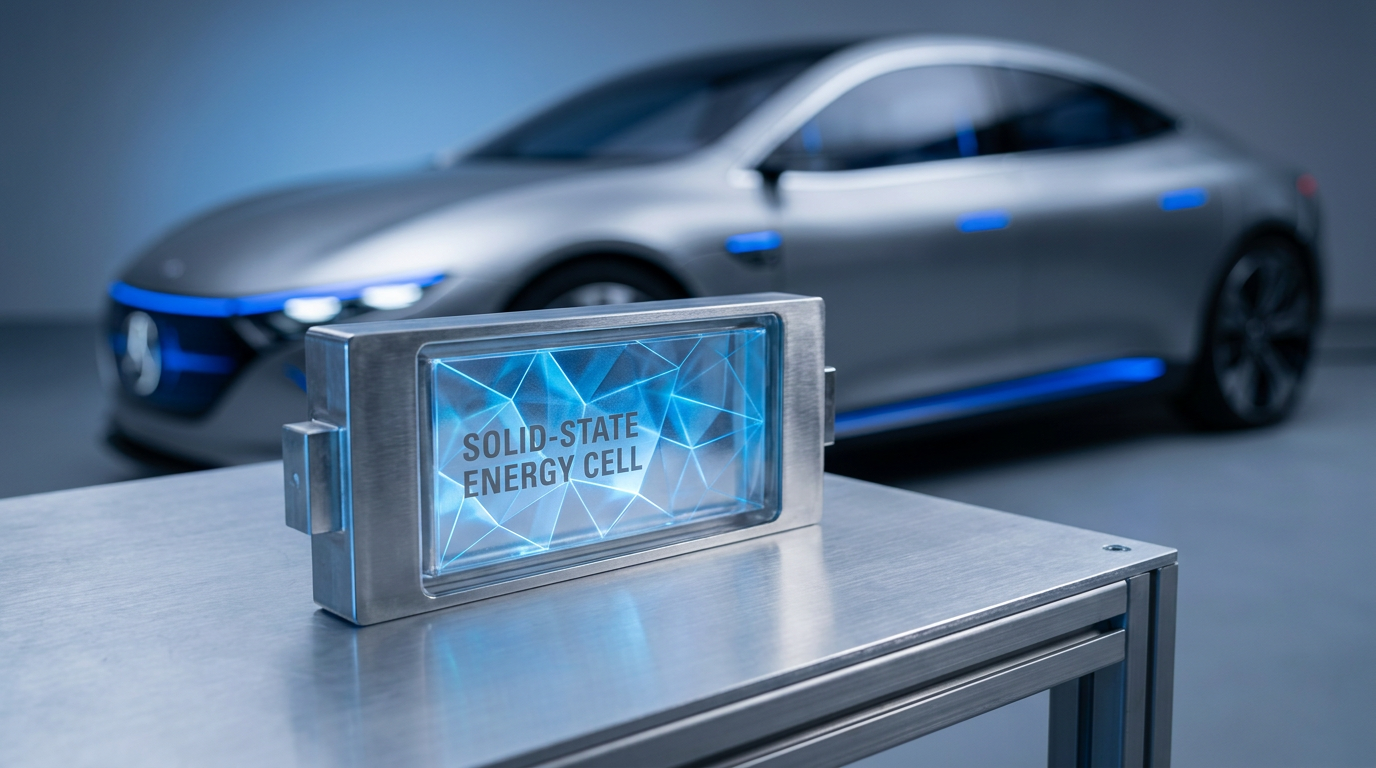
After decades of laboratory research, solid-state batteries are entering commercial mass production in 2026, promising electric vehicles with 600-mile ranges, five-minute charging times, and zero fire risk.
By Factlen Editorial Team
- Automotive Manufacturers
- Focused on leveraging higher energy density to eliminate range anxiety and reduce vehicle weight.
- Materials Scientists
- Focused on the chemical breakthroughs that suppress dendrites and the remaining hurdles of interfacial resistance.
- Market Analysts
- Focused on the economic impact, supply chain shifts, and the projected $10 billion market valuation.
- Safety Regulators
- Focused on the elimination of thermal runaway and the establishment of new testing standards.
What's not represented
- · Fossil fuel industry executives
- · Lithium-ion battery recyclers
Why this matters
Solid-state batteries eliminate the flammable liquid electrolytes that have bottlenecked lithium-ion technology for thirty years. This breakthrough fundamentally rewrites the economics and safety of energy storage, making electric vehicles lighter, vastly safer, and capable of recharging as quickly as a gas car refuels.
Key points
- Solid-state batteries are officially entering commercial mass production in 2026, ending decades of laboratory delays.
- The technology replaces flammable liquid electrolytes with a solid material, eliminating the risk of battery fires and thermal runaway.
- Early commercial units deliver an energy density of 400 Wh/kg, enabling electric vehicles with 600-mile ranges.
- Automakers are demonstrating full-charge times of under ten minutes, matching the convenience of refueling a gas car.
For the better part of a decade, the solid-state battery has been the energy sector’s most tantalizing mirage—a technology perpetually "five years away." Promising to double the range of electric vehicles while eliminating the risk of battery fires, it was widely considered the holy grail of materials science. But in 2026, the mirage has finally materialized into commercial reality. After billions of dollars in research and countless false starts, the first wave of mass-produced solid-state batteries is leaving the laboratory and hitting the streets. This transition marks the most significant leap in energy storage since the commercialization of the lithium-ion cell in 1991, fundamentally rewriting the physical limits of how we power our world.[6][7]
The proof is no longer confined to controlled laboratory demonstrations. In the first quarter of 2026, Verge Motorcycles began delivering the world’s first production vehicles powered entirely by all-solid-state batteries, utilizing cells developed by Donut Lab. These early commercial units boast an energy density of 400 Watt-hours per kilogram (Wh/kg)—a staggering leap over the 200 to 250 Wh/kg typical of top-tier lithium-ion batteries. The results are immediate and visceral: the motorcycles can charge to full capacity in under ten minutes and deliver up to 600 kilometers of range.[2][6]
The automotive sector is moving just as aggressively. Chinese manufacturing giant Dongfeng has officially announced the commencement of mass production for solid-state passenger vehicles in the second half of 2026. By equipping their vehicles with 350 Wh/kg solid-state packs, the automaker expects to deliver a driving range of 1,000 kilometers (roughly 620 miles) on a single charge. This effectively neutralizes "range anxiety," the primary psychological barrier to electric vehicle adoption, allowing drivers to travel from New York to Detroit without a single charging stop.[3][6]
To understand why this breakthrough is so transformative, one must look inside the cell. Traditional lithium-ion batteries rely on a liquid electrolyte—a chemical soup of lithium salts dissolved in an organic solvent—to ferry ions back and forth between the cathode and the anode. While effective, this liquid is highly volatile and flammable. If the battery is punctured, overcharged, or subjected to extreme heat, the liquid can ignite, triggering a catastrophic chain reaction known as thermal runaway.[1][4]

Solid-state batteries, as the name implies, replace this volatile liquid with a solid material—typically a specialized polymer, sulfide, or oxide ceramic. This solid electrolyte performs the same ion-ferrying job but is inherently non-flammable. Testing data reveals that while traditional lithium-ion cells can begin to experience thermal events at temperatures as low as 90°C, solid-state systems remain stable up to 247°C. By eliminating the flammable solvent, engineers have effectively removed the fuel source that causes EV fires, making the vehicles exponentially safer in the event of a high-speed collision.[1][8]
But safety is only half the equation; the solid electrolyte is also the key to unlocking unprecedented energy density. For years, battery chemists have wanted to use pure lithium metal for the battery's anode, as it stores vastly more energy than the graphite anodes used today. However, when paired with liquid electrolytes, lithium metal tends to grow microscopic, needle-like structures called dendrites during charging. These dendrites eventually pierce the battery's internal separator, causing a short circuit and a fire.[4][7]
But safety is only half the equation; the solid electrolyte is also the key to unlocking unprecedented energy density.
The rigid physical structure of a solid electrolyte acts as an impenetrable wall, suppressing dendrite growth and finally allowing lithium metal anodes to be used safely. This is the "golden combination" that researchers have chased for decades: a lithium metal anode paired with a stable solid electrolyte. It is this specific chemical architecture that allows 2026's commercial batteries to pack nearly twice as much energy into the same physical footprint, allowing automakers to either double a vehicle's range or cut the battery weight in half.[4][6]

The charging dynamics are equally revolutionary. Because solid electrolytes are less prone to degradation under high-voltage stress, they can accept massive amounts of electrical current without sustaining damage. Manufacturers are currently demonstrating five-to-ten-minute full charge times—a paradigm shift that aligns the EV charging experience with the time it takes to pump a tank of gasoline. Furthermore, these batteries exhibit minimal capacity fade, with some commercial designs rated for up to 100,000 cycles, far outlasting the usable lifespan of the vehicle itself.[2][8]
The geopolitical race to dominate this new era of energy storage is already reshaping the global supply chain. Recognizing the strategic importance of the technology, China’s Ministry of Industry and Information Technology is set to release the world’s first comprehensive national standards for solid-state battery safety and performance in July 2026. This regulatory framework is designed to cement the country's early lead in manufacturing, providing a standardized baseline for companies like Dongfeng, BYD, and CATL as they scale up their production lines.[3][5]
Western markets are scrambling to keep pace. Market analysts project that the solid-state battery sector will explode into a $10 billion industry by 2036, growing at a compound annual rate of over 50%. European automakers, including Mercedes-Benz—which successfully tested a 1,200-kilometer solid-state prototype in late 2025—are heavily investing in domestic battery startups to secure their own supply chains. The transition is expected to trigger a massive reallocation of capital across the automotive and energy sectors over the next five years.[1][6]

Despite the celebratory milestones of 2026, scaling this technology to replace the billions of lithium-ion cells produced annually remains a monumental engineering challenge. Manufacturing solid-state batteries requires entirely new factory architectures. The materials are highly sensitive to moisture, requiring ultra-dry cleanrooms, and assembling the layers often demands immense mechanical pressure to ensure the solid electrolyte maintains perfect contact with the electrodes—a hurdle known as interfacial resistance.[1][4]
Because of these manufacturing bottlenecks, the rollout will be staggered. The first wave of solid-state batteries is being deployed in premium, high-margin applications where the cost premium is justified: high-end motorcycles, luxury electric vehicles, and specialized industrial equipment. However, as production yields improve and economies of scale take hold, costs are expected to plummet, paving the way for mass-market adoption in standard commuter vehicles by the end of the decade.[1][7]

The implications of this breakthrough extend far beyond the automotive industry. The drastic reduction in battery weight makes electric aviation—previously constrained by the heavy, low-density nature of liquid batteries—commercially viable for short-haul regional flights. Similarly, the enhanced safety profile makes solid-state technology ideal for massive grid-scale energy storage, allowing utility companies to safely store renewable solar and wind energy in dense urban environments without the risk of catastrophic fires.[6][8]
For decades, the transition away from fossil fuels has been hampered by the physical limitations of energy storage. The commercial arrival of the solid-state battery in 2026 shatters those limitations. By delivering a power source that is lighter, safer, and faster to charge, the industry has not just improved the electric vehicle—it has fundamentally obsoleted the internal combustion engine, marking the true beginning of a post-carbon transportation network.[6][7]
How we got here
1991
Sony commercializes the first lithium-ion battery, setting the standard for three decades of portable electronics.
2018–2022
Billions of dollars are poured into solid-state startups, though timelines are repeatedly delayed due to manufacturing hurdles.
Late 2025
Mercedes-Benz and other automakers successfully test solid-state prototypes achieving over 1,200 kilometers on a single charge.
Q1 2026
Verge Motorcycles delivers the first production vehicles powered by Donut Lab's all-solid-state batteries.
July 2026
China's Ministry of Industry and Information Technology releases the world's first national safety standards for solid-state batteries.
H2 2026
Dongfeng and other major automakers begin mass production of solid-state passenger vehicles.
Viewpoints in depth
Automotive Manufacturers
Focused on leveraging higher energy density to eliminate range anxiety and reduce vehicle weight.
For automakers, the solid-state transition is the ultimate competitive differentiator. Companies like Dongfeng and Mercedes-Benz view the 1,000-kilometer range barrier as the final nail in the coffin for internal combustion engines. By offering vehicles that can drive further than a gas car and recharge in five minutes, they believe consumer hesitation will evaporate. Furthermore, the lighter weight of solid-state packs allows for more efficient vehicle designs, reducing wear on tires and suspension systems while improving overall handling.
Materials Scientists
Focused on the chemical breakthroughs that suppress dendrites and the remaining hurdles of interfacial resistance.
While the commercial launches are celebrated, the academic and engineering communities remain focused on the microscopic mechanics of the cells. The primary victory has been the physical suppression of lithium dendrites, which previously made pure lithium metal anodes impossible to use safely. However, scientists caution that manufacturing these cells at a global scale requires overcoming 'interfacial resistance'—ensuring the solid electrolyte maintains perfect, continuous contact with the electrodes as the battery expands and contracts during charging cycles.
Market Analysts
Focused on the economic impact, supply chain shifts, and the projected $10 billion market valuation.
Financial analysts view 2026 as the inflection point where solid-state technology transitions from a venture-capital gamble to a foundational industrial asset. With projections estimating a $10 billion market by 2036, the focus is on supply chain dominance. Analysts note that while early units carry a premium price tag, the higher energy density means fewer raw materials are required per kilowatt-hour. As manufacturing yields improve, the cost per cell is expected to undercut traditional lithium-ion batteries, triggering a massive reallocation of capital.
Safety Regulators
Focused on the elimination of thermal runaway and the establishment of new testing standards.
For government regulators and safety agencies, the elimination of flammable liquid electrolytes solves one of the most persistent public safety concerns of the EV era: uncontrollable battery fires. Because solid-state cells remain stable at temperatures up to 247°C, the risk of thermal runaway during a crash is virtually eliminated. Regulators in China and Europe are now rushing to draft new testing standards that account for this enhanced safety profile, which could eventually lead to relaxed structural requirements for battery enclosures.
What we don't know
- How quickly the manufacturing costs of solid-state cells will reach parity with heavily optimized lithium-ion production lines.
- Whether the global supply of raw lithium can scale fast enough to meet the increased demand generated by pure lithium metal anodes.
- How traditional lithium-ion gigafactories will adapt their existing infrastructure to produce solid-state architectures.
Key terms
- Solid Electrolyte
- A solid material, often a ceramic or polymer, that conducts ions between a battery's anode and cathode, replacing flammable liquids.
- Energy Density
- The amount of energy a battery can store relative to its weight, typically measured in Watt-hours per kilogram (Wh/kg).
- Thermal Runaway
- A dangerous chain reaction in traditional batteries where excess heat causes internal structures to fail, often leading to uncontrollable fires.
- Dendrites
- Microscopic, needle-like metallic structures that can grow inside liquid batteries, eventually causing short circuits.
- Lithium Metal Anode
- A battery component made of pure lithium that drastically increases energy storage but is too unstable to use safely with liquid electrolytes.
Frequently asked
Will solid-state batteries make electric cars cheaper?
Initially, they will be more expensive due to low production volumes. However, their higher energy density means fewer raw materials are needed per vehicle, which is expected to drive costs down over time.
Can I put a solid-state battery in my current EV?
No. The battery management systems, cooling requirements, and physical architectures are entirely different, requiring vehicles designed specifically for the new cells.
Do solid-state batteries degrade over time?
They degrade much slower than lithium-ion batteries. Some early commercial cells boast a design life of up to 100,000 cycles with minimal capacity fade.
Are they completely fireproof?
While not completely immune to extreme external heat, they eliminate the flammable liquid solvent, meaning they do not self-ignite or fuel their own fires during a crash.
Sources
Source coverage
8 outlets
4 viewpoints surfaced








[1]IDTechExMarket Analysts
Solid-State Batteries 2026-2036: Technology, Market, and Forecasts
Read on IDTechEx →[2]Donut LabAutomotive Manufacturers
Donut Lab Introduces World's First Production Solid-State Battery for Verge Motorcycles
Read on Donut Lab →[3]Dongfeng Motor CorporationAutomotive Manufacturers
Dongfeng Announces Mass Production of Solid-State Batteries in H2 2026
Read on Dongfeng Motor Corporation →[4]Nature EnergyMaterials Scientists
Overcoming interfacial resistance in scalable solid-state lithium batteries
Read on Nature Energy →[5]Ministry of Industry and Information Technology (China)Safety Regulators
National Standards for Solid-State Battery Safety and Performance (July 2026)
Read on Ministry of Industry and Information Technology (China) →[6]Factlen Editorial TeamMarket Analysts
Synthesis by Factlen editorial team
Read on Factlen Editorial Team →[7]IEEE SpectrumMaterials Scientists
The Solid-State Battery Finally Leaves the Lab
Read on IEEE Spectrum →[8]Battery Council InternationalMarket Analysts
2026 Industry Outlook: The Transition to Solid Electrolytes
Read on Battery Council International →
Every angle. Every day.
Get science stories with full source coverage and perspective breakdowns delivered to your inbox.