
Why Creatine is Moving From the Weight Room to the Medicine Cabinet
Long known as a staple for athletes, creatine monohydrate is emerging as a potent, low-cost intervention for brain health, memory, and cognitive preservation.
By Factlen Editorial Team
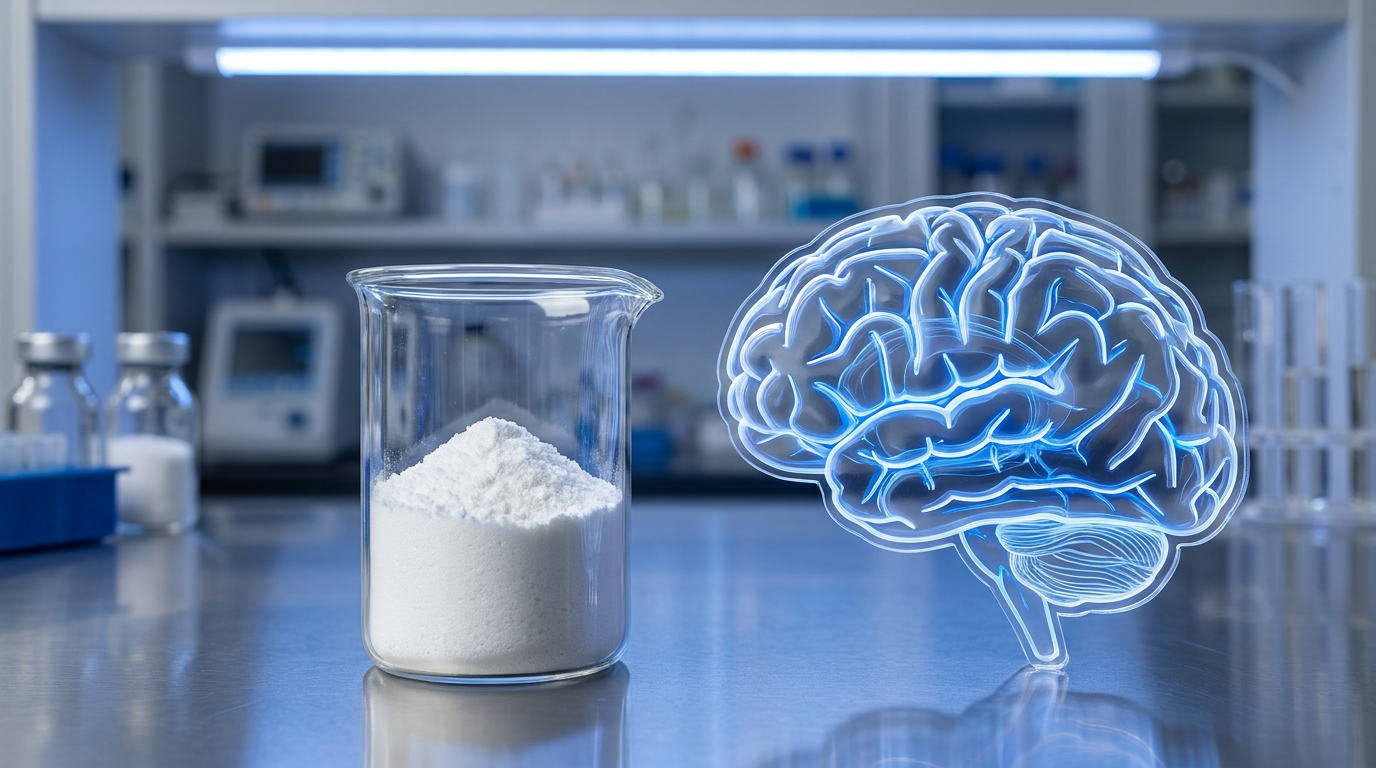
- Neuroscience Researchers
- Focuses on the cellular mechanisms of brain bioenergetics, ATP regeneration, and the challenges of the blood-brain barrier.
- Clinical Neurologists
- Explores the therapeutic applications of creatine for traumatic brain injury, Alzheimer's disease, and clinical depression.
- Longevity & Nutrition Analysts
- Advocates for daily supplementation to bridge dietary gaps and preserve cognitive function during normal aging.
What's not represented
- · Dietary Supplement Regulators
- · Pediatric Neurologists
Why this matters
Cognitive decline and mental fatigue affect millions, yet one of the most effective, evidence-backed tools to protect brain energy is a cheap, widely available supplement previously ignored by the medical mainstream. Understanding how to fuel the brain at a cellular level empowers readers to take immediate control of their cognitive longevity.
Key points
- The brain is a highly energy-demanding organ that relies on the same ATP cellular fuel system as skeletal muscle.
- Creatine acts as a cellular backup generator, rapidly recharging depleted energy stores during times of stress, sleep deprivation, or intense focus.
- Recent clinical trials show creatine supplementation significantly improves memory, processing speed, and executive function, particularly in older adults.
- Vegetarians and vegans often experience the most dramatic cognitive benefits, as their plant-based diets lack natural sources of creatine.
For decades, creatine monohydrate has been relegated to the weight room. Known primarily as a safe, cheap, and highly effective way to build muscle and increase explosive strength, it is a staple in the gym bags of athletes and bodybuilders. But a quiet paradigm shift is underway in the world of neuroscience. Researchers are increasingly looking past the biceps and focusing on the organ that consumes more energy than any other: the human brain.[3]
The brain accounts for just 2% of the body's weight but consumes roughly 20% of its resting energy. Every thought, memory, and emotional regulation requires a massive, uninterrupted supply of cellular fuel. When the brain is stressed—whether by sleep deprivation, aging, or intense mental exertion—its energy reserves can rapidly deplete, leading to brain fog, slowed processing, and cognitive fatigue.[4][6]
This is where creatine enters the picture. At a cellular level, the body runs on a molecule called adenosine triphosphate (ATP). When a cell uses ATP for energy, it loses a phosphate molecule and becomes adenosine diphosphate (ADP), which is essentially a dead battery. Creatine acts as a spatial and temporal energy buffer. Stored in the body as phosphocreatine, it eagerly donates its phosphate group to ADP, instantly recharging it back into usable ATP.[1][3]

While 95% of the body's creatine is stored in skeletal muscle, the remaining 5% is found in the brain, heart, and other organs. Historically, scientists believed the brain synthesized all the creatine it needed on its own. However, advanced neuroimaging has recently proven that oral creatine supplementation can successfully cross the blood-brain barrier, increasing brain phosphocreatine levels by 10% to 15%.[3][5]
The most dramatic evidence of creatine's cognitive power appears when the brain is under acute stress. A landmark study published in Scientific Reports subjected healthy adults to 21 hours of sleep deprivation. One group received a high dose of creatine, while the other received a placebo. Using magnetic resonance spectroscopy, researchers watched the brains of the placebo group suffer significant drops in ATP. The creatine group, however, maintained normal brain energy levels and performed significantly better on complex cognitive tests.[5]
But the benefits extend far beyond pulling an all-nighter. A comprehensive meta-analysis published in Frontiers evaluated thousands of participants and found that routine creatine supplementation significantly improves memory and attention span. The researchers noted that the compound was particularly effective at enhancing information processing speed—the rate at which the brain can take in, make sense of, and respond to new information.[2]

These cognitive enhancements are not distributed equally. Because creatine is naturally found in meat and fish, vegetarians and vegans typically have lower baseline levels of tissue creatine. When plant-based eaters begin supplementing with creatine monohydrate, their cognitive improvements in memory and intelligence tests are often far more pronounced than those of their omnivorous peers.[4][6]
Because creatine is naturally found in meat and fish, vegetarians and vegans typically have lower baseline levels of tissue creatine.
The implications for aging populations are particularly profound. As we age, natural creatine production declines, and the brain's ability to efficiently utilize energy begins to falter—a metabolic slowdown that is a hallmark of mild cognitive impairment and early Alzheimer's disease. A recent systematic review of older adults found that over 80% of clinical trials reported a positive relationship between creatine supplementation and preserved cognitive function, particularly in the domains of memory and executive control.[1]
Beyond memory and processing, neurologists are exploring creatine's role in mental health and neuroprotection. The brain uses an immense amount of energy to recover from trauma, making creatine a promising prophylactic and recovery tool for mild traumatic brain injuries and concussions. By stabilizing cellular energy, creatine helps prevent the cascade of oxidative stress and calcium influx that damages neurons following an impact.[4][6]
In the realm of psychiatry, emerging data suggests that creatine may act as a powerful adjunct therapy for mood disorders. Clinical trials have demonstrated that patients suffering from major depressive disorder who add creatine to their daily regimen—often alongside traditional selective serotonin reuptake inhibitors (SSRIs) or cognitive behavioral therapy—experience faster and more robust reductions in depressive symptoms. Researchers hypothesize this is due to creatine's ability to restore energy balance in the prefrontal cortex and modulate neurotransmitters like dopamine and serotonin.[4][6]

Despite the overwhelming evidence of its benefits, optimizing creatine for the brain presents unique challenges. The blood-brain barrier is highly selective, meaning the brain does not absorb creatine as easily as a bicep does. While a standard dose of 3 to 5 grams per day is sufficient to saturate skeletal muscle over a few weeks, some neuroscientists suspect that higher doses—or longer loading phases—may be required to fully optimize brain bioenergetics.[1][6]
Fortunately, the safety profile of creatine monohydrate is virtually unmatched in the supplement industry. With over thirty years of rigorous sports science research behind it, creatine is universally recognized as safe, well-tolerated, and non-toxic for healthy adults. The most common side effect is mild water retention in muscle tissue, which is generally viewed as a physical benefit rather than a drawback.[3][6]

As the scientific consensus solidifies, creatine is shedding its exclusive association with bodybuilders and elite athletes. For less than thirty cents a day, this simple, tasteless white powder offers a scientifically validated mechanism to protect the brain against the metabolic stress of modern life, sleep deprivation, and the inevitable march of time. It is rapidly becoming a foundational pillar not just for physical fitness, but for lifelong cognitive longevity.[3][4][6]
How we got here
1990s
Creatine monohydrate becomes a mainstream sports supplement widely used for muscle growth and athletic performance.
2000s
Early animal models suggest creatine may have neuroprotective properties against oxidative stress and cellular damage.
2018
Advanced neuroimaging studies confirm that oral creatine supplementation successfully crosses the human blood-brain barrier.
2024–2026
A wave of clinical trials demonstrates creatine's efficacy in mitigating sleep deprivation and slowing cognitive decline in older adults.
Viewpoints in depth
Neuroscience Researchers
Focuses on the cellular mechanisms of brain bioenergetics and ATP regeneration.
For neuroscientists, the excitement around creatine is purely mechanical. The brain is an energy hog, and when neurons fire rapidly during complex tasks or stress, they burn through ATP faster than the mitochondria can replace it. By increasing the brain's pool of phosphocreatine, supplementation provides a localized, rapid-response energy buffer. Researchers are currently focused on mapping exactly how much oral creatine is required to bypass the highly selective blood-brain barrier, as brain tissue appears to require higher or more sustained dosing than skeletal muscle to reach full saturation.
Clinical Neurologists
Explores the therapeutic applications of creatine for neuroprotection and mental health.
Neurologists view creatine as a promising, low-risk intervention for conditions characterized by brain energy deficits. In the context of traumatic brain injury (TBI) and concussions, the brain experiences a massive energy crisis as it attempts to repair cellular damage; creatine helps plug this energetic leak, potentially reducing long-term neuronal loss. Furthermore, clinical psychiatrists are increasingly utilizing creatine as an adjunct therapy for major depressive disorder, noting that stabilizing energy metabolism in the prefrontal cortex often enhances the efficacy of traditional SSRI medications.
Longevity & Nutrition Analysts
Advocates for daily supplementation to bridge dietary gaps and preserve cognitive function.
From a public health and longevity perspective, creatine is viewed as an underutilized tool for healthy aging. Nutritionists point out that modern diets—especially the rising trend of plant-based eating—often leave individuals with suboptimal tissue creatine levels. Because natural endogenous production declines with age, longevity experts argue that a daily 5-gram dose of creatine monohydrate should be viewed less as a sports enhancer and more as a foundational daily vitamin, crucial for staving off mild cognitive impairment and preserving independent executive function in later life.
What we don't know
- The exact optimal dosing protocol specifically for brain health, as the blood-brain barrier makes absorption more difficult than in muscle tissue.
- Whether long-term creatine supplementation can meaningfully alter the trajectory of severe neurodegenerative diseases like late-stage Alzheimer's.
- How genetic differences in natural creatine synthesis affect an individual's cognitive response to supplementation.
Key terms
- Adenosine Triphosphate (ATP)
- The primary energy currency of the cell, required for almost all biological processes, including brain function.
- Phosphocreatine
- A stored form of energy in the body that rapidly donates a phosphate molecule to regenerate depleted ATP during times of high demand.
- Blood-Brain Barrier
- A highly selective membrane that protects the brain from circulating pathogens but also makes it more difficult for certain supplements and drugs to enter brain tissue.
- Executive Function
- A set of higher-level mental skills that include working memory, flexible thinking, and self-control.
- Mild Cognitive Impairment
- An early stage of memory loss or other cognitive ability loss in individuals who maintain the ability to independently perform most activities of daily living.
Frequently asked
Does creatine cause weight gain?
Creatine can cause a slight increase in scale weight due to intracellular water retention in skeletal muscle, but it does not cause fat gain. This water retention is generally considered healthy and hydrating for the muscles.
Do I need to 'load' creatine for brain health?
While a loading phase (20 grams a day for a week) saturates muscles faster, a steady maintenance dose of 3 to 5 grams per day will eventually achieve the same saturation in both muscle and brain tissue over several weeks.
Is creatine safe for older adults?
Yes. Decades of clinical trials have shown that creatine monohydrate is highly safe and well-tolerated in older adults, offering dual benefits for both cognitive preservation and preventing age-related muscle loss (sarcopenia).
What form of creatine is best?
Creatine monohydrate is the most extensively researched, effective, and affordable form. Other variations (like creatine HCl or ethyl ester) have not been shown to be superior in clinical trials.
Sources
Source coverage
6 outlets
3 viewpoints surfaced






[1]National Institutes of HealthNeuroscience Researchers
Creatine and cognition in older adults: a systematic review
Read on National Institutes of Health →[2]FrontiersClinical Neurologists
Effects of creatine supplementation on cognitive function: A meta-analysis
Read on Frontiers →[3]ScienceDailyLongevity & Nutrition Analysts
The Truth About Creatine: Brain and Health Potential
Read on ScienceDaily →[4]MU Health CareClinical Neurologists
6 Facts About Creatine That Everyone Should Know
Read on MU Health Care →[5]Scientific ReportsNeuroscience Researchers
Single dose creatine improves cognitive performance during sleep deprivation
Read on Scientific Reports →[6]Factlen Editorial TeamLongevity & Nutrition Analysts
Synthesis by Factlen editorial team
Read on Factlen Editorial Team →

Every angle. Every day.
Get health stories with full source coverage and perspective breakdowns delivered to your inbox.