
U.S. Nears Emerging Deal With Iran as Regional Tensions and Israeli Opposition Grow
The United States is reportedly closing in on a diplomatic agreement with Iran, sparking broad discontent in Israel and prompting President Trump to warn that ongoing regional strikes could jeopardize the negotiations.
By Factlen Editorial Team
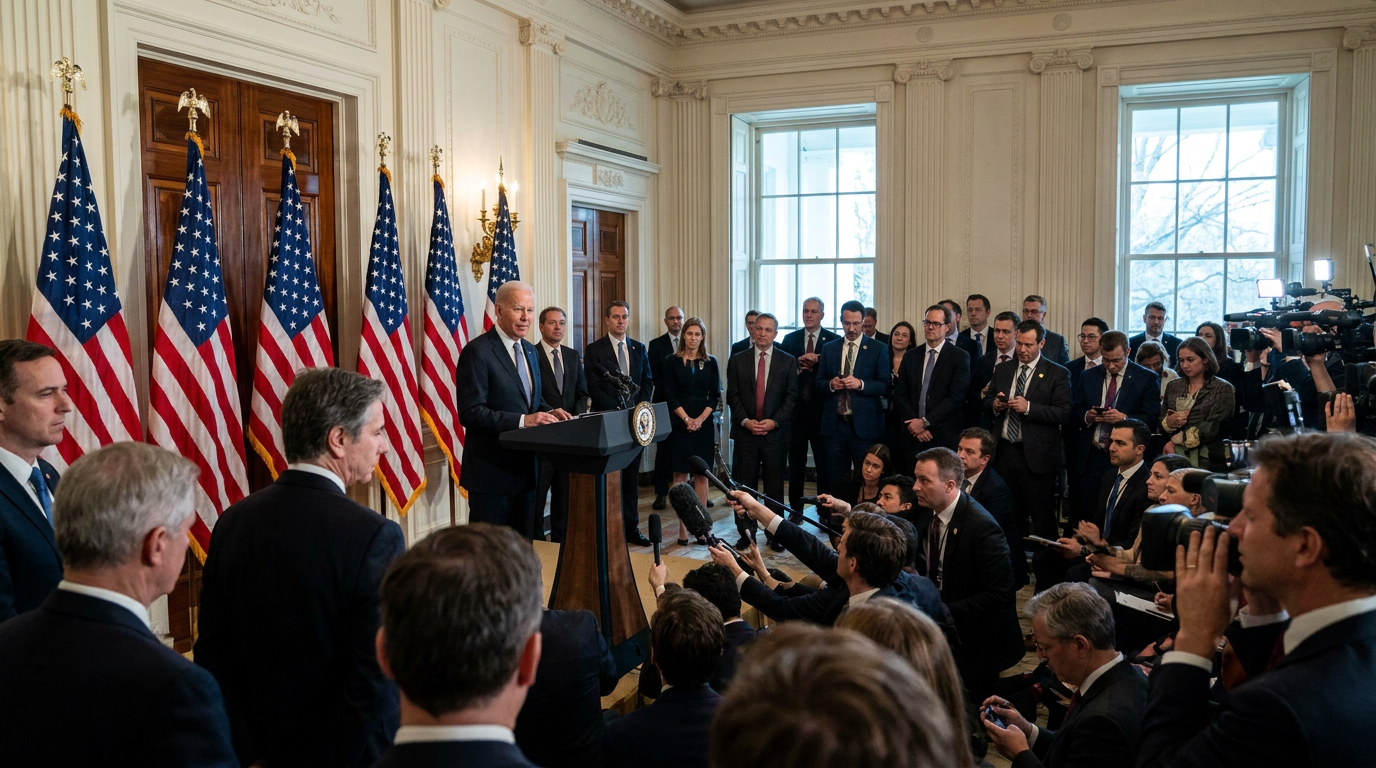
- Israeli Security Concerns
- Warning that the deal ignores conventional threats and rewards regional aggression.
- U.S. Diplomatic Push
- Advocating for a negotiated settlement to cap nuclear risks and stabilize the region.
- Regional Arab & Iranian Observers
- Focusing on the immediate impacts of sanctions relief and the cessation of military strikes.
- International Non-Proliferation Experts
- Emphasizing the necessity of verifiable IAEA inspections and structured frameworks.
What's not represented
- · Iranian civilian population facing severe economic hardship from sanctions.
- · European allies who were part of previous nuclear agreements.
Why this matters
A new U.S.-Iran agreement would reshape Middle Eastern security, potentially unfreezing billions in Iranian assets and altering global oil markets. However, fierce opposition from Israel and ongoing regional military operations threaten to derail the fragile diplomatic progress before a treaty can be signed.
Key points
- The U.S. is reportedly nearing a diplomatic agreement with Iran to address its nuclear program.
- President Trump warned that ongoing Israeli strikes in Beirut could jeopardize the fragile negotiations.
- Israeli officials across the political spectrum have expressed broad discontent with the emerging framework.
- Analysts suggest growing friction between the U.S. administration and Israeli leadership over the deal's terms.
- The diplomatic push coincides with discussions between the U.S. and Russia regarding broader geopolitical stability.
The United States is reportedly on the verge of a major diplomatic breakthrough with Iran, aiming to establish a new framework to contain Tehran's nuclear ambitions. After years of escalating proxy conflicts, stalled negotiations, and mounting regional instability, the current administration is pushing aggressively to finalize an agreement. The stakes for this diplomatic maneuver are immense. A successful deal could de-escalate one of the world's most volatile flashpoints, potentially unfreezing billions of dollars in Iranian assets and fundamentally altering global energy markets by allowing Iranian crude oil to flow more freely.[3][6]
However, the path to a signature is fraught with geopolitical landmines. The most significant hurdle is fierce opposition from Israel, where leaders across the political spectrum view the emerging terms as a dangerous capitulation. The core mechanism of the proposed agreement follows a familiar non-proliferation blueprint: the United States and its allies would offer substantial relief from crippling economic sanctions in exchange for verifiable caps on Iran's uranium enrichment program. This delicate exchange of economic lifelines for nuclear limitations has historically been the only viable diplomatic off-ramp to prevent a full-scale regional war.[1][6]
To ensure compliance, the framework would likely mandate intrusive, ongoing inspections by the International Atomic Energy Agency (IAEA). These inspections aim to extend the "breakout time"—the period required for Iran to produce enough weapons-grade fissile material for a single nuclear bomb. Yet, for the Israeli security establishment, this nuclear-centric focus is precisely the problem. Israeli officials argue that the deal leaves fundamental, immediate security threats entirely unaddressed, effectively granting Tehran a diplomatic shield while it continues to destabilize the broader Middle East.[1][6]

Specifically, critics in Jerusalem point to Iran's advanced ballistic missile program and its extensive financial and military support for proxy militias across Lebanon, Syria, and Gaza. They fear that sanctions relief will simply provide Tehran with a massive influx of cash to fund these regional operations. This diplomatic tension is playing out against a backdrop of active, intensifying warfare. Even as negotiators work toward a framework, Israel has recently expanded its military control in Gaza, Lebanon, and Syria by an estimated 1,000 square kilometers, creating new facts on the ground that complicate any potential peace agreement.[1][5][7]
These ongoing military operations have directly complicated the U.S. diplomatic effort, leading to highly unusual public friction between the two allies. Recent Israeli strikes in Beirut have drawn sharp, public condemnation from the U.S. president, exposing a growing rift between Washington and Jerusalem over the acceptable parameters of regional military action. Taking to Truth Social, President Trump labeled the Israeli attacks on Beirut as "unjustified," explicitly warning that such military actions put the fragile Iran deal at risk just as a regional ceasefire was slated to be extended.[4]
These ongoing military operations have directly complicated the U.S.
This public rebuke highlights a rapidly shifting dynamic in the U.S.-Israel relationship, a partnership that has traditionally been characterized by lockstep coordination. Analysts note that fears are mounting in Jerusalem that Trump is becoming increasingly weary of Prime Minister Benjamin Netanyahu's aggressive military strategies. Some political observers suggest Trump is "highly suspicious" of Netanyahu's underlying motives, raising deep concerns among Israeli conservatives that the U.S. president could "flip" his traditionally staunch support to secure a legacy-defining diplomatic victory with Tehran.[2]

The diplomatic push also involves complex backchannel coordination with other global powers, illustrating how the Iran deal is tied to broader international security architectures. During a recent phone call, Trump reportedly discussed the nearing Iran peace deal with Russian President Vladimir Putin, alongside efforts to end the ongoing war in Ukraine. This involvement of Moscow underscores the interconnected nature of modern statecraft, where the U.S. administration appears to be seeking a grand bargain to stabilize multiple global theaters simultaneously, using leverage in one conflict to extract concessions in another.[3][7]
Ultimately, the success of the emerging deal hinges on whether the United States can balance its overarching desire for nuclear containment with the immediate, existential security anxieties of its closest Middle Eastern ally. If the negotiations collapse under the weight of regional violence or political opposition, the Middle East faces the grim prospect of an unconstrained Iranian nuclear program and the looming, catastrophic threat of direct, state-on-state military confrontation between Israel and Iran.[1][5][6]
The internal politics of Iran also play a critical, though opaque, role in the viability of this emerging framework. While the prospect of sanctions relief is deeply appealing to an Iranian populace suffering from severe economic hardship and hyperinflation, hardline factions within the government remain deeply skeptical of American promises. Memories of the U.S. unilaterally withdrawing from the 2015 Joint Comprehensive Plan of Action (JCPOA) continue to shape Tehran's negotiating posture, leading them to demand robust guarantees that any new agreement will survive future changes in U.S. presidential administrations.[6][7]

As the diplomatic window narrows, the coming weeks will be critical in determining the trajectory of Middle Eastern security for the next decade. Negotiators are racing against the clock to finalize the technical annexes of the agreement before regional hostilities escalate beyond the point of no return. For the international community, the emerging deal represents a fragile glimmer of hope for stabilization; for its critics, it is a dangerous gamble that rewards aggression. The final outcome will inevitably reshape alliances, dictate global energy flows, and redefine the balance of power in the region.[1][3][6]
How we got here
2015
The original Joint Comprehensive Plan of Action (JCPOA) is signed, capping Iran's nuclear program in exchange for sanctions relief.
2018
The U.S. unilaterally withdraws from the JCPOA, reinstating heavy economic sanctions on Tehran.
2020-2025
Iran steadily increases its uranium enrichment levels as regional proxy conflicts escalate.
June 2026
Reports emerge that the U.S. is nearing a new diplomatic agreement with Iran, sparking fierce opposition from Israel.
Viewpoints in depth
The U.S. Administration's View
Seeking a legacy-defining diplomatic breakthrough to stabilize the Middle East.
The current U.S. administration views a comprehensive deal with Iran as a necessary step to prevent a nuclear arms race and de-escalate regional proxy wars. By leveraging economic sanctions and engaging in high-level diplomacy—even involving backchannels with Russia—the administration hopes to secure verifiable caps on Tehran's nuclear ambitions while pivoting American strategic focus elsewhere.
The Israeli Security Establishment
Viewing the deal as a dangerous concession that ignores conventional threats.
Across Israel's political spectrum, the emerging framework is viewed with deep suspicion. Israeli officials argue that focusing solely on nuclear enrichment allows Iran to continue funding and arming proxy groups across Lebanon, Syria, and Gaza. They fear that unfreezing Iranian assets will directly finance military operations against Israel, making the deal a net negative for regional security.
Iranian Leadership
Prioritizing sanctions relief while maintaining regional deterrence.
For Tehran, the primary objective of any negotiation is the removal of crippling economic sanctions that have stifled the Iranian economy for years. However, Iranian negotiators remain wary of U.S. commitments, given the history of previous agreements being dismantled. They seek to balance diplomatic engagement with maintaining their network of regional alliances as a deterrent against direct attacks.
What we don't know
- The exact terms of the emerging deal, including the specific caps on uranium enrichment and the timeline for sanctions relief.
- Whether Israeli leadership will take unilateral military action to disrupt the agreement.
- How Iran's internal political dynamics will influence the final approval of the diplomatic framework.
Key terms
- Uranium Enrichment
- The process of increasing the concentration of the U-235 isotope in uranium, which is necessary for both nuclear power generation and nuclear weapons.
- IAEA
- The International Atomic Energy Agency, the United Nations watchdog responsible for monitoring and verifying nuclear programs worldwide.
- Sanctions Relief
- The lifting or easing of economic penalties, allowing a country to resume international trade and access frozen financial assets.
Frequently asked
Why is Israel opposed to the emerging deal?
Israeli officials argue the deal focuses too narrowly on nuclear enrichment while failing to address Iran's ballistic missile program and its financial support for regional proxy militias.
How is Russia involved in the negotiations?
President Trump reportedly discussed the Iran deal during a phone call with Russian President Vladimir Putin, indicating an effort to align major global powers on regional stabilization.
What happens if the deal falls through?
A collapse in negotiations could lead to further nuclear escalation by Iran and increase the likelihood of direct military confrontation in the Middle East.
Sources
Source coverage
7 outlets
4 viewpoints surfaced






[1]The New York TimesIsraeli Security Concerns
In Israel, Broad Discontent Over the Emerging U.S. Deal With Iran
Read on The New York Times →[2]Fox NewsIsraeli Security Concerns
Israel fears Trump weary of ‘highly suspicious’ Netanyahu and could 'flip' amid Iran deal: analyst
Read on Fox News →[3]The GuardianU.S. Diplomatic Push
Trump reportedly tells Putin he is prepared to help end war in Ukraine
Read on The Guardian →[4]Al JazeeraRegional Arab & Iranian Observers
Trump says Israeli attacks on Beirut unjustified, puts Iran deal at risk
Read on Al Jazeera →Israel expands military control in Gaza, Lebanon and Syria by 1,000sq km
Read on Al Jazeera →[6]Council on Foreign RelationsInternational Non-Proliferation Experts
What Is the Iran Nuclear Deal?
Read on Council on Foreign Relations →[7]WikipediaInternational Non-Proliferation Experts
United States–Iran relations
Read on Wikipedia →

More in news politics
See all 7 stories →Student Debt
Sweeping Federal Student Loan Overhaul Takes Effect July 1, Capping Borrowing and Replacing Repayment Plans
0 sources
Crowdsourced Moderation
The Evidence on Crowdsourced Fact-Checking: High Accuracy, Fatal Delays
0 sources

Munitions Shortage
Hegseth Clashes With CBS Over U.S. Munitions Crisis as Iran War Drains Stockpiles
0 sources
Red Sea Security
Somaliland President Makes Historic Visit to Israel to Open Jerusalem Embassy
0 sources
Every angle. Every day.
Get news politics stories with full source coverage and perspective breakdowns delivered to your inbox.