
Why Longevity Researchers Are Taking Creatine for Brain Health
Once known exclusively as a bodybuilding supplement, creatine is emerging as a powerful, low-cost tool to protect the aging brain and boost cognitive processing.
By Factlen Editorial Team
- Longevity & Aging Researchers
- Viewing creatine as a critical tool for maintaining cellular energy and mitochondrial health as we age.
- Sports & Physical Therapists
- Focusing on the dual benefits of cognitive support and physical independence through muscle preservation.
- Evidence-Based Nutritionists
- Analyzing the clinical data to separate proven cognitive benefits from marketing hype.
What's not represented
- · Vegetarians and Vegans (who naturally have lower baseline creatine levels and often see the most dramatic cognitive benefits)
Why this matters
While creatine has long been dismissed as a niche supplement for bodybuilders, a wave of new research reveals it is one of the safest, most affordable ways to protect the aging brain. Understanding how it buffers cellular energy could help older adults preserve their memory, processing speed, and physical independence.
Key points
- Creatine is no longer just for athletes; it is emerging as a powerful tool for cognitive health and longevity.
- The brain consumes 20% of the body's energy, and creatine helps rapidly regenerate ATP to meet this demand.
- A 2024 meta-analysis found creatine significantly improves memory, attention, and processing speed, especially under stress.
- In older adults, creatine helps combat both cognitive decline and sarcopenia (age-related muscle loss).
- Decades of safety data confirm that 3 to 5 grams daily is safe for healthy individuals, with no risk to kidney function.
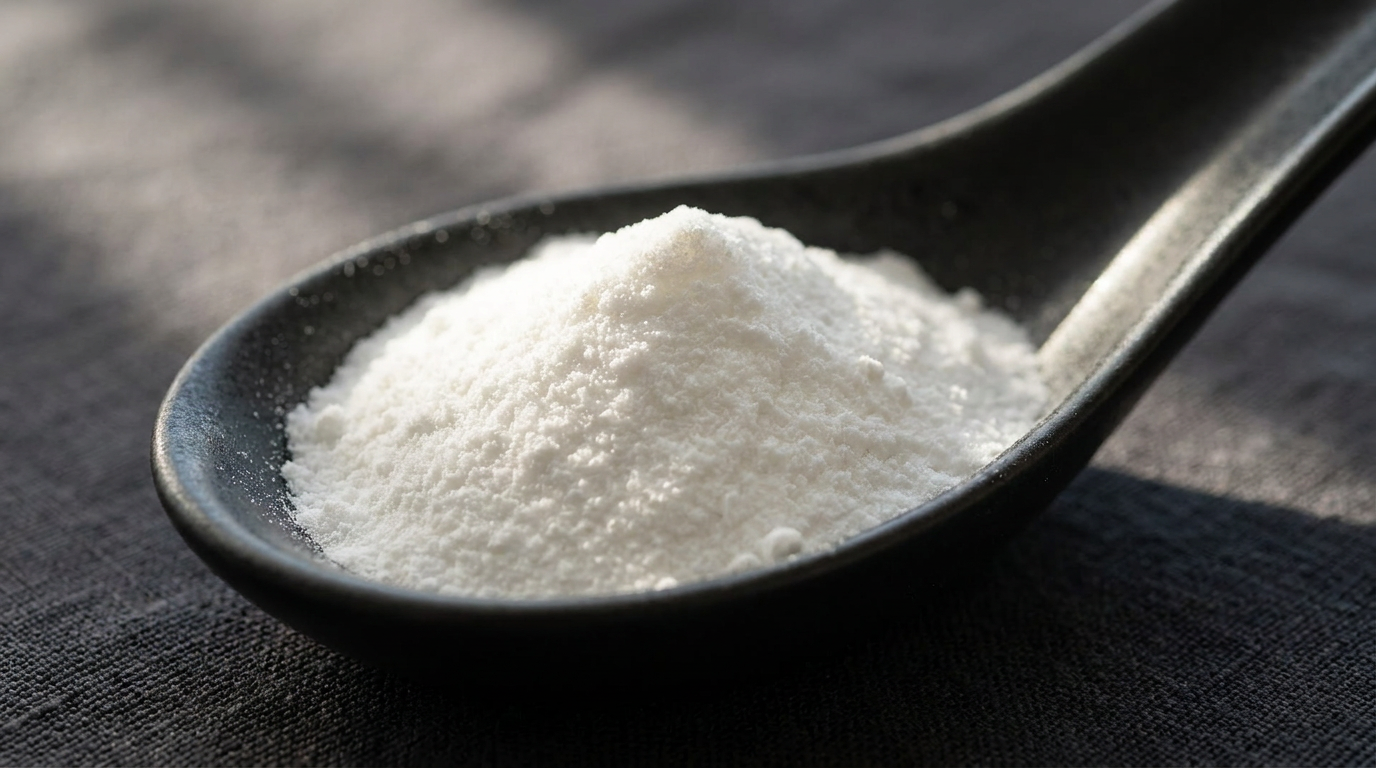
For decades, creatine monohydrate has been synonymous with weightlifting. Walk into any gym, and you will find athletes mixing the white powder into shaker bottles to squeeze out an extra repetition or build muscle mass.[1]
But a quiet shift is underway in the world of longevity and healthy aging. Researchers are increasingly looking past the biceps and focusing on a much more energy-hungry organ: the brain.[6]
Recent clinical trials and systematic reviews suggest that creatine's ability to supply rapid cellular energy extends far beyond skeletal muscle. It is now being actively studied as a neuroprotective agent that could help preserve memory, enhance processing speed, and defend against age-related cognitive decline.[2][3]
To understand why a muscle supplement affects the mind, it helps to look at how the body manages energy. The human brain accounts for only about 2% of total body weight, yet it consumes roughly 20% of the body's energy.[6]

That energy is primarily fueled by adenosine triphosphate (ATP), the microscopic battery that powers cellular function. When a brain cell fires, it burns ATP, converting it into a depleted molecule called ADP.[3]
This is where creatine steps in. Stored in the body as phosphocreatine, it acts as a rapid-response energy reserve. It donates a phosphate group to the depleted ADP, instantly regenerating it back into usable ATP.[3]
While 95% of the body's creatine is stored in muscle tissue, the remaining 5% is found in the brain. Supplementing with creatine allows the compound to cross the blood-brain barrier, effectively topping up the brain's phosphocreatine reserves and providing a buffer against energy depletion.[2][4]
While 95% of the body's creatine is stored in muscle tissue, the remaining 5% is found in the brain.
The cognitive benefits of this energy buffer become most apparent when the brain is under stress. A 2024 systematic review and meta-analysis of 16 randomized controlled trials found that creatine supplementation significantly improved memory, attention time, and information processing speed.[5]

These effects were particularly pronounced in individuals facing cognitive stressors, such as sleep deprivation or mental fatigue. For example, studies have shown that young adults deprived of sleep for 21 hours performed significantly better on memory tests when taking creatine.[1]
But the most profound implications of brain creatine lie in aging. As humans age, the brain becomes less efficient at producing and utilizing energy. Mitochondria—the power plants of the cells—begin to wear down, leading to increased oxidative stress and inflammation.[1]
"Older brains become more energy-starved because they don't produce or use energy as well," notes Dr. Matthew Taylor, an associate professor of dietetics and nutrition. By maintaining cellular energy levels, creatine may help prevent the metabolic changes that precede cognitive decline.[1]
A 2025 systematic review published in Nutrition Reviews examined the effects of creatine on older adults specifically. The researchers found that 83% of the included studies reported a positive relationship between creatine intake and cognition, particularly in the domains of memory and attention.[2]

Beyond the brain, creatine remains one of the most effective interventions for sarcopenia—the age-related loss of muscle mass and strength. When combined with resistance training, it helps older adults maintain the functional strength necessary to prevent falls and retain physical independence.[4]
Safety is another factor driving creatine's mainstream adoption. The Mayo Clinic notes that when taken at recommended doses—typically 3 to 5 grams per day—creatine is likely safe for long-term use. Decades of research have dispelled early myths about kidney damage in healthy individuals.[4]

Despite the promising data, experts caution that creatine is not a cure for dementia or Alzheimer's disease. Its cognitive benefits are generally classified as small to moderate, and some individuals—particularly those who already consume high amounts of meat, which naturally contains creatine—may not notice a dramatic difference.[3][6]
Nevertheless, as the global population ages, the search for accessible, low-risk interventions to extend healthspan has never been more urgent. For a few cents a day, creatine monohydrate is proving that the energy required to lift a heavy weight is the exact same energy required to maintain a sharp mind.[6]
How we got here
1990s
Creatine monohydrate gains massive popularity as a sports nutrition supplement for athletes and bodybuilders.
2003
Early landmark studies demonstrate that creatine supplementation improves working memory and intelligence test scores in vegetarians.
2017
The International Society of Sports Nutrition declares creatine the most effective ergogenic nutritional supplement available.
2024
A major meta-analysis confirms significant positive effects of creatine on memory, attention, and processing speed across multiple trials.
2025
Systematic reviews focus on older adults, finding that 83% of studies show a positive relationship between creatine and cognitive preservation.
Viewpoints in depth
Longevity & Aging Researchers
Viewing creatine as a critical tool for maintaining cellular energy and mitochondrial health as we age.
For researchers focused on extending human healthspan, creatine is less about building muscle and more about preserving the microscopic power plants within our cells. As we age, mitochondria become less efficient, leading to an energy crisis in highly demanding tissues like the brain. By supplementing with creatine, these researchers argue, we can provide an alternative energy buffer that protects neurons from oxidative stress and metabolic decline, potentially delaying the onset of age-related cognitive impairment.
Sports & Physical Therapists
Focusing on the dual benefits of cognitive support and physical independence through muscle preservation.
Physical therapists and geriatric specialists view creatine through a functional lens. While the cognitive benefits are promising, they emphasize that creatine's most proven benefit for older adults is combating sarcopenia—the natural loss of muscle mass. When paired with resistance training, creatine helps older adults maintain the strength required to stand up from a chair, climb stairs, and prevent catastrophic falls. For this camp, the brain benefits are an excellent bonus to the primary goal of physical independence.
Evidence-Based Nutritionists
Analyzing the clinical data to separate proven cognitive benefits from marketing hype.
Nutrition scientists and meta-analysis authors take a measured approach. They point to robust data showing that creatine reliably improves short-term memory and processing speed, particularly when the brain is stressed by fatigue or sleep deprivation. However, they caution that it does not significantly improve global executive function or cure neurodegenerative diseases. This camp advocates for widespread, low-dose daily use (3 to 5 grams) due to its exceptional safety profile, but urges consumers to manage their expectations.
What we don't know
- Whether creatine can actively reverse cognitive decline in patients who have already developed Alzheimer's or dementia.
- The exact long-term neurological effects of taking high doses of creatine (over 10 grams daily) for decades.
- Why some individuals experience significant cognitive benefits from creatine while others are 'non-responders'.
Key terms
- Creatine Monohydrate
- The most thoroughly researched and widely available form of creatine supplement, known for its high absorption rate and safety.
- ATP (Adenosine Triphosphate)
- The primary molecule that stores and transfers energy within cells, often referred to as the cellular 'energy currency'.
- Mitochondria
- The power plants of the cell that generate most of the chemical energy needed to power biochemical reactions.
- Sarcopenia
- The natural, age-related loss of muscle mass, strength, and function that can lead to frailty in older adults.
- Blood-Brain Barrier
- A highly selective semipermeable border that prevents circulating blood toxins from entering the brain, which supplemental creatine is able to cross.
Frequently asked
How much creatine should I take for brain health?
Most clinical studies and experts recommend a standard maintenance dose of 3 to 5 grams of creatine monohydrate per day. There is generally no need for a 'loading phase' when taking it for long-term cognitive and aging benefits.
Does creatine cause kidney damage?
No. Decades of research have shown that creatine is safe for the kidneys in healthy individuals when taken at recommended doses. However, those with pre-existing kidney disease should consult a doctor before starting.
Will creatine make me gain weight?
Creatine can cause a slight increase in water retention within the muscles, which may lead to a minor weight increase of 1 to 3 pounds initially. This is intracellular water (inside the muscle), not fat.
Do I need to work out for creatine to help my brain?
No. While resistance training is required to get the maximum muscle-building benefits of creatine, the cognitive and neuroprotective benefits occur independently of physical exercise.
Sources
Source coverage
6 outlets
3 viewpoints surfaced






[1]TIMELongevity & Aging Researchers
Supplementing to protect the aging brain
Read on TIME →[2]Nutrition ReviewsLongevity & Aging Researchers
Creatine and cognition in older adults: a systematic review
Read on Nutrition Reviews →[3]ExamineEvidence-Based Nutritionists
Creatine for the brain: Exploring the cognitive benefits of creatine supplementation
Read on Examine →[4]Mayo ClinicSports & Physical Therapists
Creatine: Safety, Side Effects, and Benefits
Read on Mayo Clinic →[5]Frontiers in NutritionEvidence-Based Nutritionists
Effects of creatine supplementation on cognitive function: A systematic review and meta-analysis
Read on Frontiers in Nutrition →[6]Factlen Editorial TeamLongevity & Aging Researchers
Synthesis by Factlen editorial team
Read on Factlen Editorial Team →

More in health
See all 8 stories →Nutritional Psychiatry
The Evidence for Nutritional Psychiatry: How Food is Becoming a Mainstream Mental Health Intervention
0 sources

Sleep Science
The Brain's Nightly Wash Cycle: How Deep Sleep Clears Cellular Waste
0 sources
Bilingual Brain
How the Bilingual Brain Uses a Single 'Grammar Engine' for Multiple Languages
0 sources

Nutritional Psychiatry
The Emerging Science of Nutritional Psychiatry: How the Gut Microbiome Shapes Mental Health
0 sources

Every angle. Every day.
Get health stories with full source coverage and perspective breakdowns delivered to your inbox.