
Supreme Court Declines California Parental Notification Case, Leaving Schools in Legal Limbo
The U.S. Supreme Court has turned away an appeal from a California school district seeking to enforce a mandatory parental notification policy for transgender students, deepening the legal uncertainty surrounding Title IX and student privacy.
By Factlen Editorial Team
- Parental Rights Advocates
- Argue that parents have a fundamental constitutional right to direct their children's upbringing and must be informed of significant identity transitions.
- Student Privacy Advocates
- Argue that mandatory notification policies violate student privacy and can place vulnerable youth at risk of domestic abuse or homelessness.
- School Administrators
- Caught between conflicting state laws and federal constitutional claims, seeking clear legal guidelines to avoid liability.
What's not represented
- · Transgender Students
- · Mental Health Professionals
Why this matters
For parents, educators, and students, the Supreme Court's fractured approach to gender identity policies means the rules change drastically depending on the state or even the school district. Without a definitive federal ruling, schools face the dual threat of lawsuits from parents demanding information and state regulators enforcing privacy laws.
Key points
- The Supreme Court declined to hear an appeal from California's Rocklin Unified School District regarding its mandatory parental notification policy.
- The refusal leaves in place a state ruling that struck down the district's requirement to notify parents within three days of a student's gender transition.
- The decision contrasts with a March 2026 emergency ruling where the Court blocked California from preventing schools from notifying parents.
- The fractured rulings leave school districts nationwide navigating a complex legal gray area between state privacy laws and federal constitutional claims.
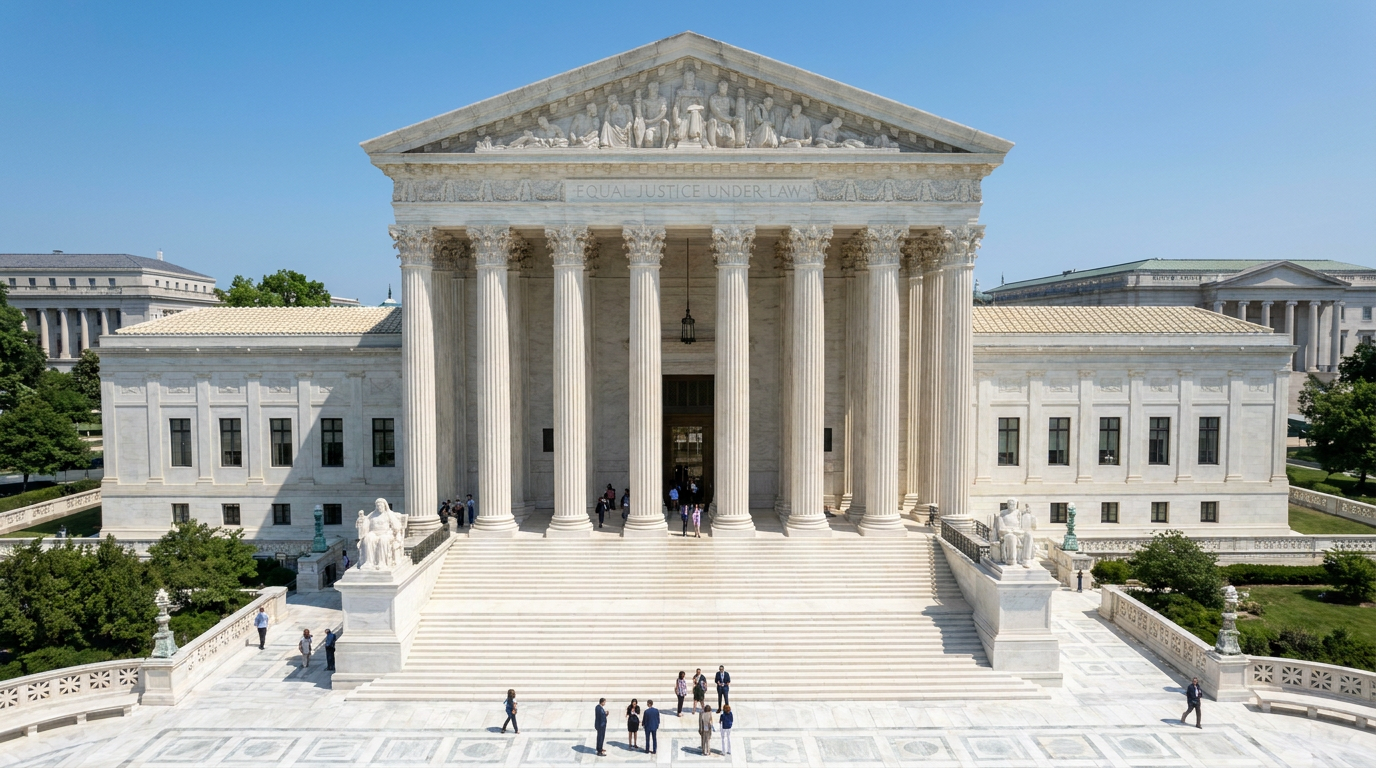
The U.S. Supreme Court has rejected an appeal from California's Rocklin Unified School District, declining to hear a case that would have settled whether public schools can mandate that teachers notify parents if a student changes their gender identity. The decision to turn away the case on Monday leaves in place a state-level ruling that struck down the district's mandatory notification policy. Rocklin Unified had implemented a rule requiring educators to inform parents within three days if a student requested to use different pronouns or identified as transgender. However, the California Public Employment Relations Board invalidated the policy in 2025, a decision the high court has now allowed to stand.[1][7]
The refusal to hear the Rocklin case creates a complex and contradictory legal landscape when contrasted with the Court's actions just months prior. In March 2026, the Supreme Court utilized its emergency "shadow docket" to reinstate an injunction in a separate case, Mirabelli v. Bonta. That 6-3 unsigned opinion blocked California from enforcing state policies that actively prevented schools from disclosing children's gender transitions to parents. In that ruling, the conservative majority signaled that state policies concealing such information likely violate parents' Fourteenth Amendment rights to direct their children's upbringing, as well as First Amendment religious freedoms.[2][3]
By blocking the state from silencing teachers in March, but refusing to protect a district's mandatory reporting policy in June, the Supreme Court has left public education in a state of profound legal limbo. The Court appears willing to protect educators and parents from state-mandated secrecy, but it has stopped short of establishing a proactive federal right for school districts to force teachers to report gender transitions against state labor and privacy laws. This fractured approach means that the legal rights of parents and students currently depend heavily on local geography and the specific wording of district policies.[1][3][7]

At the center of the California dispute is AB 1955, a state law signed by Governor Gavin Newsom in 2024. The legislation explicitly prohibits "forced outing" policies in school districts, arguing that such mandates can endanger LGBTQ+ students who may face abusive or unsupportive environments at home. Supporters of the law, including civil rights organizations and teachers' unions, argue that mandatory reporting forces educators to violate student trust and state privacy protections. They maintain that schools should be safe havens where students can explore their identities without fear of immediate domestic repercussions.[1][5]
At the center of the California dispute is AB 1955, a state law signed by Governor Gavin Newsom in 2024.
Conversely, parental rights advocates argue that schools overstep their constitutional boundaries when they withhold critical mental health and identity information from families. They frame the issue as a fundamental parental right, arguing that the state cannot substitute its judgment for that of a parent. The plaintiffs in the Mirabelli case, which included both parents and teachers, successfully argued that policies requiring educators to use a student's preferred pronouns at school while using their birth name with parents amounted to forced deception, violating their religious beliefs and parental authority.[2][3]
The notification debate is just one front in a broader, escalating legal war over Title IX and school discrimination policies. The Supreme Court recently granted certiorari in Joseph v. Board of Regents, a high-stakes case arising from the Eleventh Circuit that will determine whether school employees facing sex discrimination can sue under Title IX or must rely solely on Title VII of the Civil Rights Act. That case, scheduled for the October 2026 term, highlights the Court's increasing willingness to wade into the mechanics of how federal civil rights laws apply within educational institutions.[4][6]

For teachers and school administrators, this patchwork of rulings creates an operational minefield. Educators in some jurisdictions face disciplinary action from state boards if they notify parents, while simultaneously facing the threat of federal civil rights lawsuits from parents if they do not. The Rocklin Teachers Professional Association originally challenged their district's notification policy precisely because it placed educators in the crosshairs of conflicting legal and ethical obligations.[1][7]
The lack of a definitive, merits-based ruling from the Supreme Court ensures that the battle over student privacy and parental rights will continue to rage in lower courts. While the justices have avoided issuing a sweeping national standard this term, the sheer volume of litigation working its way through federal appellate courts guarantees the issue will return. Legal analysts note that the Court's shadow docket opinions often serve as previews for future merits decisions, suggesting the conservative majority remains deeply skeptical of state policies that exclude parents from educational and developmental decisions.[1][2][7]

Until the Supreme Court issues a comprehensive ruling, school districts across the country are left to navigate a fractured legal environment. Administrators must balance local community demands, state privacy laws like California's AB 1955, and the looming threat of federal constitutional claims. As the 2026-2027 academic year approaches, the only certainty for public schools is that the legal boundaries defining the relationship between parents, students, and educators remain fundamentally unresolved.[1][5][7]
How we got here
2024
California Governor Gavin Newsom signs AB 1955, prohibiting school districts from enacting forced parental notification policies.
2025
The California Public Employment Relations Board strikes down Rocklin Unified's mandatory 3-day parental notification policy.
March 2026
The Supreme Court issues an emergency ruling in Mirabelli v. Bonta, blocking California from preventing schools from notifying parents.
June 2026
The Supreme Court declines to hear Rocklin Unified's appeal, leaving the district's mandatory notification policy blocked.
Viewpoints in depth
Parental Rights Advocates
Parents must be informed of significant identity transitions to direct their children's upbringing.
This camp argues that schools overstep their constitutional boundaries when they withhold critical mental health and identity information from families. Citing the Fourteenth Amendment right to direct a child's upbringing and First Amendment religious freedoms, they maintain that the state cannot substitute its judgment for that of a parent. In cases like Mirabelli, advocates successfully argued that policies requiring educators to use a student's preferred pronouns at school while using their birth name with parents amounted to forced deception, fundamentally violating parental authority.
Student Privacy Advocates
Mandatory notification policies endanger vulnerable youth and violate state privacy protections.
Civil rights organizations and LGBTQ+ advocates argue that 'forced outing' policies place vulnerable students at severe risk of domestic abuse, family rejection, or homelessness. They point to state laws like California's AB 1955 as necessary protections that ensure schools remain safe havens where students can explore their identities without fear of immediate repercussions. From this perspective, mandatory reporting forces educators to violate student trust and acts as an unwarranted state intrusion into the personal lives of minors.
Educators and Administrators
Schools are trapped in a legal minefield between conflicting state and federal mandates.
For teachers and school boards, the primary concern is the lack of clear, uniform legal guidance. Administrators find themselves caught between state regulators enforcing privacy laws and parents threatening federal civil rights lawsuits. Teachers' unions, such as the Rocklin Teachers Professional Association, have actively challenged mandatory notification policies because they place educators in the crosshairs of conflicting ethical and legal obligations, forcing them to choose between facing disciplinary action or violating a student's trust.
What we don't know
- Whether the Supreme Court will eventually issue a definitive, merits-based ruling establishing a national standard for parental notification.
- How lower federal courts will interpret the contradiction between the Court's shadow docket actions and its refusal to hear the Rocklin appeal.
- How the pending Title IX case, Joseph v. Board of Regents, will further impact civil rights enforcement in federally funded schools.
Key terms
- Title IX
- A federal civil rights law that prohibits sex-based discrimination in any school or education program that receives federal funding.
- Shadow Docket
- The Supreme Court's use of emergency orders and summary decisions to resolve cases quickly, without full briefing or oral arguments.
- Certiorari
- A formal request for the Supreme Court to review the decision of a lower court, which the Court grants at its discretion.
Frequently asked
What did the Supreme Court decide in the Rocklin case?
The Court declined to hear the appeal, which leaves in place a lower state ruling that struck down the district's mandatory parental notification policy.
Does this mean schools are forbidden from notifying parents?
Not necessarily. A separate March 2026 Supreme Court emergency ruling blocked California from enforcing policies that actively prevent schools from notifying parents, creating a complex legal gray area.
What is California AB 1955?
It is a state law signed in 2024 that explicitly prohibits school districts from enacting 'forced outing' policies that require staff to disclose a student's gender identity to parents.
Sources
Source coverage
7 outlets
3 viewpoints surfaced







[1]K-12 DiveSchool Administrators
Supreme Court turns away another parental notification case
Read on K-12 Dive →[2]Education WeekSchool Administrators
Supreme Court's Gender Identity Ruling Leaves Schools Seeking Clarity
Read on Education Week →[3]Massachusetts Lawyers WeeklyParental Rights Advocates
Supreme Court backs parents in school gender policy case
Read on Massachusetts Lawyers Weekly →[4]Legis1School Administrators
Supreme Court Case Could Reshape School Discrimination
Read on Legis1 →[5]California Legislative InformationStudent Privacy Advocates
AB-1955 Support Academic Futures and Educators for Today's Youth Act
Read on California Legislative Information →[6]Supreme Court of the United States
Supreme Court Official Docket
Read on Supreme Court of the United States →[7]Factlen Editorial Team
Synthesis by Factlen editorial team
Read on Factlen Editorial Team →
More in news politics
See all 6 stories →US-Iran Relations
US-Iran Peace Deal Thrown Into Chaos After Israeli Strike on Beirut
0 sources

Middle East Peace
Trump Condemns Israeli Strike on Beirut as U.S.-Iran Peace Deal Hangs in the Balance
0 sources

Universal Meals
Fact-Checking the Impact of Universal Free School Meals: The 2026 Evidence Pack
0 sources

Deepfake Detection
How Open-Source AI Fact-Checking Tools Are Catching Deepfakes in 2026
0 sources

Every angle. Every day.
Get news politics stories with full source coverage and perspective breakdowns delivered to your inbox.