
How Japan is Using 'Hands-Free Tourism' to Solve its Overtourism Crisis
Faced with record-breaking visitor numbers, Japanese cities are deploying smart lockers, luggage couriers, and dedicated buses to clear crowded transit networks of heavy suitcases.
By Factlen Editorial Team
- Sustainable Tourism Advocates
- Focuses on preserving local quality of life, reducing congestion, and spreading economic benefits to smaller neighborhoods.
- Transit & Logistics Operators
- Prioritizes the efficiency of public transportation, the deployment of smart infrastructure, and keeping trains clear of bulky luggage.
What's not represented
- · Local delivery drivers managing the surge in luggage forwarding
- · Budget travelers navigating the increased costs of luggage transport and taxes
Why this matters
As global travel rebounds to record highs, Japan's approach to managing tourist logistics offers a blueprint for other crowded destinations. By shifting the physical burden of luggage off public transit, the initiative aims to preserve the quality of daily life for locals while making travel significantly smoother for visitors.
Key points
- Japan is rapidly expanding 'Hands-Free Tourism' to combat transit congestion caused by record visitor numbers.
- Tourists are encouraged to use courier services and smart lockers to forward luggage directly to hotels.
- Kyoto has launched a dedicated luggage bus to keep large suitcases off local commuter routes.
- The Shinkansen bullet train network now requires mandatory advance reservations for oversized luggage.
- Kyoto will implement a tiered tourist accommodation tax in 2026, reaching ¥10,000 per night for luxury stays.
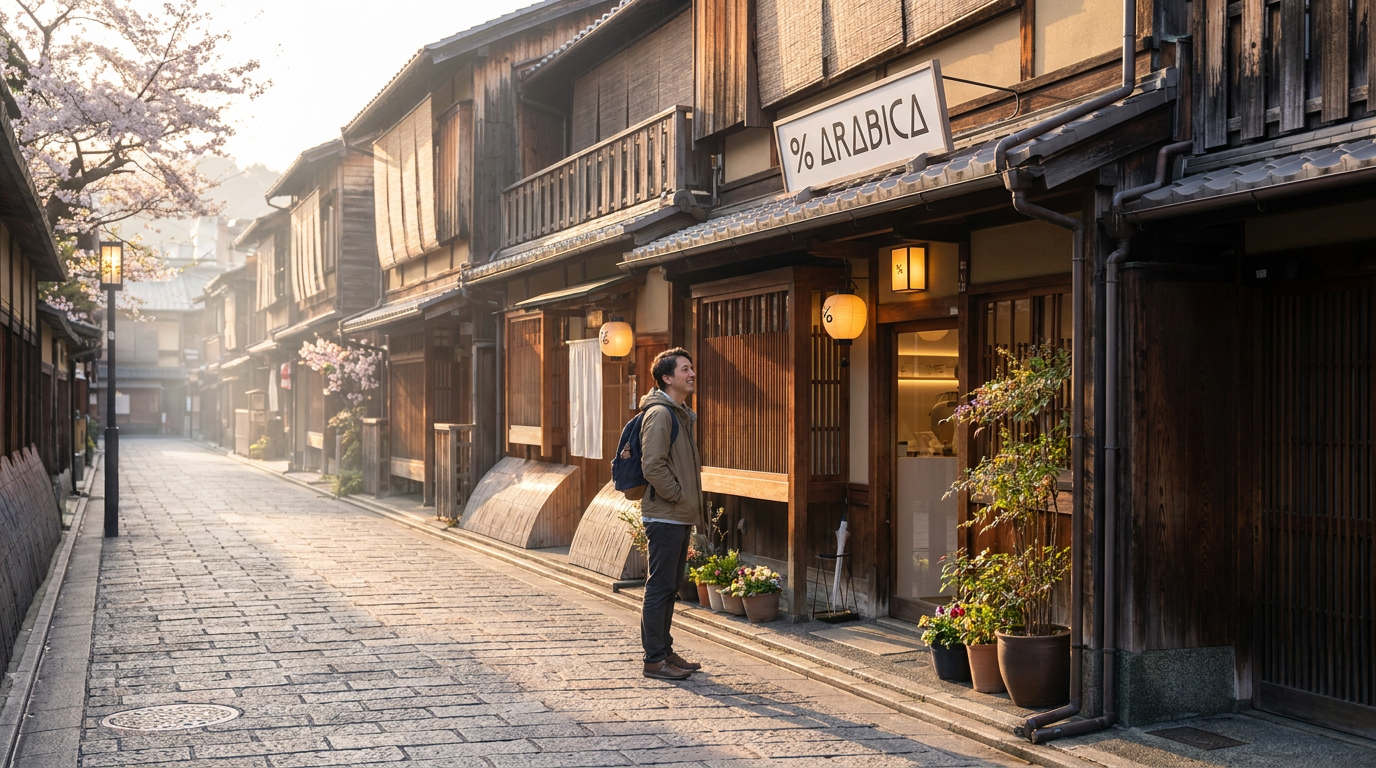
The clatter of rolling suitcases on cobblestone streets has become the universal soundtrack of modern travel. But in Japan's most historic cities, that sound is increasingly viewed as a symptom of overtourism. As the country welcomes record-breaking numbers of international visitors, the physical footprint of their luggage is straining the delicate balance between a booming tourism economy and the daily lives of local residents.[8]
In 2024, Kyoto alone saw 10.88 million foreign visitors navigate its narrow alleys and ancient temple districts. Nationwide, Japan is hurtling toward a projected 45 million annual arrivals. While the economic influx is welcome, the infrastructural reality is stark: Japan's world-class public transit systems were meticulously designed for high-density commuter efficiency, not for millions of travelers hauling 50-liter suitcases.[2][4]
The friction is most visible on local transit. In Kyoto, residents have frequently found themselves unable to board their regular city buses because the aisles are choked with tourist luggage. This phenomenon, often compared to the "Venice effect," breeds resentment, leaving locals feeling marginalized in their own neighborhoods and sparking urgent conversations about sustainable travel management.[1][2]
In response, Japan is rapidly scaling a concept known as "Hands-Free Tourism" (Tebura Kanko). The premise is simple but transformative: separate the traveler from their heavy bags as early as possible. By utilizing a vast network of courier services, smart lockers, and dedicated transport, the initiative aims to clear the aisles of trains and buses, allowing tourists to navigate the country with nothing more than a daypack.[3][5]

The mechanics of this system rely heavily on Japan's legendary logistics networks, such as Yamato Transport and Sagawa Express. Travelers can drop their bags at airport counters upon arrival and have them forwarded directly to their hotels. When moving between cities—say, from Tokyo to Kyoto—tourists are encouraged to ship their luggage ahead of time, ensuring they travel on the Shinkansen completely unburdened.[5]
Technology is accelerating this shift. In the Tokyo metropolitan area, companies like Seibu Holdings have introduced "Pikuraku PORTER," a network of app-controlled smart lockers. Travelers can deposit their suitcases into these lockers at major train stations in the morning, and the system automatically dispatches the bags to their designated hotel by the afternoon.[5]
Kyoto has taken even more direct action to protect its local transit. To keep suitcases off municipal routes, the city introduced a dedicated "Hands Free Bus." For a flat fee of ¥500, this specialized shuttle transports tourists and their large luggage directly from Kyoto Station to major hotel districts, bypassing the commuter network entirely.[1]
Kyoto has taken even more direct action to protect its local transit.
Beyond convenience, there is a strong economic incentive for local businesses to support empty-handed travel. The "Machi Hop Project" in Tokyo's Taito Ward operates on the theory that unburdened tourists are more adventurous. Without a heavy suitcase to drag around, visitors are far more likely to explore off-the-beaten-path neighborhoods, pop into small shrines, and dine at narrow back-alley izakayas, spreading their spending beyond the immediate vicinity of major train stations.[3]
To support this, over 2,500 locations nationwide—ranging from cafes to hair salons—have signed up to act as temporary luggage storage hubs. In Ueno, a major transit hub connecting Tokyo to Narita Airport, dedicated luggage facilities process hundreds of suitcases within hours of opening, allowing travelers to maximize their final day of sightseeing without dragging their bags through crowded markets.[3]
The push for hands-free travel is also reaching rural areas. At JR Okayama Station, the "Nekonote Station" (Cat's Paw Station) allows travelers to drop their bags by early afternoon for same-day delivery to traditional ryokans in Okayama and Kurashiki. This seamless logistics network is designed to encourage tourists to venture beyond the heavily trodden "Golden Route" of Tokyo, Kyoto, and Osaka.[6]
While the government is offering carrots, it is also deploying sticks. Japan Railways (JR) has implemented strict rules regarding oversized luggage on the Shinkansen bullet trains. Travelers carrying large suitcases must now reserve specific seats with designated luggage space in advance. Those who board with oversized bags without a reservation face a ¥1,000 penalty and are required to move their luggage to a crew-specified location.[7]
Kyoto is also addressing the broader costs of overtourism through taxation. Starting in March 2026, the city is implementing a significant hike to its accommodation tax. While budget stays will see only a modest fee, the tax on luxury accommodations will rise to as much as ¥10,000 per person per night.[4]

This revenue is explicitly earmarked for cultural restoration, waste mitigation, and further expansions of the city's transit infrastructure. Officials view the tax not as a deterrent, but as a necessary mechanism to ensure that the millions of visitors who enjoy Kyoto's heritage contribute directly to its preservation and the well-being of its residents.[4]
Despite the momentum, the hands-free initiative faces logistical hurdles. Japan is currently grappling with a severe labor shortage, particularly in the commercial transport and delivery sectors. Scaling same-day luggage delivery to meet the demands of 45 million annual tourists will require significant automation and efficiency improvements to prevent the system from buckling under the volume.[1][8]
There are also friction points for international visitors. While major hubs offer multilingual support and seamless digital payments, many localized luggage storage options still rely on cash-only transactions or lack English instructions, creating barriers to widespread adoption.[2]

Ultimately, Japan's push for empty-handed travel represents a profound cultural request to its visitors. It asks tourists to view traveling light not merely as a personal convenience, but as an act of respect and stewardship toward the host community.[4][8]
As global destinations from Venice to Barcelona struggle to manage the weight of their own popularity, Japan's logistical interventions offer a compelling blueprint. By systematically removing the physical friction of travel, the country is proving that sustainable tourism requires more than just managing the number of people—it requires managing how they move.[8]
How we got here
2020
Japan introduces mandatory reservations for oversized luggage on the Tokaido, Sanyo, and Kyushu Shinkansen lines.
2024
Kyoto launches the 'Hands Free Bus' to divert tourists with large suitcases away from crowded local city buses.
Late 2024
Seibu Holdings rolls out 'Pikuraku PORTER' smart lockers in Tokyo for seamless same-day luggage delivery.
March 2026
Kyoto implements a significant hike to its tourist accommodation tax, reaching up to ¥10,000 per night for luxury stays.
Viewpoints in depth
Sustainable Tourism Advocates
Viewing luggage-free travel as a vital tool for community harmony.
For urban planners and cultural preservationists, the clatter of suitcases is more than a nuisance—it is a symbol of the 'Venice effect,' where local residents feel marginalized by the sheer physical footprint of visitors. By removing heavy luggage from the equation, advocates argue that tourists become less disruptive to daily commuter life. Furthermore, unburdened travelers are more likely to wander into off-the-beaten-path neighborhoods, distributing their economic impact to smaller businesses rather than confining their spending to major transit corridors.
Transit & Logistics Operators
Focusing on the operational efficiency of Japan's rail and bus networks.
Railway and bus operators view 'Hands-Free Tourism' as an infrastructural necessity. Japan's public transit systems were optimized for high-density, rapid commuter movement, not for navigating 50-liter suitcases. Operators emphasize that mandatory reservations for oversized luggage on the Shinkansen and dedicated luggage shuttles in Kyoto are essential to maintaining on-time performance. However, logistics companies note that scaling these delivery services presents a challenge amid Japan's ongoing shortage of commercial drivers, requiring increased reliance on automated smart lockers and localized storage hubs.
What we don't know
- Whether Japan's logistics networks, currently facing a severe labor shortage, can handle the surging volume of same-day luggage deliveries.
- How effectively smaller, cash-only luggage storage hubs will adapt to serve non-Japanese-speaking tourists.
Key terms
- Hands-Free Tourism (Tebura Kanko)
- A travel movement in Japan promoting the use of delivery services and smart lockers so tourists can explore without carrying heavy bags.
- Overtourism
- A phenomenon where the volume of visitors to a destination degrades the quality of life for local residents and strains public infrastructure.
- Smart Lockers
- App-controlled storage units at train stations that not only hold luggage but can facilitate same-day delivery to a traveler's hotel.
- Machiya
- Traditional wooden townhouses found throughout Japan, particularly in Kyoto, which line the narrow streets that are easily congested by tourist luggage.
Frequently asked
What is 'Hands-Free Tourism' in Japan?
It is a nationwide initiative encouraging tourists to use courier services, smart lockers, and dedicated shuttles to transport their heavy luggage directly to hotels, keeping bags off public transit.
Do I need a reservation for luggage on the Shinkansen?
Yes. Travelers with oversized luggage must reserve a specific seat with luggage space in advance. Failing to do so results in a ¥1,000 penalty and forced relocation of the bags.
How much is the Kyoto tourist tax?
Starting in 2026, Kyoto's tiered accommodation tax will range from ¥200 for budget stays up to ¥10,000 per person per night for luxury accommodations.
Can I take my suitcase on a Kyoto city bus?
Kyoto strongly discourages large luggage on local city buses to prevent crowding. The city has introduced a dedicated 'Hands Free Bus' specifically to transport tourists and their bags from the station to major hotels.
Sources
Source coverage
8 outlets
2 viewpoints surfaced








[1]Travel VoiceTransit & Logistics Operators
Kyoto City promotes 'hands free tourism' to avoid over-tourism
Read on Travel Voice →[2]Eurasia ReviewSustainable Tourism Advocates
Japan's Strategy to Mitigate Overtourism
Read on Eurasia Review →[3]Asia News NetworkTransit & Logistics Operators
‘Hands-free’ sightseeing gains popularity in Japan as foreign visitors surge
Read on Asia News Network →[4]MediumSustainable Tourism Advocates
Kyoto Tourist Tax 2025: A Mindful Response to Overtourism
Read on Medium →[5]KanadayTransit & Logistics Operators
The Importance of Hand-Free-Luggage Travel in Japan
Read on Kanaday →[6]MatchaTransit & Logistics Operators
Nekonote Station: Hands-Free Tourism Service
Read on Matcha →[7]SailyTransit & Logistics Operators
Essential Japan Travel Tips for 2026
Read on Saily →[8]Factlen Editorial TeamSustainable Tourism Advocates
Synthesis by Factlen editorial team
Read on Factlen Editorial Team →

Every angle. Every day.
Get travel stories with full source coverage and perspective breakdowns delivered to your inbox.