
The 2026 Tech IPO Supercycle: How Mega-Listings Are Refueling the Startup Ecosystem
Following SpaceX's historic $1.75 trillion public debut, a wave of artificial intelligence and aerospace companies are racing to the public markets, unlocking billions in capital for the broader startup ecosystem.
By Factlen Editorial Team
- Venture Capitalists & Founders
- View the IPO supercycle as a vital reopening of the liquidity window, validating years of private growth.
- Institutional & Retail Investors
- Eager to gain exposure to frontier technologies like AI and space exploration, driving massive market demand.
- Market Skeptics
- Warn that unprecedented revenue multiples and the lack of profitability among AI giants signal a potential bubble.
What's not represented
- · Employees of startups who missed the IPO window and are dealing with illiquid equity.
- · Regulators monitoring the systemic risk of trillion-dollar tech valuations.
Why this matters
The reopening of the IPO window dictates the financial health of the entire technology sector. When massive companies go public, the resulting payout allows early investors to fund the next generation of startups, directly impacting the pace of future innovation.
Key points
- SpaceX's $1.75 trillion IPO has ended a years-long drought in major technology public listings.
- The resulting liquidity allows early investors to cash out and reinvest in new, early-stage startups.
- Smaller companies are utilizing alternative routes, like SPAC mergers, to catch the current wave of investor enthusiasm.
- While demand is unprecedented, skeptics warn that the astronomical revenue multiples carry significant risk for retail investors.
The drought is over. For years, the technology industry's most valuable private companies hoarded venture capital, delaying their public debuts and keeping their financial mechanics hidden from retail investors. That era ended decisively in mid-June 2026. SpaceX's historic initial public offering—pricing at $135 a share and valuing the aerospace giant at a staggering $1.75 trillion—shattered the logjam, raising $75 billion in the largest public debut in history.[2][3]
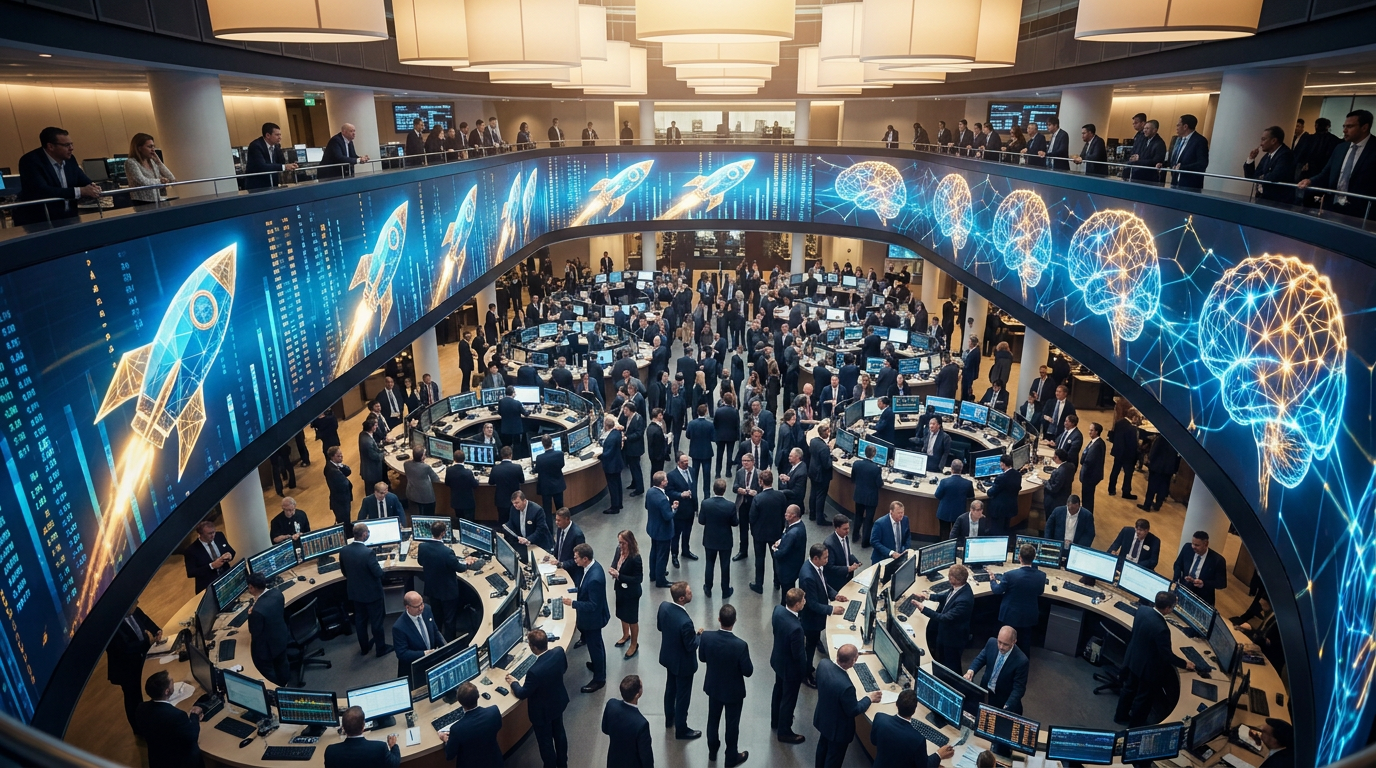
But the significance of this moment extends far beyond a single rocket company. The market is currently witnessing the birth of an "IPO supercycle," a massive wave of liquidity driven by the capital-intensive demands of artificial intelligence and orbital infrastructure. As the largest players finally open their books to Wall Street, a powerful downstream effect is taking hold across the broader technology ecosystem.[6]
Smaller startups are now racing to "ride that SpaceX IPO wave," eager to capitalize on the renewed investor enthusiasm that has flooded the public markets. When a mega-cap company successfully transitions to the public sphere, it creates a halo effect that validates the entire sector, making it easier for mid-sized and early-stage companies to secure funding, attract talent, and plot their own exit strategies.[1]
To understand why a trillion-dollar IPO matters to a ten-person startup operating out of a garage, one must look at the mechanics of the venture capital liquidity cycle. For the past several years, billions of dollars have been locked up in "paper wealth"—high valuations that early investors and employees could not easily convert into cash.[7]

A successful public listing acts as a release valve for this trapped capital. When early investors, known as limited partners (LPs), finally cash out their shares, that money rarely sits idle. It flows back into venture capital funds, which are then mandated to deploy that fresh capital into the next generation of founders. It is the financial engine of Silicon Valley restarting after a prolonged stall.[1]
Furthermore, the employees who become newly minted millionaires overnight often leave to angel-invest in their peers or found their own companies. The SpaceX debut alone turned thousands of current and former employees into millionaires, injecting a massive wave of localized capital directly back into the innovation economy.[2]
The momentum is already pulling other giants toward the public markets. The industry is bracing for the era of the "MANGOS"—a new acronym replacing FAANG, representing Meta, Anthropic, Nvidia, Google, OpenAI, and SpaceX. OpenAI has reportedly submitted a confidential filing with the U.S. Securities and Exchange Commission, while its primary rival, Anthropic, has engaged legal counsel to explore its own public offering.[1][4][5][6]
The momentum is already pulling other giants toward the public markets.
The sheer scale of these companies is forcing the issue. Building frontier artificial intelligence models and orbital data centers requires tens of billions of dollars in continuous investment. Private markets, no matter how deep, simply cannot sustain the capital requirements necessary to achieve artificial general intelligence or multi-planetary infrastructure. Wall Street is the only remaining venue large enough to foot the bill.[6]

This urgency is prompting some companies to pursue alternative, faster routes to the public markets. Special Purpose Acquisition Companies (SPACs)—shell corporations designed to take private companies public without the lengthy traditional IPO process—are experiencing a sudden revival as founders look to strike while the iron is hot.[8]
For example, Quantum Space, a startup building highly maneuverable spacecraft for the U.S. military, recently announced a $1.2 billion SPAC merger. By bypassing the traditional roadshow, the company aims to secure $300 million in immediate funding to build manufacturing facilities and compete for lucrative defense contracts before the current wave of investor appetite crests.[8]
The appetite is undeniably voracious. Ahead of its debut, SpaceX's offering drew a reported $250 billion in demand from institutional and retail investors—an oversubscription rate nearly four times its planned offering. This hunger was foreshadowed in May by Cerebras, an AI chipmaker that saw its stock soar 68% on its first day of trading.[3][7]
However, this supercycle is not without its skeptics and inherent uncertainties. Traditional financial analysts point to unprecedented valuation multiples as a cause for concern. At its IPO price, SpaceX was valued at roughly 94 times its 2025 revenue—a multiple that has virtually no precedent among the world's most valuable publicly traded companies.[2]

There is also the glaring issue of profitability. While some IPO candidates like data infrastructure firm Databricks boast positive free cash flow, many of the most anticipated AI giants are burning billions of dollars annually to train their models. Public markets have historically been unforgiving of massive, sustained losses once the initial hype fades.[7]
This dynamic creates a precarious environment for retail investors. While institutional giants secure shares at the initial offering price, everyday investors buying on the open market risk purchasing at the absolute peak. If the artificial intelligence narrative cools, or if a company fails to meet its astronomical growth projections, retail portfolios could bear the brunt of the correction.[4]
Despite these risks, the reopening of the IPO window is widely viewed as a triumph for the technology sector. It provides a necessary stress test for business models that have grown in the dark, forcing companies to prove their worth under the harsh light of public scrutiny. As the 2026 supercycle unfolds, it promises to reshape not just the stock market, but the very foundation of how future innovation is funded.[1][6]
How we got here
May 14, 2026
AI chipmaker Cerebras successfully debuts on the Nasdaq, with its stock surging 68% on the first day of trading.
June 11, 2026
Quantum Space announces a $1.2 billion SPAC merger to accelerate its military spacecraft manufacturing.
June 12, 2026
SpaceX completes the largest IPO in history, raising $75 billion at a $1.75 trillion valuation.
Late 2026
Artificial intelligence leaders OpenAI and Anthropic are projected to execute their own highly anticipated public offerings.
Viewpoints in depth
Venture Capitalists & Founders
This camp views the 2026 IPO wave as the essential engine of the innovation economy restarting.
For early-stage investors and startup founders, the public debut of giants like SpaceX and Cerebras is less about the specific companies and more about the systemic release of capital. They argue that the billions of dollars unlocked in these liquidity events will inevitably flow back into seed and Series A funds. Without this mechanism, the venture capital model stalls, as investors cannot return profits to their limited partners to raise new funds.
Institutional & Retail Investors
This group is driven by a voracious appetite for frontier technology, viewing these IPOs as generational wealth-building opportunities.
Asset managers and everyday traders have been largely locked out of the artificial intelligence boom, forced to invest indirectly through mega-cap tech stocks like Microsoft or Alphabet. They argue that direct public access to pure-play AI and space companies is long overdue. The massive oversubscription of these offerings reflects a belief that the total addressable markets for AI and orbital infrastructure are so vast that current valuations will eventually look cheap.
Market Skeptics
Financial traditionalists warn that the astronomical multiples attached to these debuts resemble past market bubbles.
Skeptics point to the fundamental disconnect between current revenues and trillion-dollar valuations. They argue that pricing a company at nearly 100 times its annual revenue leaves absolutely no margin for error. If the cost of AI compute doesn't fall, or if enterprise adoption of these tools slows, these analysts warn that the market could face a severe correction, leaving retail investors who bought on the open market holding the bag.
What we don't know
- Whether the massive valuations of AI companies can be sustained if enterprise adoption of the technology slows down.
- How retail investors will fare in the long term after buying into these mega-IPOs on the open market.
- If the regulatory environment will shift to place stricter controls on AI companies once they are publicly traded.
Key terms
- Initial Public Offering (IPO)
- The process by which a private company offers its shares to the public for the first time, allowing it to raise capital from everyday investors.
- Liquidity Event
- A financial milestone—such as an IPO or acquisition—that allows founders, employees, and early investors to cash out their equity.
- Special Purpose Acquisition Company (SPAC)
- A publicly traded shell corporation designed to acquire a private company, taking it public faster than a traditional IPO.
- Limited Partner (LP)
- Institutional or high-net-worth investors who provide the capital that venture capital firms use to fund startups.
- Revenue Multiple
- A valuation metric that compares a company's total market value to its annual sales, used to gauge how expensive a stock is relative to its current business.
Frequently asked
Why are so many tech giants going public in 2026?
The massive capital requirements for building artificial intelligence infrastructure and orbital technology have outgrown private markets, forcing companies to turn to Wall Street for funding.
How does a mega-IPO help smaller startups?
When early investors and employees cash out during a massive public offering, that money is typically reinvested into venture capital funds and new early-stage startups, creating a cycle of liquidity.
What is the difference between an IPO and a SPAC?
A traditional IPO involves a lengthy regulatory and roadshow process to sell new shares, while a SPAC is a publicly traded shell company that merges with a private startup to take it public quickly.
Are these newly public companies profitable?
While some, like data firm Databricks, generate positive cash flow, many of the most anticipated AI companies are currently operating at massive losses as they invest heavily in research and development.
Sources
Source coverage
8 outlets
3 viewpoints surfaced







[1]TechCrunchVenture Capitalists & Founders
As AI companies race to go public, who else is along for the ride?
Read on TechCrunch →[2]ForbesInstitutional & Retail Investors
SpaceX Opens At $150—Surging 20% After Largest IPO Ever
Read on Forbes →[3]ReutersInstitutional & Retail Investors
SpaceX IPO demand reaches $250 billion, sources say
Read on Reuters →[4]The Wall Street JournalMarket Skeptics
OpenAI Files to Go Public in Test of Investor Appetite for Top AI Startups
Read on The Wall Street Journal →[5]Financial TimesMarket Skeptics
Anthropic lab engages Wilson Sonsini to explore IPO
Read on Financial Times →[6]AP NewsInstitutional & Retail Investors
AI companies OpenAI, Anthropic and SpaceX are barreling toward huge IPOs
Read on AP News →[7]Built InVenture Capitalists & Founders
2026 IPO Watchlist: OpenAI, SpaceX and Other Tech Giants
Read on Built In →Quantum Space's military SPAC is trying to catch SpaceX's IPO wave
Read on TechCrunch →

Every angle. Every day.
Get technology stories with full source coverage and perspective breakdowns delivered to your inbox.