
Stablecoins Emerge as the New Standard for Global Remittances, Slashing Cross-Border Fees
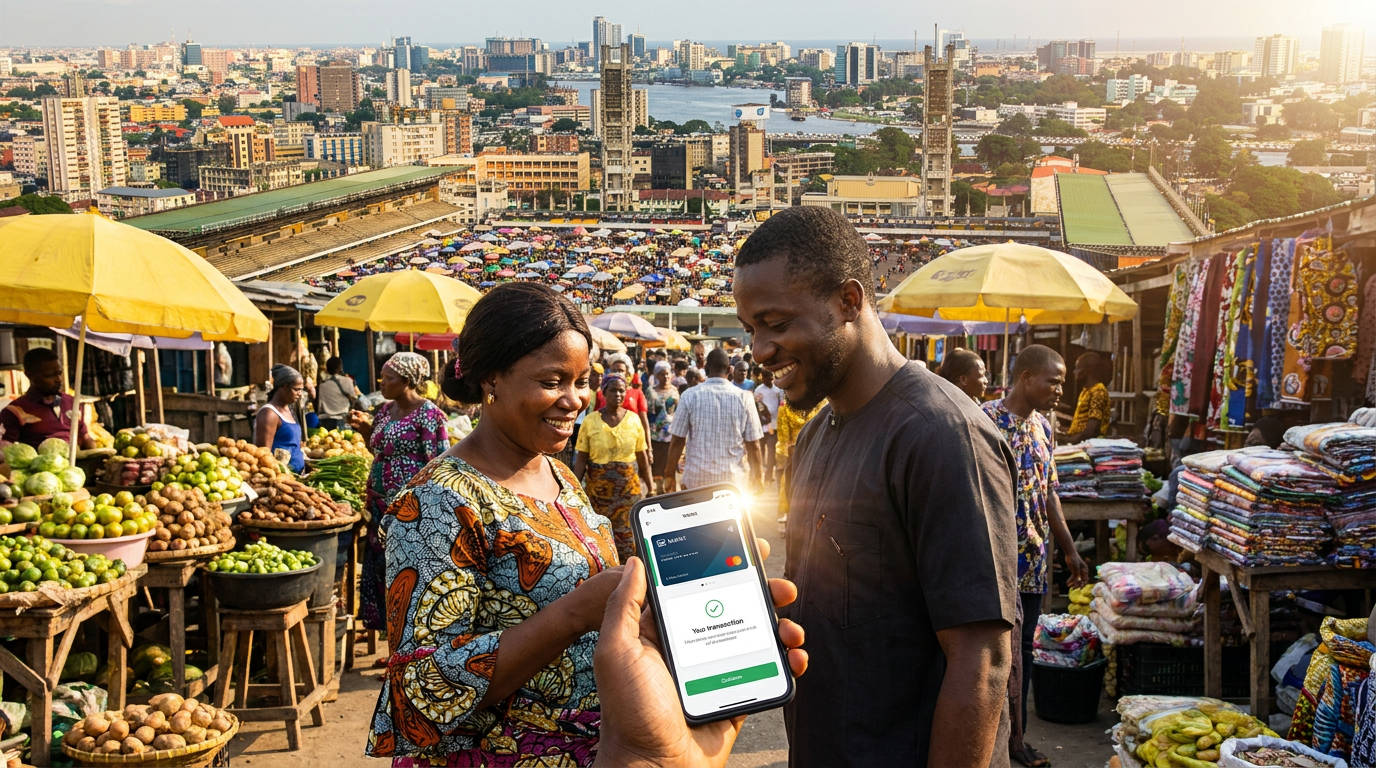
Major payment networks like Visa and Stripe have fully integrated dollar-pegged stablecoins, dropping the cost of international money transfers to under 1% and saving billions for families in emerging markets.
By Factlen Editorial Team
- Payment Incumbents
- View stablecoins as a superior backend settlement rail that modernizes global commerce.
- Financial Inclusion Advocates
- Focus on how stablecoins democratize access to dollar liquidity and eliminate predatory fees.
- Regulatory Watchdogs
- Emphasize the need for strict oversight, 1:1 fiat reserves, and robust AML controls.
What's not represented
- · Local correspondent banks in emerging markets losing revenue
- · Retail users who have lost funds due to wallet security errors
Why this matters
For decades, migrant workers and international businesses have lost billions of dollars annually to exorbitant wire fees and exchange rate markups. The integration of stablecoins by major payment networks is fundamentally rewiring the global economy, allowing anyone with a smartphone to send and receive dollars instantly for pennies.
Key points
- Stablecoins have reduced the cost of cross-border money transfers from an average of 6.5% to under 1%.
- Major payment networks, including Visa, Stripe, and Zelle, have integrated stablecoin settlement into their core infrastructure.
- Emerging markets now hold approximately 66% of the global stablecoin supply to hedge against local inflation.
- New regulatory frameworks in the U.S. and Europe have provided the legal clarity needed for institutional adoption.
- B2B stablecoin payments are projected to exceed $1 trillion by 2030.
For decades, sending money across borders has been one of the most expensive and sluggish processes in the global financial system. Migrant workers sending portions of their paychecks home to emerging markets have routinely surrendered significant percentages of their capital to correspondent banks and wire services. But in the first half of 2026, a quiet revolution has reached critical mass. Dollar-pegged stablecoins—cryptocurrencies tied directly to the value of the U.S. dollar—have bypassed traditional banking rails to become the new standard for global remittances.[1][8]
The shift represents a rare instance of blockchain technology delivering immediate, tangible relief to everyday consumers. By settling transactions on public ledgers rather than routing them through a patchwork of international banks, stablecoin transfers operate 24 hours a day and clear in minutes. More importantly, they have compressed the cost of moving money internationally from an average of roughly 6.5% down to less than 1%.[6][8]
"When the biggest payment companies in the world tell their boards they're moving onto stablecoin rails, that's the institutional permission slip everyone else was waiting for," noted an analysis of the sector's rapid maturation. This year, the infrastructure supporting these transfers has moved out of the experimental phase and into the core operations of legacy financial giants.[1][5]

Visa recently announced that its annualized stablecoin settlement run rate had reached $7 billion, integrating the technology directly into its global network. The company views the tokens not as speculative assets, but as a trusted global payment infrastructure that complements existing systems, particularly in regions suffering from volatile local currencies.[5][9]
Stripe has aggressively expanded its footprint in the space, acquiring the stablecoin infrastructure provider Bridge for $1.1 billion. The payment processor now allows businesses in over 70 countries to accept stablecoin payments and settle them seamlessly in fiat currency. For the end user, the experience is frictionless: a customer pays in crypto, and the merchant receives dollars, with the complex blockchain routing handled entirely behind the scenes.[1][4]
Stripe has aggressively expanded its footprint in the space, acquiring the stablecoin infrastructure provider Bridge for $1.1 billion.
The impact is most profound in emerging markets, which now hold approximately 66% of the global stablecoin supply. In these regions, tokens like Tether (USDT) and USD Coin (USDC) are rarely used for trading. Instead, they function as digital checking accounts, allowing citizens to hedge against local inflation and access dollar liquidity without needing a traditional U.S. bank account. As of June 2026, Tether's market capitalization alone surged past $188 billion.[2][9]

The remittance industry is taking direct notice of the shifting landscape. Early Warning Services, the network behind Zelle, recently announced its international debut in India—the world's largest recipient of remittances. To facilitate the expansion, the company unveiled ZelleUSD, a proprietary stablecoin designed specifically to support cross-border payments between the U.S. and overseas families.[7]
The mechanics of these modern transfers rely on what industry insiders call the "stablecoin sandwich." A sender converts their local currency into a stablecoin via a licensed provider. The digital tokens are then beamed across the globe instantly for fractions of a cent. Finally, the recipient's local digital wallet automatically converts the stablecoins back into their native fiat currency, ready to be spent or withdrawn.[1][6]
Beyond peer-to-peer remittances, the business-to-business (B2B) sector is also adopting the technology at a blistering pace. Mid-market companies and global platforms are utilizing stablecoins to pay international contractors and suppliers. Meta, for instance, recently began paying creators in Colombia and the Philippines directly in USDC, bypassing currency conversion delays entirely.[4][9]
This explosive growth has been catalyzed by newfound regulatory clarity. The passage of comprehensive frameworks, such as the GENIUS Act in the United States and the MiCA regulation in Europe, has forced stablecoin issuers to maintain strict 1:1 fiat reserves and implement robust anti-money laundering controls. By removing the systemic risks associated with unbacked tokens, regulators have given institutional players the confidence to build upon these networks.[5][6]

Traditional banks are not being entirely cut out of the equation, but their roles are fundamentally changing. Rather than acting as toll collectors on the actual movement of money, financial institutions are pivoting to handle the compliance, customer onboarding, and the critical on-and-off ramps between fiat cash and digital tokens.[6][7]
As the architecture of global money movement continues to evolve, the primary beneficiaries are the individuals at the end of the chain who previously absorbed the friction of the legacy system. With B2B stablecoin payments projected to exceed $1 trillion by the end of the decade, the era of exorbitant cross-border fees appears to be rapidly drawing to a close.[1][3]
How we got here
2019
Meta (then Facebook) announces the Libra stablecoin project, sparking intense global regulatory backlash and eventual cancellation.
2022
The collapse of algorithmic stablecoins prompts governments to begin drafting strict reserve-backed regulatory frameworks.
2024
Stripe acquires stablecoin infrastructure provider Bridge for $1.1 billion, signaling a major shift toward blockchain settlement.
2025
The European Union implements the MiCA framework, providing legal clarity for stablecoin issuers operating in the bloc.
Early 2026
Visa announces its annualized stablecoin settlement run rate has reached $7 billion, while Zelle prepares its international debut using ZelleUSD.
Viewpoints in depth
Financial Inclusion Advocates
Focus on how stablecoins democratize access to dollar liquidity and eliminate predatory fees.
This camp argues that the legacy correspondent banking system has functioned as a regressive tax on the world's poorest workers. By replacing SWIFT and wire services with public blockchains, they emphasize that stablecoins return billions of dollars directly to families in emerging markets. They view the technology primarily as a humanitarian and economic equalizer rather than a corporate efficiency tool.
Payment Incumbents
View stablecoins as a superior backend settlement rail that modernizes global commerce.
Legacy networks like Visa, Mastercard, and Zelle see stablecoins not as a threat, but as an inevitable infrastructure upgrade. They argue that integrating blockchain settlement allows them to offer 24/7 instant transfers without abandoning their established consumer interfaces. For this camp, the focus is on regulatory compliance, maintaining market dominance, and reducing the internal friction of cross-border treasury operations.
Regulatory Watchdogs
Emphasize the need for strict oversight, 1:1 fiat reserves, and robust AML controls.
While acknowledging the speed and cost benefits, policy institutes and central banks warn that private companies operating parallel monetary systems pose systemic risks. They argue that without stringent frameworks like the GENIUS Act or MiCA, stablecoins could facilitate illicit finance or trigger digital bank runs. Their priority is ensuring that every token is backed by verifiable, liquid fiat reserves and integrated into existing anti-money laundering surveillance systems.
What we don't know
- How quickly local merchants in developing nations will accept stablecoins directly, rather than requiring users to off-ramp into local fiat.
- Whether central bank digital currencies (CBDCs) will eventually compete with or replace private stablecoins in the remittance market.
Key terms
- Stablecoin
- A digital currency pegged to a stable asset, such as the U.S. dollar, to minimize price volatility.
- Remittance
- Money sent by a foreign worker back to their home country to support their family.
- Correspondent Bank
- A financial institution that provides services on behalf of another bank, often used to route international wire transfers.
- Fiat Currency
- Government-issued currency that is not backed by a physical commodity, such as the U.S. dollar or the Euro.
- SWIFT
- The global messaging network that traditional banks use to securely transmit information and instructions for cross-border payments.
- On-ramp / Off-ramp
- The services or exchanges that allow users to convert traditional fiat money into cryptocurrency (on-ramp) and vice versa (off-ramp).
Frequently asked
What is a stablecoin?
A cryptocurrency designed to maintain a stable value by pegging it to a traditional fiat currency, most commonly the U.S. dollar.
How do stablecoins reduce remittance fees?
They bypass the traditional correspondent banking network (SWIFT), allowing money to move peer-to-peer on a public blockchain with near-zero network costs.
Do senders and receivers need to understand crypto?
No. Modern payment platforms use a "stablecoin sandwich" model, where users interact entirely with their local fiat currencies while the blockchain handles the backend routing.
Are stablecoins regulated?
Yes. Recent frameworks like the U.S. GENIUS Act and Europe's MiCA require major stablecoin issuers to hold 1:1 fiat reserves and comply with anti-money laundering laws.
Sources
Source coverage
9 outlets
3 viewpoints surfaced









[1]European Business MagazinePayment Incumbents
How Stablecoin Settlement is Reshaping Global B2B Payments
Read on European Business Magazine →[2]TradingPediaRegulatory Watchdogs
Stablecoins Become Core Financial Infrastructure in Emerging Markets
Read on TradingPedia →[3]CoboFinancial Inclusion Advocates
Stablecoin Payments Surge to Mainstream in 2026 Amid Explosive Ecosystem Growth
Read on Cobo →[4]StripePayment Incumbents
Expanding Global Economic Infrastructure with Stablecoin Payouts
Read on Stripe →[5]VisaPayment Incumbents
Top Payments Predictions That Will Reshape 2026: Stablecoins Hit Their Stride
Read on Visa →[6]OpenDueFinancial Inclusion Advocates
Why Stablecoins Matter for Cross-Border Money Movement
Read on OpenDue →[7]Bank Policy InstituteRegulatory Watchdogs
Zelle Makes International Debut in India with Proprietary Stablecoin
Read on Bank Policy Institute →[8]OECDFinancial Inclusion Advocates
Blockchain Technology and Remittances: Reducing the Cost of Cross-Border Transactions
Read on OECD →[9]Bitcoin FoundationRegulatory Watchdogs
Payment Providers Accelerate Stablecoin Integration for 24/7 Settlement
Read on Bitcoin Foundation →

More in finance
See all 6 stories →529 Plans
How a Quiet Rule Change is Letting Parents Fund Their Kids' Retirements From Birth
0 sources

Generational Wealth
How to Fund a Child's Retirement From Birth: The New Rules of Generational Wealth
0 sources

Rewards Economics
The Hidden Economics of Credit Card Rewards: How the System Actually Works
0 sources

Generational Wealth
How to fund a child's retirement from birth using new tax rules
0 sources

Every angle. Every day.
Get finance stories with full source coverage and perspective breakdowns delivered to your inbox.