
Trump Condemns Israeli Strike on Beirut as U.S.-Iran Peace Deal Hangs in the Balance
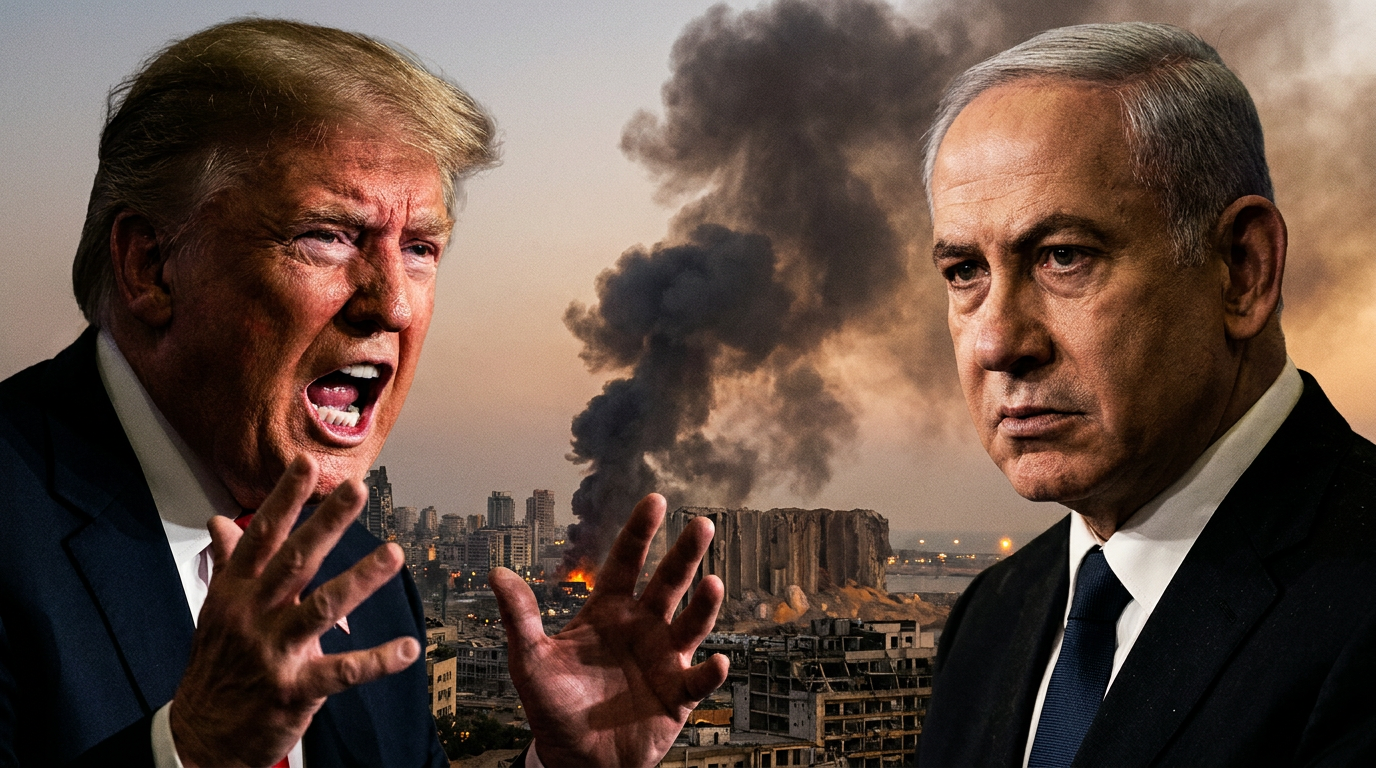
A highly anticipated peace agreement between the U.S. and Iran was thrown into jeopardy Sunday after Israel launched deadly airstrikes on Beirut just hours before the scheduled signing.
By Factlen Editorial Team
- U.S. Administration
- Eager to finalize the peace deal, reopen the Strait of Hormuz, and end the war, viewing Israel's strikes as a dangerous disruption.
- Iranian Leadership
- Demanding a comprehensive regional ceasefire and threatening military retaliation for the Beirut strikes, questioning America's ability to control its ally.
- Israeli Government
- Deeply skeptical of the deal's terms and determined to maintain military freedom against Hezbollah regardless of Washington's diplomatic timetable.
What's not represented
- · Lebanese Civilians
- · Global Oil Markets
Why this matters
This fragile agreement aims to end a three-month war that has severely disrupted global trade and energy markets. If the deal collapses due to the latest airstrikes, the U.S. and the Middle East risk plunging back into a devastating, multi-front conflict that could send global oil prices skyrocketing.
Key points
- President Trump announced the U.S. and Iran are hours away from signing a historic peace deal to end a three-month regional war.
- Israel launched a deadly airstrike on Beirut's southern suburbs just hours before the scheduled signing, killing at least three people.
- Trump furiously condemned the strike, telling Axios that Prime Minister Netanyahu has 'no judgment' and demanding all sides stand down.
- The proposed deal would reopen the Strait of Hormuz, unfreeze $24 billion in Iranian assets, and dismantle Tehran's highly enriched uranium.
- Iranian officials warned the strike will not go unanswered, casting doubt on whether the agreement will be finalized.
A highly anticipated peace agreement between the United States and Iran was thrown into sudden jeopardy on Sunday after Israel launched deadly airstrikes on the Lebanese capital of Beirut, just hours before the historic deal was scheduled to be signed. The last-minute military escalation triggered a furious public and private response from U.S. President Donald Trump, who demanded an immediate halt to all regional hostilities in a desperate bid to save the fragile pact. The incident underscores the deep divisions between Washington and Jerusalem over the future of the Middle East.[1][2]
The Israeli Defense Forces struck a residential building in Beirut's southern Dahiyeh district, a densely populated area known as a Hezbollah stronghold, killing at least three people and wounding 16 others. The IDF stated the bombing was a direct and necessary response to two Hezbollah drones fired into northern Israel earlier in the day. The exchange of fire marked the most serious escalation in the region since a tenuous ceasefire took hold in early April, threatening to unravel months of painstaking diplomacy.[2][3]
The timing of the strike infuriated the White House, which had been preparing to announce the end of a three-month war. Trump took to his Truth Social platform to declare that the attack "should not have happened," emphasizing that the U.S. and Iran were on the verge of a deal that would bring peace to the entire region, including Lebanon. "This could be the beginning of a long and beautiful peace — Let's not blow it!" Trump wrote, publicly urging all parties, including Hezbollah and the Israeli military, to stand down immediately.[2]
Behind the scenes, the U.S. president's reaction was remarkably blunt and profane. In an interview with Axios, Trump expressed outrage at Israeli Prime Minister Benjamin Netanyahu, stating he was "pissed off" that the strike occurred a mere hour before the scheduled signing. Trump told the outlet that Netanyahu had "no fucking judgment" and revealed he had directly confronted the Israeli leader over the phone, demanding to know why the attack could not have waited. The extraordinary public rebuke highlights a severe fracturing of the U.S.-Israel alliance at a critical geopolitical moment.[1][4]

The Israeli government has been largely sidelined from the U.S.-Iran negotiations, which have been heavily mediated by Pakistan and Qatar over the past several months. Israeli officials view the emerging agreement as a deep disappointment, fearing it will fail to permanently neutralize Tehran's nuclear ambitions while simultaneously restricting Israel's freedom to operate against Iranian proxy groups. Netanyahu was reportedly caught off guard by the rapid finalization of the deal, having been informed by Trump only days prior that an agreement was imminent.[5][7]
The Israeli government has been largely sidelined from the U.S.-Iran negotiations, which have been heavily mediated by Pakistan and Qatar over the past several months.
Despite intense pressure from Washington, Netanyahu has signaled a firm unwillingness to let the U.S. diplomatic timetable dictate Israel's immediate security operations. Defense Minister Israel Katz reiterated that Israel reserves the absolute right to act independently against threats on its borders, highlighting a growing rift between Jerusalem and Washington over how to manage the multi-front conflict. Israeli hardliners argue that any peace deal that grants Hezbollah de facto immunity in Lebanon is fundamentally unacceptable to the nation's security, regardless of the broader geopolitical benefits sought by the American administration.[5]
In Tehran, the Beirut airstrikes immediately threatened to derail the entire negotiation process. Mohammad Bagher Ghalibaf, Iran's parliamentary speaker and a lead negotiator, warned that the attack proved the United States either lacks the will or the ability to enforce its commitments on its closest allies. Iranian military officials promised that the deadly strikes on the Lebanese capital would not go "unanswered," raising the terrifying specter of a broader regional retaliation just as the ink was being prepared for the treaty. Hardliners within the Iranian government are now vociferously pushing to reject the U.S. peace deal entirely.[2][6]

The stakes of the proposed agreement are massive, aiming to formally end a devastating three-month war that has severely disrupted global trade. A central pillar of the deal is the immediate reopening of the Strait of Hormuz and the lifting of a U.S. naval blockade on Iranian ports, which would allow the resumption of critical energy shipments. U.S. Defense Secretary Pete Hegseth noted that the military is already preparing to secure safe passage through the vital waterway once the agreement is finalized.[2][4]
In exchange for sweeping economic relief, the framework reportedly requires the comprehensive dismantling of Iran's nuclear program and the destruction or removal of its highly enriched uranium stockpile, which had grown to alarming levels before the conflict began. The agreement would also unfreeze an estimated $24 billion in Iranian assets held abroad, providing a massive injection of capital into Tehran's struggling economy. However, U.S. officials insist the release of these funds will be strictly performance-based and tied to verifiable compliance with international inspectors, ensuring Iran cannot access the money without meeting its obligations.[2][6]
Because the sweeping diplomatic deal leaves several complex logistical issues unresolved, negotiators have established a 60-day framework for technical discussions to finalize the exact mechanisms of the nuclear drawdown and the phased sanctions relief. This critical buffer period is designed to keep both sides at the negotiating table while scientific and financial experts hammer out the granular details of uranium dilution and international asset transfers. Despite this ongoing technical work, the core cessation of hostilities—including the reopening of maritime trade routes—is meant to take effect immediately upon the formal signing of the document.[7]

As Sunday evening approached, the ultimate status of the historic pact remained in a tense state of limbo. President Trump insisted to reporters that the deal was merely delayed by a few hours and would be signed electronically by the end of the day. However, Iranian state media cautioned that Tehran had not yet made a final decision, leaving the Middle East bracing for either a monumental diplomatic breakthrough or a rapid descent back into a devastating cycle of violence.[1][2][6]
How we got here
March 2026
A major escalation triggers a three-month war in the Middle East involving the U.S., Israel, and Iran.
April 7, 2026
A tenuous ceasefire takes hold, leading to intense, Pakistan-mediated negotiations between Washington and Tehran.
June 13, 2026
Trump informs Netanyahu that a 'great' peace deal with Iran will be signed within days.
June 14, 2026 (Morning)
Israel launches deadly airstrikes on Beirut's southern suburbs, citing Hezbollah drone attacks.
June 14, 2026 (Afternoon)
Trump furiously condemns the strike, demanding restraint as Iranian officials threaten retaliation.
Viewpoints in depth
The U.S. Administration's View
The White House is desperate to finalize the deal and end the war, viewing Israel's actions as reckless.
President Trump and his administration see the peace deal as a massive diplomatic victory that will reopen global shipping lanes and neutralize Iran's nuclear threat without prolonged U.S. military involvement. The White House is deeply frustrated by Israel's independent military actions, believing that striking Beirut hours before a historic signing jeopardizes months of delicate, Pakistan-mediated negotiations and risks dragging the U.S. back into a hot war.
The Israeli Government's View
Israel feels sidelined by the negotiations and refuses to compromise its security against Hezbollah.
Israeli leadership, including Prime Minister Benjamin Netanyahu, views the U.S.-Iran deal with profound skepticism. They argue the agreement fails to permanently dismantle Iran's nuclear infrastructure and rewards Tehran with billions in unfrozen assets. More pressingly, Israel insists that a U.S.-Iran pact cannot grant Hezbollah immunity in Lebanon, maintaining that the IDF must retain the freedom to strike militant targets whenever Israeli territory is threatened.
The Iranian Leadership's View
Tehran is demanding a comprehensive regional ceasefire and using the strikes to test U.S. leverage.
Iranian hardliners and military officials are utilizing the Beirut airstrikes to question the viability of the entire agreement. They argue that if Washington cannot stop Israel from bombing an Iranian ally during the final hours of negotiations, the U.S. lacks the ability to enforce the deal's broader terms. Tehran is demanding that the cessation of hostilities apply to all fronts, including Lebanon, and has threatened military retaliation if its conditions are not met.
What we don't know
- Whether Iran will follow through on threats to retaliate militarily for the Beirut strike, which could collapse the deal entirely.
- The exact timeline for the electronic signing of the agreement, given the conflicting statements from Washington and Tehran.
- How the U.S. plans to enforce the 60-day technical framework for dismantling Iran's nuclear program.
Key terms
- Strait of Hormuz
- A narrow, strategically vital waterway between the Persian Gulf and the Gulf of Oman through which a massive portion of the world's oil passes.
- Dahiyeh
- A predominantly Shia suburb south of Beirut that serves as a major stronghold for the Hezbollah militant group.
- Highly Enriched Uranium
- Uranium that has been processed to a purity level close to what is required for nuclear weapons, a central focus of the U.S.-Iran negotiations.
Frequently asked
Why did Israel bomb Beirut?
The Israeli military stated the airstrike on the Dahiyeh district was a direct response to two drones fired by Hezbollah into northern Israel earlier in the day.
What is in the U.S.-Iran peace deal?
The draft agreement reportedly includes reopening the Strait of Hormuz, unfreezing $24 billion in Iranian assets, and dismantling Iran's highly enriched uranium stockpile.
Is the peace deal canceled?
President Trump insists the deal is only delayed by a few hours and will still be signed electronically, though Iranian officials warn that no final decision has been made.
Sources
Source coverage
7 outlets
3 viewpoints surfaced







[1]AxiosU.S. Administration
Trump to Axios: Netanyahu has "no fucking judgment" but Iran deal still on
Read on Axios →[2]The GuardianIranian Leadership
Trump calls for restraint after Israel launches fresh airstrikes on Beirut
Read on The Guardian →[3]Al JazeeraIranian Leadership
Al Jazeera reports from Israeli attack site in southern Beirut
Read on Al Jazeera →[4]Fox NewsU.S. Administration
Trump says he will ask Iran not to respond to Israeli strikes on Beirut
Read on Fox News →[5]The Jerusalem PostIsraeli Government
Trump tells Netanyahu it's time for war to end, calls Iran deal 'great'
Read on The Jerusalem Post →[6]Channel News AsiaIranian Leadership
Trump warns Israel, Iran not to 'blow it' after new strikes on Beirut threaten ceasefire deal
Read on Channel News Asia →[7]CTV NewsIranian Leadership
Unclear if U.S.-Iran peace deal will be signed Sunday, despite Trump's claims: expert
Read on CTV News →
Every angle. Every day.
Get news politics stories with full source coverage and perspective breakdowns delivered to your inbox.