
The Evidence is In: How 'Missing Middle' Zoning Reform is Stabilizing US Rents
After years of theoretical debate, empirical data from early-adopter cities like Austin and Minneapolis confirms that eliminating restrictive zoning to allow denser housing significantly slows rent growth.
By Factlen Editorial Team
- Supply-Side Economists
- Argue that removing regulatory barriers and allowing the market to build is the primary mechanism for lowering housing costs.
- Comprehensive Policy Advocates
- Emphasize that while zoning reform is essential, it must be paired with targeted subsidies and renter protections to achieve true equity.
- Data & Market Analysts
- Focus on tracking the empirical outcomes of municipal policy changes, measuring rent growth against housing stock additions.
What's not represented
- · Neighborhood Associations
- · Incumbent Homeowners
- · Local Municipal Governments
Why this matters
Housing is the largest single expense for most American families. The proven success of these reforms offers a replicable blueprint for cities nationwide to lower the cost of living and restore the path to homeownership.
Key points
- Empirical data from 2026 confirms that upzoning and removing regulatory barriers significantly increases housing supply and stabilizes rents.
- Austin, Texas, added 120,000 homes over nine years, resulting in a 7 percent year-over-year drop in rent prices.
- Minneapolis eliminated single-family zoning, keeping rent growth to just 1 percent over five years compared to 14 percent statewide.
- While market-rate supply lowers median costs, experts agree that targeted subsidies remain necessary for the lowest-income households.
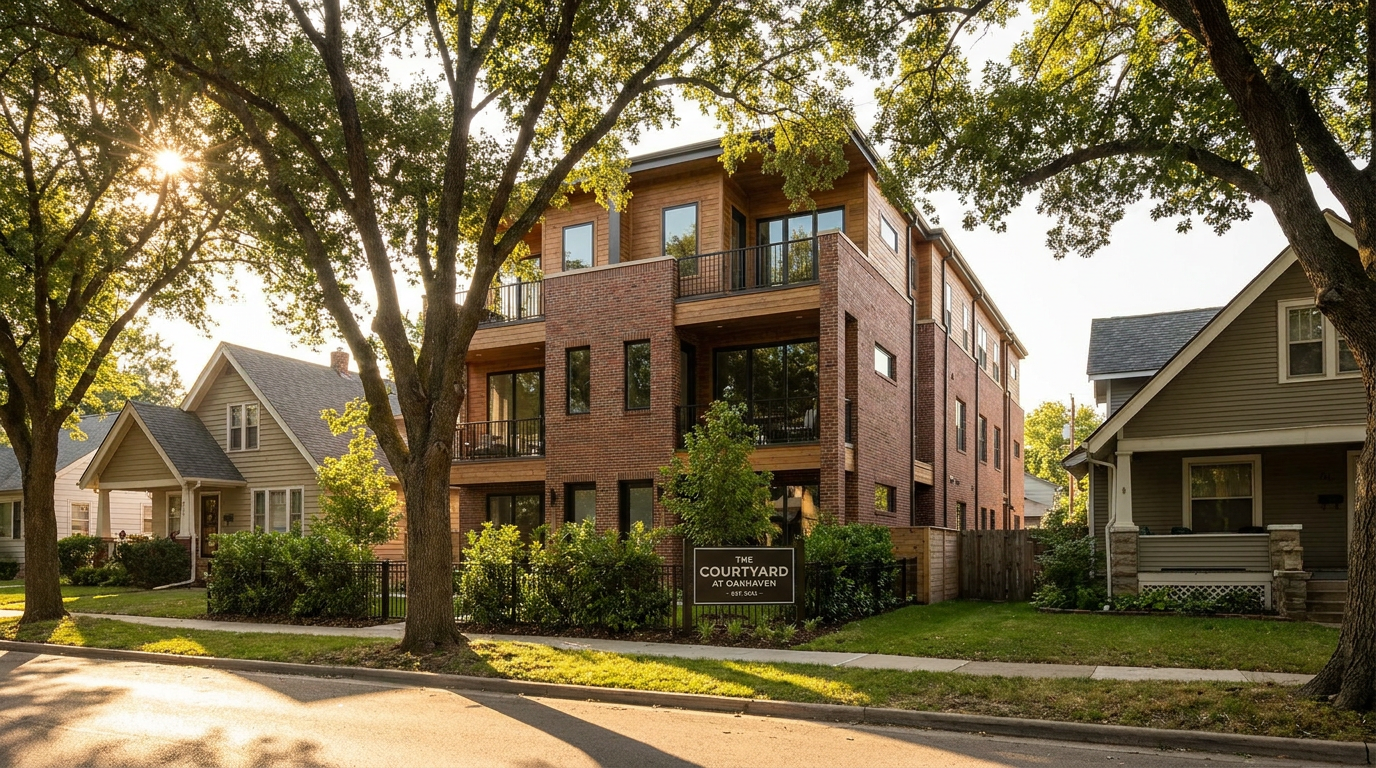
For decades, the American housing market has been defined by a severe structural shortage, driving rents and home prices to historic, unaffordable highs across the country. Economists, urban planners, and housing advocates have long argued that local zoning laws—specifically those banning anything other than single-family detached homes on large plots of land—are the primary culprit behind this artificial scarcity. This rigid regulatory framework effectively outlawed 'missing middle' housing: the duplexes, triplexes, courtyard apartments, and townhomes that naturally provided density and affordability in pre-World War II neighborhoods. By mandating large minimum lot sizes and requiring extensive off-street parking, local governments placed a heavy, invisible 'regulatory tax' on new construction, making it mathematically impossible for developers to build entry-level homes.[1][5][7]
Until recently, the argument that reversing these bans would solve the affordability crisis was largely theoretical, confined to economic modeling and academic white papers. Skeptics frequently countered that upzoning would only enrich developers and result in luxury condos rather than affordable units. But in 2026, the debate has definitively shifted from economic theory to hard empirical evidence. A critical mass of early-adopter cities and states have now had pro-housing reforms in place long enough to yield definitive, measurable data on how increased supply impacts the rental market. The results are providing policymakers with a proven blueprint for stabilizing the cost of living.[7]
The strongest evidence that upzoning stabilizes housing costs comes from Minneapolis. In 2018, the city passed its landmark 2040 Plan, making national headlines by becoming the first major United States municipality to eliminate single-family-only zoning citywide and allow triplexes on all residential lots. The results, tracked over a five-year period, show a stark divergence from regional and national trends. According to a comprehensive 2025 analysis by the JPMorganChase PolicyCenter, these comprehensive zoning reforms facilitated a 12 percent increase in the city's overall housing supply. Consequently, rents in Minneapolis grew by a nominal 1 percent over that half-decade, while rents across the rest of Minnesota surged by 14 percent, proving that local policy can effectively decouple a city from broader inflationary pressures.[1][2]

While Minneapolis demonstrated impressive rent stabilization, Austin, Texas, has provided undeniable evidence that aggressive supply expansion can actually drive rents down in absolute terms. Beginning in 2015, Austin enacted a sustained, multi-year package of reforms that included broad rezoning, reducing parking requirements, and aggressively streamlining the municipal permitting process. The cumulative impact of these policies resulted in a historic, sustained building boom. Between 2015 and 2024, Austin added 120,000 new housing units—a massive 30 percent increase to its total housing stock, representing a growth rate more than three times the national average. As a direct result of this new inventory hitting the market, rents in large apartment buildings fell by 7 percent from 2023 to 2024, marking the steepest decline of any large metropolitan area in the country.[1]
Beyond full-scale rezoning, targeted regulatory tweaks have also proven highly effective at unlocking new housing. Houston, which famously lacks traditional use-based zoning, historically maintained strict minimum lot sizes that suppressed density and forced development outward into sprawling suburbs. When the city reduced its by-right minimum lot size requirement from 5,000 square feet down to 1,400 square feet in designated residential areas, it triggered a massive wave of missing-middle townhome construction. This single regulatory change allowed builders to subdivide existing parcels and construct three or four homes where only one could legally stand before, rapidly increasing the supply of entry-level homeownership opportunities within the urban core.[2]

Beyond full-scale rezoning, targeted regulatory tweaks have also proven highly effective at unlocking new housing.
The mechanism behind these successes relies heavily on the concept of 'by-right' development. When developers can build multi-unit housing administratively—meaning their permits are approved automatically if they meet the written zoning code, without facing years of discretionary public hearings and neighborhood vetoes—the cost and risk of construction plummet. This predictability allows smaller, local developers to enter the market and build incremental density, rather than restricting the industry to massive corporate developers who have the capital to survive years of legal battles. By-right permitting effectively removes the premium that developers previously had to charge just to cover the legal and holding costs of navigating the bureaucracy.[3][7]
Eliminating parking minimums has emerged as another critical variable in the evidence pack. For decades, cities required developers to provide a set number of off-street parking spaces per unit, regardless of whether the future tenants actually owned cars. Structured parking can add tens of thousands of dollars to the cost of a single housing unit, a cost that is inevitably passed down to the renter. By abolishing these mandates and allowing builders to decide how much parking to provide based on actual market demand, cities like Austin and Minneapolis have unlocked smaller, previously unbuildable infill lots for residential use, making smaller apartment buildings financially viable again.[1]

Despite these clear successes, the evidence also highlights transparent uncertainties and limitations regarding how quickly these policies can provide relief. The most significant caveat is the timeline lag between legislative action and market impact. The Center for American Progress notes that efforts to reduce barriers to production often take many years to bear fruit. Even after a city legalizes missing middle housing, developers must still acquire land, secure financing, draft architectural plans, and complete physical construction. Most empirical studies estimate that visible, market-wide increases in housing supply only materialize three to ten years after the initial reforms are enacted, requiring immense political patience.[3]
Furthermore, while adding market-rate supply effectively lowers median rents through a process known as 'filtering,' it does not directly solve the housing crisis for the lowest-income brackets. When higher-income earners move into brand-new apartments, they vacate older, more affordable units, easing competition across the entire market. However, a person working full-time at the federal minimum wage cannot afford a market-rate apartment, regardless of how much new supply is added to the city. The data clearly shows that while abundance prevents displacement of the middle class, it cannot single-handedly house those living in deep poverty.[1][6]
Because of this limitation, researchers emphasize that zoning reform is a necessary, but ultimately insufficient, condition for total housing equity. Abundance-type permitting reforms must be paired with targeted demand-side subsidies to protect vulnerable populations. Organizations analyzing the data argue that a functional housing policy requires a 'both/and' approach: unleashing private development to stabilize the broader market, while simultaneously expanding Low-Income Housing Tax Credits (LIHTC), Section 8 housing vouchers, and direct public housing investments to serve those whom the private market cannot profitably house.[4]

Recognizing the empirical success of these local experiments, momentum has rapidly shifted to the state and federal levels, transforming housing abundance into a rare bipartisan issue. In the United States Senate, the ROAD Act (Renewing Opportunity in the American Dream to Housing Act of 2025) has advanced with support from both sides of the aisle. The legislation aims to condition federal transportation and infrastructure grants on local zoning reform, effectively using federal leverage to force municipalities to legalize denser housing and remove parking minimums.[4]
Simultaneously, states have begun taking matters into their own hands by passing sweeping preemption laws that override local municipal bans on missing middle housing. Following Oregon's pioneering legislation in 2019, states like Washington and Montana have enacted laws forcing municipalities to allow denser development near transit hubs and commercial corridors, stripping local councils of their ability to block housing. The consensus from the 2026 evidence pack is unambiguous: the laws of supply and demand apply to housing just as they do to any other sector. While zoning reform is not a panacea for all economic inequality, removing the regulatory barriers to missing middle housing is the most proven, scalable tool available for reversing the American housing crisis.[1][7]
How we got here
2015
Austin begins a sustained package of pro-housing reforms, including rezoning and permitting streamlining.
2018
Minneapolis passes the 2040 Plan, becoming the first major US city to eliminate single-family-only zoning.
2019
Oregon passes HB 2001, becoming the first state to mandate the legalization of missing middle housing statewide.
2023
Austin abolishes parking minimums citywide, further accelerating infill development.
2025
A new wave of state-level reforms passes in Washington, Montana, and Texas, alongside the introduction of the bipartisan ROAD Act in the US Senate.
2026
Empirical data confirms that early-adopter cities like Austin and Minneapolis successfully decoupled their rent growth from national averages.
Viewpoints in depth
Supply-Side Economists
Focus on deregulation and market forces as the primary solution to the housing shortage.
This camp, heavily represented by academic economists and pro-housing 'YIMBY' groups, argues that the housing crisis is a straightforward math problem caused by artificial scarcity. They point to the empirical data from Austin and Houston as proof that when the 'regulatory tax' of zoning and parking minimums is removed, private developers will rapidly build enough supply to drive down median rents. They generally oppose inclusionary zoning mandates, arguing such rules act as a tax on new construction that ultimately suppresses overall supply.
Comprehensive Policy Advocates
Argue that market-rate supply must be paired with robust public subsidies to protect vulnerable populations.
While agreeing that restrictive zoning must end, this perspective cautions against viewing deregulation as a silver bullet. Organizations in this camp highlight that new market-rate construction rarely reaches the lowest-income brackets directly. They advocate for a 'both/and' approach: unleashing private development to stabilize median rents, while simultaneously expanding Low-Income Housing Tax Credits (LIHTC), Section 8 vouchers, and direct public housing investments to serve those whom the private market cannot profitably house.
Local Control Defenders
Oppose state and federal interventions that override municipal zoning authority.
Though largely absent from the academic consensus driving recent reforms, this viewpoint remains a potent political force at the neighborhood level. Defenders of local control argue that state-level preemption laws strip communities of their ability to manage infrastructure loads, traffic, and neighborhood character. They often contend that upzoning primarily enriches developers without guaranteeing that the resulting units will be affordable to existing residents.
What we don't know
- How quickly the construction industry can scale its labor force to meet the newly unlocked zoning capacity nationwide.
- Whether state-level preemption laws will face successful legal challenges from municipalities fighting to retain local control.
- The long-term impact of these reforms on property tax revenues and municipal infrastructure budgets.
Key terms
- By-right development
- A process where housing projects are administratively approved if they meet the zoning code, bypassing lengthy and subjective public hearings.
- Upzoning
- Changing the local zoning code to allow for higher density, such as permitting a triplex on a lot previously restricted to a single-family home.
- Parking minimums
- Local laws that require developers to provide a set number of off-street parking spaces per residential unit, which significantly increases construction costs.
- Filtering
- The economic process where new, expensive housing absorbs high-income demand, freeing up older housing stock for middle- and lower-income earners.
Frequently asked
What exactly is 'missing middle' housing?
It refers to house-scale buildings with multiple units, such as duplexes, triplexes, townhomes, and courtyard apartments. They are called 'missing' because restrictive zoning made them illegal to build in most US cities for decades.
Does building luxury apartments lower my rent?
Yes, evidence shows it helps. When higher-income earners move into new market-rate housing, it creates a 'filtering' effect that frees up older, more affordable units, reducing competition and stabilizing rents across the board.
Why does it take so long to see results after zoning changes?
Zoning reform only makes building legal; it doesn't build the homes. Developers still need to acquire land, secure financing, and complete construction, a process that typically takes three to ten years to impact the market.
Will zoning reform solve homelessness?
Not on its own. While increasing supply lowers median rents, researchers emphasize that targeted subsidies, like housing vouchers, are still required to house the lowest-income populations who cannot afford market rates.
Sources
Source coverage
7 outlets
3 viewpoints surfaced







[1]Economic Security ProjectComprehensive Policy Advocates
Housing Supply and the Missing Middle: Evidence from 2026
Read on Economic Security Project →[2]JPMorganChase PolicyCenterData & Market Analysts
State and Local Policy Reforms to Advance Housing Affordability
Read on JPMorganChase PolicyCenter →[3]Center for American ProgressComprehensive Policy Advocates
A New Vision for Housing Policy: Expanding Supply and Affordability
Read on Center for American Progress →[4]Stanford Institute for Economic Policy ResearchSupply-Side Economists
Executive Actions and Legislative Reforms to Boost Housing Supply
Read on Stanford Institute for Economic Policy Research →[5]National Bureau of Economic ResearchSupply-Side Economists
Estimating the Economic Value of Zoning Reform
Read on National Bureau of Economic Research →[6]Pew Charitable TrustsData & Market Analysts
How Housing Supply Shapes Rent Growth
Read on Pew Charitable Trusts →[7]Factlen Editorial TeamSupply-Side Economists
Synthesis by Factlen editorial team
Read on Factlen Editorial Team →
Every angle. Every day.
Get real estate stories with full source coverage and perspective breakdowns delivered to your inbox.