
Fact-Checking the Fakes: How OSINT and AI Detection Are Winning the Deepfake War
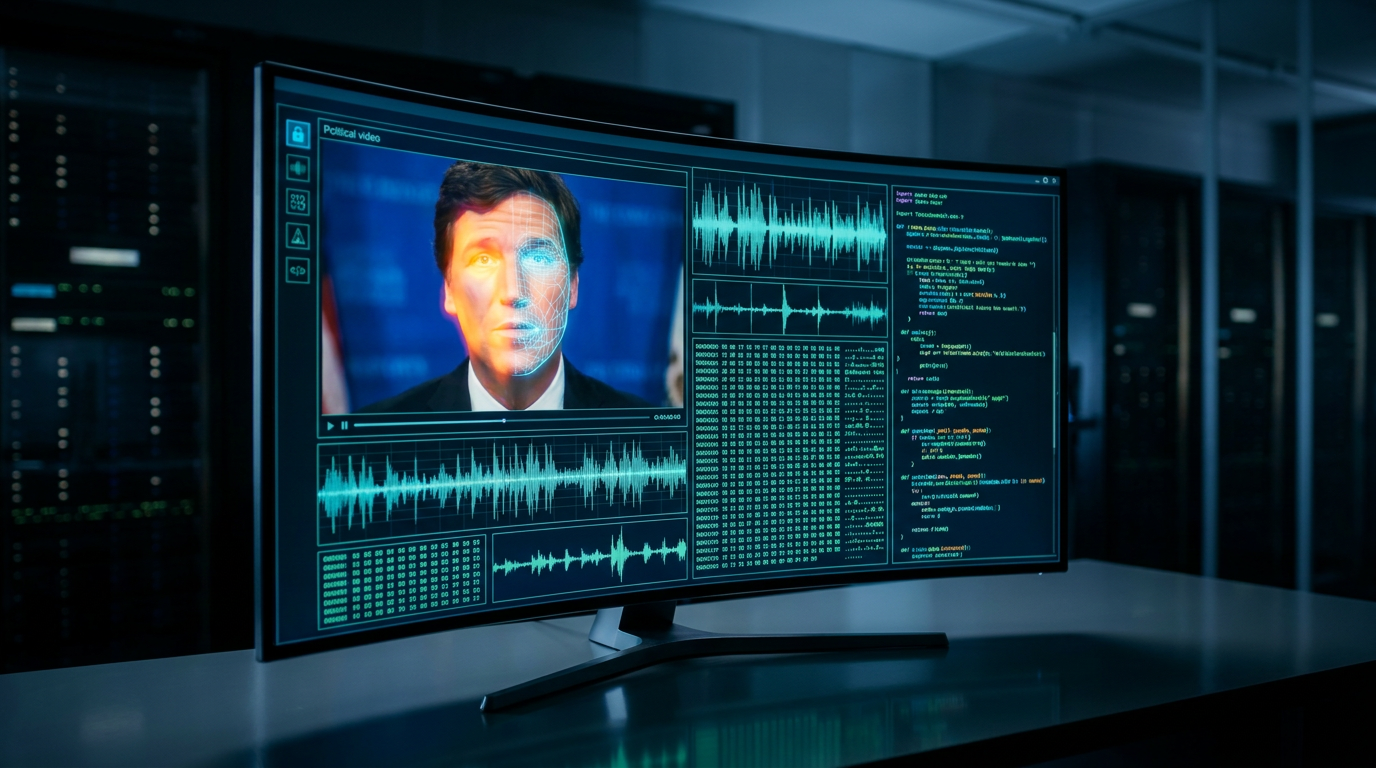
As synthetic media floods the internet, a new ecosystem of open-source intelligence tools, cryptographic watermarks, and AI-powered forensics is successfully helping investigators trace and debunk political deepfakes.
By Factlen Editorial Team
- Digital Forensics Experts
- Focus on algorithmic detection and identifying the mathematical signatures of AI generation.
- Provenance Advocates
- Focus on establishing a cryptographic chain of custody for authentic media from the moment of capture.
- OSINT Investigators
- Focus on tracing the human networks and infrastructure behind disinformation campaigns.
What's not represented
- · Open-Source AI Developers
- · Social Media Platform Moderators
Why this matters
With global elections and corporate security increasingly targeted by synthetic media, understanding how these fakes are caught empowers readers to navigate the digital landscape with confidence rather than anxiety.
Key points
- Algorithmic forensics now detect deepfakes by analyzing invisible compression artifacts rather than relying on visual cues like hands or teeth.
- Audio deepfakes are increasingly common in phishing, but detection tools can flag unnatural prosody and lip-sync misalignment.
- The C2PA standard embeds cryptographic metadata into media at creation, establishing a verifiable chain of custody for authentic content.
- Blockchain technology is being used in global elections to create immutable records of polling station media, preventing retroactive AI manipulation.
- Automated OSINT tools allow investigators to trace the digital footprints of disinformation networks, shifting from defense to offense.
The sheer volume of synthetic media has reached a critical tipping point. The European Commission has noted that up to 90% of online content could soon be synthetically generated or altered in some capacity. As generative AI tools became universally accessible, the creation of manipulated media skyrocketed, with industry projections hitting 8 million deepfakes shared annually by 2025.[2][4]
The initial panic surrounding this explosion centered on the fear that deepfakes would completely destabilize democratic elections and corporate security. Yet, as the 2026 election cycle unfolds globally, a counter-revolution has quietly succeeded in neutralizing the worst of these threats.[8]
Fact-checkers, cybersecurity professionals, and open-source intelligence (OSINT) investigators have built a robust, multi-layered defense system. Rather than relying on a single algorithm, they now deploy a combination of cryptographic provenance, algorithmic forensics, and automated network tracing to dismantle disinformation campaigns before they can spread.[8]

Claim 1: Visual cues are dead; algorithmic forensics have taken over. In the early days of generative AI, detecting a deepfake was often a matter of looking for anatomical errors—extra fingers, fused digits, or unnaturally asymmetrical eyes.[3]
By 2025, major AI models had largely solved these rendering issues, making visual inspection by the naked eye dangerously obsolete. A journalist trained on 2023 detection methods might develop false confidence, declaring a highly sophisticated deepfake as authentic simply because it passes outdated visual tests.[3]
Instead, modern detection relies on algorithmic forensics. AI detection platforms analyze media for "compression artifacts" and unusual pixel correlations. When AI generates an image, it leaves behind mathematical signatures and unnatural compression patterns that differ entirely from camera-originated raw files.[3][4]
Claim 2: Audio is the new frontline, but acoustic artifacts give fakes away. While hyper-realistic video grabs headlines, the most sophisticated and frequent deepfake attacks often arrive via voice calls. Deepfake fraud incidents increased fourfold globally between 2023 and 2024, driven heavily by voice cloning used in corporate phishing.[7]

Claim 2: Audio is the new frontline, but acoustic artifacts give fakes away.
To combat this, audio detection tools now analyze lip-sync alignment in videos and scrutinize the "prosody"—the rhythm, stress, and intonation—of speech. AI voice clones frequently struggle to replicate the micro-acoustic artifacts of genuine human breathing and vocal cord resonance, anomalies that specialized software can instantly flag.[7]
Claim 3: Provenance and watermarking are creating a "chain of custody" for reality. Detecting a fake after it goes viral is a reactive measure. The proactive solution gaining massive traction in 2026 is the Coalition for Content Provenance and Authenticity (C2PA) standard.[1]
C2PA embeds cryptographic metadata into digital content at the moment of creation, allowing users to validate the origin and authenticity of the media. While bad actors can strip watermarks or use open-source models that don't apply them, the absence of a C2PA credential on a supposed "breaking news" photo is now treated as a massive red flag by investigators.[1][8]
Claim 4: Blockchain is securing election media in real-time. To further harden this chain of custody, organizations are turning to decentralized ledgers. During recent major elections in Taiwan, India, and Indonesia, civic projects leveraged blockchain technology to register media files captured by voters and journalists.[6]

By indexing archived election media with unique identifiers on a blockchain, these initiatives ensured that content history records remained immutable and transparent. Once a photo of a polling station or a candidate's speech was written to the ledger, it could not be secretly altered, fundamentally changing how voters verify facts.[6]
Claim 5: OSINT automation is mapping the networks behind the fakes. Identifying a deepfake is only half the battle; finding out who deployed it is the other. The OSINT tools market, expected to reach $29 billion by 2026, has evolved to automate this exact process.[5]
Platforms like ShadowDragon, Maltego, and SpiderFoot can pull information from over 200 different sources simultaneously, mapping digital footprints and connecting seemingly isolated data points. When a deepfake surfaces, these tools trace the upload origins, domain registrations, and social media networks of the distributors in minutes.[5]

This integration of AI into OSINT allows investigators to move beyond simply labeling a video as "fake." They can now expose the coordinated networks pushing the disinformation, turning a defensive fact-check into an offensive exposure of bad actors.[5][8]
How we got here
Early 2023
AI image generators struggle with anatomy, making visual detection easy for the general public.
January 2024
Blockchain provenance tools are successfully deployed to verify media during the Taiwan elections.
Mid 2024
Major tech companies and newsrooms begin adopting the C2PA standard for content credentials.
2025
Deepfake volume surges, prompting a shift toward algorithmic forensics as visual cues become obsolete.
2026
OSINT automation and AI detection platforms successfully neutralize several high-profile political deepfake campaigns.
Viewpoints in depth
Digital Forensics Experts
Focus on algorithmic detection and identifying the mathematical signatures of AI generation.
This camp argues that the arms race between AI generators and AI detectors will always be won by the detectors if they focus on the invisible math. They emphasize that while generative models can fool the human eye by perfecting lighting and anatomy, they cannot avoid leaving behind compression artifacts and unnatural pixel correlations. Their primary concern is ensuring these enterprise-grade detection tools remain accessible to local newsrooms and independent fact-checkers, not just well-funded corporate security teams.
Provenance Advocates
Focus on establishing a cryptographic chain of custody for authentic media from the moment of capture.
Rather than trying to detect every fake, this viewpoint argues we should focus on proving what is real. Advocates for the C2PA standard and blockchain ledgers believe that 'opt-in reality' is the only scalable solution. They argue that if all legitimate cameras, smartphones, and news organizations cryptographically sign their media, the public will naturally learn to distrust any unsigned viral content. They acknowledge the challenge of open-source models that refuse to implement watermarks, but view provenance as a necessary baseline for digital trust.
OSINT Investigators
Focus on tracing the human networks and infrastructure behind disinformation campaigns.
For OSINT professionals, a deepfake is just a piece of evidence; the real target is the network distributing it. They argue that hyper-focusing on the media itself misses the broader context. By using automated tools to map domain registrations, social media amplification rings, and financial ties, they aim to dismantle the infrastructure of bad actors. They warn that as AI detection becomes a cat-and-mouse game, tracking the human behavior and metadata surrounding the deployment of fakes will remain the most reliable way to uncover the truth.
What we don't know
- Whether open-source AI models will ever universally adopt C2PA watermarking standards, as many currently operate outside regulatory frameworks.
- How effectively the general public will adapt to checking for cryptographic 'content credentials' before sharing sensational media.
- The long-term impact of 'false positives,' where legitimate human-created media is incorrectly flagged as AI-generated by overzealous detection algorithms.
Key terms
- OSINT
- Open-Source Intelligence; the practice of collecting and analyzing publicly available data for investigative purposes.
- C2PA
- Coalition for Content Provenance and Authenticity; an open technical standard that binds cryptographic metadata to digital media.
- Compression Artifacts
- Unnatural pixel patterns left behind by AI generation algorithms, invisible to the human eye but detectable by software.
- Prosody
- The rhythm, stress, and intonation of speech, which AI voice cloning tools often struggle to replicate perfectly.
Frequently asked
Can AI deepfakes still fool detection tools?
Yes, no single tool is perfectly accurate. However, combining visual forensics, audio analysis, and OSINT tracing catches the vast majority of fakes.
What is a C2PA watermark?
It is a cryptographic signature embedded into a photo or video at the moment of creation, proving who made it and whether it has been altered.
Why can't we just look for weird hands or teeth anymore?
Generative AI models advanced significantly by 2025, largely eliminating the obvious anatomical errors that characterized early deepfakes.
Sources
Source coverage
8 outlets
3 viewpoints surfaced








[1]Council on Foreign RelationsProvenance Advocates
Watermarking AI-Generated Content: Promises and Perils
Read on Council on Foreign Relations →[2]European CommissionProvenance Advocates
Tackling AI-generated disinformation
Read on European Commission →[3]Global Investigative Journalism NetworkDigital Forensics Experts
Spotting Deepfakes in an Election Year: How AI Detection Tools Work
Read on Global Investigative Journalism Network →[4]CloudSEKDigital Forensics Experts
Best Deepfake Detection Tools in 2026
Read on CloudSEK →[5]HackReadOSINT Investigators
Top OSINT Tools for Digital Investigations in 2026
Read on HackRead →[6]Numbers ProtocolProvenance Advocates
How Blockchain Enhances Election Media Provenance
Read on Numbers Protocol →[7]Adaptive SecurityDigital Forensics Experts
How to Detect AI Deepfakes: Tools and Forensic Techniques
Read on Adaptive Security →[8]Factlen Editorial TeamOSINT Investigators
Synthesis by Factlen editorial team
Read on Factlen Editorial Team →

More in news politics
See all 7 stories →U.S.-Iran Ceasefire
U.S. and Iran Reach Ceasefire Agreement to End Four-Month War
0 sources

Strait of Hormuz
U.S. and Iran on Verge of Peace Deal to Reopen Strait of Hormuz After 107-Day War
0 sources

Student Debt
Sweeping Federal Student Loan Overhaul Takes Effect July 1, Capping Borrowing and Replacing Repayment Plans
0 sources
Crowdsourced Moderation
The Evidence on Crowdsourced Fact-Checking: High Accuracy, Fatal Delays
0 sources
Every angle. Every day.
Get news politics stories with full source coverage and perspective breakdowns delivered to your inbox.