
Fact-Checking the Fact-Checkers: The Evidence on Crowdsourced Context
Recent studies reveal that decentralized 'crowdchecking' systems are highly effective at reducing belief in misinformation and pressuring authors to delete misleading posts, though speed remains a critical vulnerability.
By Factlen Editorial Team

- Behavioral Scientists
- Argue that public peer-correction leverages reputational risk and social pressure to encourage voluntary retractions.
- Civic Technologists
- Focus on the scalability of decentralized moderation and the trust-building power of cross-partisan bridging algorithms.
- Platform Critics
- Warn that while accurate, crowdsourced notes are often too slow to catch misinformation during its peak viral window.
What's not represented
- · Professional fact-checkers whose funding and roles are being displaced by crowdsourced systems.
- · Users in non-English speaking regions where crowdchecking participation and consensus may be significantly lower.
Why this matters
As social media platforms move away from traditional moderation, understanding whether crowdsourced fact-checking actually works is crucial for the future of our digital information ecosystem and democratic discourse.
Key points
- Crowdsourced fact-checking reduces belief in misinformation as effectively as expert moderation.
- Public community notes increase the likelihood of authors deleting their own misleading posts by 32 percent.
- Users trust peer-generated notes more than generic warning labels because they provide transparent context.
- Bridging algorithms prevent partisan manipulation by requiring consensus across opposing viewpoints.
- The primary limitation of crowdchecking is speed, as viral falsehoods often outpace the consensus process.
The modern internet is locked in a high-stakes, seemingly endless battle over the nature of shared reality. For years, major social media platforms relied almost exclusively on centralized trust and safety teams, or partnerships with third-party expert organizations, to actively flag and remove false information from their networks. But this top-down approach to content moderation has increasingly sparked fierce accusations of censorship, political interference, and partisan bias, leaving tech executives and policymakers searching desperately for a more democratic, transparent solution to the misinformation crisis.[7]
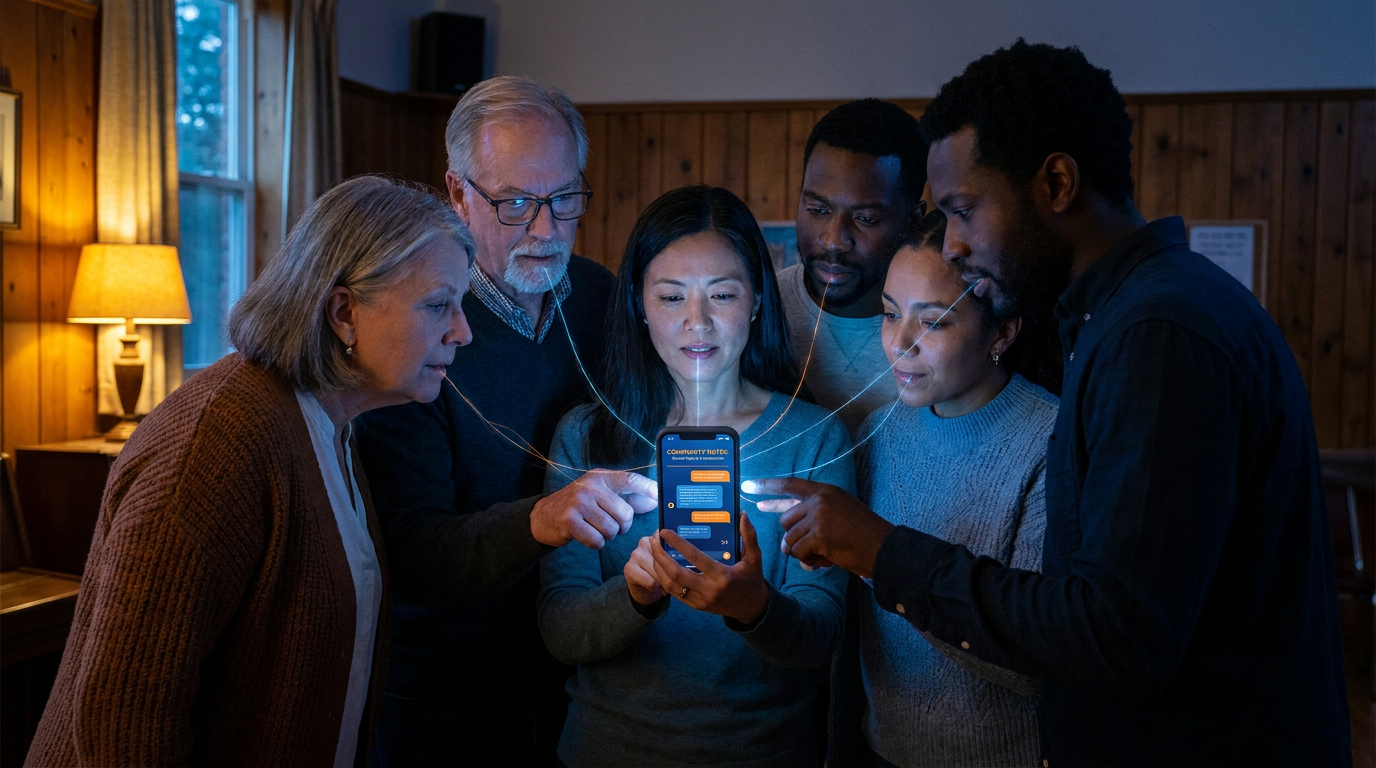
Enter the concept of "crowdchecking," a decentralized model of digital moderation that has recently gained massive traction, best known through X's (formerly Twitter) Community Notes feature. Instead of relying on opaque algorithms or corporate employees to quietly delete posts or ban users, this system empowers everyday users to collaboratively write, debate, and vote on contextual notes that are appended directly beneath potentially misleading content. It represents a fundamental shift in how the internet handles truth, moving from a paradigm of authoritative removal to one of collective contextualization.[4][5]
When the concept of crowdsourced fact-checking was first introduced to the public, media critics and academic researchers alike were highly skeptical of its potential. The central, glaring question was obvious to anyone who had spent time online: How could the exact same digital public that is responsible for rapidly spreading viral misinformation be trusted to accurately and fairly correct it? Many assumed the system would simply devolve into another partisan battleground, where ideological mobs would weaponize the notes to harass their political opponents and bury inconvenient truths.[5]
However, a wave of recent, rigorous empirical research provides a surprising and highly optimistic answer: the system actually works, and in several key metrics, it even outperforms traditional expert moderation. A comprehensive May 2026 study published in the peer-reviewed journal PLOS One found that crowdsourced fact-checking is just as effective at reducing a reader's confidence in misinformation as interventions written by professional, institutional fact-checkers. This finding challenges the long-held assumption that only credentialed experts can effectively combat digital falsehoods.[1]

The PLOS One researchers, Cindy Phan Vu and Lauren L. Saling, conducted extensive testing on users' willingness to believe and share false claims before and after exposure to different types of digital corrections. They discovered that the crowd-generated notes significantly reduced both the underlying belief in the false information and the willingness of users to amplify it by retweeting. The data suggests that the collective intelligence of a well-structured crowd can match the analytical rigor of dedicated professionals when it comes to shifting public perception.[1]
The secret to this surprising efficacy lies not just in the objective facts being presented to the reader, but in the specific format and origin of the correction. A separate, large-scale study published by the National Institutes of Health (NIH) found that users across the entire political spectrum perceive community-generated notes as significantly more trustworthy than the simple, context-free "misinformation" warning labels that platforms previously utilized. When users feel the correction comes from their peers rather than a corporate overlord, their defensive barriers lower.[3]
This increased trust stems directly from the transparency of the crowdchecking model. Rather than a faceless algorithm slapping a generic, unexplained "False" sticker on a controversial post, crowdchecking provides a highly readable, nuanced explanation complete with direct links to primary sources. The NIH study concluded that this added context is the primary driver of user trust, effectively mitigating the partisan defensiveness and confirmation bias that usually accompanies traditional fact-checking efforts.[3]
But perhaps the most profound and unexpected impact of crowdchecking isn't on the readers consuming the content—it is on the original authors of the misinformation themselves. A landmark November 2025 study published in the prestigious journal Information Systems Research analyzed a massive dataset of over 260,000 posts to meticulously measure how content creators react when their peers publicly and visibly correct them on the timeline.[2][5]
The research team, hailing from the University of Rochester, the University of Illinois Urbana-Champaign, and the University of Virginia, utilized an advanced causal inference method known as regression discontinuity design to isolate the exact effect of the notes. Their findings were striking and definitive: posts that received a public community note were 32 percent more likely to be voluntarily deleted by their authors compared to posts that only received private, invisible warnings from the platform.[2][5]

Huaxia Rui, a co-author of the study and professor of information systems, noted that trying to objectively define and forcibly remove misinformation often backfires, inadvertently entrenching the author's beliefs and sparking outrage. However, public peer-generated corrections introduce a completely different and highly powerful social dynamic: immediate reputational risk. When an author's peers publicly dismantle their claim with cited evidence, the social cost of leaving the post up becomes painfully high.[5]
However, public peer-generated corrections introduce a completely different and highly powerful social dynamic: immediate reputational risk.
This peer pressure effect is particularly potent among high-profile, influential users who rely on their digital reputation. The study found that verified accounts—those with large follower bases, significant public visibility, and established personal brands—were the fastest demographic to delete their own misleading posts once a community note was attached. The intense desire to maintain credibility in front of their audience vastly outweighed the stubborn desire to double down on a demonstrably false claim.[5]
Researchers characterize this fascinating dynamic as a much more "civilized approach" to resolving online disagreements and curbing the spread of lies. Voluntary retraction by the author entirely sidesteps the thorny First Amendment debates, political hearings, and censorship accusations that inevitably plague forcible content removal. It strikes a delicate, highly effective balance between protecting free expression and ensuring factual accuracy in the public square.[2][7]
The underlying mechanics that make these systems function so well rely heavily on what software engineers and technologists call a "bridging algorithm." For a crowdsourced note to graduate from a draft to a public, visible correction, it cannot simply be upvoted by a massive partisan mob. The algorithm strictly requires consensus from users who have historically disagreed on past notes, ensuring that the final correction appeals to a broad, cross-partisan baseline of reality rather than a factional echo chamber.[4]
The undeniable success of this decentralized model has not gone unnoticed by the broader technology industry, sparking a massive shift in how Silicon Valley approaches trust and safety. In early 2025, Meta officially announced it would begin scaling back its heavy reliance on third-party fact-checking partnerships in favor of adopting its own community notes system across its platforms. This move signals a permanent industry pivot toward decentralized, user-driven moderation at a global scale.[6]

Despite these overwhelming successes and the enthusiastic adoption by major tech conglomerates, the scientific evidence pack on crowdchecking does contain one significant, glaring vulnerability: the issue of speed. A comprehensive analysis published by the LSE Impact Blog highlighted that while the crowdsourced notes are highly accurate—achieving an impressive 97 percent accuracy rate on complex medical topics—they almost always arrive too late to stop the initial bleeding.[4]
Digital misinformation is engineered to be highly emotive and hyper-engaging, allowing it to typically achieve its maximum viral reach within the first few hours of publication. Because the crowdchecking process inherently requires time for users to draft notes, gather cross-partisan votes, and achieve the necessary algorithmic consensus, the most damaging falsehoods have often already saturated the network and done their damage before the correction ever appears on the screen.[4]
Furthermore, the vast majority of misleading posts on the internet never receive a crowdsourced note at all. The sheer, overwhelming volume of daily content generated on modern social networks means that crowdchecking functions more like a targeted, high-beam spotlight on the most prominent falsehoods, rather than acting as a comprehensive, catch-all filter for the entire platform's ecosystem.[4]

To address this critical vulnerability, leading researchers suggest that platforms should absolutely not view crowdchecking as a total, silver-bullet replacement for expert moderation or algorithmic detection. Instead, the most resilient and healthy information ecosystems of the future will likely need to employ a sophisticated hybrid approach that leverages the strengths of both humans and machines.[1][4]
In this hybrid future, artificial intelligence could be rapidly deployed to detect and artificially slow the initial viral spread of highly suspicious, unverified claims, effectively buying crucial time. This temporary friction would allow human experts and crowdsourced communities the necessary window to evaluate the nuance, debate the evidence, and provide the vital context before the misinformation can achieve escape velocity.[1][6]
Ultimately, the wealth of new data reveals a surprisingly optimistic and empowering truth about the modern internet: when given the right tools, transparent structures, and proper incentives, online communities are highly capable of policing themselves and self-correcting. By leveraging the power of transparency and cross-partisan peer consensus, crowdchecking is proving that the best defense against bad information might just be the collective wisdom of the public itself.[2][5][7]
How we got here
Early 2021
Twitter launches 'Birdwatch', the first major crowdsourced fact-checking experiment, later rebranded as Community Notes.
Late 2022
Community Notes are made globally visible on the platform, expanding the dataset for researchers.
Jan 2025
Meta announces it will scale back third-party fact-checking partnerships in favor of adopting its own community notes system.
Nov 2025
A landmark study in Information Systems Research proves that public notes increase author self-deletion by 32 percent.
May 2026
PLOS One publishes research confirming that crowdsourced notes reduce belief in misinformation as effectively as expert fact-checkers.
Viewpoints in depth
Behavioral Scientists' View
Focusing on the psychological impact of peer pressure and reputational risk.
Researchers in this camp emphasize that traditional content moderation fails because it triggers defensive psychological reactions. When a centralized authority deletes a post, the author often feels censored and doubles down on their beliefs. However, crowdsourced notes introduce a powerful social dynamic: peer pressure. By publicly attaching context to a post, the system threatens the author's credibility and social standing, particularly for verified users with large audiences. This reputational risk shifts the incentive structure, making voluntary self-deletion the most rational choice to save face.
Civic Technologists' View
Championing decentralized consensus and algorithmic bridging.
For technologists, the triumph of crowdchecking lies in its architecture. The 'bridging algorithm' solves the fundamental flaw of simple upvote systems, which are easily manipulated by partisan mobs. By requiring consensus from users who have historically disagreed, the system mathematically guarantees that a public note appeals to a shared baseline of reality. Technologists view this as a scalable, democratic alternative to the impossible task of hiring enough expert moderators to police the entire internet.
Platform Critics' View
Highlighting the critical vulnerability of speed and viral reach.
Critics acknowledge the accuracy of crowdchecking but argue it fundamentally misunderstands the lifecycle of online falsehoods. Misinformation is designed to be highly emotive, allowing it to achieve peak viral velocity within hours of publication. Because community notes require time for human drafting and cross-partisan voting, they almost always arrive after the damage is done. From this perspective, relying solely on crowdsourcing is a cost-cutting measure by tech giants that allows the most dangerous lies to spread unchecked during their most critical window.
What we don't know
- Whether crowdchecking systems can be successfully scaled to video-first platforms like TikTok.
- How sophisticated bad actors might eventually reverse-engineer the bridging algorithms to suppress legitimate information.
- The long-term impact of decentralized moderation on overall societal polarization outside of social media.
Key terms
- Crowdchecking
- A decentralized moderation system where social media users collaboratively write and vote on contextual notes to append to misleading posts.
- Bridging Algorithm
- A mathematical formula that prioritizes consensus between users with opposing viewpoints rather than simple majority rule.
- Regression Discontinuity Design
- A statistical method used by researchers to measure the causal impact of an intervention, such as the exact moment a public note appears on a post.
- Confirmation Bias
- The psychological tendency for people to favor information that confirms their existing beliefs while ignoring contradictory evidence.
Frequently asked
What is a bridging algorithm?
It is a system that requires users who typically disagree on past issues to reach a consensus before a fact-check note is made public.
Does crowdchecking replace expert fact-checkers?
No. Researchers emphasize that crowdsourcing and expert moderation are complementary, with experts handling complex investigations while the crowd scales context.
Why do authors delete their own misleading posts?
Public community notes create reputational risk. Authors, especially those with large followings, often delete their posts to protect their credibility once context is added.
Are community notes fast enough to stop viral fake news?
Often, no. Studies show that misinformation peaks in virality within hours, while crowdsourced notes can take much longer to achieve the necessary consensus.
Sources
Source coverage
7 outlets
3 viewpoints surfaced






[1]PLOS OneCivic Technologists
Trust the crowd: Crowdsourced fact-checking is as effective at reducing confidence in misinformation as expert fact-checking
Read on PLOS One →[2]Information Systems ResearchBehavioral Scientists
Can Crowdchecking Curb Misinformation? Evidence from Community Notes
Read on Information Systems Research →[3]National Institutes of HealthCivic Technologists
Community notes increase trust in fact-checking on social media
Read on National Institutes of Health →[4]LSE Impact BlogPlatform Critics
Do Community Notes work?
Read on LSE Impact Blog →[5]University of RochesterBehavioral Scientists
The most effective online fact-checkers? Your peers
Read on University of Rochester →As Social Media Scales Back Fact-Checking, Can Technologies Fill the Gap?
Read on National Institutes of Health →[7]Factlen Editorial TeamPlatform Critics
Synthesis by Factlen editorial team
Read on Factlen Editorial Team →

More in news politics
See all 7 stories →U.S.-Iran Ceasefire
U.S. and Iran Reach Ceasefire Agreement to End Four-Month War
0 sources

Strait of Hormuz
U.S. and Iran on Verge of Peace Deal to Reopen Strait of Hormuz After 107-Day War
0 sources

Student Debt
Sweeping Federal Student Loan Overhaul Takes Effect July 1, Capping Borrowing and Replacing Repayment Plans
0 sources

Crowdsourced Moderation
The Evidence on Crowdsourced Fact-Checking: High Accuracy, Fatal Delays
0 sources
Every angle. Every day.
Get news politics stories with full source coverage and perspective breakdowns delivered to your inbox.