
European and Global Football Bodies Unleash Record Investments in Women's Academies and Grassroots
A massive wave of funding, headlined by UEFA's €1 billion 'Unstoppable' strategy, is transforming women's football infrastructure ahead of the 2026/27 season. The capital injection aims to eliminate pay-to-play barriers, build elite academies, and establish fully professional leagues across the globe.

As the 2026/2027 European football season approaches, the women's game is experiencing an unprecedented structural transformation driven by a massive influx of capital. Moving beyond the era of fighting for basic recognition, the sport has entered a phase of strategic, billion-dollar expansion. At the center of this shift is UEFA's "Unstoppable" strategy, a landmark initiative committing €1 billion in competition revenue and direct investment to women's football initiatives by 2030.
This financial pledge is designed to overhaul the sport from the grassroots level up to the elite professional tiers, ensuring that the surge in popularity following recent international tournaments translates into sustainable, long-term infrastructure. The sheer scale of the funding marks a historic departure from previous decades, signaling that major governing bodies now view women's football not as a charitable endeavor, but as one of the most investable growth markets in global sports.
The immediate effects of this decade-long pledge are already materializing in UEFA's financial blueprints for the upcoming season. In its recently approved 2026/27 budget, the European governing body allocated €77 million specifically toward women's, youth, and futsal competitions. Furthermore, UEFA increased its funding for broader football development and education programs to €78.3 million, with a significant portion earmarked directly for the "Unstoppable" mandate.
This capital injection is intended to support national associations in building out their domestic pathways, ensuring that the financial windfall from elite men's and women's tournaments trickles down to local communities. UEFA President Aleksander Čeferin has emphasized that the governing body's mission is to secure a prominent, permanent place for women's football within the European sporting ecosystem, relying on this targeted funding to bridge historical gaps in resources and facilities.[1]
The overarching targets of the €1 billion "Unstoppable" strategy are highly specific and aggressively ambitious. By 2030, UEFA aims to establish six fully professional women's leagues across the continent—double the current number—and increase the pool of fully professional female players from roughly 3,000 to 5,000. Beyond the elite professional ranks, the core objective is to make football the most-played team sport for women and girls in every single European country.
To achieve this, the funding is heavily weighted toward developing comprehensive pathways that seamlessly connect youth participation to senior professional careers. This involves training thousands of new coaches and referees, upgrading training facilities, and ensuring that young girls have the exact same geographic access to high-quality academies as their male counterparts.
While UEFA focuses on the European continent, FIFA is simultaneously executing a massive global push to expand the women's game. The international governing body has committed $71 million to its Women's Football Development Programmes for the current cycle, aiming to reach a staggering 60 million female players worldwide by 2027.
This global strategy involves 13 distinct development programs available to all 211 member associations, ranging from grassroots initiatives in emerging markets to elite coach mentorship and national team preparation. Recent capacity-building workshops in regions like The Gambia, Timor-Leste, and the Turks and Caicos Islands demonstrate FIFA's intent to build sustainable ecosystems in nations where women's football has historically been underfunded or culturally marginalized.
The macro-level investments from UEFA and FIFA are translating into tangible, brick-and-mortar realities at the national level. A prime example is Northern Ireland, which recently hosted the UEFA Women's Under-17 Championship. This milestone was made possible by years of strategic investment from the Irish Football Association, heavily supported by UEFA's HatTrick funding program.
The Irish FA has utilized these funds to establish a Girls' National Performance Programme, providing elite coaching to hundreds of players aged 11 to 14 across regional centers. This pathway continues into an Elite Girls' Youth Academy, ensuring that talented players receive consistent technical training, strength conditioning, and competitive fixtures without having to leave their local communities. It represents the exact model of sustainable, localized development that the billion-euro pledges are designed to replicate across the globe.[3]
At the club level, the ripple effects of this financial boom are prompting historic organizational shifts. Ahead of the 2026/27 season, English side Brentford FC announced the launch of a comprehensive new girls' Academy, moving away from their previous B-team structure to create a more effective route into senior football. Crucially, Brentford's new academy model removes the traditional pay-to-play barriers that have historically excluded talented girls from lower-income backgrounds.
By fully funding the participation of young athletes and integrating them into the Junior Premier League, clubs like Brentford are actively dismantling the financial hurdles that have long bottlenecked female talent. This localized investment mirrors the broader continental strategy: raising standards, increasing accessibility, and building a robust pyramid that can sustain the professional game for decades.
The influx of capital is not limited to governing bodies and traditional community clubs; private investors and multi-club ownership groups are increasingly viewing women's football as a premier asset class. High-profile investors are acquiring stakes in multiple women's teams across different leagues, injecting vital capital and professionalizing club operations at an unprecedented rate.
This commercial enthusiasm aligns with UEFA's goal to make the sport the most "investable" women's property globally. As broadcast viewership continues to break records and commercial sponsorships are unbundled from men's properties to stand on their own merits, private equity and independent owners are rushing to secure a foothold in a market that is widely projected to yield massive long-term returns.[2]
However, this rapid commercialization and influx of private capital has prompted governing bodies to implement strict regulatory guardrails to protect the integrity of the sport. As multi-club ownership models proliferate, UEFA's director of women's football, Nadine Kessler, has vowed to take a hard line on enforcing competitive balance.
Rules prohibiting clubs with the same owner from competing against each other in the UEFA Women's Champions League are being strictly monitored and enforced, with no exceptions granted for the women's game. This regulatory firmness underscores a critical maturation point for the sport: while governing bodies are desperate to attract investment and accelerate growth, they are simultaneously establishing the governance structures necessary to prevent monopolization and ensure a fair, competitive landscape.[2]
Ultimately, the convergence of UEFA's €1 billion pledge, FIFA's global development funds, and surging private investment marks a permanent cultural and economic shift for women's football. The narrative has decisively moved away from highlighting the sport's potential to actively engineering its dominance.
The narrative has decisively moved away from highlighting the sport's potential to actively engineering its dominance.
With fully funded academies replacing pay-to-play models, professional minimum standards being enforced across national leagues, and a clear, lucrative pathway established from grassroots to the Champions League, the infrastructure of the women's game is finally beginning to match the passion of its players and fans. As the 2026 season kicks off, the gap between grassroots dreams and professional reality is closing faster than ever before, setting the stage for a truly unstoppable era in global sports.
Key points
- UEFA has committed €1 billion to women's football initiatives through its 'Unstoppable' strategy running until 2030.
- The funding aims to double the number of fully professional European leagues to six and support 5,000 professional players.
- FIFA is concurrently investing $71 million to reach 60 million female players globally by 2027.
- Local clubs are utilizing new funding to launch fully funded academies, eliminating historic pay-to-play barriers for young girls.
How we got here
2019
UEFA's previous strategy sets a goal of 2.5 million registered female players across its member federations.
July 2023
The expanded FIFA Women's World Cup generates record revenue and viewership, accelerating commercial interest in the sport.
October 2024
UEFA officially launches the €1 billion 'Unstoppable' strategy for the 2024-2030 cycle.
May 2026
UEFA approves its 2026/27 budget, allocating €77 million specifically for women's, youth, and futsal competitions.
June 2026
Clubs like Brentford FC finalize the launch of fully funded, barrier-free girls' academies for the upcoming season.
- Global Governing Bodies
- Focusing on massive structural investment to hit ambitious global participation targets and establish fully professional leagues.
- Local Clubs & Associations
- Prioritizing the removal of pay-to-play barriers and building elite academies to nurture local talent from the ground up.
- Commercial Investors
- Viewing women's football as a highly investable, sustainable growth market ripe for private equity and multi-club ownership.
Perspectives this story doesn't cover
- Independent grassroots coaches
- Players in non-European emerging markets
Sources
Source coverage
3 outlets
3 viewpoints surfaced


- [1]UEFAGlobal Governing Bodies
2026/27 UEFA budget: Outlining our commitment to invest in the future of football
Read on UEFA → - [2]The GuardianCommercial Investors
David Raya: ‘When you lose a Champions League final it destroys you inside’
Read on The Guardian → - [3]Irish FALocal Clubs & Associations
Investing in the Future of Girls' Football in Northern Ireland
Read on Irish FA →

More in Sports
See all →AC Milan Rebuild
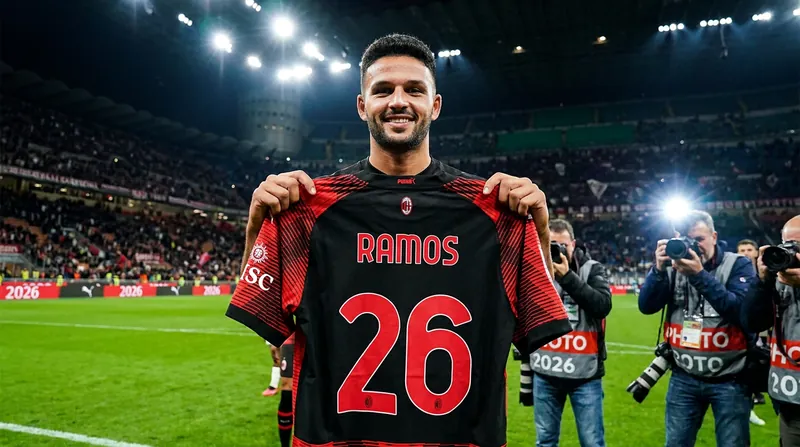
AC Milan Announces Record-Breaking Signing of Goncalo Ramos in Blockbuster Transfer Deal
3 sources
National Team Reset
Nagelsmann Steps Down as Germany Coach; DFB Pivots to Jürgen Klopp in Major Reset
3 sources

Transfer Market
Man City Shatters British Transfer Record With £116M Signing of Elliot Anderson
4 sources
World Cup Knockouts
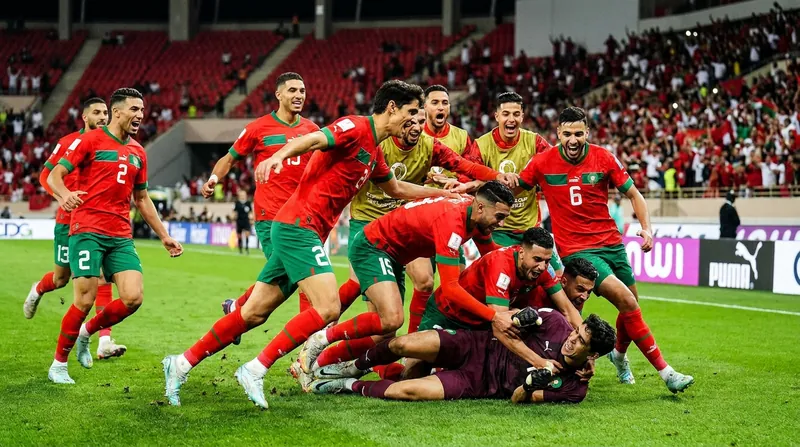
Morocco Stuns Netherlands on Penalties to Reach World Cup Round of 16
5 sources
Comments
Every angle. Every day.
Get Sports stories with full source coverage and perspective breakdowns, free every day.