
Israel Strikes Beirut as U.S.-Iran Peace Deal Nears, Drawing Sharp Rebuke from Trump
Israeli warplanes struck Hezbollah targets in Beirut's southern suburbs on Sunday, threatening to derail a highly anticipated U.S.-Iran peace agreement and prompting President Trump to harshly criticize Prime Minister Benjamin Netanyahu.
By Factlen Editorial Team
- U.S. Administration
- Prioritizes finalizing the regional peace deal and reopening the Strait of Hormuz, viewing the Israeli strike as a dangerous provocation.
- Israeli Government
- Maintains that it must defend its northern border against Hezbollah attacks and refuses to be dictated to by U.S.-Iran negotiations.
- Iranian Leadership
- Demands a complete cessation of Israeli operations in Lebanon as a precondition for peace, threatening military retaliation.
What's not represented
- · Lebanese Civilians
- · Global Shipping Industry
Why this matters
A collapse of the U.S.-Iran peace negotiations would prolong a devastating three-month regional war and keep the Strait of Hormuz closed, severely impacting global oil supplies and the international economy. The unprecedented public rift between the U.S. and Israeli leadership also signals a major shift in Middle Eastern diplomatic dynamics.
Key points
- Israeli warplanes struck a Hezbollah target in Beirut's southern suburbs on Sunday.
- The IDF said the strike was a response to three drones launched into northern Israel.
- President Trump harshly criticized Prime Minister Netanyahu for launching the attack as a U.S.-Iran peace deal neared.
- Trump claimed the peace deal is still scheduled to be signed electronically on Sunday.
- Iranian officials warned the strike would not go unanswered and cast doubt on the Sunday signing timeline.
- The proposed deal would reopen the Strait of Hormuz and establish a 60-day window for nuclear negotiations.
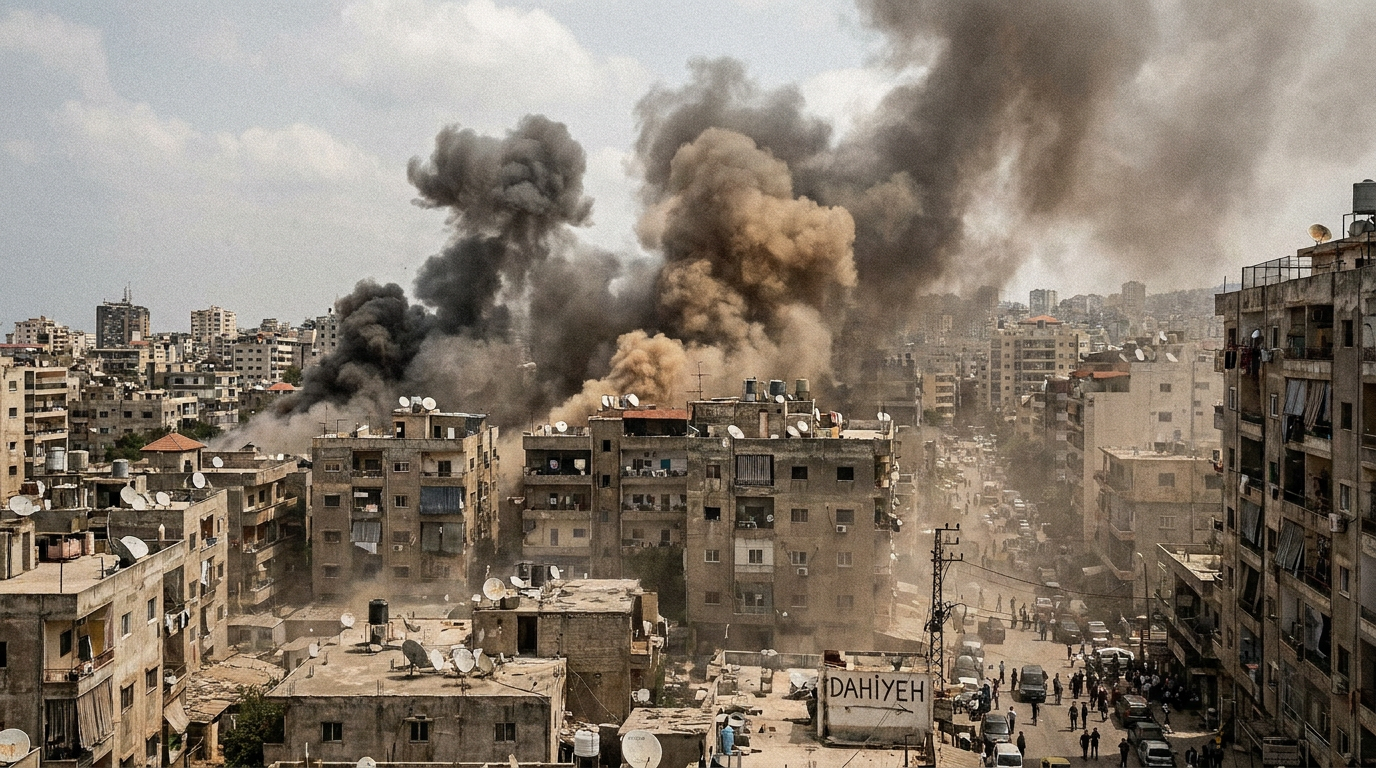
Israeli warplanes struck Hezbollah targets in Beirut's southern suburbs on Sunday, threatening to derail a highly anticipated peace agreement between the United States and Iran just hours before its expected signing. The airstrike on the densely populated Dahiyeh district sent thick plumes of smoke over the Lebanese capital and triggered a frantic diplomatic scramble to salvage a three-month effort to end the regional war. The sudden escalation underscored the fragility of the negotiations, which aim to resolve one of the most severe Middle Eastern crises in recent history.[2][5]
The timing of the attack infuriated U.S. President Donald Trump, who has staked significant political capital on brokering a comprehensive settlement before the upcoming elections. In a blunt and unprecedented rebuke, Trump told Axios that Israeli Prime Minister Benjamin Netanyahu had "no fucking judgment" for launching the strike at such a sensitive moment. The president reportedly conveyed his intense dissatisfaction directly to the Israeli leader during a tense phone call, warning that the military operation jeopardized a historic diplomatic breakthrough that the administration had spent months carefully assembling.[1]
Publicly, the U.S. president took to his Truth Social platform to urge immediate restraint, warning that the region was on the cusp of a "long and beautiful peace." Trump declared that the attack on Beirut "should not have happened" and demanded that all sides, including Israel and Hezbollah, stand down so as not to "blow it." The public dressing-down of a close ally highlighted the immense pressure the White House is applying to prevent the multi-front conflict from spiraling out of control just as a resolution appeared within reach.[2][6]

The Israel Defense Forces (IDF) defended the operation as a necessary and "precise" strike on a Hezbollah command center embedded within the civilian infrastructure. According to a joint statement from Netanyahu and Defense Minister Israel Katz, the bombing was a direct and unavoidable response to three explosive drones launched by the Lebanese militant group into military zones in northern Israel earlier in the day. "Israel will not tolerate fire directed at its territory," the statement read, signaling that Jerusalem refuses to subordinate its immediate border security to Washington's diplomatic timetable.[4][5]
The Israel Defense Forces (IDF) defended the operation as a necessary and "precise" strike on a Hezbollah command center embedded within the civilian infrastructure.
Lebanese civil defense officials reported that the strike hit a five-story apartment building with ground-floor shops, killing at least three people and injuring more than a dozen others. The two lowest floors sustained the most severe damage, leaving residents scrambling through the rubble to locate survivors. In the immediate aftermath of the bombing, the IDF issued urgent evacuation orders for nearly 30 villages in southern Lebanon, bracing for a wider escalation as both sides prepared for the possibility of a renewed, full-scale military confrontation.[4][6]
The bombardment severely complicates the final stages of the U.S.-Iran negotiations, which have been painstakingly mediated by officials from Pakistan and Qatar. Iranian leaders immediately warned that the strike crossed a definitive red line and would "not go unanswered." Brigadier General Mohammad Jafar Asadi, a senior Iranian military commander, stated that Israel's actions demonstrated a lack of American commitment and could imperil the entire diplomatic framework, raising fears that Tehran might walk away from the table entirely.[2][7]
Tehran has consistently demanded that any regional peace agreement must include a complete cessation of Israeli military operations in Lebanon, viewing the protection of its Hezbollah allies as a non-negotiable condition. Iranian Foreign Ministry officials cautioned that while a deal remains possible in the coming days, a final decision has not yet been made by the Supreme National Security Council. This directly contradicted Trump's earlier assertions that an electronic signing was firmly scheduled for Sunday, revealing a significant gap in expectations between the negotiating parties.[3][7]

The stakes of the proposed agreement extend far beyond the Levant, carrying massive implications for the global economy. The draft deal reportedly includes a 60-day framework for negotiations on Iran's nuclear program, the release of billions in frozen Iranian assets, and the immediate reopening of the Strait of Hormuz. The strategic waterway has been effectively closed to international shipping since the conflict erupted, choking off a critical artery for global oil and liquefied natural gas supplies and sending energy markets into prolonged turmoil.[2][3]
Despite the exchange of fire and the escalating rhetoric, U.S. officials remain optimistic that the diplomatic off-ramp will ultimately hold. Trump insisted to reporters that the Beirut strike had only delayed the agreement "by a few hours," projecting confidence that the economic incentives would keep Tehran engaged. However, with the IDF openly preparing for potential Iranian retaliatory missile fire, the window to finalize the historic pact is rapidly narrowing, leaving the region suspended between the promise of peace and the threat of a wider war.[1][4]
How we got here
March 2026
A wider regional conflict erupts, leading to the closure of the Strait of Hormuz and a U.S. naval blockade.
April 7, 2026
A tenuous ceasefire takes hold between Iran and Israel, though low-level exchanges continue.
Early June 2026
Mediators from Pakistan and Qatar push the U.S. and Iran closer to a comprehensive peace framework.
June 13, 2026
President Trump announces a peace deal is scheduled to be signed on Sunday, promising the immediate reopening of the Strait of Hormuz.
June 14, 2026
Israel strikes Hezbollah targets in Beirut in response to drone attacks, prompting Trump to harshly criticize Netanyahu and Iran to threaten retaliation.
Viewpoints in depth
U.S. Administration's View
Prioritizes finalizing the regional peace deal and reopening the Strait of Hormuz.
The White House views the Israeli strike as a dangerous and ill-timed provocation that threatens months of delicate diplomacy. President Trump and his advisors are intensely focused on securing a comprehensive settlement that reopens the Strait of Hormuz and stabilizes global energy markets before the upcoming elections. The administration's unprecedented public frustration with Prime Minister Netanyahu reflects a belief that immediate Israeli tactical gains in Lebanon are not worth risking a broader strategic breakthrough with Tehran.
Israeli Government's View
Maintains that it must defend its northern border against Hezbollah attacks regardless of diplomatic timelines.
Jerusalem refuses to subordinate its immediate national security to the timeline of U.S.-Iran negotiations, in which it feels largely sidelined. The IDF and Prime Minister Netanyahu argue that they cannot allow Hezbollah to launch explosive drones into northern Israeli communities without facing severe consequences. Israeli officials maintain that establishing deterrence against Iranian proxies is a sovereign right that cannot be paused simply because Washington is eager to sign a peace agreement.
Iranian Leadership's View
Demands a complete cessation of Israeli operations in Lebanon as a precondition for peace.
Tehran is balancing the massive economic incentives of a peace deal—including the release of frozen assets and sanctions relief—against its commitment to its regional allies. Iranian military and political leaders insist that a ceasefire in Lebanon is an absolute precondition for any broader agreement with Washington. They view the Beirut strike as a test of American resolve and have warned that such attacks cross a red line, threatening military retaliation even as diplomatic channels remain open.
What we don't know
- Whether Iran will launch a retaliatory military strike against Israel in response to the Beirut bombing.
- The exact timeline for when the U.S.-Iran peace agreement will be officially signed.
- How the 60-day negotiation window regarding Iran's nuclear program will be structured and enforced.
Key terms
- Strait of Hormuz
- A highly strategic waterway between the Persian Gulf and the Gulf of Oman, through which a significant portion of the world's oil and liquefied natural gas passes.
- Dahiyeh
- A predominantly Shia Muslim district in the southern suburbs of Beirut, Lebanon, known as a stronghold for the militant and political group Hezbollah.
- Hezbollah
- A heavily armed, Iran-backed Shia Islamist political party and militant group based in Lebanon.
Frequently asked
Why did Israel strike Beirut?
The IDF stated the strike targeted a Hezbollah command center in response to three explosive drones launched by the militant group into northern Israel earlier in the day.
What are the terms of the proposed U.S.-Iran deal?
The draft agreement reportedly includes reopening the Strait of Hormuz to global shipping, releasing frozen Iranian assets, and establishing a 60-day window to negotiate limits on Iran's nuclear program.
How did President Trump react to the strike?
Trump was reportedly furious, telling Axios that Prime Minister Netanyahu had "no judgment" and publicly urging all sides to stand down so as not to "blow" the imminent peace deal.
Will the peace deal still be signed?
Trump insists the deal is still on track, but Iranian officials have cautioned that a final decision has not been made and warned that the Beirut strike will not go unanswered.
Sources
Source coverage
7 outlets
3 viewpoints surfaced







[1]AxiosU.S. Administration
Trump to Axios: Netanyahu has "no fucking judgment" but Iran deal still on
Read on Axios →[2]The GuardianIranian Leadership
Trump calls for restraint after Israel launches fresh airstrikes on Beirut
Read on The Guardian →[3]Al JazeeraIranian Leadership
Iran war day 107: Washington, Tehran close to signing first stage of deal
Read on Al Jazeera →[4]The Times of IsraelIsraeli Government
IDF strikes Hezbollah target in Beirut after 3 drones hit north; Iran threatens response
Read on The Times of Israel →[5]The HinduIsraeli Government
Israeli military strikes Beirut suburbs in lead-up to anticipated U.S.-Iran deal
Read on The Hindu →[6]CBC NewsU.S. Administration
Trump warns Israel and Iran not to 'blow it' after new strikes threaten emerging ceasefire deal
Read on CBC News →[7]The New ArabIranian Leadership
Iran says no decision taken on US deal; Israel bombs Beirut
Read on The New Arab →

Every angle. Every day.
Get news politics stories with full source coverage and perspective breakdowns delivered to your inbox.