
The Multi-Million Dollar Biological Quest for the Perfect World Cup Pitch
Agronomists have spent five years engineering specialized grass systems to survive indoors and standardize play across 16 World Cup stadiums.
By Factlen Editorial Team
- Turfgrass Agronomists
- The scientists focused on the biological engineering and mechanical consistency of the playing surface.
- Tournament Organizers
- The officials managing the logistics, standardization, and visual presentation of the global event.
- Player Health Advocates
- Medical professionals and climate scientists focused on the environmental risks to the athletes.
What's not represented
- · Local sod farmers
- · Players' union representatives
Why this matters
The unprecedented effort to engineer natural grass for indoor stadiums sets a new global standard for player safety, potentially accelerating the end of injury-prone artificial turf in professional sports.
Key points
- FIFA invested millions to engineer identical natural grass pitches across 16 diverse World Cup stadiums.
- Scientists developed a 'shallow profile' system, growing grass in 1.5-inch sand trays so it could be transported intact.
- Domed stadiums rely on 1,800-kilogram grow lights and industrial fans to keep the grass alive indoors.
- A custom 'fLEX' machine was invented to test the turf's shock absorption and rotational friction to prevent injuries.
- Climate scientists warn that despite the perfect grass, extreme summer heat poses a severe risk to player health.
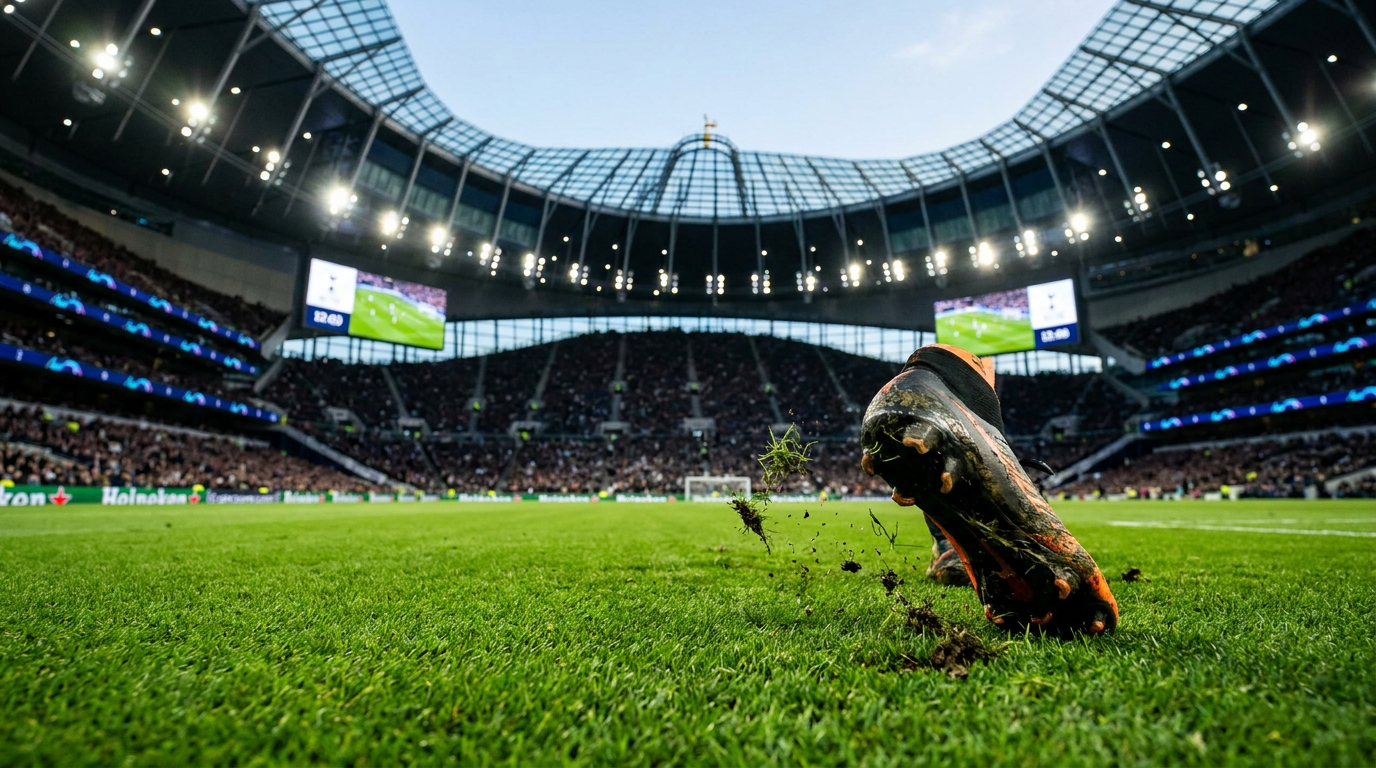
When the first whistle of the 2026 FIFA World Cup blew at Estadio Azteca in Mexico City, the roaring fans were focused on the players. But beneath the cleats of the world's elite athletes lay the culmination of a five-year, multi-million-dollar scientific endeavor. For the first time in the tournament's history, the matches are spread across three countries, 16 cities, and 10 distinct climate zones. Yet, FIFA mandates that every single bounce, roll, and foot strike must feel exactly the same, whether the match is played in the humid heat of Miami or the cool altitude of Mexico City. Achieving this uniformity required an unprecedented biological engineering effort to standardize a living, breathing organism across the North American continent.[2][3]
The scale of the agronomic challenge was staggering. Of the 16 host stadiums, eight required temporary natural grass to be installed over existing artificial turf, and five are fully enclosed domed venues where natural grass cannot innately survive. In past decades, temporary grass installations often resulted in dead, shifting sod that frustrated players and caused injuries. Recognizing that the 2026 footprint was too vast for traditional groundskeeping, FIFA invested heavily in a centralized research initiative, tapping the world's leading turfgrass scientists to invent a completely new system for cultivating, transporting, and sustaining elite soccer pitches.[2][4][5][7]
The project was spearheaded by Dr. John Sorochan, a distinguished professor of turfgrass science at the University of Tennessee, and Dr. Trey Rogers of Michigan State University. Beginning in 2018, their teams transformed university research plots into high-tech laboratories, testing thousands of seed combinations, soil profiles, and lighting conditions. Their mandate was clear: engineer a playing surface that could withstand the compounding stress of up to nine matches in 39 days, while surviving in environments entirely hostile to plant life.[1][3][5]
To minimize variables, the scientists ruthlessly narrowed the biological diversity of the pitches down to two primary systems. For stadiums in warmer southern climates, they selected a highly durable strain of Bermuda grass. For the cooler northern cities and the light-starved indoor domes, they engineered a highly precise mixture consisting of 84 percent Kentucky bluegrass and 16 percent perennial ryegrass. This specific ratio was chosen because the two species share a similar leaf texture and appearance, but offer complementary root strengths that lock the sod together under severe mechanical stress.[2][3]

Growing the grass was only half the battle; moving it into the stadiums without destroying the root system required a mechanical breakthrough. Traditional sod is grown in deep soil, and harvesting it severs the deep taproots, leading to a weak, slippery surface when re-laid. To solve this, the agronomists developed a shallow-profile system. The World Cup grass was grown on massive plastic trays filled with just 1.5 inches of specialized sand. Because the roots could not grow deeply, they grew laterally, weaving into a dense, impenetrable mat that could be sliced like a pizza and rolled up completely intact.[2][3][7]
Once the shallow-profile sod was transported via refrigerated trucks and rolled out onto the stadium floors, it had to be rigorously tested for player safety. To quantify the exact physical properties of the grass, the research team invented a custom testing device known as the fLEX machine. Equipped with a 3D-printed foot wearing a standard professional soccer cleat, the fLEX machine simulates the exact force, rotation, and shear stress of an elite athlete planting their foot to change direction.[3][4]
The data generated by the fLEX machine allowed researchers to measure shock absorption and rotational friction down to the millimeter. If a pitch is too hard, it accelerates fatigue and joint wear; if it is too soft, it drains the players' energy. More critically, if the grass does not tear at the precise moment of maximum rotational torque, the player's knee or ankle will tear instead. By calibrating the sand depth and root density, the scientists ensured the turf would give way just before a catastrophic ligament injury could occur.[3][4]

While the outdoor stadiums rely on natural weather, the five domed venues presented a severe biological hurdle. Inside these cavernous structures, the grass is entirely cut off from sunlight, rain, and natural wind. To keep the pitches alive, the grounds teams installed a network of sensors directly into the root zones, feeding real-time data on moisture, salinity, and temperature to a central command system.[2][4]
While the outdoor stadiums rely on natural weather, the five domed venues presented a severe biological hurdle.
When the sensors detect a deficit, automated irrigation systems can saturate the entire field in minutes, while a specialized waterproof honeycomb layer beneath the sand drains the excess water just as rapidly. This rapid cycling prevents the shallow roots from drowning, mimicking the natural water table fluctuations that grass relies on to cycle oxygen.[4][7]
To replace the missing sun, the indoor stadiums deployed arsenals of massive, 1,800-kilogram grow lights. These rigs are rolled onto the pitch between matches and training sessions, bathing the grass in specific wavelengths of artificial sunlight for up to 12 hours a day. The precise spectrum of light is tailored to trigger photosynthesis without generating excess heat that would scorch the delicate blades.[4]
However, photosynthesis alone cannot save an indoor pitch. The stagnant air inside a closed dome is a breeding ground for root rot and aggressive fungal infections that can decimate a field in a matter of days. To combat this, groundskeepers utilize banks of industrial fans that constantly blow a five-mile-per-hour artificial breeze across the surface. This continuous airflow disrupts fungal spores and forces the grass to strengthen its cellular walls, mimicking the stress of natural wind.[4]

The aesthetic and functional demands of the tournament require absolute precision from the maintenance crews. Across all 16 venues, the grass must be mowed to exactly 22 millimeters in height. If the grass is cut even a millimeter shorter, it risks shocking the plant and exposing the crown to fatal damage; if it is left longer, it dramatically slows the speed of the ball, altering the pace of the game and frustrating the players.[4]
This obsession with surface consistency is further amplified by the technology embedded in the tournament's official match ball. The ball contains a central motion sensor that tracks its movement 500 times per second, feeding data to the Video Assistant Referee system to make instantaneous offside and handball decisions. Any irregularity in the grass that causes an unpredictable bounce or deceleration is immediately registered by the ball's telemetry, making the agronomists' flawless execution a prerequisite for the tournament's digital officiating.[4]
Beyond the mechanical wear and tear of the matches, the turfgrass scientists remain at the mercy of the broader climate. The 2026 tournament is taking place during a period of intense summer heat across North America, raising significant concerns among sports medicine professionals and climate researchers. The intersection of the playing surface and the ambient environment is a critical factor in player safety, as natural grass fields can absorb and radiate immense amounts of thermal energy.[6]
FIFA relies on the Wet Bulb Globe Temperature (WBGT)—a metric that combines heat, humidity, wind, and solar radiation—to determine when matches should be paused for hydration breaks or postponed entirely. Currently, FIFA's threshold for considering a delay is a WBGT of 32 degrees Celsius (89.6 degrees Fahrenheit). However, this standard has sparked intense debate within the medical community.[6]

In the lead-up to the tournament, a coalition of climate researchers and sports doctors published an open letter arguing that FIFA's 32-degree threshold is dangerously high for elite athletes engaged in continuous, high-intensity exertion. The scientists cited physiological data indicating that the safe WBGT limit for extreme exertion is actually 25 degrees Celsius (77 degrees Fahrenheit), warning that the current protocols leave players highly vulnerable to exertional heat illness.[6]
Despite the looming threat of extreme weather, the sheer technical achievement of the 2026 pitches remains a triumph of modern agronomy. The collaborative effort between university researchers, sod farmers, and stadium operators has established a new gold standard for sports infrastructure. By proving that elite, natural grass surfaces can be successfully engineered and sustained in previously impossible indoor environments, the project has permanently altered the landscape of stadium design.[1][2][5][7]
As the tournament progresses toward the July 19 final in New Jersey, the 88 square miles of meticulously engineered sod will endure the cleats of the world's best players and the scrutiny of billions of viewers. For the scientists who spent half a decade obsessing over sand depths, seed ratios, and artificial wind, the ultimate victory will be a tournament where the grass performs so flawlessly that no one notices it at all.[1][2][3]
How we got here
2018
FIFA partners with turfgrass scientists at the University of Tennessee and Michigan State to begin researching standardized pitches.
2022
Researchers finalize the 'shallow profile' sand tray system and begin testing seed combinations.
Early 2025
Sod farms across North America begin growing the precise 84/16 bluegrass-ryegrass mix and Bermuda grass strains.
May 2026
The mature grass is harvested, transported in refrigerated trucks, and installed in the 16 host stadiums.
June 11, 2026
The 2026 FIFA World Cup kicks off at Estadio Azteca on the engineered natural grass.
Viewpoints in depth
Turfgrass Agronomists
The scientists focused on the biological engineering and mechanical consistency of the playing surface.
For the researchers at the University of Tennessee and Michigan State, the World Cup is the ultimate agronomic proving ground. They view the successful deployment of the shallow-profile sod and the fLEX testing machine as a monumental leap forward for sports science. Their primary concern is ensuring that the grass provides the exact same rotational friction and shock absorption across all 16 venues, prioritizing player safety and injury prevention over the logistical ease of artificial turf.
Tournament Organizers
The officials managing the logistics, standardization, and visual presentation of the global event.
FIFA and stadium operators are focused on the unprecedented logistical challenge of maintaining a living crop inside multi-purpose entertainment venues. Their mandate is absolute uniformity: the pitch must look and play identically on television and in person, regardless of whether the stadium is a humid outdoor bowl in Miami or a climate-controlled dome in Dallas. They rely heavily on the automated irrigation and massive grow-light rigs to prevent catastrophic biological failures during the 39-day tournament window.
Player Health Advocates
Medical professionals and climate scientists focused on the environmental risks to the athletes.
While health advocates praise the move to natural grass for its joint-protecting qualities, they are deeply concerned about the broader environmental conditions. Climate researchers argue that FIFA's current Wet Bulb Globe Temperature (WBGT) threshold of 32°C is dangerously high for the extreme cardiovascular exertion required in professional soccer. They advocate for stricter heat protocols and more frequent match postponements, warning that the meticulously engineered grass cannot protect players from severe exertional heat illness.
What we don't know
- Whether the shallow-profile grass will survive the compounding mechanical stress of up to nine matches in a 39-day window without degrading.
- If FIFA will adjust its heat delay protocols in response to pressure from climate and medical researchers.
Key terms
- Wet Bulb Globe Temperature (WBGT)
- A measure of heat stress in direct sunlight that takes into account temperature, humidity, wind speed, and sun angle.
- Shallow Profile Sod
- Grass grown in thin, 1.5-inch sand trays rather than deep soil, allowing it to be easily transported and installed over existing stadium floors.
- fLEX Machine
- A custom testing device equipped with a 3D-printed foot and soccer cleat used to measure the friction and shock absorption of the turf.
- Hybrid Grass
- Natural grass that is reinforced with a small percentage of synthetic fibers stitched into the root zone to prevent the surface from tearing under heavy use.
Frequently asked
Why doesn't FIFA just use artificial turf?
FIFA requires natural grass because professional players strongly prefer its shock absorption and consistency, which significantly reduces the risk of non-contact joint injuries compared to artificial surfaces.
How do they keep grass alive inside domed stadiums?
Agronomists use massive 1,800-kilogram grow lights to simulate 12 hours of sunlight and industrial fans to prevent fungal growth in the stagnant indoor air.
What happens to the grass after the World Cup?
The intense wear and tear of the tournament, combined with the shallow root systems, means the grass will likely be too damaged to salvage and will be removed after the final match.
Sources
Source coverage
7 outlets
3 viewpoints surfaced







[1]The New York TimesTournament Organizers
The Scientific Quest for Perfect World Cup Pitch
Read on The New York Times →[2]The Washington PostTournament Organizers
The quest to get perfect grass into 16 World Cup stadiums
Read on The Washington Post →[3]Fast CompanyTurfgrass Agronomists
Inside the painstaking, yearslong process of making perfect grass for the World Cup
Read on Fast Company →[4]BBCPlayer Health Advocates
The science behind FIFA's perfect grass
Read on BBC →[5]Sports Business JournalTurfgrass Agronomists
Power Players: FIFA World Cup 2026 — University of Tennessee
Read on Sports Business Journal →[6]North Carolina Health NewsPlayer Health Advocates
Record crowds, hot stadiums: Extreme heat could be a player during this summer's World Cup
Read on North Carolina Health News →[7]University of TennesseeTurfgrass Agronomists
FIFA Returns to UT for Final Pitch Management Research Field Day Ahead of World Cup 26
Read on University of Tennessee →
Every angle. Every day.
Get science stories with full source coverage and perspective breakdowns delivered to your inbox.